
































What counts as a personal injury case in California?
A personal injury claim asks the person or business that caused your injury to pay for the harm. Most California cases are based on negligence: someone failed to act with reasonable care, and you were hurt as a result. Some are based on strict liability, where fault does not have to be proven, such as many dog bites and defective product claims.
The cases we handle most often include:
- Car crashes, which our California car accident lawyers handle from first call to settlement or trial
- Commercial truck and big-rig collisions on the I-5, I-10, I-15, and SR-60, handled by our California truck accident team
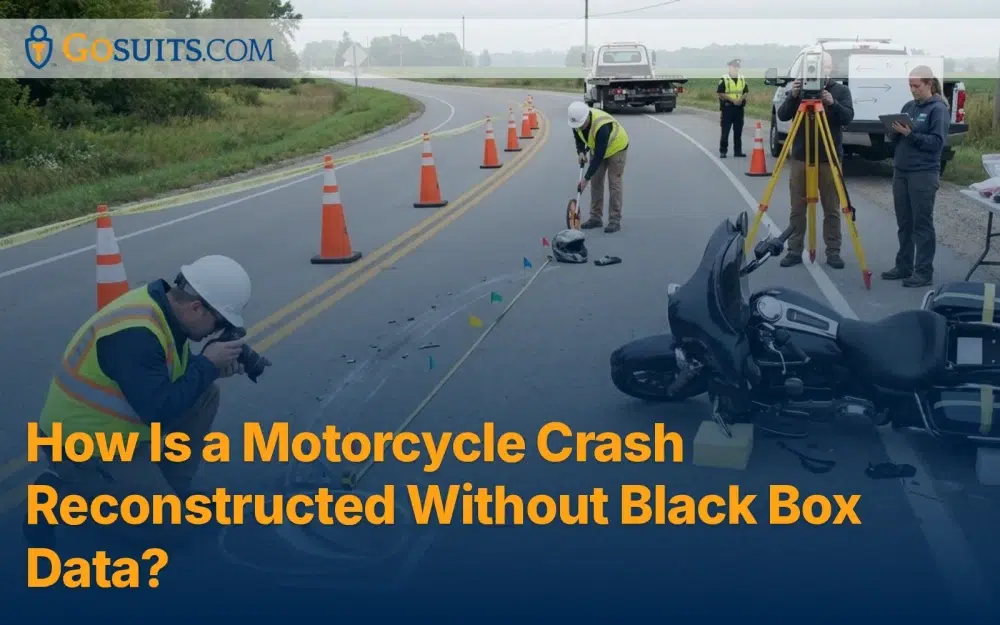
- Motorcycle crashes across California, including lane-splitting disputes
- Uber and Lyft collisions, covered on our California rideshare accident page
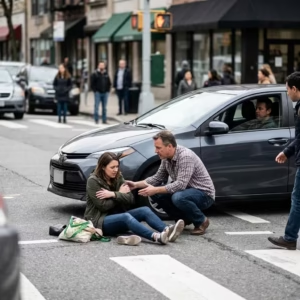
- Pedestrians struck in crosswalks and parking lots, a focus of our pedestrian accident attorneys
- Falls on unsafe property, dog bites, and injuries on job sites, including California construction accident cases and other on-the-job injuries in California
- Injuries from defective products in California, from car parts to household devices
- Fatal accidents, where our California wrongful death lawyers represent surviving families
Our offices sit in the two largest Southern California markets. People hurt in Los Angeles County usually work with our Los Angeles personal injury lawyers, and Orange County clients usually work with our Irvine accident and injury team.
Where serious injuries happen in Southern California
Freeway congestion drives a large share of our cases. The I-405 through West Los Angeles and Orange County stops and starts for hours each day, and sudden slowdowns near interchanges produce chain-reaction rear-end crashes. The I-5 carries commuters and freight from the San Fernando Valley through downtown and down into Orange County. The US-101 and I-10 add their own pattern of lane-change and merge collisions.
Truck traffic concentrates on the routes out of the ports of Los Angeles and Long Beach, the I-710 and the I-110, and east through the Inland Empire on the I-10, SR-60 and I-15, where warehouses and distribution centers keep big rigs on the road around the clock. Truck cases there usually involve a carrier, sometimes a broker or a shipper, and federal safety rules on driver hours and maintenance.
Not every case is on a freeway. Dense neighborhoods in Los Angeles see frequent pedestrian and cyclist injuries at intersections, and the big shopping centers and apartment complexes across Orange County produce a steady stream of fall and security cases.
Falls and injuries on someone else’s property
Property owners and businesses in California have a duty to keep their premises reasonably safe and to warn about hazards they know of or should have found. A spill left in a grocery aisle, a broken stair in an apartment building, or a dark parking structure can all support a claim.
These cases usually turn on notice: how long the hazard existed and whether the owner should have caught it. Inspection logs, cleaning schedules, and store video answer that question, and they are the records most likely to be discarded quickly, which is why we ask for them in writing right away.
How long do you have to file a personal injury claim in California?
For most injury claims, a lawsuit must be filed within two years of the injury under Code of Civil Procedure section 335.1. Miss it and the claim is usually barred, no matter how strong it is.
Several situations change the clock:
- Claims against a public entity. If a city bus, a county vehicle, or a dangerous condition on public property caused the injury, a written government claim generally must be presented within six months under Government Code section 911.2, before any lawsuit.
- Injured children. For most claims, the two-year period does not start running until the child turns 18, under Code of Civil Procedure section 352. Claims against public entities are an exception and still require a timely government claim.
- Injuries discovered later. When an injury or its cause is not reasonably discoverable right away, the deadline may run from discovery rather than from the incident.
- Wrongful death. The two-year period generally runs from the date of death.
Property damage claims have a longer window, but evidence for the injury claim disappears long before any deadline does.
How California decides who is at fault
California uses pure comparative fault, adopted by the California Supreme Court in Li v. Yellow Cab Co. in 1975. You can recover damages even if you were partly responsible, and your award is reduced by your share of fault. A person found 30 percent at fault recovers 70 percent of their damages.
Insurers know this rule well, which is why so many claims turn into arguments about speed, phone use, or where you were walking. Your answer is evidence: video, crash data, witness statements, and the physical scene.
When more than one party is responsible, Civil Code section 1431.2, added by Proposition 51, makes each defendant responsible for non-economic damages, such as pain and suffering, only in proportion to their own fault. Economic damages, such as medical bills and lost wages, can still be recovered in full from any responsible defendant. This is one reason we identify every responsible party early. For a closer look at how fault sharing works in car crashes, see our guide on comparative negligence in California car accidents.
What compensation can you recover?
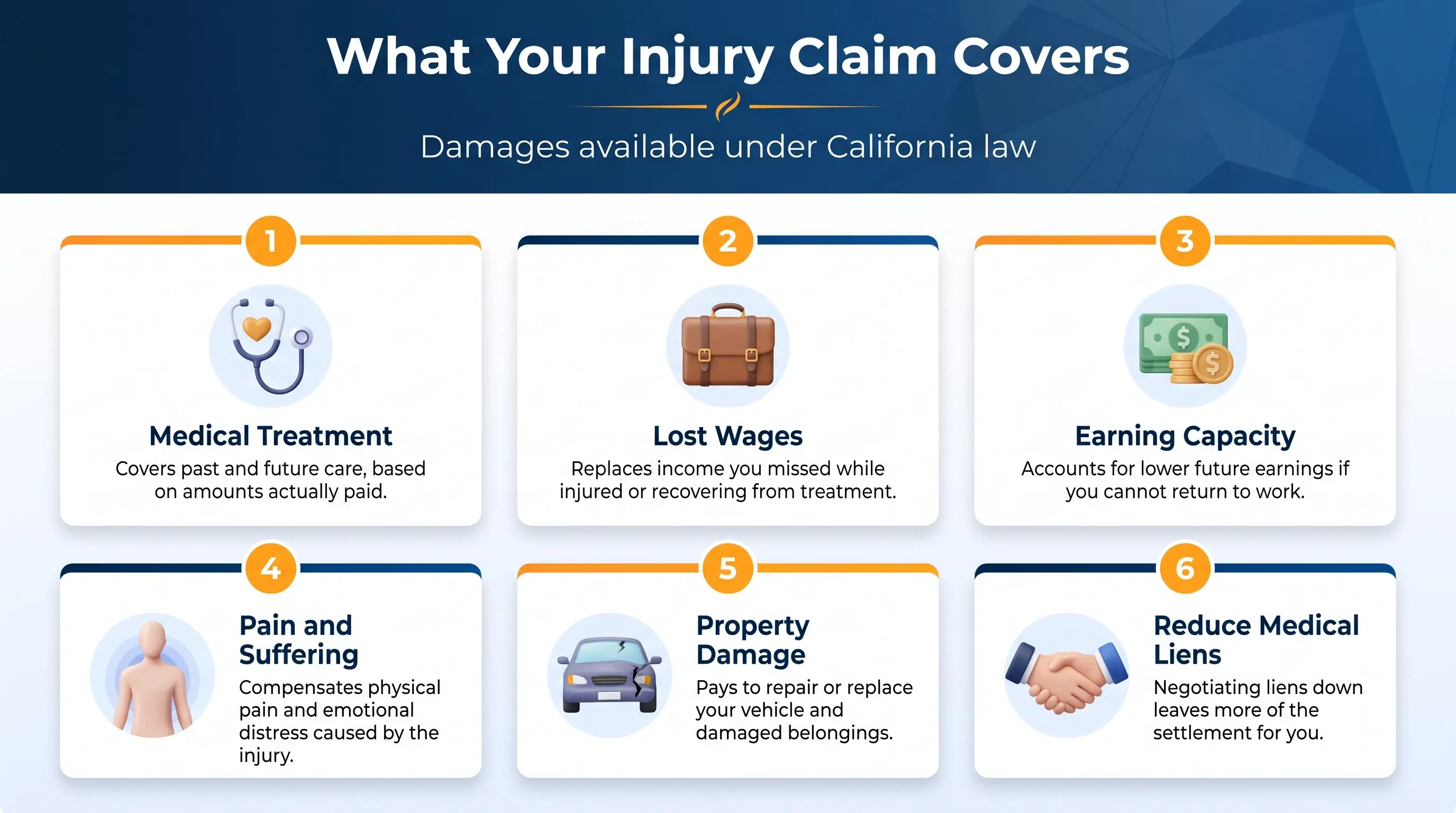
California law lets injured people recover two broad kinds of damages. Economic damages cover losses with a dollar figure: past and future medical treatment, lost wages, reduced earning capacity, and property damage. Non-economic damages cover pain, emotional distress, disfigurement, and loss of enjoyment of life.
A few California rules shape the number:
- Medical bills are measured by what was paid. After Howell v. Hamilton Meats (2011), past medical damages are generally limited to the amounts actually paid or owed, not the higher amounts hospitals first bill.
- Uninsured drivers face limits. Under Civil Code section 3333.4, a driver who was uninsured at the time of a crash generally cannot recover non-economic damages from the at-fault driver.
- Punitive damages are rare. Under Civil Code section 3294, they require clear and convincing evidence of malice, oppression, or fraud, such as some drunk driving cases.
The gross settlement is also not what you take home. Hospitals, ER physician groups, health plans, and medical lien holders often claim part of the recovery. At settlement we negotiate those balances down so more of the money reaches you.
Special rules for common California case types
Dog bites
Civil Code section 3342 makes a dog’s owner liable when the dog bites someone in a public place or lawfully on private property, even if the dog never bit anyone before. You do not have to prove the owner was careless.
Rideshare crashes
Coverage depends on what the Uber or Lyft driver was doing. With the app off, only the driver’s personal policy usually applies. While the driver waits for a request, the company’s contingent coverage may apply. Once a ride is accepted or a passenger is in the car, much higher limits generally apply.
Injuries at work
Workers’ compensation is usually the only remedy against your own employer in California. If a third party caused the injury, such as a negligent driver, a subcontractor, or the maker of a defective machine, you may also have a separate injury claim against them.
Wrongful death
Code of Civil Procedure section 377.60 lets a spouse, domestic partner, children, and in some cases other dependents bring a wrongful death claim. Damages can include lost financial support, household services, and the loss of love and companionship.
What insurers do with California injury claims
An adjuster may call within a day of the incident, ask for a recorded statement, and request a broad medical authorization. Each of these can be used later to argue that your injury came from somewhere else or that you were partly at fault.
Quick offers are common, usually before an MRI or a specialist visit. Accepting closes the claim. If a herniated disc or a brain injury shows up later, there is no reopening it.
You do not have to give the other side’s insurer a recorded statement. You can refer them to your lawyer.
What to do after an injury in California
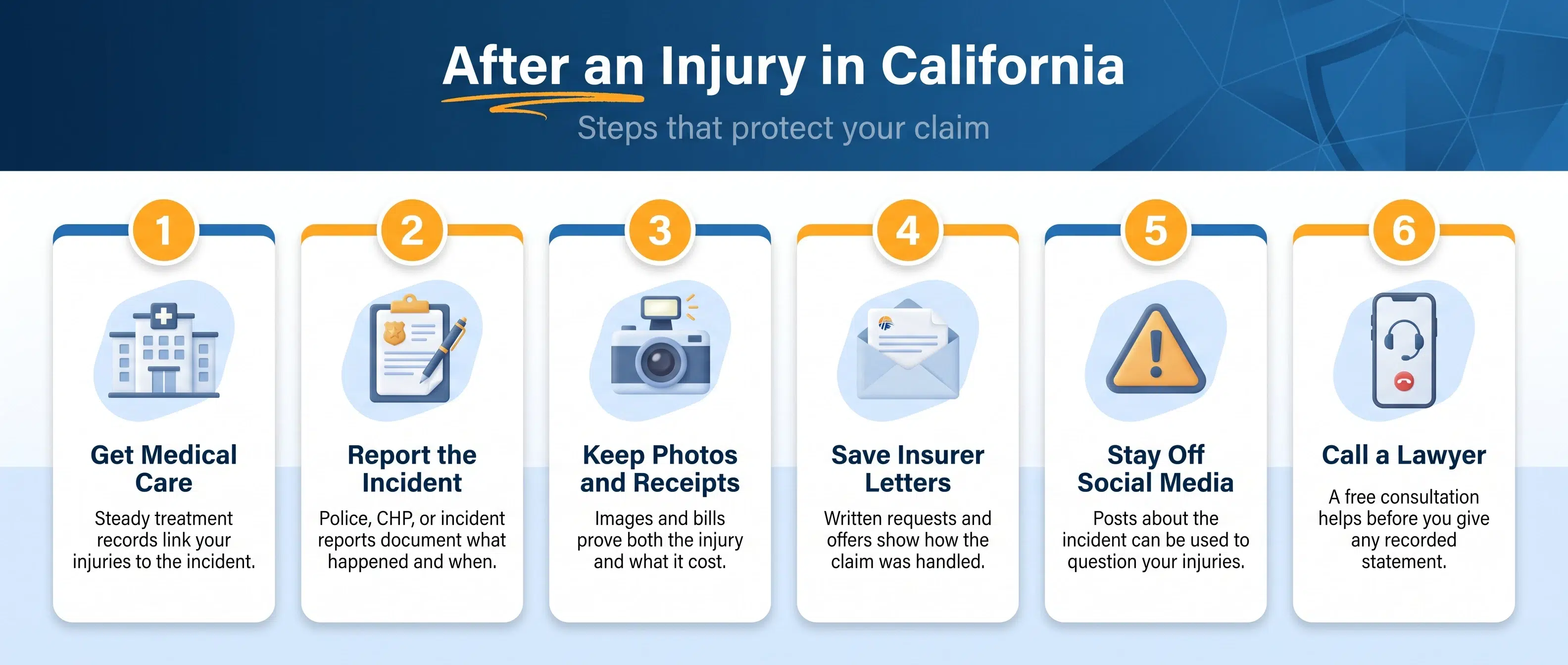
Get medical care right away and follow through with it. Gaps in treatment are one of the most common reasons insurers cut offers. Report crashes to police or the CHP, and if anyone was hurt or property damage exceeds $1,000, file an SR-1 report with the DMV within 10 days.
Keep photos, receipts, and every letter from an insurer. Stay off social media about the incident. Then talk to a lawyer. You can schedule a free consultation with our team any time, day or night.