



































What is Wrongful Death in California?
Wrongful death occurs when an individual’s life is ended due to another party’s actions or negligence. Common examples include fatalities resulting from car accidents, workplace incidents, defective products, or unsafe premises. In each situation, the goal of California wrongful death lawyers is to help families hold the responsible parties accountable and to recover the financial support they’ve lost.
Under California law, a wrongful death claim is a civil action distinct from any criminal charges that may arise from the same event. Criminal cases, if present, are handled separately by the state, and the outcome does not directly influence the civil wrongful death lawsuit in California.
Who Can File a Wrongful Death Lawsuit in California?
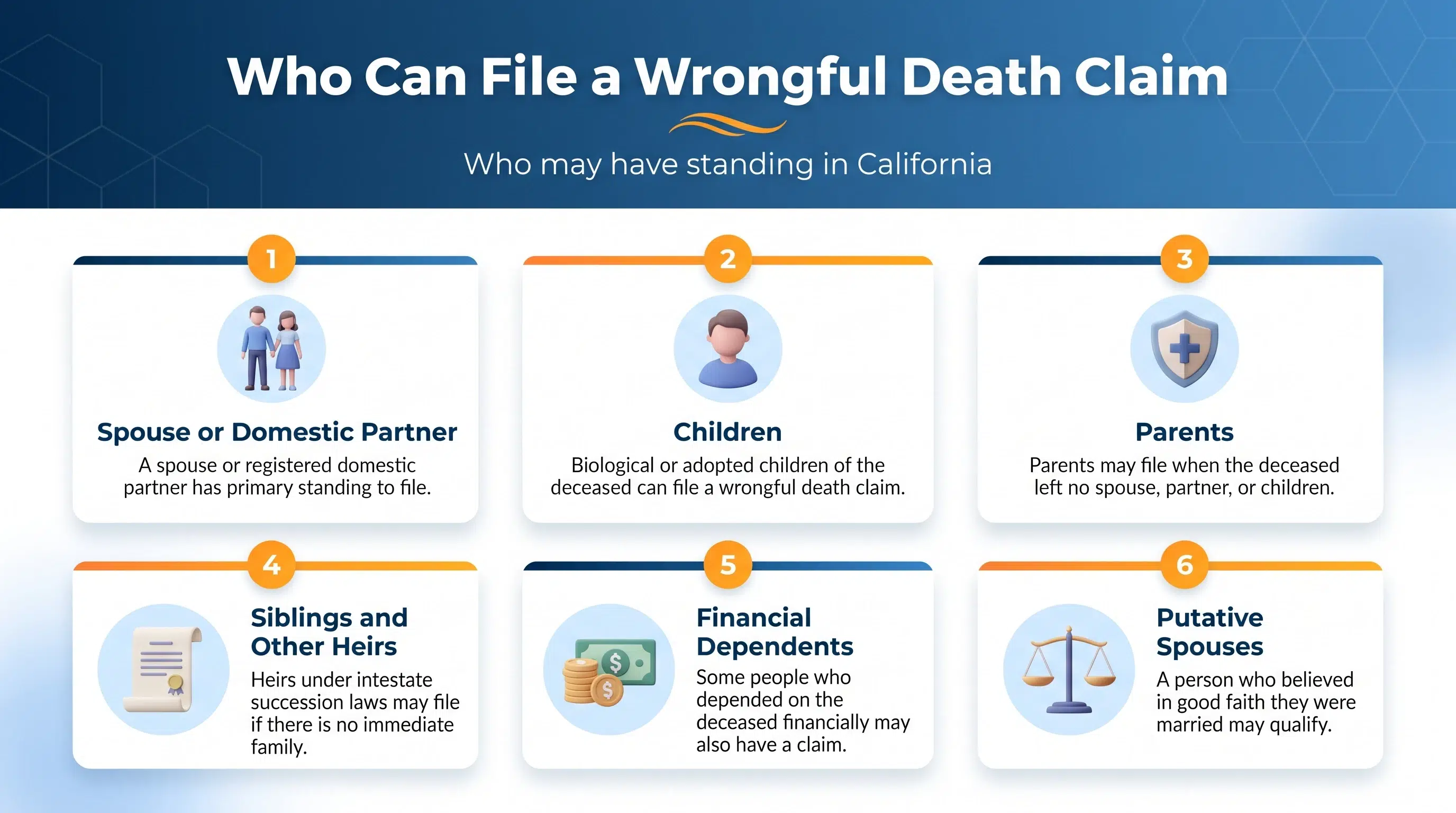
California law specifies that only certain people are eligible to file a wrongful death lawsuit.
- Surviving Spouse or Domestic Partner: The deceased’s spouse or registered domestic partner has primary standing to file a wrongful death lawsuit in California. This ensures that those closest to the deceased have the right to seek compensation.
- Children of the Deceased: Biological or adopted children of the deceased can file a wrongful death claim. If the deceased has minor children, they have a legal right to pursue damages for the loss of their parent.
- Parents of the Deceased: In cases where the deceased has no spouse, partner, or children, the deceased’s parents may be eligible to file a wrongful death lawsuit, particularly if they were financially dependent on the deceased.
- Siblings or Other Heirs: If the deceased has no immediate family (such as a spouse, partner, children, or parents), siblings or other heirs, as defined by California’s intestate succession laws, may be able to file a claim.
- Financially Dependent Individuals: Individuals who were financially dependent on the deceased, such as stepchildren or putative spouses (a person who believed they were married to the deceased in good faith), may also have the right to pursue a wrongful death claim under certain circumstances.
California Wrongful Death Laws and Requirements
The wrongful death lawsuit statute of limitations in California is generally two years from the date of death. This time frame means that eligible family members must act relatively quickly, as failing to file within this period will likely bar them from seeking compensation. Our California wrongful death attorneys help clients navigate these strict timelines, ensuring that essential documents are filed accurately and promptly.
Additionally, California’s wrongful death law encompasses a wide range of compensable damages. The claim may cover economic damages, such as lost income, medical bills, and funeral expenses. Non-economic damages may also be sought for the loss of companionship, emotional support, and other intangibles.
Damages in a California Wrongful Death Lawsuit
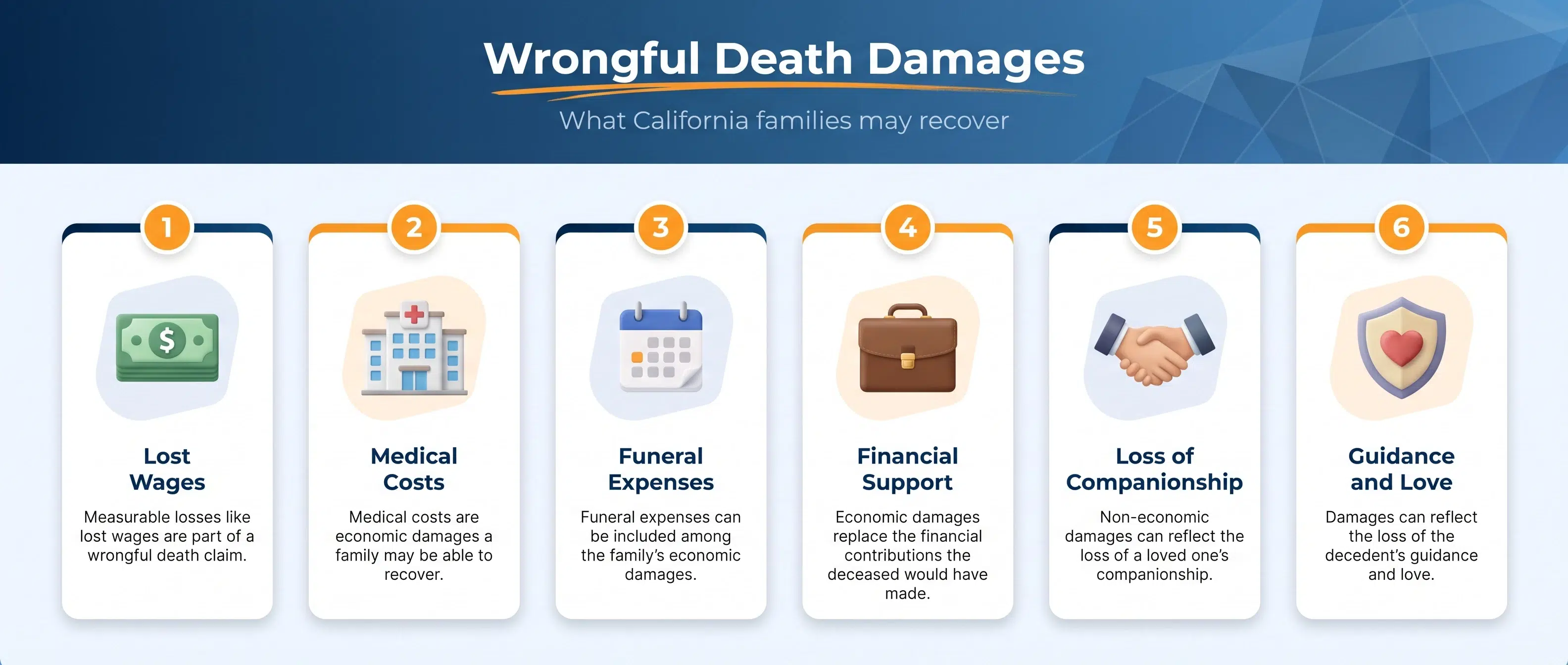
In a California wrongful death lawsuit, the family may be eligible to recover several types of damages. Economic damages include measurable losses like lost wages, medical costs, and funeral expenses. These damages are designed to replace the financial contributions the deceased would have made. On the other hand, non-economic damages reflect losses that are more challenging to quantify, such as the loss of love, companionship, comfort, care and moral support, and the decedent’s guidance.
As wrongful death attorneys in California, we carefully assess each case, working with economic and forensic experts to determine fair compensation. Although no amount of money can ever replace a loved one, pursuing compensation can provide stability and security for families facing unexpected financial burdens.