















Award-Winning Chicago IL Pedestrian Injury Lawyers | GoSuits

Award-Winning Chicago, IL Pedestrian Injury Lawyers

30 Years of Experience Emblem

Pedestrian Accident? Go Smart, GoSuits.

Get your free case estimate, takes 60 seconds.

No Fees Unless You Win No Fees Unless You Win*
No Hidden Administrative Fees No Hidden Administrative Fees
24/7 Legal Support Fast Response Time and Available 24/7

If a car, truck, or other vehicle struck you while you were on foot in Chicago, the days that follow can be disorienting. Medical appointments, missed work, calls from insurance adjusters, and unanswered questions about what you are owed all land at once. GoSuits handles pedestrian injury cases throughout Chicago and Cook County, and our attorneys are here to take the legal side off your plate so you can focus on recovery.

Pedestrian injuries in Chicago happen across the full range of the city’s streets, from the dense crosswalk traffic around the Loop to busy arterials like Lake Shore Drive and the corridors that feed onto I-90 and I-94. These cases typically involve the at-fault driver’s liability insurer, and sometimes a municipality or third party as well, when a dangerous intersection design or a failure to maintain a crosswalk contributed to what happened. We know this terrain, and we know how insurers approach pedestrian claims in Illinois.

Hero Image
$1,850,000 Car Accident
Litigated and Settled
$1,200,000 Car Accident
Litigated and Settled
$875,000 Car Accident
Litigated and Settled
$575,000 Car Accident
Litigated and Settled
$350,000 Car Accident
Litigated and Settled
The National Top 40 Under 40 Trial Lawyers Attorney At Law Magazine - Law Firm of The Month Sean Chalaki - Best Lawyers 2025 Sean Chalaki - Best Lawyers Ones to Watch 2022

Reviews And Testimonials

Why choose GoSuits as your Chicago pedestrian injury lawyer?

A pedestrian struck by a vehicle in Chicago is almost always the most seriously injured person in the incident. The driver walks away; the pedestrian does not. That physical reality shapes everything about how these claims are built and fought, and it is why having attorneys who handle pedestrian injury cases specifically in Cook County matters.

GoSuits represents pedestrian injury victims throughout Chicago and Cook County. Cases we handle involve passenger vehicles, commercial trucks, city buses, rideshare drivers, and delivery vans, along with the insurers behind all of them. When a claim involves a municipality, such as when a defective crosswalk signal or an unmarked construction barrier contributed to the collision, we pursue that avenue as well. Matters that go to litigation are filed in the Circuit Court of Cook County. Understanding how that court operates, which judges handle these cases, and what local practice norms look like gives our attorneys a real working advantage.

Here is what that looks like in practice across a pedestrian injury case:

  • Scene investigation before evidence disappears. Pedestrian injury scenes change fast. Traffic cameras are overwritten, skid marks fade, broken crosswalk equipment gets repaired, and witnesses scatter. Our attorneys move quickly to preserve camera footage from city traffic systems, nearby businesses, and any dashcam-equipped vehicles that passed through. We also bring in qualified accident reconstruction professionals when the fact pattern requires it, people who can analyze vehicle speed, braking distance, and pedestrian position to establish exactly what the driver did and when.

  • A full liability review, not just the driver. Chicago pedestrian injury cases often involve more than one responsible party. A rideshare company whose driver was logged in during the collision, an employer whose worker struck someone while on a delivery route, a property owner whose broken sidewalk contributed to where the pedestrian was standing, a city agency responsible for a malfunctioning crosswalk signal. We review all of it. Collecting from multiple sources, where liability exists, is often what makes the difference in what a client actually recovers.

  • Medical documentation from the start. Pedestrian injuries frequently include fractures, traumatic brain injury, spinal damage, and soft tissue injuries that are not fully understood until weeks after the collision. We work with our clients to make sure the medical record reflects the true scope of their injuries, because an incomplete medical file is one of the main ways insurers reduce what they pay.

  • Insurer tactics handled directly. Illinois operates under a modified comparative fault rule. Under 735 ILCS 5/2-1116, a plaintiff who is found more than 50 percent at fault cannot recover. Insurers in Chicago pedestrian cases know this, and they frequently argue that the pedestrian was jaywalking, stepped off the curb unexpectedly, or was otherwise at fault. Our attorneys anticipate these arguments, build against them from the evidence collected, and negotiate from a position of documented fact, not defensiveness.

  • Local knowledge as a working advantage. Knowing which intersections on Lake Shore Drive generate the most pedestrian conflicts, how the Circuit Court of Cook County handles pedestrian liability disputes, and which insurers litigate hard versus settle fast in Chicago, all of that shapes strategy. GoSuits has handled injury cases in this city long enough that local patterns are built into how we approach each file from day one.

Contact Us Today
30+ years of combined experience

30+ years of combined experience

Our attorneys have handled pedestrian injury cases in Chicago and throughout Cook County for decades. That means years of negotiating with Illinois insurers, litigating in the Circuit Court of Cook County, and reconstructing how Chicago street collisions actually happened. When a pedestrian case involves a commercial vehicle, a municipal crosswalk failure, or a disputed liability question, that accumulated experience changes how the case gets built from the first phone call.

No fees unless you win

No fees unless you win

GoSuits represents pedestrian injury victims in Chicago on a contingency basis. You pay nothing to start, and you owe us no attorney fees unless we recover compensation for you. For injured people who are already dealing with medical bills and lost income after being struck by a vehicle, that structure removes one more barrier to getting real legal help. To learn more about how contingency representation works, see our no-win, no-fee guide.

No hidden administrative fees

No hidden administrative fees

Some firms charge clients for copying, postage, file management, and other administrative costs that quietly reduce what a client takes home from a settlement. GoSuits does not work that way. The fee structure you hear at the start is what applies throughout the case. When you work with our Chicago pedestrian injury lawyers, you will not find unexpected line items in your settlement statement at the end.

Fast response time and 24/7 availability

Fast response time and 24/7 availability

Pedestrian injury evidence in Chicago, especially traffic camera footage from the city’s network of intersection cameras, can disappear within days. That is why we are available around the clock for a free initial consultation, and why we move quickly once we hear from you. Our intake team includes Spanish and Farsi speakers, so language is not a barrier to getting answers. If you have been struck by a vehicle in Chicago, do not wait to call.

Contact Us Today
No Win. No Attorney Fees*

Start Your FREE Case Evaluation!

If you need immediate assistance, do not hesitate to call Chicago IL Pedestrian Accident Lawyers!

Call Our Lawyer

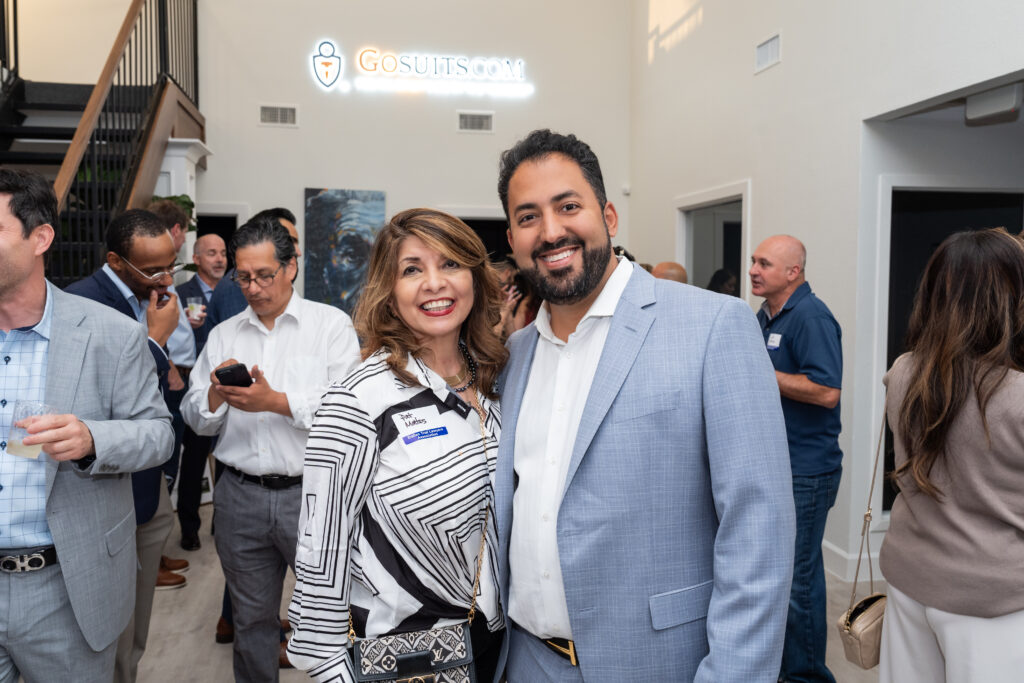
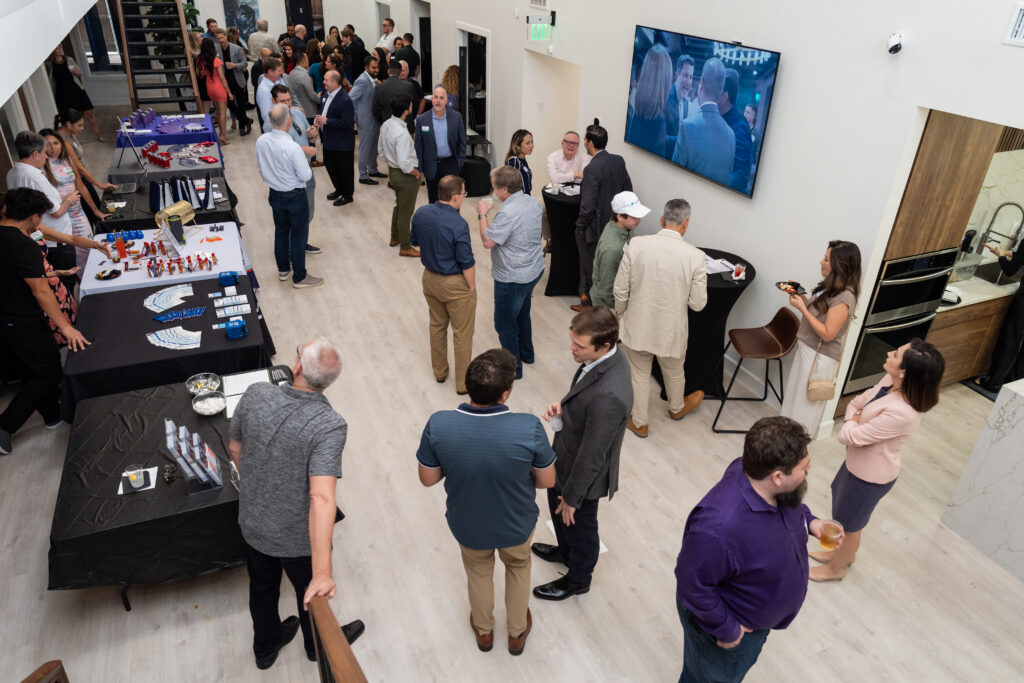
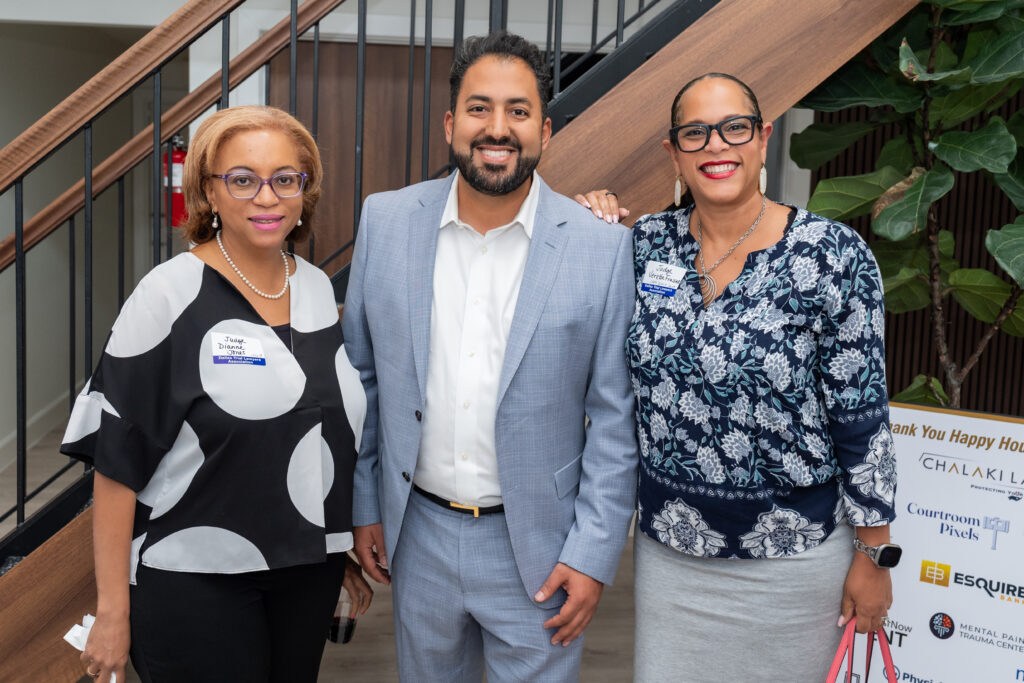
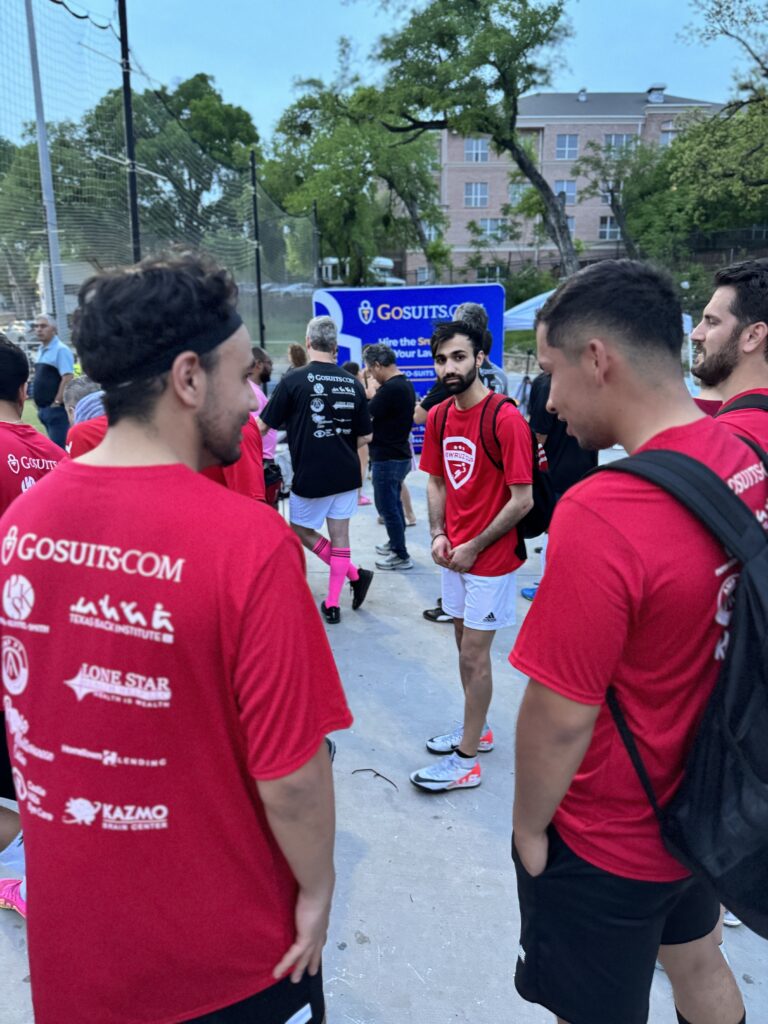
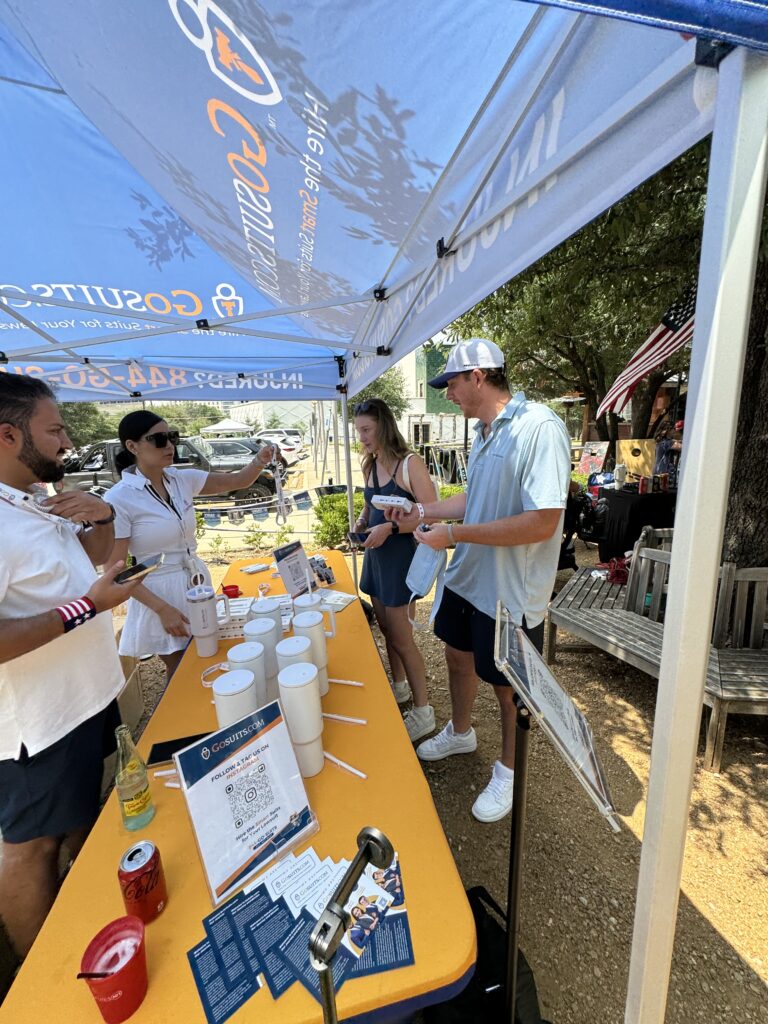
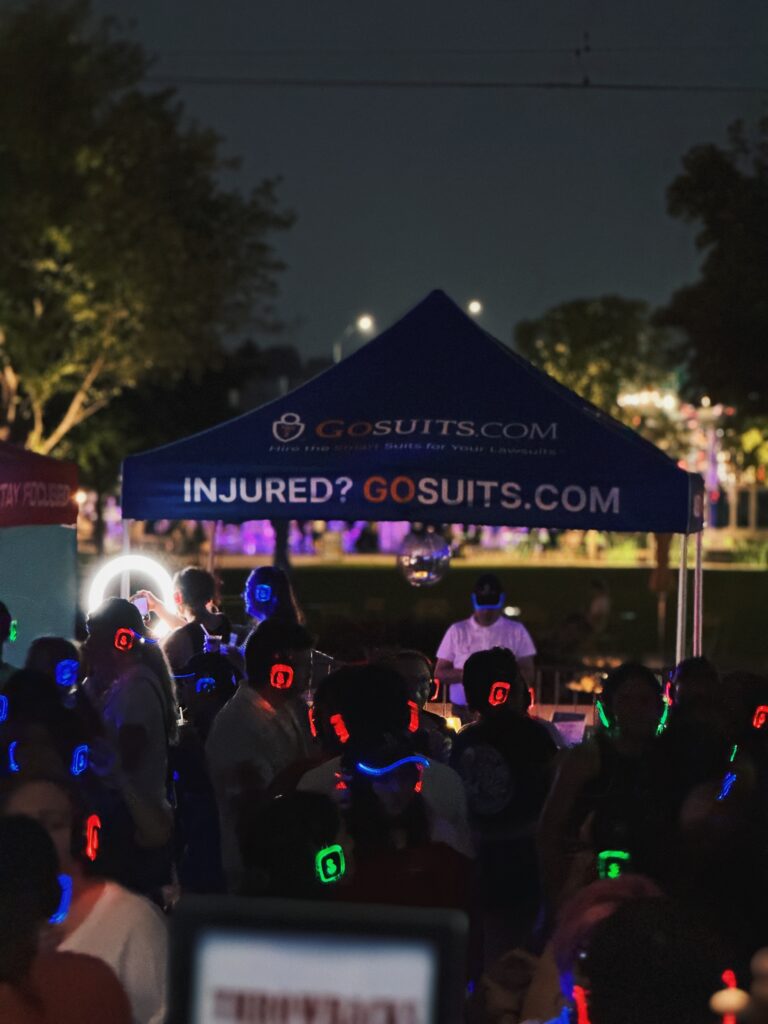
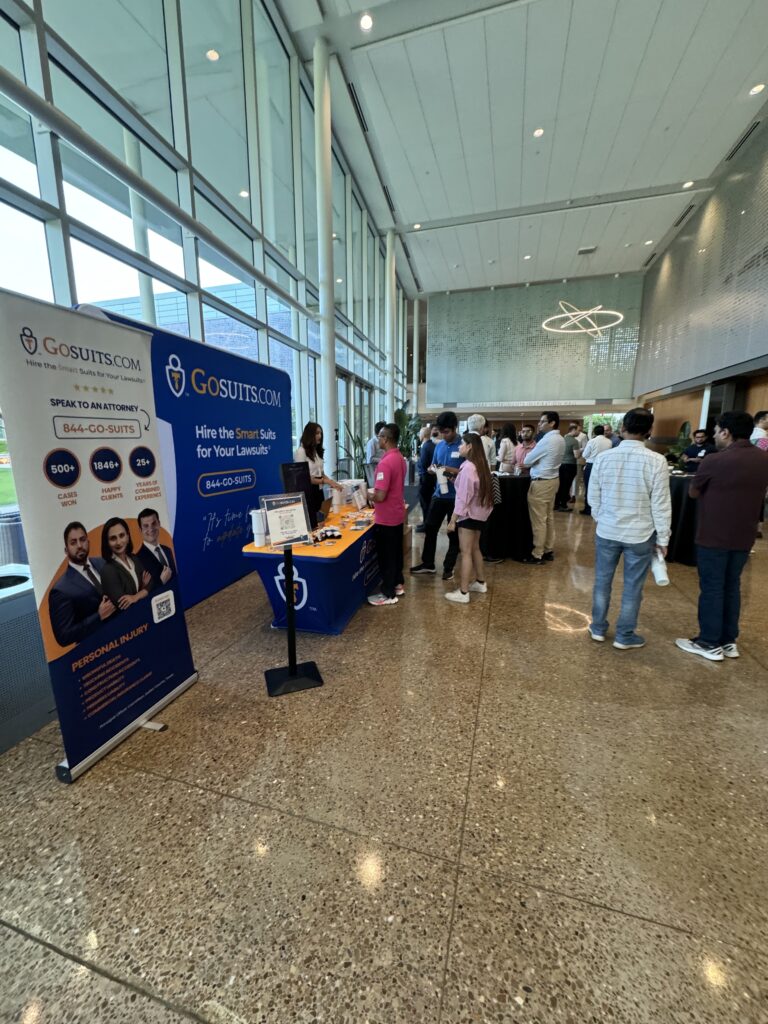
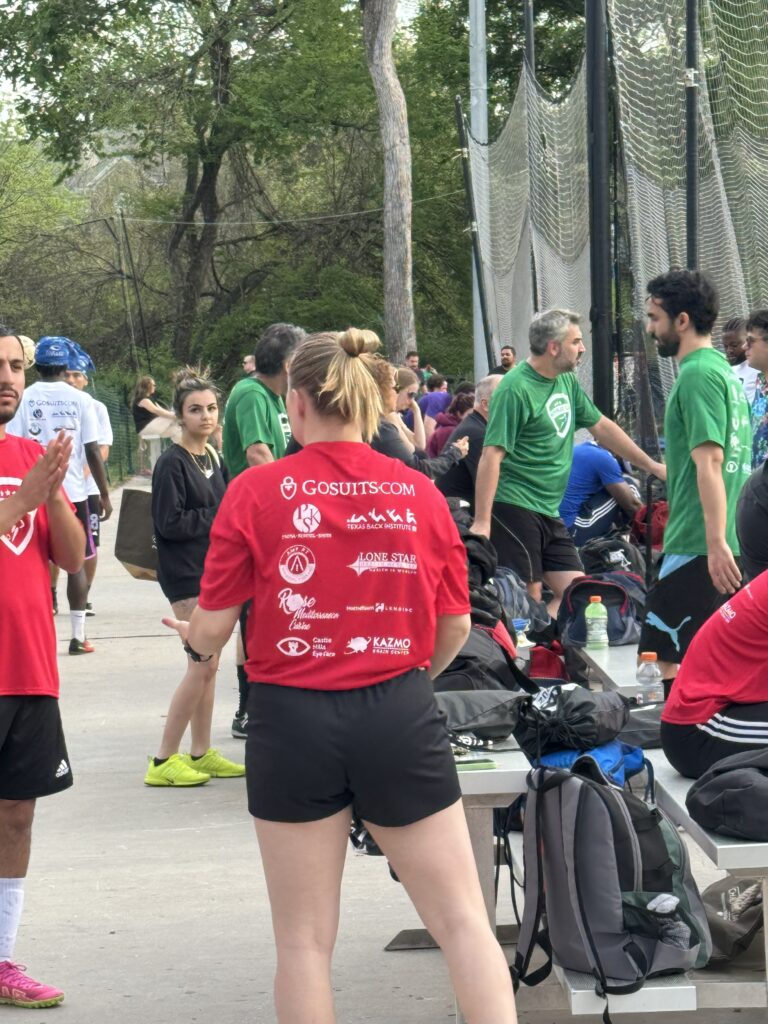
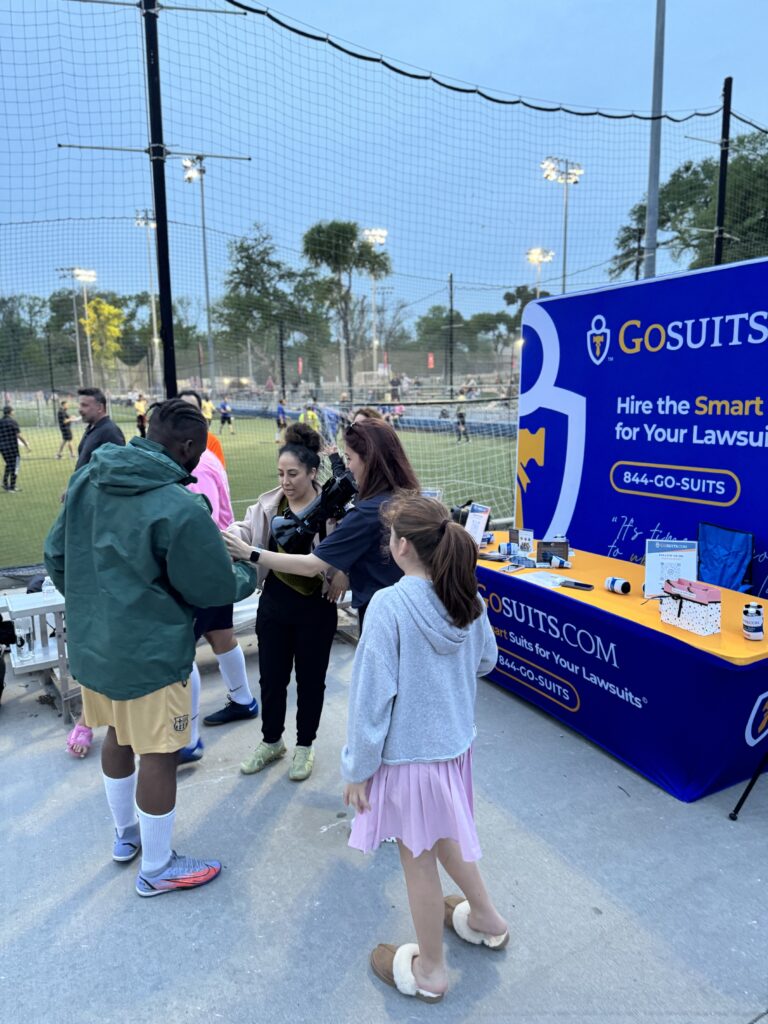
Our commitment to Chicago through events and outreach

GoSuits is invested in Chicago beyond the courtroom. Cook County has some of the highest pedestrian injury rates in the state, concentrated in corridors where traffic volumes, inadequate crosswalk infrastructure, and driver behavior intersect. We participate in pedestrian safety awareness initiatives that bring that reality to street level, working alongside community organizations in neighborhoods on the South Side and West Side where pedestrian infrastructure is often weakest and injury rates are highest.

We support legal education efforts aimed at helping Chicago residents understand their rights after an injury on public streets and sidewalks. That includes outreach at community centers and library events where people can ask basic questions about what a pedestrian injury claim involves without any sales pressure. A person who understands their legal options makes better decisions about their situation, and that matters to us regardless of whether they hire GoSuits.

Road safety along Lake Shore Drive and the high-volume arterials feeding into the Loop has been a consistent focus of our outreach conversations. Better awareness of pedestrian right-of-way rules, the risks at poorly lit crosswalks, and the role driver distraction plays in Chicago street accidents are all topics we bring into these community settings. We are here because Chicago is where our clients live, and the city’s streets are safer when residents know what to do and who to call.

Affiliations & Community Involvement

  • Texas Trial Lawyers Association - Members, Sean Chalaki & Shawn S. Hashemi (Sean Chalaki serves on the Executive Board for Technology and Innovation)
  • Dallas Trial Lawyers Association - Members, Sean Chalaki & Shawn S. Hashemi
  • Illinois Trial Lawyers Association - Member, Shawn S. Hashemi
  • State Bar of Texas, Torts and Insurance Practice Section - Member, Shawn S. Hashemi
  • Dallas Association of Young Lawyers - Member, Shawn S. Hashemi
  • Phi Delta Phi Honor Society - Member, Shawn S. Hashemi, and graduate of the Dallas Bar Association Trial Academy
  • Orange County Bar Association - Member, Sean Chalaki
  • Irvine, Beverly Hills, and Frisco Chambers of Commerce - Member, Sean Chalaki
  • Network of Iranian Professionals of Orange County - Member, Sean Chalaki
  • Heritage Reimagined - Founding Member, Sean Chalaki
  • South Australian Bar Association and the Iran Central Bar Association - Member, Yasamin Moussavi
  • Turtle Rock Elementary School - Former PTA President, Sean Chalaki
  • Legal Aid - Volunteer, Shawn S. Hashemi
  • Supporters of local schools, nonprofits, and community organizations in every region we serve

How can I find a reliable pedestrian injury attorney near me?

Our Chicago Office

8 S Michigan Ave Suite 935
Chicago, IL 60603

(312) 646-4566

Open 24/7 for Emergencies

What should I bring to my first meeting with a Chicago pedestrian injury lawyer?

The more you can bring, the faster the attorney can assess what happened and what your claim is worth. Start with the police report from the incident, which in Chicago will typically be a CPD crash report that names the driver, the vehicle, and any citations issued. Bring your medical records and bills from every provider you have seen, including emergency room, imaging, specialists, and any follow-up visits. Photos from the scene, including the crosswalk, the vehicle that struck you, your injuries, and any contributing hazards, are valuable. Bring your health insurance information, any correspondence from the at-fault driver's insurer, and a written timeline of events as you remember them. If witnesses gave you their contact information, bring that too.

Where do pedestrian injuries happen most often in Chicago?

Chicago’s street grid creates a predictable pattern of pedestrian injury locations. The city’s busiest pedestrian corridors are also its most dangerous. The Loop concentrates office workers, tourists, and transit riders into a few square miles of high-volume crosswalks, and the combination of delivery trucks, taxis, rideshare pickups, and distracted drivers makes it one of the higher-risk areas in the city. State Street and Michigan Avenue see significant pedestrian volumes and near-daily conflict between turning vehicles and people in the crosswalk.

Outside the Loop, Lake Shore Drive is a consistent source of pedestrian injuries near the park and beach access points where pedestrians cross against traffic patterns that are not well-designed for foot traffic. The I-90 and I-94 corridors feed into surface streets on the North Side where volume spikes during rush hours, and the Dan Ryan on the South Side creates spillover congestion on local streets where drivers are still moving fast. The West Side corridors connecting to I-290 carry heavy truck and commercial vehicle traffic through residential neighborhoods where pedestrian crossings are poorly marked.

Intersections without pedestrian signals, intersections with signals that are timed poorly for the volume of foot traffic, and crosswalks that have been eroded or blocked by construction staging all contribute to Chicago pedestrian injury patterns. When a defective or absent pedestrian signal played a role in your accident, a city agency may share liability, and that changes how the claim is built.

Who can be held responsible after a pedestrian is struck in Chicago?

The at-fault driver is the obvious starting point, but Chicago pedestrian injury cases frequently involve more than one responsible party. Working through the full liability picture is one of the most important things a pedestrian injury attorney in Illinois does early in a case.

If the driver was working at the time of the collision, delivering packages, driving for a rideshare platform, making a commercial route stop, the driver’s employer or the platform may share liability under Illinois respondeat superior principles. A rideshare driver who was active on the app at the time of the collision implicates the rideshare company’s commercial insurance policy, not just the driver’s personal coverage. That distinction matters significantly for a pedestrian with serious injuries.

The city or a contractor can be responsible when a defective crosswalk signal, an unmarked construction zone encroaching on a pedestrian path, or a deteriorated sidewalk contributed to the collision. A claim against a local public entity in Illinois runs on a one-year statute of limitations under 745 ILCS 10/8-101, not the two years that applies to a claim against a private driver. If the CTA was involved, written notice is due within six months under 70 ILCS 3605/41. Identifying a government defendant early is what keeps those deadlines from closing before the investigation is finished.

Vehicle defects, a brake failure or a steering malfunction that contributed to the driver’s inability to stop, can open a product liability path against the vehicle manufacturer or a maintenance company. And in construction zones along major corridors like I-290 or the active construction stretches near I-55 and I-94, multiple contractors and subcontractors may have had responsibility for pedestrian pathway safety.

None of these avenues are guaranteed to apply in a given case. What matters is that every one of them gets examined before the investigation closes, because missing a responsible party means leaving available compensation on the table.

What evidence a Chicago pedestrian injury case depends on

The evidence in a pedestrian injury case is almost always time-sensitive, and in Chicago that problem is acute. The city’s network of intersection cameras is managed by CDOT and CPD, and footage is typically overwritten on a short cycle. Nearby business surveillance cameras, dashcam footage from other vehicles, and the driver’s own phone records all follow similar retention patterns: request them early or lose them.

The police report from the responding CPD officers is a foundational document but not a final one. Officers sometimes record a pedestrian as at fault based on an initial driver account, before witness statements are collected or camera footage is reviewed. Those preliminary conclusions can be challenged with additional evidence, and our attorneys know how to do that.

Physical evidence at the scene matters. The position of the vehicle after impact, the presence or absence of skid marks, the condition of the crosswalk markings, whether the pedestrian signal was functioning, all of it contributes to reconstructing what happened. When the driver’s speed is disputed, a qualified accident reconstruction professional can analyze the data available from the scene and, where applicable, from the vehicle’s own onboard systems.

Medical records are evidence too. The emergency room visit, imaging results, specialist notes, physical therapy records, and any future care recommendations all feed into how the claim is valued. Gaps in treatment, where a client stopped going to appointments for a period of time, are one of the most common tools insurers use to argue that injuries were not serious or have resolved. Consistent documentation matters throughout.

How Illinois law affects what you can recover

Illinois follows a modified comparative fault rule. Under 735 ILCS 5/2-1116, an injured person’s recovery is reduced by their percentage of fault for the accident, but if they are found more than 50 percent at fault, they recover nothing. In a Chicago pedestrian injury case, this statute is often where the litigation gets fought. The at-fault driver’s insurer will frequently argue that the pedestrian bore partial responsibility: that they crossed outside the crosswalk, that they stepped off the curb without looking, that they were wearing dark clothing at night.

These arguments are not automatically accepted by courts or juries, but they are serious enough to require a careful response grounded in evidence. Camera footage showing the pedestrian in the crosswalk with the signal, witness accounts confirming the driver ran a red light, expert reconstruction establishing the driver’s speed, all of it builds against the fault-shifting narrative.

The two-year statute of limitations for personal injury claims in Illinois (735 ILCS 5/13-202) applies to pedestrian injuries. Two years sounds like a long time, but the investigation phase, medical treatment, and insurer negotiation all take time, and filing a lawsuit with a poorly built case is not a good outcome. Starting early gives the process room to unfold correctly.

On the question of what you can recover: medical expenses past and future, lost wages and lost earning capacity, pain and suffering, and in cases involving permanent disability, compensation for the ongoing impact on daily life. GoSuits also works on reducing what clients owe to medical lien holders at settlement. Hospitals, ER groups, and health insurers that paid for your care often assert liens against your recovery, and negotiating those balances down under the Illinois Health Care Services Lien Act is a real part of the work. What matters is what a client actually keeps, not just what the gross settlement figure says, and that is how we approach every case.

What insurers do with pedestrian injury claims in Chicago

Illinois is an at-fault state for auto liability. The at-fault driver’s liability insurer is the primary source of compensation in most pedestrian injury cases. And that insurer’s adjuster, who contacts you quickly after the accident, is working for the insurance company, not for you.

The early contact from an adjuster is not customer service. It is an attempt to gather a recorded statement before you have legal advice, to establish a low anchor for settlement discussions, and sometimes to get you to say something that can be used to argue comparative fault. Politely declining to give a recorded statement until you have spoken with an attorney is one of the most protective things you can do in the days immediately after a pedestrian injury.
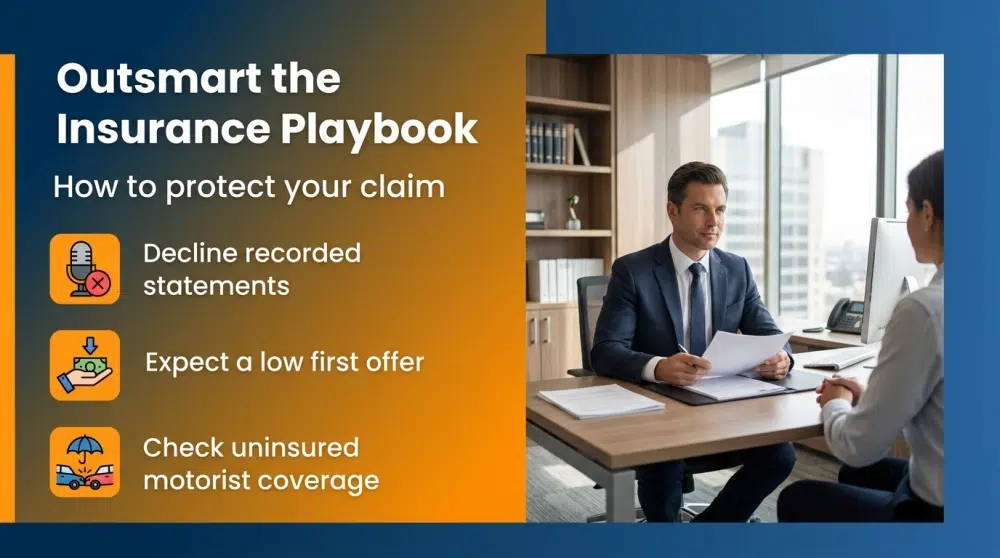
Outsmart the Insurance Playbook — How to protect your claim: Decline recorded statements; Expect a low first offer; Check uninsured motorist coverage

Low initial offers are standard. An insurer’s first offer in a Chicago pedestrian injury case is almost never close to what the claim is actually worth, particularly in serious injury cases. Adjusters are trained to move cases off the books quickly and cheaply. An attorney who has seen a range of settlement outcomes in Cook County pedestrian cases is in a far better position to evaluate an offer than a client seeing their first one.

If the at-fault driver was uninsured or underinsured, your own auto policy’s uninsured and underinsured motorist coverage may apply, even as a pedestrian. Many people do not realize that UM/UIM coverage can protect them in a pedestrian injury. It is worth reviewing your own policy before concluding that coverage is unavailable.

For a deeper look at how GoSuits builds and pursues these claims in Chicago, our Chicago personal injury team handles the full range of injury cases in Cook County and can walk you through what your specific situation looks like.

What to do in the days after a pedestrian injury in Chicago
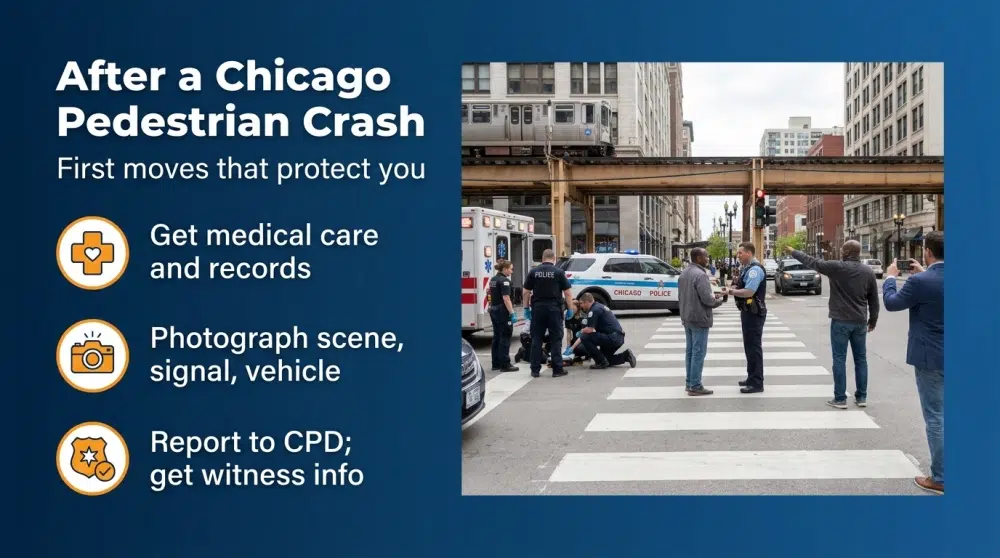
After a Chicago Pedestrian Crash — First moves that protect you: Get medical care and records; Photograph scene, signal, vehicle; Report to CPD; get witness info

Get medical care, even if you feel like you might be fine. Pedestrian injuries, particularly head trauma and internal injuries, do not always present symptoms immediately. A hospital or urgent care visit creates a medical record that ties your injuries to the collision date. Leaving and waiting to see how you feel risks both your health and your claim.

If you can at the scene, photograph everything. The vehicle, the crosswalk, the signal state, the surrounding area, any injuries visible on your body. Get the driver’s name, license plate, insurance information, and phone number. Collect contact information from any witnesses present.

Report the accident to CPD if officers have not already responded. A police report is a foundational document in any Chicago pedestrian injury claim.

Do not speak to the at-fault driver’s insurer before you have legal advice. When the adjuster calls, you can acknowledge the call, take their information, and tell them you will be in touch. That is all you need to do at that point.

Then call an attorney. The sooner the investigation starts, the more evidence there is to work with. If you are ready to talk, schedule a free consultation with our team and we will take it from there.

Understanding the Illinois Health Care Services Lien Act and your recovery

One of the least-discussed but most important parts of a pedestrian injury settlement in Illinois is what happens to the money after it arrives. Hospitals, ER physician groups, and ambulance services that provided care after your accident frequently file liens under the Illinois Health Care Services Lien Act (770 ILCS 23) against your settlement proceeds. Health insurers, including Medicare and Medicaid, may assert their own reimbursement rights.

These liens can be substantial. A pedestrian who receives emergency surgery, a hospital stay, and specialist follow-up care in Chicago can accumulate six figures in medical billing quickly. Without active negotiation of those lien amounts at settlement, a significant portion of the gross recovery flows directly back to the providers, leaving the injured person with far less than the settlement number suggested.

GoSuits negotiates directly with medical lien holders as part of every case. Understanding how the Illinois Health Care Services Lien Act works and what can be negotiated is part of protecting what a client actually receives. The gross settlement figure is only part of the story.
Chicago, Illinois pedestrian injury lawsuit steps and process

1. Collect all available evidence after a pedestrian injury incident

Evidence preservation starts immediately. In Chicago, that means requesting footage from CDOT intersection cameras and nearby business surveillance systems before the footage is overwritten, often within 30 days. It also means photographing the scene, the crosswalk markings, and the vehicle involved; obtaining the CPD crash report; and identifying any witnesses who observed the collision. Where the driver’s speed or the pedestrian’s position is disputed, a qualified accident reconstruction professional may be brought in to analyze the physical evidence.

2. Write a demand letter to the insurance company

Once the injured person has reached a stable point in their medical treatment and the full scope of their injuries is documented, our attorneys prepare a demand letter to the at-fault driver’s liability insurer. The letter sets out the facts of the collision, establishes liability, and presents the full damages picture: medical bills incurred and anticipated, lost wages, and pain and suffering. In Chicago pedestrian cases with serious injuries, the demand also addresses future care needs and the long-term functional impact of the injuries.

3. Negotiate a settlement with the insurance adjuster

The insurer’s first response to a demand letter in a Cook County pedestrian case is almost never the last word. Adjusters are authorized to negotiate, and they typically open with a number well below what the claim supports. Our attorneys counter with the documented evidence, push back on comparative fault arguments that insurers raise under Illinois’s 50-percent bar, and work the negotiation until a fair number is on the table or it becomes clear that settlement is not possible without litigation.

4. File a pedestrian injury lawsuit in Cook County

If settlement negotiations stall or the insurer’s position is unreasonable, we file a personal injury lawsuit in the Circuit Court of Cook County. The complaint sets out the legal basis for the claim, identifies all defendants, and formally begins the litigation process. Filing also preserves the client’s rights under Illinois’s two-year statute of limitations (735 ILCS 5/13-202). Identifying all responsible parties before filing is critical because adding defendants later is procedurally complicated.

5. Begin the discovery process in a lawsuit

Discovery in a Cook County pedestrian injury case involves exchanging interrogatories, requesting documents from the defendant including driving records, phone records, and any telematics data from the vehicle, and taking depositions of the driver, any eyewitnesses, and the parties’ respective accident reconstruction professionals. If a municipal defendant is involved, city records related to the intersection, signal maintenance logs, and prior incident reports become part of the document request.

6. Mediate the case before trial

The Circuit Court of Cook County frequently requires or strongly encourages mediation in personal injury cases before trial. A neutral mediator meets with both sides, separately and together, to work toward a resolution. Mediation in Chicago pedestrian injury cases can be productive because it gives the insurer a realistic picture of what a Cook County jury is likely to do with the evidence. A large number of cases resolve at mediation without going further. When they do not, trial preparation continues.

7. Go to trial in a Chicago pedestrian injury case

A trial in the Circuit Court of Cook County presents the pedestrian injury case to a judge or, in most cases, a jury selected from the community. Our attorneys present the reconstruction evidence, the medical testimony, the witness accounts, and the damages picture, while cross-examining the defense’s witnesses. Cook County juries are experienced with personal injury cases and not easily manipulated by insurer arguments, but a well-prepared, well-documented case is still what it takes to win.

8. Finalize a pedestrian injury settlement

Whether settlement comes before filing, at mediation, or during trial, the finalization process involves a written release and settlement agreement that resolves all claims against the defendant in exchange for the agreed payment. Our attorneys review every line of the release before the client signs, and we negotiate the medical liens held by hospitals, ER groups, and health insurers simultaneously, so that what the client receives reflects genuine lien reduction, not just the gross figure on the check.

9. Appeal a verdict if a legal error affected the outcome

If a trial results in an adverse verdict and there is a legal basis for appeal, such as a prejudicial evidentiary ruling, an improper jury instruction, or a verdict that is against the manifest weight of the evidence, the case may be taken to the Illinois Appellate Court. Appeals in Illinois personal injury cases are procedurally demanding and time-sensitive. Not every unfavorable outcome has a viable appellate basis, and an honest evaluation of that question is part of what we provide after any trial result.

Talk to a Lawyer. NO WIN. NO ATTORNEY FEES.*

Call Us Now

Meet our Chicago pedestrian injury attorneys

It's time we do things the SMART way rather than the hard way
“Hire the Smart Suits for Your Lawsuits”

We'll Evaluate Your Case - Totally Free

(312) 646-4566

Frequently asked questions

How long do I have to file a pedestrian injury claim in Illinois?

Illinois gives you two years from the date of the accident to file a personal injury lawsuit (735 ILCS 5/13-202). That is the deadline for a claim against a private driver or company. If a government entity may share responsibility, the deadline is shorter. Claims against the City of Chicago, the Chicago Park District, or a county fall under 745 ILCS 10/8-101, which allows one year from the date of injury. A claim involving the CTA requires written notice within six months and filing within one year under 70 ILCS 3605/41. Confirm early which deadline applies to you.

More Questions?

Call Our Lawyer

Reviewed by Shawn Hashemi , Attorney · Jurisdiction: Cook County, Illinois

CONTACT US TODAY - 24/7 (312) 646-4566

Limited time to file your claim. Don't wait!

We’re here to help you get the compensation you deserve.

No Win. No Attorney Fees*

Start Your FREE Case Evaluation!