An Uber or Lyft driver’s lack of personal auto insurance does not necessarily leave an injured person without a source of compensation after a Chicago crash.
Under the Illinois Transportation Network Providers Act, required rideshare liability coverage may be maintained by the driver, the transportation network company, or a combination of both. When driver-maintained coverage has lapsed or ceased to exist, the TNC must provide the coverage required by law from the first dollar of the claim.
The amount and type of coverage depend largely on what the driver was doing in the app when the collision occurred. A driver who was waiting for a request is subject to different insurance requirements than a driver who had already accepted a ride or was transporting a passenger.
Medical bills, lost income, and property damage may therefore be addressed through different policies based on the driver’s app status and who caused the crash.
Key Takeaways
- When an uninsured Uber or Lyft driver causes a crash, the primary rideshare coverage is generally the TNC liability coverage required by Illinois law.
- Required coverage may be maintained by the rideshare driver, Uber or Lyft, or both.
- While a driver is logged in and waiting for a request, Illinois requires at least $50,000 per person, $100,000 per incident, and $25,000 for property damage.
- From the moment a ride is accepted until it is completed, Illinois requires $1 million in primary liability coverage.
- UM/UIM coverage serves a different purpose and generally applies when another uninsured or underinsured motorist causes injuries while a passenger is inside the rideshare vehicle.
- The driver’s app status, fault for the collision, and applicable policy terms determine which claim route may be available.

What happens when an uninsured Uber or Lyft driver causes a crash in Illinois?
The fact that an Uber or Lyft driver is uninsured does not necessarily mean that no insurance is available after a crash. Under the Illinois Transportation Network Providers Act (625 ILCS 57/10), required rideshare insurance may be maintained by the driver, the transportation network company (TNC), or a combination of both. If driver-maintained insurance has lapsed or ceased to exist, the TNC must provide the insurance coverage required by Illinois law.
The insurance available depends on the driver’s status in the rideshare app at the time of the accident. Whether the driver was waiting for a ride request, traveling to pick up a passenger, or transporting a passenger helps determine which policy may respond to the claim.
Why Rideshare Accidents Are Different From Ordinary Car Accidents
Rideshare accidents often involve multiple insurance policies instead of a single auto insurance policy. Many of the liability issues resemble those involved in other Chicago car accident claims, but rideshare cases also require determining which policy applied at the time of the crash.
Which insurer handles the claim depends on factors such as the driver’s app status, who caused the accident, and the insurance available under Illinois law.
As a result, determining the applicable coverage is often more complex than in a typical motor vehicle accident.
The Illinois Transportation Network Providers Act (625 ILCS 57) Explained
The Illinois Transportation Network Providers Act (625 ILCS 57) establishes insurance requirements for transportation network companies operating in Illinois.
Among other provisions, the Act requires specified insurance coverage while a driver is using the rideshare platform, with the required coverage changing as the driver’s activity changes.
These statutory insurance requirements form the basis for determining which policy may apply after a rideshare accident. The next section explains how coverage changes based on the driver’s status in the app and why that distinction is important when evaluating a claim.
How does Uber and Lyft insurance coverage work by ride status?
The insurance available after an Uber or Lyft accident depends on what the driver was doing in the rideshare app at the time of the crash. Under the Illinois Transportation Network Providers Act, different insurance requirements apply depending on whether the driver was using the vehicle for personal purposes, waiting for a ride request, traveling to pick up a passenger, or transporting a passenger.
Uber and Lyft Insurance Coverage by Ride Status |
|||
|---|---|---|---|
| Ride Status | Driver Status | Liability Coverage | UM/UIM Coverage |
| App Off | Personal Use (Not Logged Into the Rideshare App) | Driver’s Personal Auto Insurance | Any UM/UIM Coverage Available Under Applicable Personal Policies |
| App On, Waiting for a Ride Request | Available to Accept Rides | At Least $50,000 per Person, $100,000 per Incident for Death or Bodily Injury, and $25,000 for Property Damage | Not Required Under 625 ILCS 57/10 for This Status |
| Ride Accepted | Traveling to Pick Up a Passenger | $1 Million Primary Liability Coverage | Not Required Under 625 ILCS 57/10 for This Status |
| Passenger Onboard | Passenger in the Vehicle Until the Trip Ends | $1 Million Primary Liability Coverage | $50,000 UM/UIM Coverage Required |
App Off
When the rideshare app is turned off, the driver is using the vehicle for personal purposes, and the TNC insurance requirements generally do not apply. A claim would ordinarily begin with the driver’s personal auto policy. If the driver is uninsured, other potentially applicable coverage, including coverage available under an injured person’s own policy, may need to be evaluated.
App On, Waiting for a Ride Request
Once the driver logs into the rideshare app and is available to accept ride requests, Illinois law requires liability coverage of at least $50,000 per person, $100,000 per incident for death or bodily injury, and $25,000 for property damage. If driver-maintained insurance has lapsed or ceased to exist, the transportation network company must provide the required coverage.
Ride Accepted
After the driver accepts a ride request, Illinois law requires $1 million in primary liability coverage while the driver is traveling to pick up the passenger. This higher level of coverage continues throughout the trip.
Passenger Onboard
Once the passenger enters the vehicle, the $1 million primary liability coverage continues. Illinois law also requires at least $50,000 in uninsured/underinsured motorist (UM/UIM) coverage during this portion of the trip. This UM/UIM coverage generally applies when another uninsured or underinsured motorist causes the accident, rather than when the rideshare driver is the at-fault uninsured driver.
Who is legally responsible when the at-fault driver has no insurance?
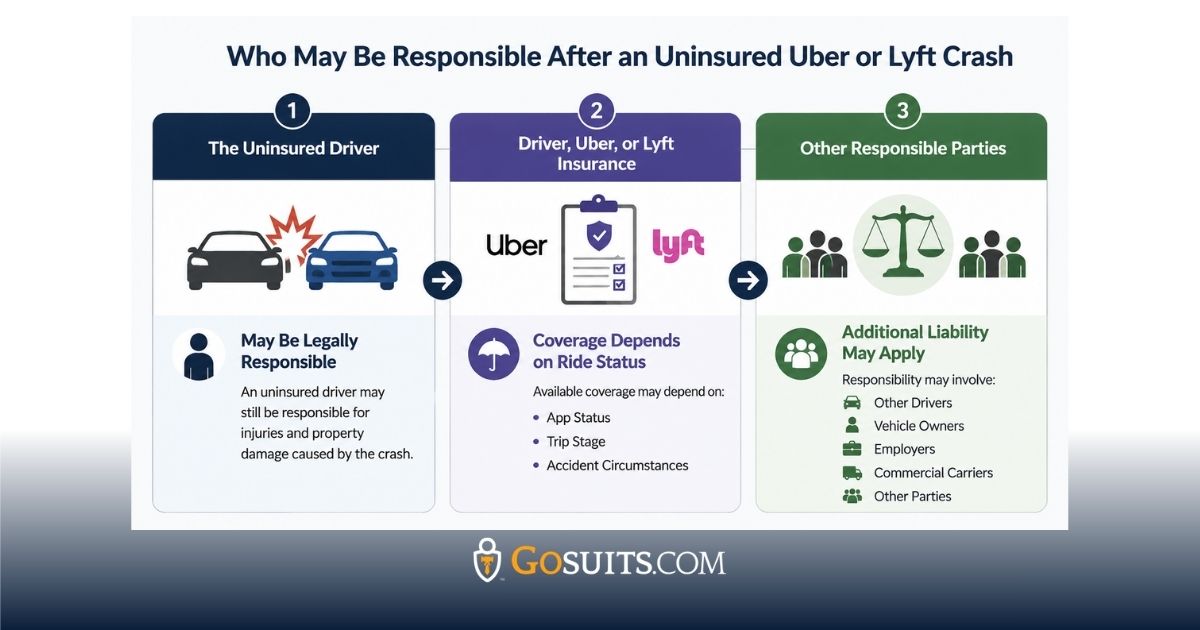
When an uninsured Uber or Lyft driver causes a crash, determining who is legally responsible is different from determining which insurance policy may pay the claim.
The at-fault driver may be legally liable for the accident, while one or more insurance policies may provide coverage depending on the driver’s status in the rideshare app and the circumstances of the collision.
The Uninsured Driver
An Uber or Lyft driver who negligently causes an accident may be legally responsible for the resulting injuries and property damage, even if they do not have valid personal auto insurance. However, the absence of applicable personal insurance may make it especially important to identify any TNC coverage and other insurance policies that may respond to the claim.
Insurance Maintained by the Driver, Uber, or Lyft
If the driver was using the rideshare app at the time of the accident, insurance required under the Illinois Transportation Network Providers Act may provide coverage depending on the driver’s ride status and the applicable policy terms.
For example, different insurance requirements apply when a driver is waiting for a ride request than when a ride has already been accepted or a passenger is in the vehicle. Determining which coverage applies often requires reviewing the driver’s app activity, the timing of the trip, and the facts of the accident.
Other Potentially Responsible Parties
Some rideshare accidents involve more than one at-fault party. Depending on the circumstances, another motorist, a vehicle owner, an employer, a commercial carrier, a manufacturer, or another party may also bear responsibility.
Illinois follows a fault-based system, so each potentially responsible party may be evaluated based on their role in causing the accident.
How do you file an insurance claim after an uninsured rideshare driver causes a crash?
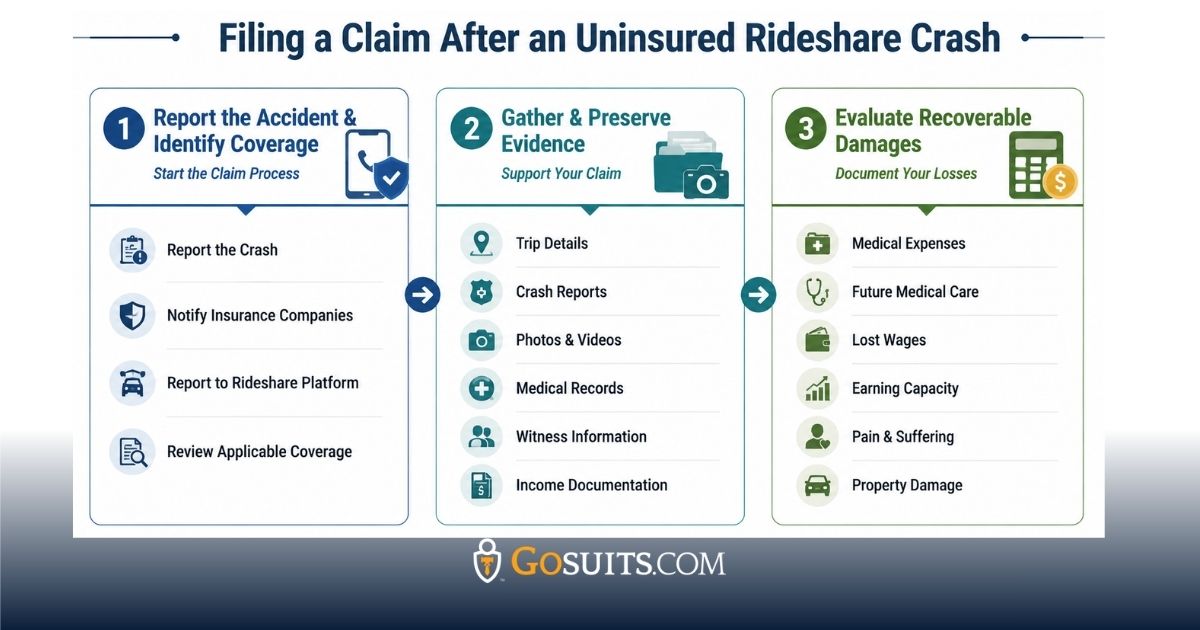
A claim involving an uninsured Uber or Lyft driver generally begins by reporting the accident to the appropriate insurance company and the rideshare platform. The next step is determining which insurance policy applies based on the driver’s ride status at the time of the collision.
Depending on the circumstances, the claim may involve the driver’s personal insurance, the rideshare coverage required under Illinois law, or another applicable insurance policy.
Because rideshare accidents can involve multiple insurers and overlapping coverage questions, preserving evidence and reporting the accident promptly can help support the claims process.
What Documentation Strengthens a Chicago Rideshare Claim?
The following documentation may help support a rideshare accident claim:
- Screenshots of the Uber or Lyft trip confirmation and ride details
- The Illinois Traffic Crash Report or other law enforcement documentation
- Photographs or videos of the accident scene, vehicle damage, and visible injuries
- Contact information for witnesses
- Medical records, treatment notes, and medical bills
- Documentation of lost wages or other income-related losses
- Vehicle repair estimates or property damage records, when applicable
- A written request to preserve rideshare trip records, GPS data, and in-app communications
- Correspondence with insurance companies regarding the claim
Keeping these records organized can help establish how the accident occurred, the injuries sustained, and which insurance coverage may apply.
What Damages Can Be Recovered?
The damages available after an Illinois rideshare accident depend on the facts of the case, the applicable insurance coverage, and Illinois law. Individuals with questions about pursuing compensation after a serious injury may benefit from speaking with a Chicago personal injury attorney to better understand their legal options.
In qualifying claims, compensation may include:
- Medical Expenses: Reasonable and necessary medical treatment related to the accident.
- Future Medical Care: Anticipated medical treatment supported by the available evidence.
- Lost Wages: Income lost while recovering from accident-related injuries.
- Loss of Earning Capacity: Reduced ability to earn income because of long-term or permanent injuries.
- Pain and Suffering: Physical pain and emotional suffering resulting from the accident.
- Loss of Normal Life: The impact of the injuries on everyday activities and quality of life.
- Property Damage: Damage to a vehicle or other personal property, when applicable.
The damages available in any case depend on the evidence, the applicable insurance policy, and Illinois law. If a rideshare accident results in a fatal injury, surviving family members may wish to speak with Chicago wrongful death attorneys to better understand the legal options that may be available under Illinois law.
Does Illinois comparative negligence affect your recovery?
Yes. Illinois follows a modified comparative negligence rule under 735 ILCS 5/2-1116. If you are partly responsible for a rideshare accident, your compensation may be reduced by your percentage of fault. However, you may still recover damages as long as your share of fault is 50% or less. If you are found to be more than 50% at fault, you generally cannot recover damages from another at-fault party.
For example, if your total damages are $100,000 and you are found 20% at fault, your potential recovery would generally be reduced by 20%, resulting in $80,000. If you were found 50% at fault, you could generally still recover 50% of your damages. If you were found 51% at fault, you would generally be barred from recovering damages under Illinois law.
Comparative negligence can also apply when more than one driver contributes to a rideshare accident. Insurance companies and, if necessary, the courts may evaluate the actions of each party when determining fault. Evidence such as police reports, witness statements, photographs, and rideshare trip records can help establish how the collision occurred.
How long do you have to file a rideshare accident lawsuit in Illinois?
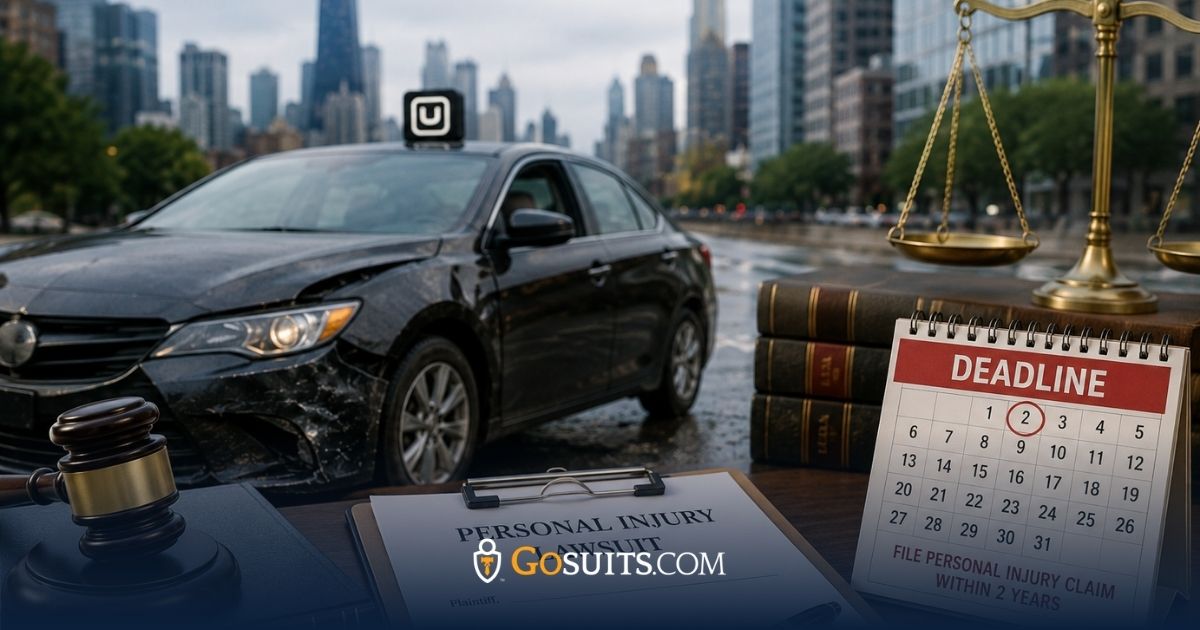
For most personal injury claims arising from a motor vehicle accident, Illinois law generally requires a lawsuit to be filed within two years from the date of the accident under 735 ILCS 5/13-202. Missing this deadline may prevent you from pursuing a personal injury lawsuit. However, insurance policies may require claims to be reported sooner, and certain cases, such as those involving public entities or other special circumstances, may be subject to different legal requirements or deadlines.
Although two years may seem like a long time, it is generally best to act as soon as possible. Evidence in a rideshare accident, including trip records, GPS data, in-app communications, and witness information, may become more difficult to obtain over time. Promptly reporting the accident and preserving available evidence can help support your claim.
FAQs
What if I wasn't wearing a seatbelt during the crash?
Not wearing a seat belt does not automatically prevent you from pursuing compensation after an Illinois motor vehicle accident. Under 625 ILCS 5/12-603.1, failure to wear a seat belt may not be treated as evidence of negligence, limit an insurer’s liability, or reduce recovery for damages arising from the ownership, maintenance, or operation of a motor vehicle.
Can I sue both the uninsured driver and Uber or Lyft?
Potentially. Depending on the circumstances, a claim may involve the at-fault driver, one or more applicable insurance policies, or other responsible parties. The available claims depend on the facts of the accident and Illinois law.
Does it matter if I was a pedestrian or another driver instead of a passenger?
Yes. Passengers, pedestrians, cyclists, and occupants of other vehicles may all have legal rights after a rideshare accident. The insurance coverage available depends on how the accident occurred and the driver’s status in the rideshare app.
What if the rideshare driver was also partly at fault?
Illinois follows a modified comparative negligence rule. If more than one party contributed to the accident, fault may be shared, and any compensation may be adjusted based on each party’s percentage of responsibility.
How long does a claim like this typically take to resolve in Chicago?
There is no standard timeline for a rideshare accident claim. The time required depends on factors such as the severity of the injuries, disputes over liability, and the complexity of the insurance claim.
Will Uber or Lyft automatically pay for my injuries?
Not necessarily. The insurance available depends on the driver’s status in the app, the applicable policy, and the facts of the accident. Determining which coverage applies often requires reviewing the circumstances of the crash.
What should I do immediately after an Uber or Lyft accident in Chicago?
Seek medical attention if needed, report the accident to law enforcement and the rideshare platform, document the scene, and preserve your trip information and other evidence as soon as possible.