















Where do El Monte injury cases usually start?
Most of the El Monte cases we see begin on a handful of familiar roads. Peck Road runs north and south through the city and crosses Valley Boulevard. Valley Boulevard is lined with driveways, shops and bus stops, which means drivers are pulling in and out all day. Flair Drive, Garvey Avenue and Santa Anita Avenue add their own turning conflicts, and the freeway ramps feed fast traffic into the city’s stop-and-go grid.
Rear-end collisions are common wherever a freeway exit lets out onto a signal. Left-turn crashes happen at wide intersections where oncoming traffic is hard to judge. Pedestrian injuries cluster around El Monte Station, where the bus terminal draws a steady flow of people crossing between platforms, parking structures and the street.
None of this means a crash was inevitable. It means that when a case comes in, we already know which signal timing, sight line or driveway to check first.
You were hurt this week. What should you do now?
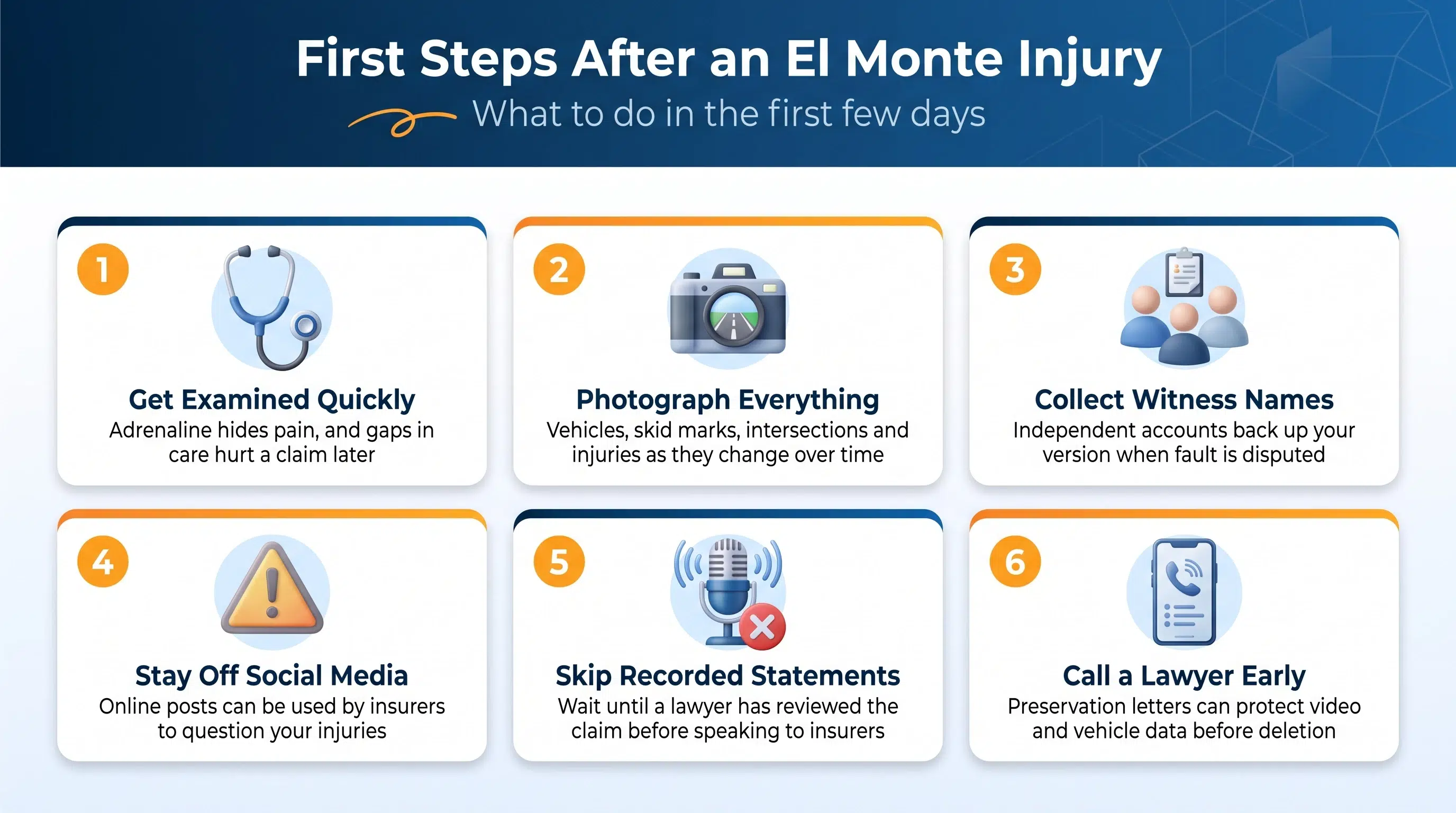
See a doctor, even if you think you got off lightly. Adrenaline hides pain, and a gap between the crash and your first appointment is something an insurer will point to later.
Take photos of everything: the vehicles, the road, skid marks, the intersection from each direction, and your injuries as they change. Write down the names of witnesses. Do not post about the incident online, and do not agree to a recorded statement with the other driver’s insurer until you have talked to a lawyer.
Then call. Our Los Angeles personal injury team can send preservation letters to the companies that hold video, vehicle data and maintenance records before they are routinely deleted.
Who is responsible besides the driver who hit you?
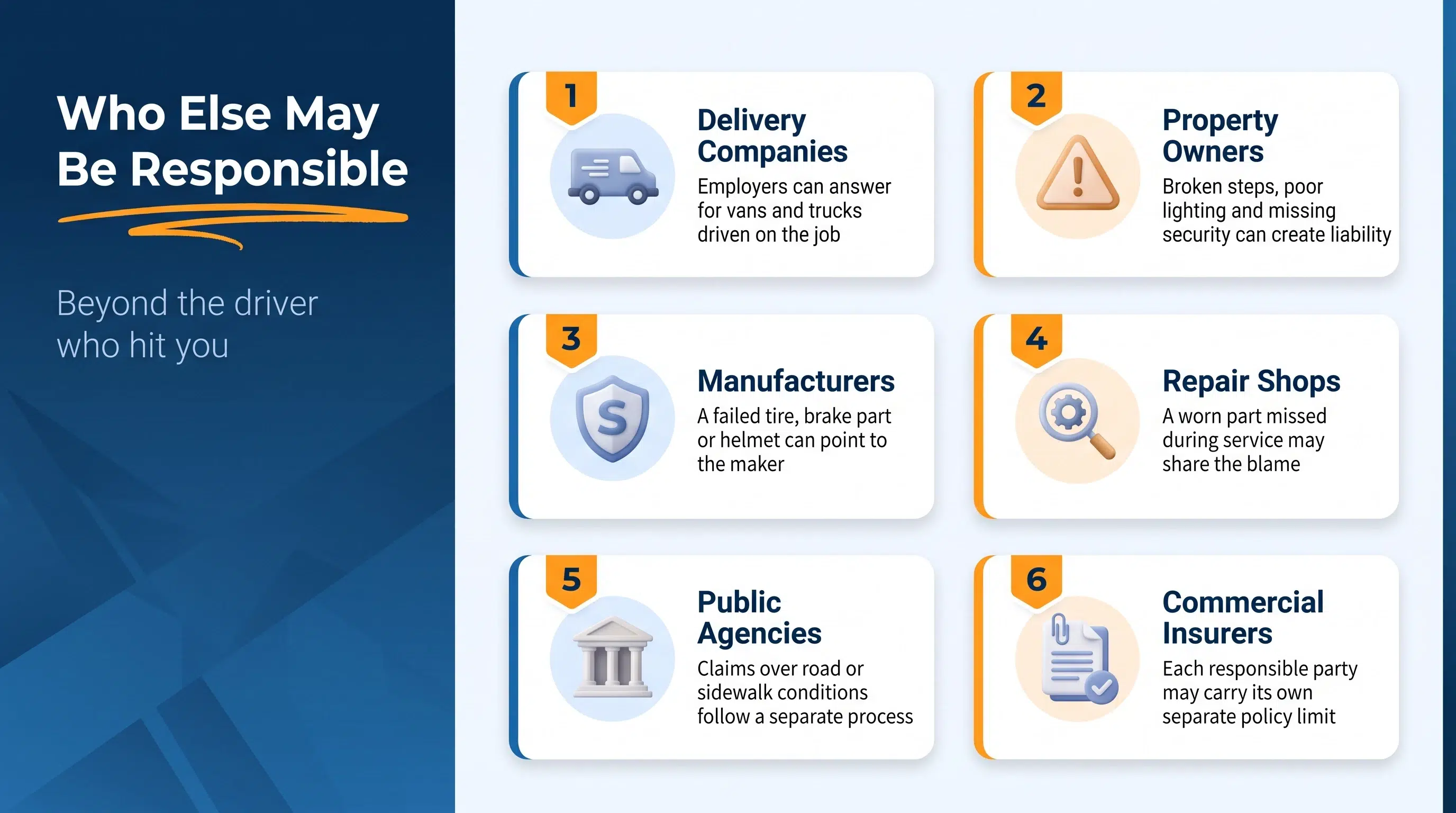
A single at-fault driver is only one possibility. El Monte sits near freight corridors and warehouse districts, so a delivery van, a box truck or a rideshare car may be involved, and each of those can bring an employer, a contractor or a commercial insurer into the case.
A property owner can be responsible when a fall or an assault happens because of a broken step, bad lighting or missing security. A manufacturer can be responsible when a tire, a brake part or a helmet fails. A repair shop that missed a worn component may share the blame.
Finding every responsible party matters because each has its own policy limit. A minimum-limits policy on one driver may not come close to covering a spinal injury, but a second policy might.
Walking and riding near El Monte Station
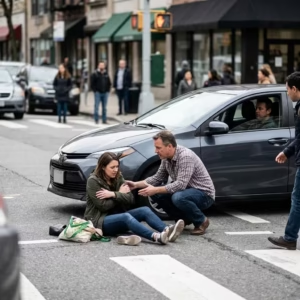
People who take the bus or walk to the station are exposed in ways drivers are not. A pedestrian crossing mid-block between a bus bay and a parking structure may be partly blamed by an insurer, even when the driver was speeding through a crowded area.
If a missing curb ramp, a broken sidewalk or a poorly designed crossing contributed, the claim may be against a public entity, and that changes the clock. A claim against a city, county or transit agency generally has to be presented in writing within six months under Government Code section 911.2, far sooner than an ordinary lawsuit. Our article on dangerous conditions on public property explains how those claims work.
Do not wait to find out whether a public agency is involved. Tell us about the location early and we will check who owns the road, the sign or the curb.
Delivery vans, rideshare cars and other commercial vehicles
Package vans, box trucks and rideshare drivers are part of daily traffic in El Monte, and they change the shape of a case. The driver may be an employee, a contractor or a gig worker, and which one it is decides whether a company can be held responsible and how many insurance policies sit behind the vehicle.
Commercial vehicles also leave records that ordinary cars do not. Route logs, dispatch messages, dash camera footage, app data showing whether a rideshare driver was logged in with a passenger, and driver training files can all matter. Companies keep some of that data for a short time only, so the first letter we send is often a request that it be kept.
Insurance is different too. A rideshare driver’s coverage depends on what the app showed at the moment of the crash, and a delivery company may carry a policy with much higher limits than a private driver. We sort that out early so that you do not settle against the wrong policy.
Riding a motorcycle or bicycle through El Monte
Riders have no frame around them, so a collision that would be a fender-bender in a car can mean fractures, road rash or a head injury. Insurers sometimes argue that a rider should have been more visible or was lane-splitting, and those arguments need an answer built on witness accounts and the position of the vehicles after impact.
Doors opening into a bike lane, drivers turning right across a cyclist, and left turns into an oncoming motorcycle are the patterns we see most. Helmet use and protective gear can come up in the discussion of damages, so photographs of the gear and the damage to it are worth keeping.
What can an injured person recover?
The categories are familiar. Past and future medical expenses, lost wages and reduced earning ability make up the economic losses. Pain, limits on daily activities and emotional distress are the non-economic losses, and they are often the largest part of a serious claim even though they have no receipt attached.
Property damage, such as a totaled car or a damaged bike, is handled separately and usually resolves faster. In a death case, the family may pursue funeral costs, lost financial support and the loss of the relationship.
The right number comes from the records, not from a formula. A settlement offered before treatment is finished tends to leave out care that comes later, which is one reason we avoid rushing a claim.
Police report: El Monte police or the CHP?
Who wrote the report depends on where you were hurt. Crashes on city streets are normally handled by the El Monte Police Department, whose station is at 11333 Valley Boulevard. Crashes on the I-10, the I-605 or other state freeways are handled by the California Highway Patrol.
A report is helpful, but it is one officer’s summary, often written without all the facts. Errors in who was heading which way, or what a witness actually said, are common enough that we compare every report with the physical evidence and the witnesses. If a report gets something wrong, there are ways to challenge it, and the earlier we start, the better.
How do insurers decide what an injury claim is worth?
Adjusters start from the medical bills and treatment notes. Lost income, future care and the way the injury changes ordinary life come next. A claim with steady treatment and clear records is easier to value than one with gaps.
California uses pure comparative fault. If a jury finds you partly responsible, your recovery is reduced by your share, but you can still recover. That is why adjusters work so hard to assign you a percentage, and why we gather the evidence that keeps it low.
One more point deserves attention. The gross settlement is not what lands in your account. Hospitals, ER groups and health plans may assert liens against the recovery. We negotiate those liens down at settlement so more of the money reaches you.
Hurt at a warehouse or on a job site: workers’ compensation or a lawsuit?
El Monte and its neighbors have plenty of warehouses, shops and light industrial sites, and injuries there are routine. Workers’ compensation is usually the path against your own employer, and it pays medical care and part of lost wages regardless of fault.
It is not always the whole story. If a forklift maker, a contractor on site, an outside driver or a property owner other than your employer contributed, a separate injury lawsuit against that party may be possible, and it can include pain and suffering, which workers’ compensation does not. We look at who else was involved before the file is closed.
How long do you have to file in California?
For most personal injury claims, the deadline to file a lawsuit is two years from the date of injury under California Code of Civil Procedure section 335.1. The same section covers a death caused by another person’s wrongful act. Under section 377.60 a wrongful death claim can be brought by close family members, such as a spouse, domestic partner or children, or by the decedent’s personal representative.
Claims against public entities follow the six month rule mentioned above. Some exceptions can extend or shorten these periods, such as an injury to a child, so do not assume a date from a general article.
An El Monte injury lawsuit is filed in Los Angeles County Superior Court. Which courthouse hears a case depends on the court’s filing rules at the time, so we confirm that before we file. If you want a lawyer to check your dates, schedule a free consultation and bring what you have.
Which El Monte cases do we take?
Most of the El Monte cases we see begin on the road. Collisions on the I-10 and the I-605, and turning crashes on Peck Road and Valley Boulevard, are handled by our Los Angeles County car accident lawyers. When a delivery van, a box truck or a semi is involved, a carrier and its insurer enter the case, and our Los Angeles County truck accident team works it from the start.
When a crash or another person’s negligence takes a life, the family’s claim follows its own rules about who may bring it and what it can recover. Our Los Angeles County wrongful death lawyers handle those cases. We also take pedestrian, motorcycle, bicycle, workplace and premises injury cases from El Monte.