






































Why you should not wait to act after a scooter or e-bike crash
The device may disappear quickly. A rental scooter or e-bike usually goes back into the company’s fleet after a crash. It may be collected, repaired and sent back out within days, and with it goes the best evidence of a brake or throttle problem. If you own the device, keep it exactly as it is after the crash. Do not repair it, sell it or send it back to the manufacturer before a lawyer has a chance to have it inspected.
Ride data has a shelf life. Rental apps typically log when a ride started, the route and the speed along the way. Many personal e-bikes and fitness apps record similar data. That information can help show you were riding lawfully, but companies do not keep it forever. A written request for the data and a preservation letter sent early give it a far better chance of being saved.
Police do not always write a full report. When a car is involved, officers usually document the crash. When a rider falls because of a pothole or a sudden scooter failure, there may be no police report at all. Reporting the crash, getting the report number and writing down your own account while it is fresh can fill that gap.
Camera footage and injuries both change fast. Traffic cameras and storefront security systems often record over themselves within days or weeks. Your injuries change, too. Road rash and bruising fade, so photographs from the first few days, along with prompt medical records, help show how serious the crash was.
The statute of limitations for most scooter and e-bike injury claims is two years in California, Texas and Illinois. A claim against a city over a dangerous road condition can carry a much shorter deadline, so it is worth getting started early.
Who can actually be held responsible?
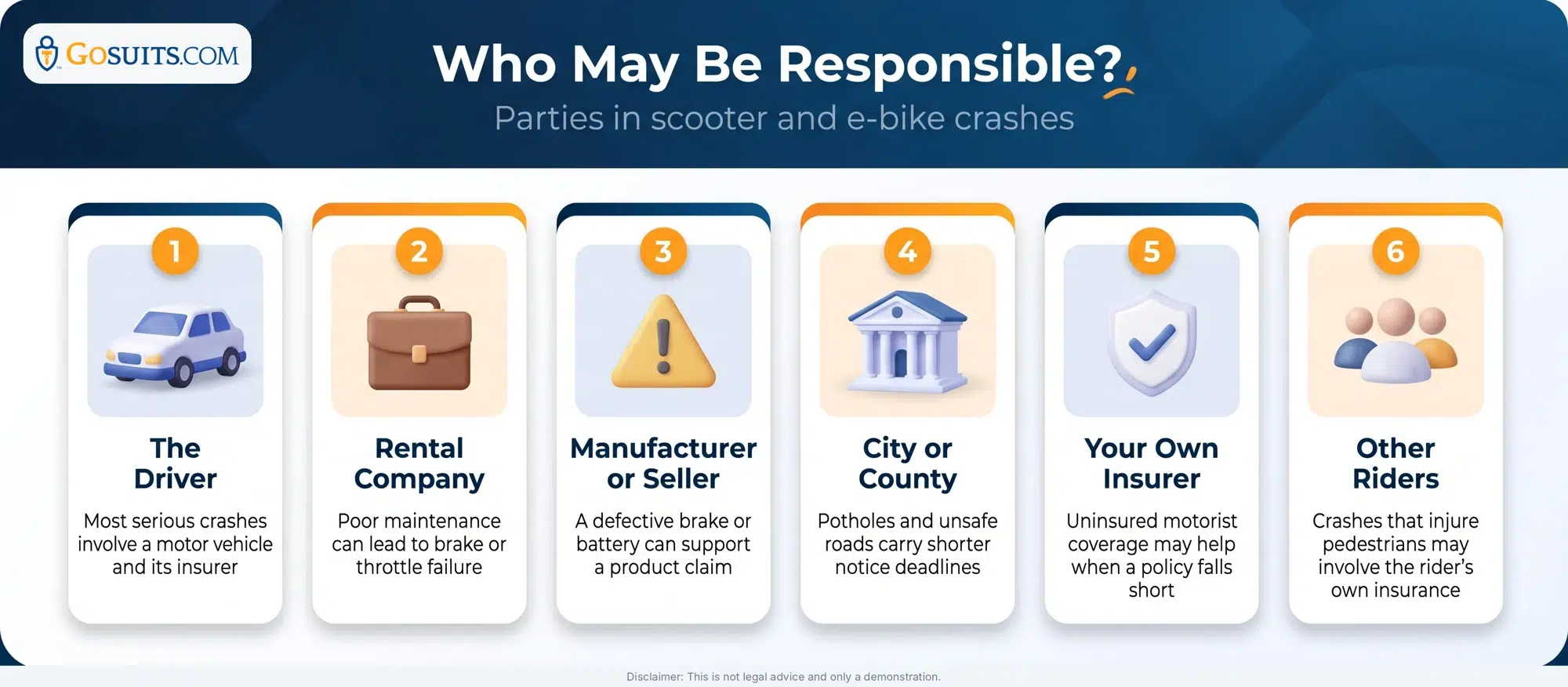
In most serious scooter and e-bike crashes, a driver is the main responsible party. CPSC data shows motor vehicle collisions were involved in 140 of the 206 e-scooter deaths and 170 of the 310 e-bike deaths it reviewed from 2017 through 2024. Other parties can share the blame, though, depending on what caused the crash.
A rental company may be responsible when a poorly maintained scooter or bike fails mid-ride. Brake problems came up in 40 of the 189 e-scooter incidents CPSC investigated. Rental apps usually require riders to accept terms of use that include liability waivers and arbitration clauses, but those terms do not always hold up, particularly when the company’s own negligence caused the injury. A manufacturer or seller can be held responsible for a defective product, like brakes that fail or a battery that catches fire. A city or county may be involved when a pothole or a poorly marked construction zone caused the fall, although government claims carry their own notice rules and shorter deadlines.
Insurance is often the trickiest part of these cases. When a driver is at fault, their auto liability policy is usually the first source of payment. If that coverage falls short, your own auto policy’s uninsured or underinsured motorist coverage may help, and in Texas, personal injury protection (PIP) may cover medical bills and lost wages. Which of those coverages apply to someone on a scooter or e-bike depends on the policy language, so each policy needs a close read.
What situations lead to scooter and e-bike crashes?
Riders share the road with cars but take up far less space, which makes them easy to overlook. Some of the most common situations include:
- Turning drivers: A driver turning right across a bike lane, or turning left in front of an oncoming rider, is one of the most frequent causes of serious crashes. Drivers often misjudge how fast an e-bike is moving.
- Opening car doors: A parked driver who opens a door without checking can leave a rider with nowhere to go, especially in narrow bike lanes next to parked cars.
- Defective or poorly maintained devices: Brake failures, throttles that stick, and loose handlebars or wheels can throw a rider without warning. Lithium-ion battery fires are a separate hazard that can cause burns even when no one is riding. California now requires batteries sold for e-bikes and e-scooters to meet recognized safety standards (SB 1271), so a battery that fails may point to a violation worth investigating.
- Dangerous road conditions: Small scooter wheels do not handle potholes, cracks or debris the way a car tire does. A hazard a driver would not notice can cause a rider to lose control.
- Low visibility: CPSC found that about one in five injured e-scooter riders in 2024 said it was dark or hard to see. Drivers are still expected to watch for riders, but poor lighting gives insurers an argument.
- Rider-on-pedestrian collisions: Scooters and e-bikes can also injure people on foot. Those claims may involve the rider’s own insurance or, for a rental, the rental company.
State rules shape how fault is argued, because insurers often look for any rule the rider may have broken:
How the rules differ in California, Texas and Illinois
California. E-scooter riders must be 16 or older with a driver’s license or permit, stay at or under 15 mph, keep off sidewalks, and ride alone. Riders under 18 must wear a helmet. E-bikes fall into three classes. A helmet is required under 18 on any class, and Class 3 riders must be 16 or older and wear a helmet at any age.
Texas. E-scooters are generally allowed on streets posted 35 mph or less and on sidewalks unless a city restricts them, and bicycle rules apply. E-bikes are generally treated like bicycles, and there is no statewide helmet law.
Illinois. Where e-scooters are allowed today depends on each city’s authorization, and Chicago runs its own scooter program with its own rules. A statewide law signed in August 2026 takes effect January 1, 2027 and sets a minimum rider age of 16 and a 15 mph cap. E-bikes have three classes, Class 3 riders must be 16 or older, many cities bar them from sidewalks, and there is no statewide helmet law for adults. From January 1, 2027 the statewide law sets minimum ages of 15 (Class 1 and 2) and 16 (Class 3), and treats devices that can exceed 28 mph as motor vehicles that need a license, insurance and registration.
Breaking one of these rules does not automatically end a claim. In all three states, it may reduce what you can recover, and it matters most when the violation actually played a part in the crash.
How do scooter and e-bike injuries differ from other personal injury cases?
A rider has almost no protection in a crash, and the small wheels and upright stance of a scooter make it easy to be thrown forward. According to CPSC, fractures are the most common injury treated in emergency rooms, and the head and neck are among the most frequently injured areas.
Helmet use is often low. In CPSC’s 2024 follow-up study, only 18% of injured e-scooter riders were wearing a helmet, compared with 40% of injured e-bike riders. Expect an insurer to argue that a missing helmet made a head injury worse, even where no law required one. That argument does not erase a driver’s fault, and how much weight it carries varies by state and by the facts.
These cases can also involve injuries that do not come from the impact at all. Battery fires can cause serious burns, and those claims usually turn on product liability rather than traffic law. The best answer to most insurer arguments is the same in every case: clear evidence of what caused the crash and complete medical records from the start.
How is a scooter or e-bike accident case valued?
The value of a scooter or e-bike claim depends on how badly someone was hurt, the treatment they need, and how the crash has affected their daily life and work. A few key factors shape the number:
- Medical expenses: Emergency care, imaging, surgery and physical therapy are documented through medical records and itemized bills. Future care, such as hardware removal after a fracture repair, is estimated with input from the client’s doctors.
- Lost income: Lost wages cover the paychecks missed during recovery. For delivery riders and others who rely on an e-bike for work, an injury can affect both the job and the means of getting there, and the claim may include future lost earning capacity.
- Non-economic damages: Pain, emotional distress, scarring and the loss of activities someone used to enjoy all count toward value. California, Texas and Illinois do not cap these damages in a standard injury case, but their weight depends on how well they are documented over time.
- Shared fault: In all three states, compensation is reduced by the rider’s share of responsibility. Texas and Illinois go a step further and bar recovery once that share passes 50%, which is why insurers focus so closely on speed and helmet use.
- Available insurance: The minimum bodily injury coverage a driver must carry is $30,000 per person in California and Texas, and $25,000 per person in Illinois. Serious injuries can easily go beyond that. A product liability claim against a manufacturer or rental company may open other sources of recovery.
- Medical liens: Hospitals, providers who treated on a lien, and health insurers that paid for care may be entitled to repayment from the recovery. GoSuits negotiates these balances before the case closes, because every dollar saved on a lien goes to our client.
Find out what your claim may be worth. Schedule a free consultation with our team, and we will review your case and walk you through your options.
What should you do in the days after a scooter or e-bike crash?
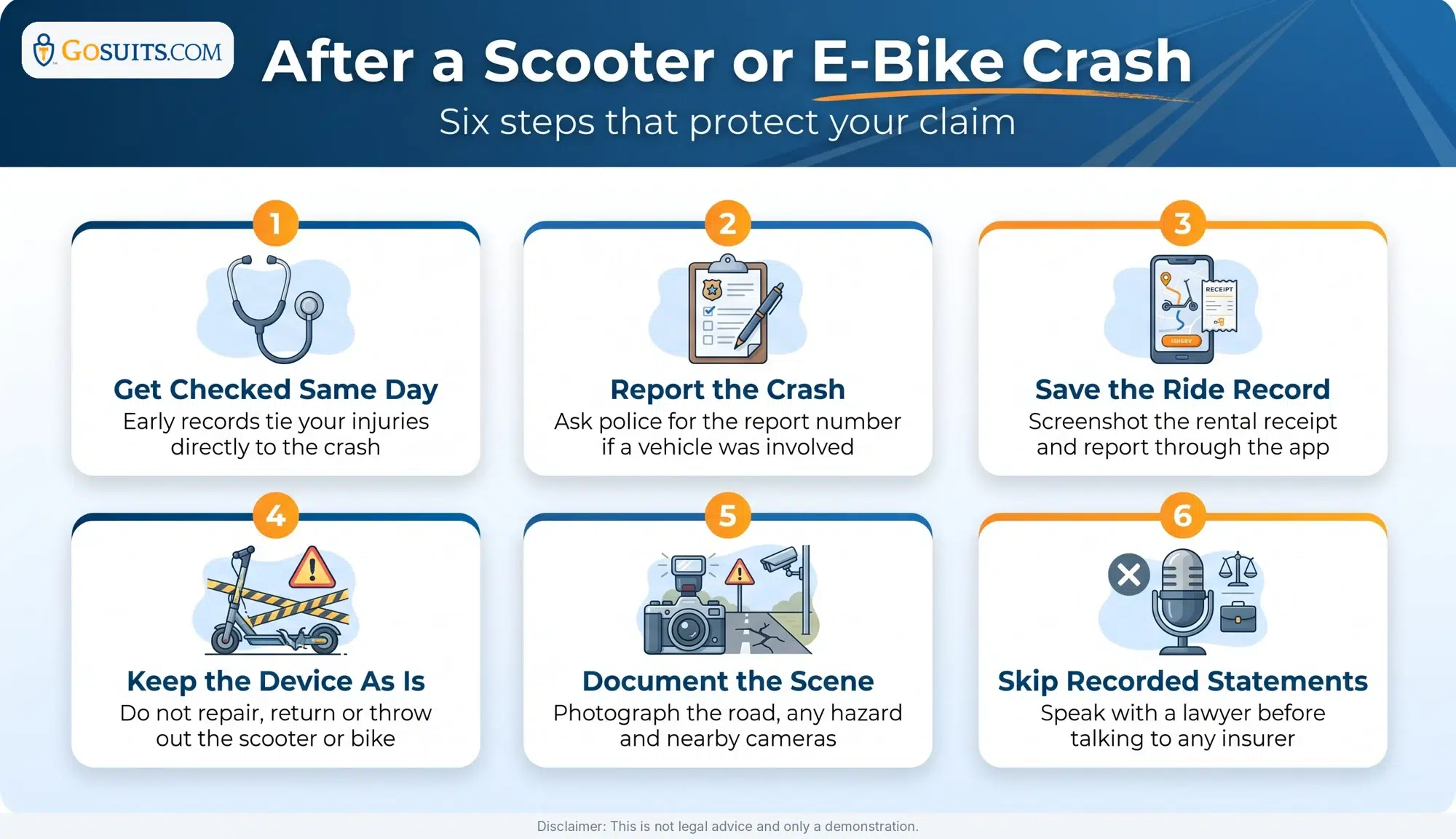
Get medical care the same day. Your health comes first. Get checked out the same day, even if you were able to stand up and walk away. Head injuries and some fractures do not always show their full effect right away. A same-day visit also creates a record that ties your injuries to the crash.
Report the crash and save the ride record. Call the police if a vehicle was involved, and ask for the report number. If you were on a rental, screenshot the ride receipt and report the crash through the app, but keep your description short and factual. Get the driver’s name, plate and insurance information if you can.
Keep the scooter or e-bike as it is. If you own the device, do not repair it, throw it out or ship it back to the manufacturer. If it was a rental, photograph it from several angles before it is collected, including the brakes, tires and any visible damage. Keep your helmet and any damaged gear, too.
Document the scene. Photograph the road surface, the intersection, and anything that played a part in the crash, such as a pothole or a parked car. Write down the names and numbers of witnesses, and note any nearby businesses or homes with cameras.
Speak with a scooter and e-bike accident lawyer first. An adjuster for the driver or the rental company may contact you quickly and ask for a recorded statement. You have no obligation to give one. Before you speak with any insurer, schedule a free consultation with our team. We will review what happened, explain your options, and handle the communication so you can focus on recovering.
Related pages: pedestrian accident lawyers, rideshare accident lawyers, car accident lawyers, product liability lawyers, wrongful death lawyers, Irvine and Chicago personal injury lawyers.