- What we know so far about the Plano tanker truck rollover
- Location, closures, and traffic impacts around Spring Creek Pkwy and Windhaven Pkwy
- Environmental and public health considerations when oil reaches pavement and storm drains
- Who might be liable in a Plano tanker truck crash
- Steps to document the crash and protect your rights
- How to get official records and information
- Insurance and corporate players: what typically happens after a tanker rollover
- Time sensitivity and key Texas deadlines
- Community safety reminders for North DFW drivers near hazardous-material incidents
- Local resources and where to call for help
- Commentary from Gosuits Dallas Personal Injury Attorney
- References
What we know so far about the Plano tanker truck rollover
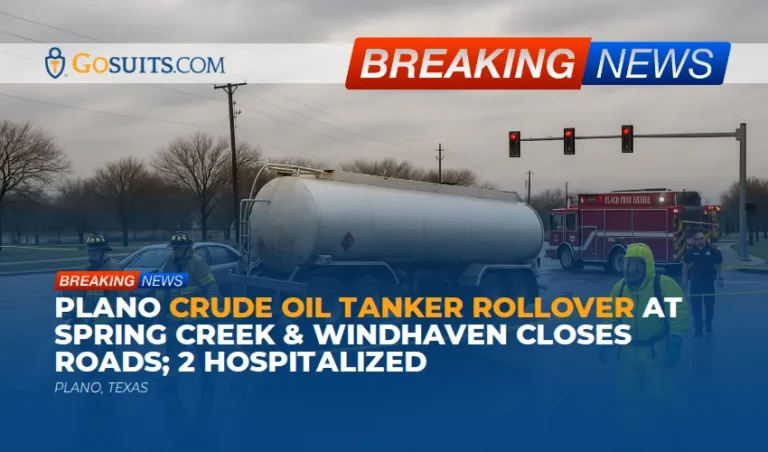
Early Friday afternoon around 1 p.m., a small tanker truck hauling crude oil overturned at Spring Creek Parkway and Windhaven Parkway in Plano. Plano Police, Plano Fire-Rescue, and hazmat crews responded quickly. Two people were transported to a hospital in stable condition. Aerial video showed a significant pool of oil spreading east along Spring Creek Parkway, a white sedan with heavy damage beside the tanker, and a nearby black SUV with airbags deployed. Northbound Windhaven and eastbound Spring Creek were expected to remain closed for an extended period while cleanup proceeded. White Rock Creek runs through the area, so responders worked to keep oil from entering storm drains that ultimately discharge to local waterways. These details come from on-the-ground reporting and public safety updates shared in real time.
Because this is an active investigation and cleanup, facts may be refined as agencies release more information. The core safety priorities are consistent: protect people at the scene, stabilize the tanker and vehicles involved, stop oil from reaching drains and creeks, and clear the roadway safely.
Location, closures, and traffic impacts around Spring Creek Pkwy and Windhaven Pkwy
Spring Creek Parkway is a major east-west corridor in Plano, with Windhaven Parkway feeding northbound traffic toward neighborhoods, schools, and retail spots between the Dallas North Tollway and Preston Road. Midday closures on a Friday ripple quickly. Detours likely extended to Legacy Drive, Parker Road, and the Dallas North Tollway frontage roads as crews managed the spill and vehicle recovery. When oil coats asphalt, responders often lay absorbent booms, sand, and pads, which takes time. The intersection’s proximity to White Rock Creek also makes storm-drain protection a must, which can prolong lane closures.
Anyone traveling between Legacy West, the Shops at Willow Bend area, and neighborhoods along the Windhaven corridor would have seen delays. If you live nearby, expect lingering lane restrictions while street services and environmental teams complete cleanup and pavement treatment to reduce post-spill slick spots.
Environmental and public health considerations when oil reaches pavement and storm drains
Crude oil on pavement presents immediate risks: slip hazards for people on foot near the crash scene, traction loss for vehicles, and hydrocarbon vapors that can irritate eyes and airways. Longer term, responders fight to keep oil out of storm drains because municipal storm systems typically discharge into creeks and lakes without treatment. Federal and state frameworks, including the federal Spill Prevention, Control, and Countermeasure program, require planning to minimize discharges from oil storage and handling activities. Local governments also operate stormwater programs under federal permits that prohibit illicit discharges to storm drains and waterways. Plano’s stormwater management program educates residents and businesses about keeping pollutants out of creeks, which is exactly why crews rapidly blocked drains in this incident [4] [7].
In Texas, most roadway releases of oil and fuel are reported and coordinated with the Texas Commission on Environmental Quality. State guidance covers immediate spill containment and longer-term remediation when needed. TCEQ directs responsible parties to promptly notify proper authorities and prevent entry into water or drains, then conduct or fund cleanup under agency oversight [3]. Where exploration-and-production oil spills are involved, the Texas Railroad Commission can also have jurisdiction, but for roadway transportation incidents TCEQ coordination is common.
For first responders and bystanders, health guidance from federal agencies emphasizes avoiding direct contact with crude oil, staying out of vapors where possible, and allowing trained hazmat teams to handle cleanup. The CDC’s occupational health arm has published advisories related to crude oil hazards during spill response, including skin irritation and respiratory effects, underscoring why perimeters and closures are enforced until conditions are safe [5].

Who might be liable in a Plano tanker truck crash
Determining fault in a rollover with multiple damaged vehicles often requires a thorough investigation. Commercial carriers moving hazardous materials operate under federal hazardous-materials regulations and must follow route, training, placarding, and safety rules. Violations can become evidence of negligence if they contributed to a crash. The Federal Motor Carrier Safety Administration maintains the hazardous materials regulations and industry guidance used by carriers and drivers nationwide [6].
Potentially responsible parties in a tanker rollover may include:
- The tanker driver and motor carrier if driver error, improper loading, inadequate securement, speed relative to the curve, or maintenance failures played a role.
- The shipper or loader if the product was misdeclared, improperly loaded, or overfilled, increasing rollover risk.
- Other motorists if a cut-off, sudden lane change, or impact led to the overturning.
- Vehicle and component manufacturers if a mechanical defect contributed to the loss of control or tank failure after the crash.
- Entities responsible for roadway design or maintenance in limited circumstances where a hazardous condition is proven to have contributed to the crash.
Investigations typically examine dashcam and traffic camera footage, electronic control module data from the truck, maintenance records, driver qualification and hazmat endorsement status, bill of lading information, and skid or yaw marks on the roadway. Witness statements from drivers in the white sedan and black SUV near the overturned tanker could also be decisive.
Steps to document the crash and protect your rights
If you or a loved one was involved or affected, detailing what happened is vital. In the first days, consider the following practical steps while medical care takes priority:
- Photograph and video the scene if it can be done safely after releases are controlled. Capture vehicle positions, damage profiles, deployed airbags, visible skid marks, tire gouges, and any deployed absorbents. Document signage, lane markings, and the view lines approaching the intersection.
- Save your own in-vehicle data including dashcam clips and telematics screenshots that show speed, braking, and GPS position near the time of impact.
- Record your symptoms and care even if you left the scene feeling ok. Some oil-vapor exposures and crash injuries evolve across 24 to 48 hours.
- Preserve communications with insurers, employers, and healthcare providers. Consider maintaining a simple symptom and expense log.
For a structured, local checklist geared to heavy-vehicle cases, see Dallas truck crash evidence checklist for victims. For health monitoring during the first couple of days, this practical guide can help you track concerns your doctor should know about: Dallas accident injury symptoms to watch in the first 48 hours.
When the time is right, it can help to speak with a legal team that regularly handles collisions of this size and complexity. If you want a quick sense of background and fit, you can review our Dallas personal injury team and the kinds of claims we pursue for injured people and families in North Texas.
How to get official records and information
Several agencies keep records that can support claims and help families understand what happened. Here is where to start, and what each record usually contains:
- Plano Police Department crash report. In Texas, law-enforcement crash reports are obtained through the Texas Department of Transportation’s Crash Records Information System. You can search and purchase a certified copy of the CR-3 report online by providing details like date, location, and involved names [1].
- Plano open records request. For 911 audio, CAD logs, photos, or dashcam where releasable by law, submit a public information request to the City of Plano. Some materials can be withheld under state law, but the portal is the right place to start [9].
- Hazardous material release reporting. Where a reportable quantity of oil is released, state reporting to TCEQ and federal notifications may apply. Families and affected property owners sometimes seek confirmation of spill volumes and cleanup steps through TCEQ incident records [3].
- Medical examiner records in the tragic event an involved person does not survive. In Collin County, autopsy and related records are handled by the Medical Examiner’s Office according to state statutes and next-of-kin access rules [8].
- Stormwater and environmental inquiries. For concerns about oil entering local creeks or impacts to trails and parks tied to White Rock Creek, city stormwater staff maintain resources and community reporting channels [7].
When requesting records, include exact date and time, intersection, and known vehicle descriptions to help agencies locate responsive documents quickly.
Insurance and corporate players: what typically happens after a tanker rollover
Commercial carriers that transport crude oil typically maintain multiple layers of insurance, and their claim representatives mobilize fast following a collision. Investigators for carriers often contact other motorists or businesses within hours. It is common for private claims teams to request statements, authorizations for medical records, and vehicle inspections.
People who were injured can benefit from pausing before giving a detailed recorded statement. What you say can be used against you later by an opposing insurer. If a claim involves multiple vehicles, a hazardous material, or serious injuries, talk with a lawyer first about your options and how to navigate insurer requests. It is also common to see overlapping coverages: personal auto policies for private motorists, commercial liability for the trucking company, cargo insurers, and sometimes excess policies. Sorting out primary versus excess layers, subrogation from health insurers, and potential governmental claims for cleanup can be complicated.
If you are evaluating your options and would like to understand your rights and potential next steps, you can always schedule a free consultation. A quick conversation can prevent avoidable mistakes in the early days of a claim.

Time sensitivity and key Texas deadlines
Texas law sets firm deadlines for bringing civil injury claims, including most motor-vehicle cases. For many personal injury actions, the general limitations period is two years from the date of injury, though some claims have shorter or different time rules and notice requirements, especially if a governmental entity is involved [2]. Beyond statutes, important evidence can disappear quickly:
- Traffic camera and private video often overwrite within days or weeks.
- Commercial driver records and electronic logs are subject to regulatory retention periods but are more readily preserved early through a legal hold.
- Vehicle event data and dashcam footage can be lost when vehicles are released or repaired without preservation steps.
Because of these realities, early documentation, measured communications, and timely requests to preserve evidence can make a significant difference in how clearly the crash picture is captured.
Community safety reminders for North DFW drivers near hazardous-material incidents
When you come upon a scene like this one at Spring Creek and Windhaven, the safest move is to keep distance, follow detour signs, and avoid driving through sheen or standing liquid. Even after crews apply absorbents, surfaces can remain slick. If you live along White Rock Creek or use nearby trails, heed any posted advisories until the city declares the area safe.
Commercial hazmat carriers operate under strict rules about training, placarding, and emergency response planning. The FMCSA and allied agencies publish guidance that carriers must follow, which is designed to reduce risks during incidents and to communicate hazards quickly to responders and the public [6]. Local stormwater programs, including Plano’s, also remind residents and businesses to report suspected spills to protect creeks and lakes that run behind our neighborhoods [7].
Local resources and where to call for help
In the hours and days after a high-profile crash and oil release, different needs arise. Here is a plain-language roadmap to the most common points of contact in and around Plano and Collin County:
- Emergency and non-emergency police. Call 911 for emergencies. For non-emergency follow-up after the scene is safe, use the Plano Police non-emergency line listed on the city website. For copies of crash reports, use TxDOT’s online system [1].
- City of Plano open records. Use the city portal for public information requests regarding police CAD logs, 911 recordings when releasable, traffic camera footage if retained, and incident photos [9].
- TCEQ spill reporting and incident information. To report environmental concerns from a spill or to ask about cleanup oversight, contact TCEQ using the resources listed on the agency’s spill pages [3].
- Collin County Medical Examiner. If a death is connected to the incident, families can find procedures for requesting autopsy reports and next-of-kin resources on the county site [8].
- Stormwater and creek safety. For questions about White Rock Creek and neighborhood storm drains, Plano’s stormwater program pages provide education and contact details [7].
If your vehicle was towed from the scene, Plano Police can typically tell you which tow company has possession and how to arrange an inspection once release is permitted.
Additional legal context and how seasoned counsel can help
This kind of case brings together multiple moving parts: federal hazmat rules, state environmental oversight, and everyday road rules that apply to all drivers. Investigations often expand beyond the first-priority crash report. For example, in a tanker rollover it may be relevant to request load paperwork and securement documentation, maintenance logs, and driver hazmat endorsement verification. It can also be important to coordinate with environmental regulators to understand the scope of the release and any remediation work orders that might affect nearby properties or roadways.
Truck accident lawyers and their investigators commonly issue preservation letters early to motor carriers and shippers. If you prefer to explore the topic at your own pace first, the following overview explains how DFW claims teams organize key evidence in heavy-vehicle crashes, why timing matters, and how evidence such as black box data and bills of lading are pursued. Many injured people in our area look for Dallas truck accident resources because tanker and big-rig cases demand more documentation than a routine fender bender. That is where truck accident lawyers in Dallas concentrate a lot of early effort.
Separately, many people search for guidance on building a claim from the ground up after a serious collision. If you are comparing approaches for North Texas matters involving multiple injured motorists, cargo insurers, and roadway closures, it is reasonable to look for Dallas-focused materials that address both medical recovery and documentation. In that context, some families also look ahead to how personal injury lawyers approach valuation, medical liens, property damage logistics, and communications boundaries with insurers.
For those who want an additional reference, these pages may help you orient to DFW processes and teams that handle oil tanker, 18-wheeler, and commercial-vehicle collisions: our resource hub for heavy-vehicle cases and Dallas commercial vehicle attorneys who guide people through evidence preservation, insurance coordination, and negotiations.
Next steps and time sensitivity
Here is a clear, step-by-step outline of practical actions that people often take after a crash like this in Plano:
- Get medical evaluation. Even with stable initial vitals, follow-up helps catch hidden injuries and exposure effects.
- Document everything. Keep a running list of appointments, time off work, out-of-pocket costs, and vehicle repair steps.
- Request core records. Obtain the TxDOT CR-3 crash report and note the report number for later use [1].
- Preserve vehicle and dashcam data. Ask your tow yard to hold the vehicle until needed inspections can occur.
- Pause before insurer statements. A recorded statement can be used later by an adverse carrier. Consider legal guidance first.
- Seek a rights-focused consultation. A no-cost consult can clarify claim scope, medical-bill handling, and evidence preservation. If timing is tight, you can schedule a free consultation to avoid delays that could affect your claim.
One more reminder for folks dealing with North DFW collisions: personal injury claim and evidence timelines move faster than most expect. Early, measured steps reduce stress and help you avoid missteps that can complicate recovery later.

Commentary from Gosuits Dallas Personal Injury Attorney
Our thoughts are with everyone affected by the rollover at Spring Creek and Windhaven. Incidents involving crude oil are frightening, and the scene lingers in neighbors’ minds even after the roads reopen. This article is meant for general information and education so the community can understand what usually happens next after a crash and spill like this.
Based on initial reports, multiple vehicles were involved and hazmat teams worked quickly to protect White Rock Creek. In our view, early fact development will focus on how the rollover occurred, who had the right of way, whether loading or securement played a part, and how quickly oil containment began. Each of these questions ties into potential civil liability and the scope of any injury claims.
We have seen insurers and large companies move fast after heavy-vehicle crashes. Their goal is to gather statements, shape the narrative, and minimize payouts. That is why recorded statements taken before people understand their rights can create real problems later. Complex cases with hazmat cargo introduce more players and policies, which gives carriers more avenues to dispute responsibility or push medical costs onto others.
A free consultation matters because you get grounded, plain-English guidance before making decisions that affect your claim. It helps you understand how medical bills are handled, what to do about your car, which records to request, and how to preserve video and data. That kind of conversation can prevent small mistakes from becoming big obstacles down the road.
References
- Crash Records Information System CR-3 Purchase Portal – Texas Department of Transportation
- Texas Civil Practice and Remedies Code § 16.003: Limitations for Personal Injury and Wrongful Death – Texas Legislature Online
- Spill Reporting and Emergency Response – Texas Commission on Environmental Quality
- Spill Prevention, Control, and Countermeasure (SPCC) Rule – U.S. Environmental Protection Agency
- Oil Spill Response Safety and Health – CDC/NIOSH
- Hazardous Materials Regulations Overview – Federal Motor Carrier Safety Administration
- Stormwater Management Program – City of Plano
- Medical Examiner Office – Collin County
- Open Records and Public Information Requests – City of Plano