- What Is a Traumatic Brain Injury?
- What Is Chronic Traumatic Encephalopathy (CTE)?
- What Are the Symptoms of a Traumatic Brain Injury?
- What Are the Most Common Causes of TBI in Civil Cases?
- How Is a TBI Diagnosed After an Accident?
- What Are the Long-Term Effects of Traumatic Brain Injury?
- What Are the Legal Rights of TBI Victims in a Civil Case?
- How Do TBI Laws Differ in California, Texas, and Illinois?
- What Compensation Can TBI Victims Pursue?
- What Should Defendants in TBI Cases Know?
- How GoSuits Helps Brain Injury Victims
- References & Resources
What Is a Traumatic Brain Injury?
A traumatic brain injury, commonly called a TBI, is an injury that disrupts normal brain function caused by a bump, blow, or jolt to the head or by a penetrating head injury. [1] The Centers for Disease Control and Prevention (CDC) classifies TBIs as mild, moderate, or severe, with concussions representing the most common form of mild TBI. Despite the word “mild,” even a concussion can produce serious, lasting effects when left untreated or when repeated head impacts occur over time.
Here’s the thing. TBIs happen way more than people realize. The CDC says over 69,000 people died from TBI-related causes in the US in 2021, which works out to roughly 190 deaths a day. [2] And those are just the fatalities. Millions more survive but end up dealing with lingering neurological damage that changes the way they think, feel, act, sleep, kind of everything. If somebody you love got hurt in a crash, on the I-405 near Irvine, in stop-and-go traffic on the Kennedy Expressway in Chicago, or on I-35E in the Dallas area, understanding what a TBI really is matters. It’s where protecting your legal rights starts.
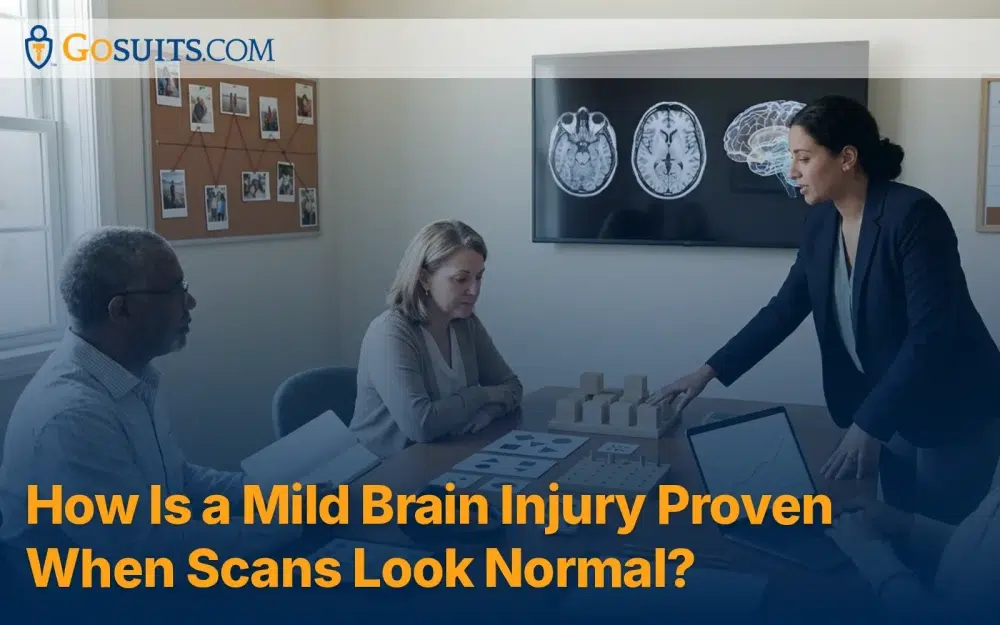
TBIs come in three flavors, basically. Mild (that’s your concussion), moderate, and severe. The damage itself comes from the brain getting jostled around inside the skull, bouncing, twisting, stretching, which kicks off chemical changes and wrecks brain cells in ways that a standard CT or MRI sometimes just doesn’t catch. That’s why folks call it an invisible injury. And honestly, that’s also why proving one of these in a civil case is so hard if you don’t have a lawyer who’s been through it before.
What Is Chronic Traumatic Encephalopathy (CTE)?
Chronic traumatic encephalopathy, or CTE, is a progressive neurological disease associated with repeated head trauma. [3] Unlike a single TBI, CTE develops over years or even decades following multiple concussions or subconcussive blows impacts below the threshold of a diagnosed concussion but still damaging. The abnormal accumulation of a protein called tau in the brain is the hallmark pathological feature of CTE, and it leads to deteriorating brain function over time.
CTE awareness has grown considerably because of research into sports-related brain injuries, but the condition is not limited to athletes. [4] Anyone who experiences repeated head trauma whether from contact sports, military service, domestic violence, or multiple accidents can be at risk. What makes CTE particularly difficult from a legal standpoint is that it can only be definitively diagnosed after death, through brain autopsy. During a person’s lifetime, physicians rely on a thorough history of head impacts, neurological testing, and advanced imaging to assess the likelihood of CTE-related neurological damage.
In civil injury litigation, CTE awareness matters because it informs the full scope of a plaintiff’s long-term harm. A defense attorney may argue that symptoms are attributable to other causes; a plaintiff’s legal team will work to present the documented history of head trauma and its medically established consequences. Neither side benefits from treating brain injury claims casually.
What Are the Symptoms of a Traumatic Brain Injury?
TBI symptoms vary dramatically based on the location and severity of the injury. The CDC identifies a broad range of potential brain injury symptoms that may affect how a person thinks, learns, feels, acts, and sleeps. [1] These symptoms can appear immediately after an incident or in a pattern that surprises many accident victims emerge hours, days, or even weeks later.
Physical symptoms may include:
- Headaches that worsen or do not resolve
- Dizziness and loss of balance
- Nausea or vomiting
- Blurred or double vision
- Sensitivity to light and sound
- Fatigue or sleep disturbances
Cognitive symptoms may include:
- Difficulty concentrating or remembering
- Slowed thinking or confusion
- Problems with problem-solving
- Memory gaps surrounding the injury event
Emotional and behavioral symptoms may include:
- Irritability, mood swings, or emotional volatility
- Anxiety or depression
- Personality changes that concern family members
In children, TBI affects a developing brain differently, and can limit a child’s ability to participate in school and other activities. [2] Older adults face additional risks because TBI symptoms can overlap with conditions like dementia, leading to misdiagnosis or missed diagnosis especially after a fall or car crash.
If you noticed any of these symptoms after an accident even symptoms that seemed minor at first, seek medical evaluation without delay. That documentation becomes essential evidence in any future personal injury claim. A personal injury claim involving TBI must be supported by a thorough medical record, and a gap in treatment can be used against you by an opposing insurer or defense team.
What Are the Most Common Causes of TBI in Civil Cases?
The CDC identifies four primary mechanisms behind TBI: falls, firearm-related injuries, motor vehicle crashes, and assaults. [2] In the civil litigation context where we focus on cases where another party’s negligence contributed to the injury such as motor vehicle crashes, slip-and-fall incidents, and product defects are the dominant categories.
Motor Vehicle Collisions
Motor vehicle crashes remain one of the most significant causes of accident-related brain injury in the United States. In dense urban corridors like downtown Los Angeles, the San Fernando Valley, or along I-90 and I-94 through Chicago’s South Side, high-speed impacts and rear-end collisions create the sudden acceleration-deceleration forces that cause the brain to slam against the inside of the skull. A driver or passenger wearing a seatbelt may survive what appears to be a moderate crash but still sustain a TBI that goes undiagnosed for days. Motorcycle riders face particular danger: a crash on SR-73 in Orange County or the Dallas North Tollway can result in severe TBI even with helmet use.
If your injury resulted from another driver’s negligence, distraction, or impairment, you may have a viable personal injury claim. Our team of brain injury lawyers is ready to review the facts with you.
Slip-and-Fall and Premises Liability Incidents
A fall on an improperly maintained floor, a trip on an uneven sidewalk outside a retail property in the Irvine Spectrum, or a slip on an unmarked wet surface in a Plano, Texas parking garage can produce a serious concussion injury or worse. When a property owner knew or should have known of a dangerous condition and failed to address it, premises liability law may allow an injured person to seek compensation.
Workplace Accidents and Construction Sites
Construction workers throughout the Chicago area including job sites in Cicero and Naperville, and across the Dallas metroplex face elevated risks of TBI from falling objects, scaffolding collapses, and equipment accidents. Federal OSHA regulations impose duties on employers to protect workers from head injuries, and a violation of those duties can form the basis of a civil negligence claim.
Sports-Related Brain Injuries
Sports-related brain injuries receive significant public attention, particularly in the context of repeated subconcussive impacts associated with CTE research. [4] Youth athletics, recreational leagues, and organized amateur competition can give rise to civil claims when institutions fail to follow established concussion protocols or equipment is defective. While professional sports litigation operates in a different legal landscape, local and amateur sport organizations can face civil liability for inadequate safety measures.
Defective Products
Helmets and safety equipment that fail to perform as warranted, defective airbag systems, and improperly designed head restraints can all contribute to TBI severity in accidents. Product liability claims require establishing that a product was defective in design, manufacture, or warning, and that the defect caused or significantly worsened the brain injury. brain injury lawyers who have handled product-liability TBI matters understand the intersection of engineering evidence and medical causation.
How Is a TBI Diagnosed After an Accident?
TBI diagnosis involves a combination of clinical evaluation, neuropsychological testing, and, in some cases, advanced imaging. [1] A healthcare provider will typically ask about symptoms and test for problems with learning, memory, concentration, and problem-solving. These are called neuropsychological or neurocognitive tests. Even when brain imaging such as a CT scan does not reveal structural damage, a TBI may still exist a point that is highly significant in legal proceedings because insurers sometimes argue that “normal” imaging means no injury occurred.
The absence of visible damage on standard imaging does not rule out a TBI. This distinction matters profoundly for TBI diagnosis documentation in litigation. Neurologists and neuropsychologists who conduct detailed evaluations can provide medical opinions that accurately characterize the nature and extent of neurological damage even when scans appear unremarkable.
After any accident involving a blow to the head, you should:
- Seek immediate emergency evaluation – do not delay treatment
- Follow all healthcare provider instructions during recovery
- Keep records of all symptoms, including how they change over time
- Attend all follow-up appointments and complete recommended neuropsychological testing
- Consult with an attorney before speaking with insurance adjusters about your claim

Our team can connect you with legal guidance to help you preserve the evidence you need. Understanding how to maximize compensation in personal injury cases starts with building a complete medical record from day one.
What Are the Long-Term Effects of Traumatic Brain Injury?
The long-term effects of TBI depend significantly on its severity and location. Mild TBI or concussion may resolve within weeks or months, while moderate and severe TBIs can produce life-long neurological impairment. [2] A person with a history of repeated mild TBIs may experience longer recovery periods, ongoing concentration and memory problems, and balance difficulties even without a single catastrophic injury event.
Long-term brain trauma can manifest in several ways relevant to both medical and legal assessment:
- Chronic post-concussion syndrome – persistent headaches, dizziness, cognitive fog lasting months or years beyond the initial injury
- Neurological damage affecting motor control, speech, or sensory processing
- Psychiatric consequences including depression, anxiety disorders, post-traumatic stress disorder, and in severe cases, psychosis
- Cognitive decline affecting memory, attention, and executive function – potentially accelerated in individuals with CTE-related pathology
- Loss of earning capacity when neurological damage prevents a return to the same type or level of work
- Caregiver dependency in moderate-to-severe cases, creating substantial economic burden on families
For TBI victims in Los Angeles County, the Stanley Mosk Courthouse at the Los Angeles County Superior Court handles civil cases involving catastrophic brain injuries cases that frequently require life-care planning testimony to establish the full present value of future medical needs. In Cook County, Illinois, cases are filed at the Richard J. Daley Center, where Circuit Court of Cook County civil procedures require strict compliance with medical expert disclosure rules.
The economic and non-economic losses from long-term brain trauma are substantial. From medical treatment costs to reduced quality of life, pain and suffering, and the effect on family relationships, TBI litigation calls for thorough documentation of every dimension of harm. Attempting to navigate these claims without experienced legal guidance puts you at a serious disadvantage.
What Are the Legal Rights of TBI Victims in a Civil Case?
If another person’s or entity’s negligence caused your traumatic brain injury, you may have the right to seek compensation through a civil personal injury claim. The fundamental elements of a negligence claim, duty, breach, causation, and damages must all be established. In TBI cases, causation is often the most contested element: the defendant will typically argue either that the injury was not caused by their conduct or that it was less severe than claimed.
As a plaintiff, you have the right to:
- Demand that your case be evaluated on its full merits, not minimized by insurers
- Retain your own medical professionals to evaluate and testify about your injuries
- Seek compensation for both economic and non-economic damages, including pain and suffering
- File suit in the appropriate court if a fair settlement cannot be reached through negotiation
Personal injury lawyers who handle TBI cases must understand both the science of neurological damage and the procedural requirements of civil courts in the relevant jurisdiction. You should strongly consider retaining skilled legal counsel before providing any recorded statements to opposing insurers, and before any applicable filing deadlines expire.
If a TBI proves fatal, surviving family members may also have a wrongful death claim available to them. In that scenario, personal injury lawyers experienced in both brain injury claims and wrongful death matters can provide guidance on the full scope of remedies available.

How Do TBI Laws Differ in California, Texas, and Illinois?
While general negligence principles apply across all three states, important procedural and substantive differences affect how TBI claims are pursued.
California
In California, personal injury claims including TBI claims arising from vehicle accidents or premises liability are generally subject to a two-year statute of limitations under California Code of Civil Procedure §335.1. [5] California follows a pure comparative fault system, meaning a plaintiff’s own percentage of fault reduces (but does not eliminate) their recovery. This is significant for TBI victims involved in multi-vehicle accidents on the I-405 or in complex intersection crashes in the Orange County area, where comparative fault arguments are common.
Cases filed in Orange County are heard at the Orange County Superior Court, with the Central Justice Center located in Santa Ana handling a large volume of civil injury matters. Los Angeles County cases go to the Los Angeles County Superior Court, frequently at the Stanley Mosk Courthouse. Personal injury lawyers in Irvine serving Orange County clients must be well-versed in both California comparative negligence law and the local court procedures that govern TBI litigation.
Texas
Texas personal injury claims involving TBI are subject to a two-year statute of limitations under Texas Civil Practice and Remedies Code §16.003. [6] Texas follows a modified comparative fault rule: a plaintiff may recover as long as they are not found to be more than 51% responsible for their own injuries. Defendants and their insurers frequently deploy comparative fault arguments in TBI cases, particularly in accident scenarios on I-635 (the LBJ Freeway), I-30, or the Dallas North Tollway where multiple contributing factors may be present.
Dallas County civil cases are filed at the George L. Allen Sr. Courts Building. Brain injury claims in North DFW areas including Plano and Carrollton, also route to Dallas County courts. Texas law caps non-economic damages in some cases involving healthcare providers, an issue that can intersect with TBI litigation when medical negligence contributed to the injury’s severity. brain injury lawyers in Dallas familiar with the local court system are an important resource for injured victims in the DFW metroplex.
Illinois
In Illinois, the statute of limitations for personal injury claims is generally two years under 735 ILCS 5/13-202. [7] Illinois follows a modified comparative fault rule with a 51% bar closely aligned with Texas, meaning a plaintiff who is more than 50% responsible for their own injury cannot recover. Illinois also has specific procedural rules regarding medical expert testimony in injury cases, which are particularly relevant in complex TBI litigation where neurological causation is disputed.
Cook County civil cases, including those arising from crashes on the Dan Ryan Expressway or Lake Shore Drive, are heard at the Circuit Court of Cook County, located at the Richard J. Daley Center in the Loop. The heavy traffic conditions on expressways through Chicago’s West Side and South Side create frequent rear-end and sideswipe accidents that produce the types of sudden-impact forces associated with concussion injuries. Personal injury lawyers in Chicago must navigate Illinois evidentiary rules governing expert witnesses and the state’s jury instruction patterns for brain injury damages.
What Compensation Can TBI Victims Pursue?
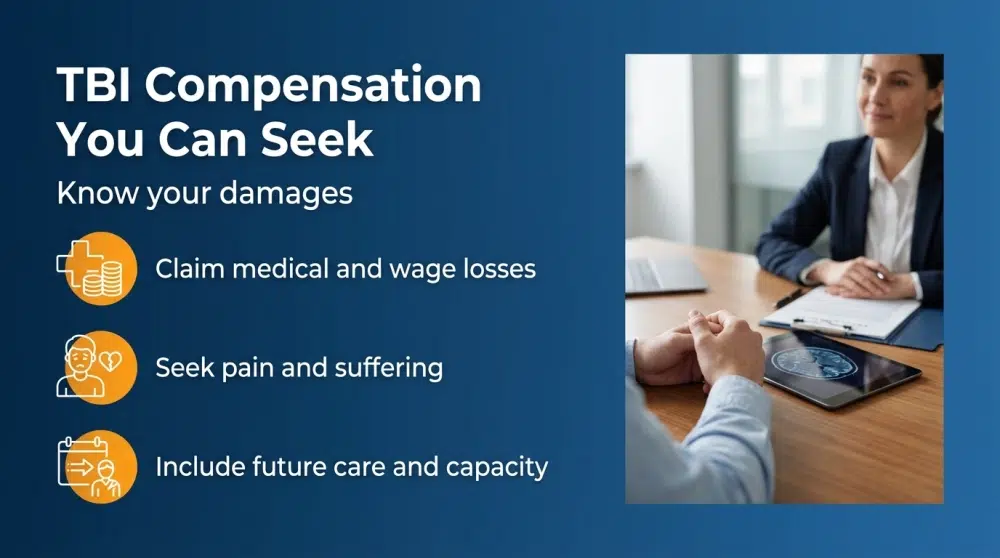
Compensation in a TBI civil case typically falls into two broad categories: economic damages and non-economic damages.
Economic Damages
- Past and future medical expenses – emergency care, hospitalization, neuropsychological testing, rehabilitation, medication, and future care needs
- Lost wages – income lost during recovery from the injury
- Lost earning capacity – the diminished ability to earn income in the future due to lasting neurological damage
- Life care costs – if the TBI requires ongoing assistance, in-home care, or facility placement
- Out-of-pocket expenses – transportation to medical appointments, adaptive equipment, home modifications
Non-Economic Damages
- Pain and suffering – the physical discomfort and emotional distress caused by the injury and its consequences
- Loss of enjoyment of life – the inability to participate in activities that were central to the victim’s life before the injury
- Emotional distress – anxiety, depression, post-traumatic reactions
- Loss of consortium – the effect of the injury on the victim’s relationships with their spouse or family
In fatal TBI cases where wrongful death claims apply, surviving family members may seek additional categories of recovery specific to their state’s wrongful death statute – including loss of financial support, loss of companionship, and funeral and burial expenses.
The full scope of compensation available in a TBI case depends on the specific facts, the jurisdiction, and the effectiveness of the legal representation presenting the claim. Injured victims in Irvine personal injury matters, and those across Los Angeles, Dallas, and Chicago, deserve the full picture of what they may be entitled to recover before accepting any settlement offer.
What Should Defendants in TBI Cases Know?
Defendants in TBI civil cases – whether they are individual drivers, property owners, employers, or corporations – face serious potential liability. A few principles are important to understand from the defense perspective:
Insurance coverage and limits matter early. Many TBI cases implicate policy limits, and both plaintiffs and defendants benefit from understanding the applicable coverage landscape from the outset. Insurers may argue that the injury was pre-existing, not caused by the incident, or less severe than claimed – but courts have consistently held defendants responsible when credible evidence establishes the connection between the incident and the TBI.
Spoliation of evidence is a serious risk. Vehicle data recorders, surveillance footage, maintenance records, and employment records can all be relevant in TBI litigation. Defendants who fail to preserve relevant evidence risk adverse inference instructions and other sanctions from the court.
Expert testimony governs the outcome. TBI cases are won and lost on expert medical, neuropsychological, and, in vehicular cases, accident reconstruction testimony. Defendants in TBI cases should retain counsel experienced in retaining and cross-examining these witnesses.
Early settlement decisions have long-term consequences. Because TBI effects can evolve over time, both plaintiffs and defendants face significant uncertainty in early settlement negotiations. Defendants and their insurers must weigh the risk that documented long-term brain trauma will lead to a larger verdict at trial against the certainty of a negotiated resolution.
How GoSuits Helps Brain Injury Victims
A traumatic brain injury changes everything. It can affect your ability to work, your relationships, your sense of self, and your financial security. When someone else’s negligence caused or contributed to that injury, you deserve access to skilled legal representation – not case managers, not automated systems, not generic advice.
Four cities. Irvine, Los Angeles, Dallas, Chicago. That’s where our attorneys are, and we take personal injury cases across all three states, California, Texas, Illinois. Our team handles matters throughout Orange County, the wider LA area, the DFW metroplex, and Chicagoland. Got hurt on the 405 near Costa Mesa? A construction job on Chicago’s West Side? A rear-end on US-75 (Central Expressway) north of Dallas? We’re positioned to represent you right in the courts where your case lands.

What Makes GoSuits Different?
At GoSuits, we have combined more than 30 years of experience handling serious personal injury matters, including catastrophic brain injury claims, wrongful death cases, and complex multi-party litigation. Our attorneys have tried cases to verdict – an experience that directly benefits our clients at the negotiating table, because insurers know we are prepared to go all the way.
What sets us apart is our commitment to both innovation and personal attention:
- Proprietary case management technology – GoSuits has developed exclusive software that accelerates case timelines, organizes evidence efficiently, and keeps our clients informed at every stage without the delays that slow down traditional law firms.
- Every client has a designated attorney – we do not use case managers as intermediaries. You have unfettered access to your attorney throughout your case. When you have questions, you get answers from the lawyer handling your matter.
- Technology-driven, attorney-led – our proprietary tools handle the administrative burden so our attorneys can focus on what matters: building a compelling case for your recovery.
- Proven results for injured clients – our team has achieved meaningful results for clients who have suffered serious injuries, including traumatic brain injuries, across all of our practice areas. View our prior cases to learn more about outcomes we have achieved.
- Trial experience that protects you – knowing that your attorney has stood before a jury and won changes the dynamic of every settlement negotiation. Opposing counsel and insurers take cases more seriously when they know your legal team is not afraid of a courtroom.
Our Practice Areas
GoSuits handles a wide range of serious personal injury matters across all of our markets. Our practice areas include car accidents, truck accidents, motorcycle accidents, rideshare accidents, construction accidents, slip and fall injuries, work injuries, product liability, and wrongful death claims. Our attorneys bring focused knowledge to each of these areas, and we match clients with attorneys whose experience aligns with the specific type of case involved.
If you or someone you love has suffered a traumatic brain injury or is showing signs that may be consistent with long-term neurological damage from repeated head trauma, do not wait. Statutes of limitations are real deadlines that cannot be extended after the fact. The right time to speak with an attorney is now.
Learn more about who we are and how we work by visiting our about us page, or take the first step today and schedule a free consultation with a member of our team. There is no fee unless we recover for you.
References & Resources
- About Mild TBI and Concussion – Centers for Disease Control and Prevention (CDC)
- Facts About TBI – Centers for Disease Control and Prevention (CDC)
- Chronic Traumatic Encephalopathy – National Institute of Neurological Disorders and Stroke (NINDS), NIH
- Comparing Head Impacts – Traumatic Brain Injury & Concussion, CDC
- California Code of Civil Procedure Section 335.1 – California Legislative Information
- Texas Civil Practice and Remedies Code Chapter 16 – Limitations – Texas Legislature Online
- 735 ILCS 5/13-202 – Illinois General Assembly Personal Actions Limitation
- Symptoms of Mild TBI and Concussion – CDC
- Health Disparities and TBI – CDC
- Federal Civil Procedure Overview – United States Courts