













































Brain Injuries and Their Legal Implications
Brain injuries can range from mild concussions to severe traumatic brain injuries (TBI). Common causes in civil cases include car accidents, slip and fall incidents, workplace accidents, and motor vehicle accidents. If you or a loved one has suffered head trauma, consulting with well-versed head injury lawyers can help you understand your legal rights and options.
Why Choose a Dedicated Brain Trauma Attorney?
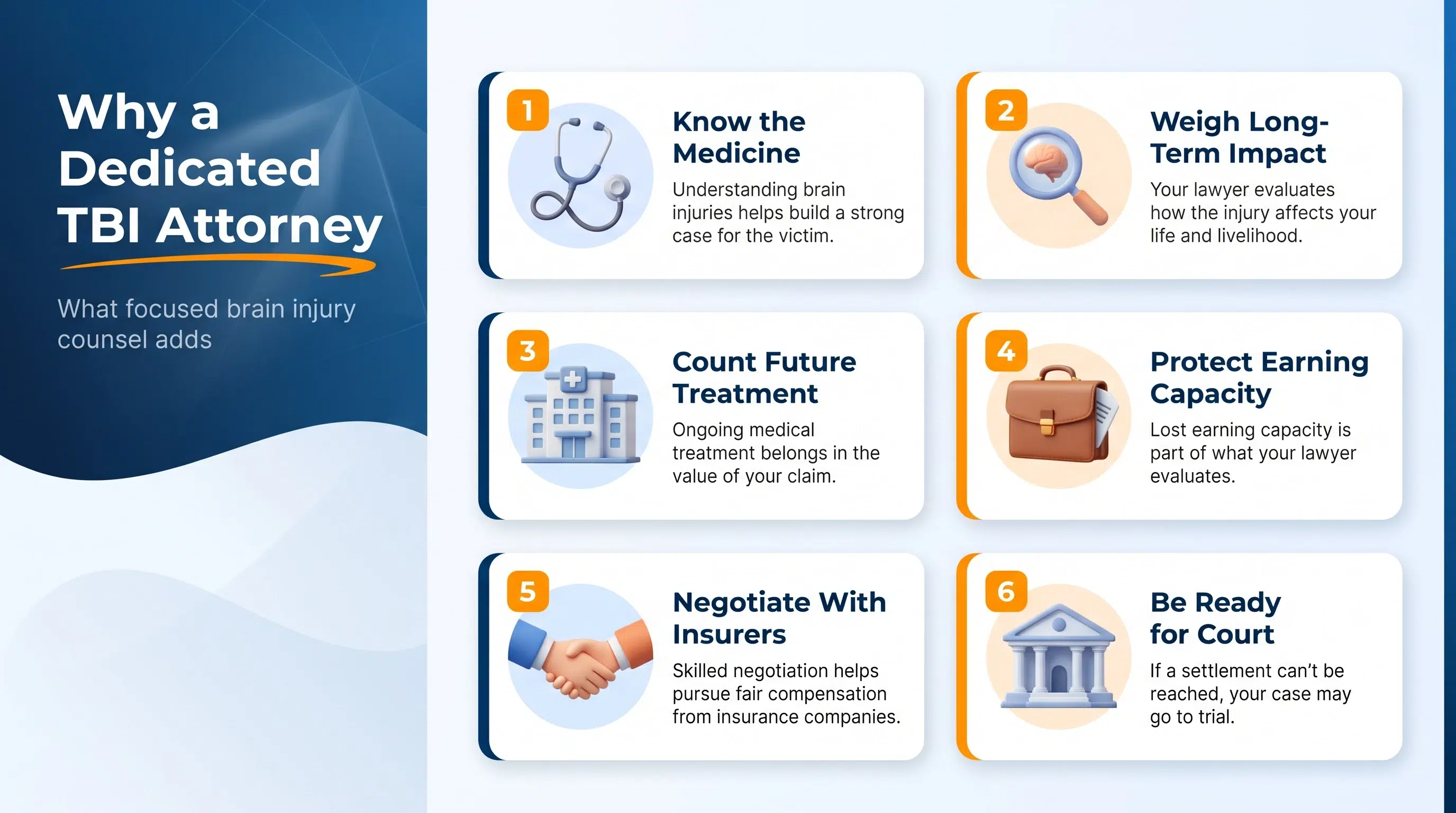
Brain injury cases are complex and require specific industry knowledge. Here are the reasons why choosing a dedicated attorney for a brain injury case can be beneficial for you or your loved one:
- Brain injury attorneys understand the medical aspects of brain injuries which allows them to build strong cases in favor of the victim.
- An adept head trauma lawyer can evaluate the long-term impact of the injury on your life and livelihood. This may include medical treatments, lost earning capacity, and the emotional toll it may take on you and your family.
- Brain injury attorneys are proficient at negotiating with insurance companies to pursue fair compensation.
- If a settlement can’t be reached, your lawyer may be prepared to take your case to court.
The Role of a Brain Injury Attorney in Your Recovery Journey
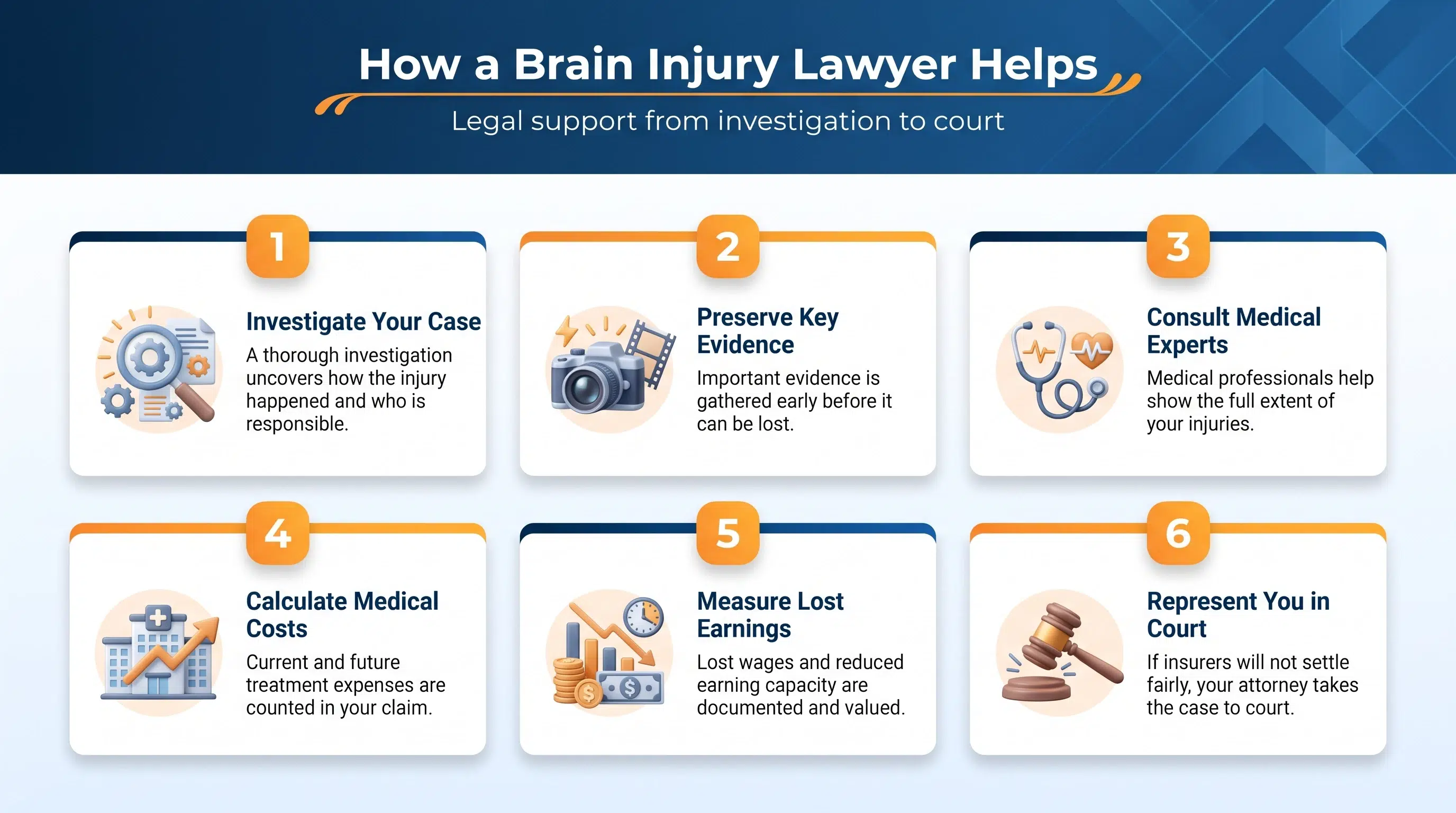
When you work with dedicated traumatic brain injury lawyers, you benefit from comprehensive legal support throughout your case. Your attorney’s contributions may include:
- Conduct a thorough investigation of your case
- Gather and preserve important evidence
- Consult with medical professionals to understand the full extent of your injuries
- Calculate current and future medical expenses
- Determine lost wages and earning capacity
- Negotiate with insurance companies on your behalf
- Represent you in court if necessary
Initiating a Traumatic Brain Injury Lawsuit
As plaintiff attorneys, we highly recommend seeking legal representation as soon as possible after a brain injury occurs. Early intervention by a brain injury lawyer can help preserve important evidence, facilitate proper medical documentation, protect your rights during insurance company investigations, and meet legal deadlines for filing claims.