- What we know about the Greene County school bus rollover
- Where the crash happened and why Heinold Curve matters locally
- Reported injuries, pediatric care, and what symptoms to watch
- How investigators typically handle a school bus rollover in Illinois
- Potential civil liability paths after a school bus crash
- Time limits and special Illinois rules that affect claims
- Key records to request and who to call
- Practical steps to protect a claim right now
- Insurance issues unique to public school bus crashes
- Community safety notes for US 67 near Carrollton
- Call-to-Action: Why taking early steps matters
- References
- Commentary from Gosuits Carrollton, Illinois Personal Injury Attorney
What we know about the Greene County school bus rollover
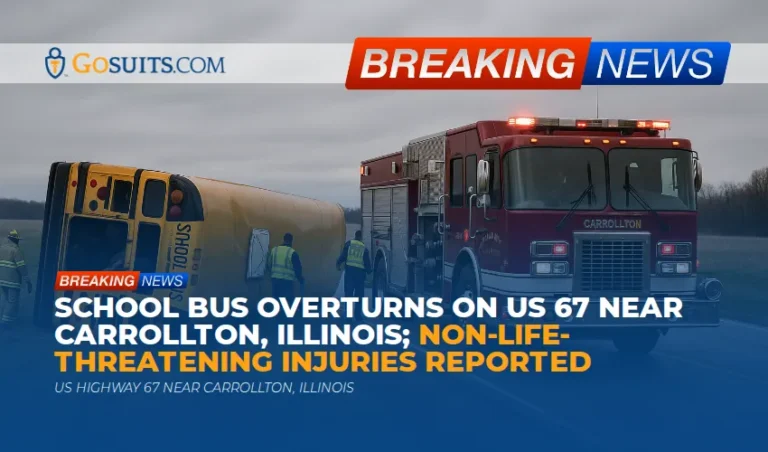
On a weekday afternoon just before 3:45 p.m., a school bus operated by Greene School District #3 overturned on US Highway 67 near Carrollton, Illinois, along a stretch of road locals know as the Heinold Curve. First responders from the Carrollton Fire Department extricated one student while others were able to get out on their own. Several students were transported to area hospitals with reported non-life-threatening injuries. Authorities did not immediately release the ages of the students on board. These details were reported shortly after the incident and may be updated as agencies complete their work.
In small, close-knit communities like Carrollton and nearby Jerseyville, news of a bus rollover travels fast and hits hard. After-school activities, sports runs, and bus routes intersect with farm-to-market traffic on US 67, and a crash along a known curve raises understandable questions about what happened, who is checking the scene, and how families can get verified information.
Where the crash happened and why Heinold Curve matters locally
US Highway 67 is a major north-south corridor that threads through Greene County, connecting Carrollton to Jerseyville to the north and the Illinois River corridor and Alton to the south. The Heinold Curve, as locals call it, has tighter geometry than the long straightaways that dominate this highway. Anytime a roadway departs from straight, flat conditions, vehicle dynamics change. Elevated center-of-gravity vehicles like school buses can be more sensitive to sudden steering inputs, roadway edge drop-offs, or traction changes.
That does not mean the curve is defective or that any party is necessarily at fault. Rather, it explains why investigators often document the scene in greater detail at curved segments — skid marks, yaw marks, gouge marks, and debris fields can tell a different story across a curve than on a straightaway. Weather, sun angle, and roadway surface conditions around 3:45 p.m. can also be relevant, especially in spring when showers pass through quickly and fields shed water toward ditches.
Reported injuries, pediatric care, and what symptoms to watch
Initial reports described non-life-threatening injuries. Even so, children and teens can experience delayed-onset symptoms following a rollover. Concussion signs in young people can be subtle at first and may include headache, dizziness, nausea, light sensitivity, sleep changes, or trouble concentrating. The Centers for Disease Control and Prevention publishes symptom guidance for head injuries in children and adolescents [7]. Watching for changes over the first 48 hours is particularly important.
Greene County does not have a Level 1 trauma center within its borders, so EMS may transport to the nearest appropriate facility based on age and injury severity, sometimes including regional centers in Springfield for higher-acuity pediatric or trauma care. Illinois organizes trauma resources through the Illinois Department of Public Health’s trauma program, which designates trauma center levels statewide [6]. Families who receive discharge instructions should keep those documents and follow them closely, including any recommended follow-up with pediatricians or concussion clinics.

How investigators typically handle a school bus rollover in Illinois
Law enforcement and fire personnel secure the scene, triage injuries, and preserve evidence. If the Illinois State Police or a local agency leads the investigation, they document roadway evidence, vehicle resting positions, and occupant seating if known. In bus incidents, it is common to check for:
- Driver factors: Duty status on the route, licensure and required endorsements, recent hours, and any medical or impairment indicators. In Illinois, school bus drivers must hold the appropriate CDL credentials and endorsements as administered through the Illinois Secretary of State [8].
- Vehicle condition: Tires, steering components, suspension, and brake condition. Maintenance logs can be important for public carriers.
- Onboard recordings: Many districts equip buses with inward and outward-facing cameras, GPS breadcrumbs, and sometimes telematics. Prompt preservation notices can help ensure video is not overwritten.
- Roadway environment: Curve signage, advisory speeds, shoulder condition, surface friction, and any temporary hazards.
The crash report prepared by the investigating agency becomes a foundational document for insurance and any later civil claims. Illinois law governs when and how crash reports are released to involved persons and insurers [3].
Potential civil liability paths after a school bus crash
Every case turns on verified facts. In a bus rollover with student injuries, possible civil liability theories may include:
- Driver negligence: If evidence shows the bus operator failed to use reasonable care under the circumstances, that can support a negligence claim similar to other vehicle collisions.
- School district or contractor responsibility: Public school operations are often shielded by portions of the Illinois Local Governmental and Governmental Employees Tort Immunity Act, but they can still face claims where immunity does not apply. Separate entities like contracted transportation providers may also bear responsibility depending on the arrangement.
- Vehicle maintenance: Improper inspection or maintenance can factor into causation if component failure contributed to loss of control.
- Roadway conditions: Claims alleging dangerous roadway conditions are complex and fact dependent. They require notice and defect proof that meet specific statutory standards. Many such claims face immunities or defenses under Illinois law.
For families sorting out next steps in a situation like this, commercial-vehicle crash experience matters. Serious bus and heavy-vehicle cases are often grouped with commercial motor vehicle incidents, which is why truck accident lawyers are frequently involved when a public or private bus overturns on a highway. In a broader metropolitan context, truck accident lawyers in Chicago routinely analyze vehicle data, policies, and training files when a common carrier is involved.
Because a bus crash is still a roadway collision, some issues overlap with car claims — vehicle occupant injuries, medical billing, coordination of benefits, and future care. It is not uncommon for car accident lawyers to collaborate with counsel who routinely handle common carrier or public entity facets of a case. In a statewide context that includes Cook County and beyond, car accident lawyers in Chicago often address similar medical documentation and liability proof questions for multi-passenger highway crashes.
Time limits and special Illinois rules that affect claims
Illinois imposes specific timelines for injury claims, and some are shorter when a local public entity is involved. Under 745 ILCS 10/8-101, actions against a local public entity or its employees generally must be commenced within one year of the date of injury [4]. That one-year period can surprise people who are familiar with the longer two-year period that typically applies to private-party negligence claims.
There are important exceptions. For minors, certain personal injury limitations can be tolled under 735 ILCS 5/13-211, which extends the filing deadline during minority and for a set time after reaching the age of majority, subject to statutory terms [5]. The specifics of tolling and how it interacts with public entity timelines are technical and fact sensitive.
Even where a statute allows more time, early evidence preservation is critical. Video from buses or roadside businesses can overwrite within days or weeks. Witness memories fade. Medical trajectories evolve. Early documentation helps ensure accuracy when it matters most.
Key records to request and who to call
Gathering official records brings clarity and helps prevent misinformation from social media or rumor. Here are common records and where to look:
- Crash report: The investigating agency’s report is central. Illinois law describes crash report confidentiality and permitted disclosures to involved parties and insurers [3]. If the Illinois State Police handled the scene, a request can be made through ISP channels, including its FOIA process for releasable records [2]. If a local department took the report, contact that agency’s records division and ask about their release procedure.
- Fire and EMS run reports: The Carrollton Fire Department and any EMS providers will have incident records. These documents can help verify mechanism of injury, extrication details, and transport notes. Contact the department’s administrative office for instructions on obtaining copies consistent with privacy laws.
- School district incident report: Greene School District #3 may create an internal incident or transportation report. Ask the district office or transportation director about the process to request records as an involved parent or guardian.
- Medical records and discharge instructions: Hospital and clinic records document diagnoses, imaging, and treatment plans. Keep copies of all discharge paperwork and follow-up orders.
- Road agency information: For roadway signage, speed advisories, or recent work orders on US 67, inquiries can be made to the Illinois Department of Transportation. IDOT also publishes statewide crash facts and statistics that provide useful context for highway risks [10].
If any fatality had occurred, the county coroner would handle death investigation records. That does not apply here based on current reports, but it is worth knowing that autopsy and coroner’s records in Illinois have separate request processes governed by statute and local policy.
Practical steps to protect a claim right now
It is natural to prioritize medical care and reassurance after a frightening rollover. Once immediate needs are addressed, a few practical steps can protect long-term interests:
- Write down what you remember: Route, time, seating position, whether you were using any available restraints, where items inside the bus ended up, and anything the driver or other passengers said. Small details can matter.
- Photograph and organize: Take photos of visible injuries, clothing damage, and any relevant items. Keep medical wristbands, discharge documents, and prescriptions together in a folder.
- Save digital evidence: Preserve texts, photos, or location histories that reflect the time window of the rollover and immediate aftermath.
- Be cautious with insurance statements: Do not provide recorded statements to any insurer before speaking with a qualified attorney. What is said to an adjuster can be used later to challenge fault or minimize injuries.
- Mindful communication: Avoid social media posts about the crash or injuries. Insurers routinely review public content.
For a step-by-step, plain-English refresher on what to do after traffic collisions in the state’s largest metro, see what to do after a car accident in chicago. While this bus rollover happened in Greene County, the fundamentals of documenting injuries and protecting a claim are similar across Illinois communities.
Insurance issues unique to public school bus crashes
Public school operations involve different insurance and legal frameworks than private vehicles. Consider these points as you evaluate paths forward:
- Public entity coverage: School districts typically maintain liability programs that respond to negligence claims where immunity does not bar recovery. Claim procedures can differ from private auto carriers.
- Layered responsibility: If transportation is contracted, both the district and contractor may have coverage. A proper investigation identifies all potentially responsible entities and policy layers.
- Medical billing coordination: Hospital billing offices may submit claims to family health insurance, Medicaid, or other coverage first. Keep an eye on explanation-of-benefit statements and subrogation notices. Illinois Health Care Services Lien Act considerations can arise in injury cases when providers assert liens on recoveries, particularly in larger injury claims.
- No upfront recorded statements: Contact an attorney first before speaking with any insurer about fault or injuries. Adjuster questions may sound routine, but responses can be taken out of context later.
Because a bus is a large commercial vehicle, some families opt to consult attorneys who frequently address heavy-vehicle claims. For people in and around the state’s urban core, truck accident lawyers in Chicago are commonly called when commercial carriers are involved. That said, many issues overlap with passenger-vehicle practice, and car accident lawyers play a role in documenting medical damages and long-term impacts from any roadway crash. Broadly speaking, Chicago personal injury lawyers help families align evidence, medical documentation, and the applicable Illinois legal framework.
Community safety notes for US 67 near Carrollton
Springtime in Greene County brings farm equipment and grain trucks into the traffic mix. After-school hours can concentrate bus traffic, parent pickups, and student drivers on US 67 and nearby county roads. Curves like Heinold ask a bit more of everyone — scanning farther ahead, managing speed through the approach, and leaving generous following distances.
NHTSA emphasizes that school buses remain one of the safest forms of roadway transportation for children, thanks to their design and operational safeguards [1]. Nationally, the share of total highway fatalities that involve school transportation is comparatively small, and most incidents each year occur outside the bus in loading and unloading zones rather than to occupants inside the bus. Even so, when a rollover does happen, thorough scene work and careful follow-up help families and the community understand what occurred and how to reduce risks going forward [9].
Call-to-Action: Why taking early steps matters
Early action preserves choices. Collecting records, tracking symptoms, and documenting time missed from school or activities creates a clear picture that supports whichever path is chosen later. Acting now also reduces the chance that key video or roadway data disappears. In Illinois, time limits for claims involving public entities can be shorter than expected, and deadlines approach quickly when the calendar is filled with doctor visits and school obligations. The most practical next step is to organize medical records, take photographs of any visible injuries, and keep a simple timeline of symptoms and appointments. Before speaking with any insurance company about fault or injuries, consult an attorney for a free consultation to understand rights and responsibilities. Statements given to insurers can be used against the claimant later, so it is prudent to get informed guidance first.

References
- School Bus Safety Overview – NHTSA
- Freedom of Information Act Requests – Illinois State Police
- 625 ILCS 5/11-408: Accident Reports Confidentiality and Release – Illinois General Assembly
- 745 ILCS 10/8-101: Limitation of Actions Against Local Public Entities – Illinois General Assembly
- 735 ILCS 5/13-211: Minors and Persons Under Legal Disability – Illinois General Assembly
- Trauma Program and Designations – Illinois Department of Public Health
- Concussion Signs and Symptoms – CDC HEADS UP
- School Bus Endorsement and CDL Requirements – Illinois Secretary of State
- School-Transportation-Related Crashes: Traffic Safety Facts – NHTSA
- Crash Facts and Statistics – Illinois Department of Transportation
- Illinois FOIA General Information – State of Illinois
Commentary from Gosuits Carrollton, Illinois Personal Injury Attorney
We are relieved to hear the students’ injuries were described as non-life-threatening, and we’re thinking of the families, classmates, and school staff who were shaken by this rollover. This article is intended to provide educational information about what typically follows an incident like this and how Illinois law frames the key decisions that come next.
In our view, the most important work now is meticulous, fact-driven follow-up. A bus overturn on a known curve invites close attention to roadway conditions, vehicle state, and driver inputs. Preserving bus video, confirming maintenance status, and verifying the exact path through the curve can help the community understand why this happened and how to reduce risks in the future.
Insurance carriers and institutional risk programs move quickly after transportation incidents. They often contact families early and ask for statements or medical authorizations that seem routine. The reality is that these materials can be used to narrow or dispute a claim later. Large organizations and insurers are highly practiced in these processes, and they benefit when injured people are unfamiliar with Illinois deadlines, public entity rules, or how to document evolving symptoms accurately.
A free consultation can level the playing field. It provides a private opportunity to ask questions about timelines, evidence, and next steps before speaking with any insurance company. Knowing in advance how a recorded statement might be interpreted or how public entity timelines differ from private-party claims helps people make informed choices while focusing on recovery.
Again, we are grateful that early reports indicate all injuries were survivable, and we appreciate the work of Greene County’s first responders who managed a complex scene with students aboard. We will continue to follow official updates as they are released.