
































What areas in Los Angeles County do residential property damage lawyers serve?
If your home was damaged anywhere in Los Angeles County, GoSuits is ready to help. While our practice is rooted in Los Angeles, our legal team serves homeowners and tenants throughout the region, from the coastal neighborhoods of Manhattan Beach and Santa Monica to the foothill communities of Pasadena and the high-desert stretches of Lancaster.
Honestly, this isn’t a one-neighborhood thing. Hillside homes out near Topanga. Apartment buildings on Wilshire. Single-family blocks in El Monte and Norwalk. Multi-family complexes spread all over the San Fernando Valley. We’ve worked all of it. Where you happen to live doesn’t really matter that much when you get down to it. What matters is having local knowledge and real legal experience in your corner, to protect your rights and go chase the money, whether it’s coming from an insurer, a contractor, or whoever else ends up on the hook.
9.7 million people, around 3.5 million housing units. Those are Census Bureau numbers, straight out of the American Community Survey, and they kind of explain on their own why LA County operates on its own scale. CAL FIRE and LAFD work thousands of structure fires every year. A real share of California’s homeowner claim disputes routing through the state Department of Insurance come out of just this county. We pay attention to all of that. Topanga risk doesn’t really look like Norwalk risk, so the strategy doesn’t either, not really. It depends on where your home actually sits.
Areas we commonly serve:
- Westside and coastal: Santa Monica, Venice, Marina del Rey, Manhattan Beach, Playa del Rey
- Central LA: Hollywood, Mid-Wilshire, Koreatown, Silver Lake, Echo Park, Downtown Los Angeles
- San Fernando Valley: Sherman Oaks, Studio City, Encino, Northridge, Van Nuys, Woodland Hills
- San Gabriel Valley and foothills: Pasadena, Arcadia, Glendale, Burbank, El Monte
- South Bay and Harbor: Norwalk, San Pedro, Wilmington
- Antelope Valley and North County: Lancaster, Palmdale, Santa Clarita area
Wherever your home is in Los Angeles County, we are just a call away and always ready to step in when you need legal guidance after a residential property damage event.
What types of residential property damage cases do we handle in Los Angeles?
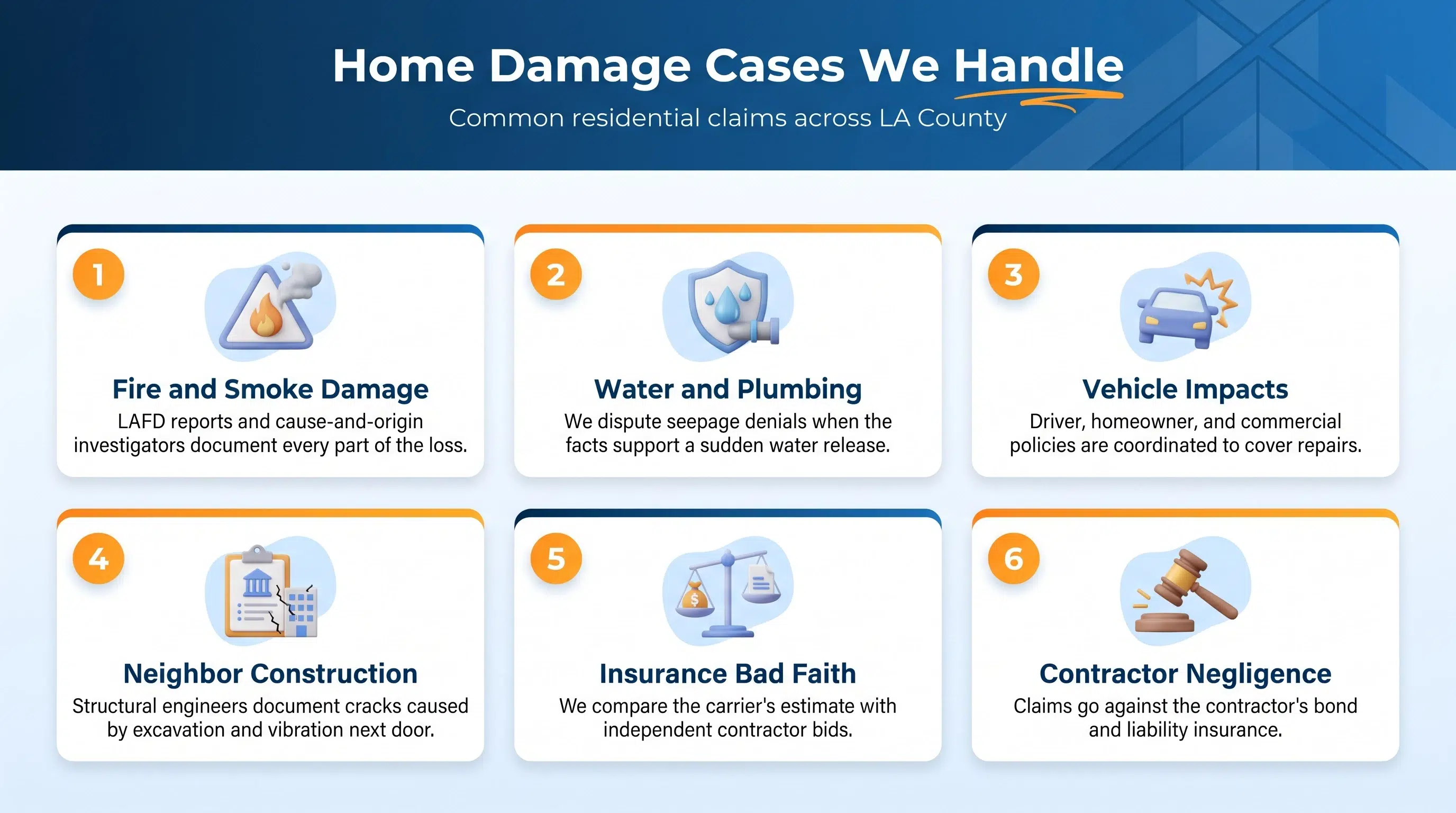
Home damage rarely has one clean cause. And rarely one person to point at either. We’ve handled LA cases involving insurance bad faith, contractor negligence, construction going on right next door, cars plowing through living rooms, and natural events that got worse because somebody, somewhere, dropped the ball. Below, you’ll see the residential property damage cases we handle most often, plus a rough sense of how we work each one. Mostly it comes down to strategy and empathy, honestly. With actual results sitting behind both.
Fire and smoke damage to homes
House fires and structural fire losses
Honestly, fires don’t end when the flames do. Kitchen fire in a Sherman Oaks duplex. Electrical fire in some older Pasadena bungalow. The flames are honestly kind of the easy part. The visible part. The part that gets put out. What comes after is what really buries people. Smoke seeping into the drywall, soot on basically everything, water from suppression running through walls and turning up two rooms over from where the crew was aiming. That’s where the real damage hides. So we pull the LAFD incident report, bring in cause-and-origin investigators, and walk through your policy line by line. Dwelling. Personal property. ALE. Code upgrades, if your policy has that endorsement. None of it gets left off the demand.
Wildfire and wildland-urban interface losses
If your house is up in the foothills or tucked into a canyon, wildfire isn’t really a season at this point, it’s basically a constant. CAL FIRE reports that wildfires have wiped out tens of thousands of structures across recent California fire seasons, with insured losses running into the billions. When yours ends up being one of those structures, the claim almost never lives in a single bucket. There’s the homeowner policy, sometimes a FAIR Plan policy stacked on top, and in some cases a real third-party liability angle against a utility or a land manager. We work each layer separately. Nothing valuable gets left on the table.
Smoke-only and ash damage claims
Even when flames never reach your home, smoke and ash can render a residence uninhabitable, contaminate HVAC systems, and damage textiles and electronics. Insurers sometimes minimize these claims. We work with industrial hygienists and restoration professionals to document contamination levels and push back when an adjuster tries to write the loss off as cosmetic.
Water damage and plumbing failures
Burst pipes and sudden water releases
A failed supply line under a sink or a ruptured copper pipe in a wall cavity can flood multiple rooms within minutes. California Insurance Code section 2071 sets the standard form for fire policies, and most homeowner policies cover sudden and accidental water releases. We confirm the loss is properly classified, dispute denials based on alleged “long-term seepage” exclusions when the facts support a sudden event, and pursue full recovery for drying, demolition, mold remediation, and rebuild.
Sewer backups and drain failures
Sewer backups are among the most distressing residential losses because of contamination and odor. Coverage often depends on whether you carry a water and sewer backup endorsement. We review the policy, examine plumber reports and city wastewater records, and, where a municipal main is responsible, we help you prepare a government claim against the public entity within the deadlines of Government Code section 911.2 (one year for damage to the home, six months for personal property or injuries).
Roof leaks and storm-driven water intrusion
Atmospheric river events have produced record rainfall across Los Angeles in recent winters. When a roof fails during a storm, insurers may try to attribute the loss to wear and tear rather than wind or impact. We work with roofing professionals and meteorological records from the National Weather Service to document the storm event and the failure mode, then build the claim accordingly.
Vehicle-into-house and impact damage
Cars crashing into homes and structures
Honestly, vehicle-into-building events are kind of more common in LA than most homeowners realize. A driver loses it on a hillside street. Jumps a curb. Runs a stop sign. Next thing you know, they’re parked in a living room or a garage. We coordinate with the at-fault driver’s auto liability insurer, your own homeowner policy, and any commercial policy in play if a delivery or rideshare vehicle was involved. Recovery can include structural repairs, contents, loss of use, and diminished value.
Falling objects, fallen trees, and debris
A neighbor’s eucalyptus comes down on your roof during a Santa Ana wind event. Construction debris from an adjacent project lands on your patio cover. We sort out which policy responds first, whether a negligence claim against the tree owner or contractor is appropriate, and how to preserve the evidence before cleanup crews remove it.
Construction-related damage to neighboring homes
Excavation, vibration, and foundation damage
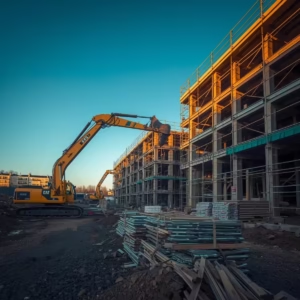
When a developer or contractor excavates next door, the resulting vibration, lateral earth movement, or dewatering can crack foundations, drywall, and tile in your home. California Civil Code section 832 governs lateral and subjacent support obligations between neighboring property owners. We document pre-existing conditions, retain structural engineers, and pursue claims directly against the responsible contractor and developer.
Water and runoff from adjacent projects
Improperly graded construction sites can divert stormwater onto neighboring lots, causing flooding, soil saturation, and slope failure. We work with civil engineers and geotechnical professionals to trace the cause and pursue compensation for repairs, regrading, and lost use.
Insurance bad faith and underpaid homeowner claims
Lowball estimates and forced underpayment
California Insurance Code section 790.03 and the Fair Claims Settlement Practices Regulations require insurers to investigate claims promptly, communicate clearly, and pay covered losses fairly. When an insurer delays, misclassifies a sudden loss as long-term wear, or pays only a fraction of the documented damage, that can be the basis for a bad-faith claim. We compare the carrier’s estimate against independent contractor bids, demand fair payment, and litigate when the gap remains.
Wrongful denial of coverage
Denials based on misapplied exclusions, unsupported “pre-existing damage” theories, or arbitrary cause determinations are challengeable. We obtain the claim file, the engineer’s full report (not just the summary), and the carrier’s internal communications through litigation, then move to set the denial aside.
Additional living expenses (ALE) disputes
When your home is uninhabitable, your policy generally pays for comparable temporary housing, meals beyond your normal grocery costs, and pet boarding. Insurers sometimes cap ALE prematurely or refuse to extend the coverage period as repairs drag on. We track every receipt, document the repair timeline, and push back when ALE is cut short.
Contractor negligence and property loss
Defective repairs and improper restoration
A water-damage restoration company that fails to properly dry a structure can leave hidden mold behind. A roofer who installs flashing incorrectly can cause leaks years later. We work with the Contractors State License Board records, retain qualified inspectors, and pursue claims against the contractor’s bond and liability insurance.
Unlicensed work and contractor abandonment
If a contractor takes a deposit and walks away, or performs work without the license required under California Business and Professions Code section 7028, you may have multiple paths to recovery, including a Recovery Fund claim with the CSLB and civil action. We help you choose the path that returns the most money in the shortest time.
Mold and habitability claims
Untreated water intrusion can produce mold growth that triggers respiratory illness, especially for children and elderly household members. For homeowners, mold claims tie into the underlying water-damage claim. For tenants, a landlord’s failure to address habitability issues under California Civil Code section 1941.1 can support a separate claim. We handle both sides depending on your situation.
Choosing the right residential property damage legal representation in Los Angeles, CA
Finding a residential property damage lawyer in Los Angeles after your home is hit can feel as overwhelming as the damage itself. You need more than a lawyer who occasionally handles property cases. Look for someone who focuses on insurance disputes, property damage, and homeowner litigation, and who has a track record in cases like yours.
Ask how often the firm goes to trial, how it calculates additional living expenses and code-upgrade costs, and how it plans to keep you informed. A clear legal strategy and a willingness to communicate in plain English are signs you are in good hands.
Local experience is also key. A residential property damage attorney in Los Angeles who knows the LA County court system, local building departments, and the major insurance carriers operating in California can spot potential delays and move your case forward faster. Most trusted firms, including GoSuits, offer free consultations and take cases on a contingency basis. That means no attorney fee unless we recover. Case costs and medical bills may still be owed.
Top-rated property damage lawyers vs. generalists: why it matters
If you needed structural repair, you would not hire a handyman. You would hire a licensed structural engineer. The same logic applies when choosing a lawyer after a residential loss.
Top-rated property and personal injury attorneys focus their practice on insurance disputes, serious losses, and claims requiring qualified opinions from engineers, hygienists, and adjusters. They understand how to preserve evidence, negotiate with carriers, and work with restoration professionals. At GoSuits, our team focuses on civil litigation for individuals, not corporate defense work.
Generalist attorneys may not recognize important Insurance Code deadlines or know how to calculate the full value of a long-displacement ALE claim. They often lack access to the engineers, public adjusters, and code consultants who help prove damages in residential cases. When you choose a firm that concentrates on this work, you gain a deeper level of strategy and support.
Understanding California’s residential property damage laws
California gives homeowners and renters several legal protections after a property loss. Most homeowner insurance disputes are governed by California Insurance Code sections 2070 through 2071 (the standard form fire policy), section 790.03 (unfair claim practices), and the Fair Claims Settlement Practices Regulations adopted by the California Department of Insurance.
Timing matters. The statute of limitations for an action on a homeowner insurance policy is generally one year from the date of loss for first-party property claims under the standard fire policy, though tolling rules apply during the claim investigation. For losses related to a declared state of emergency, such as the January 2025 Los Angeles wildfires, Insurance Code section 2071 extends that period to 24 months. Negligence claims against contractors or third parties typically run on a two-year personal injury statute or a three-year statute for damage to real property under California Code of Civil Procedure section 338. If a public entity is responsible, you must present a government claim within one year for damage to the home itself, or within six months for personal property or injuries (Government Code section 911.2).
Damages in a residential property case can include a few different buckets. Repair or replacement cost for the structure. Loss of personal property. Additional living expenses. Diminished value, sometimes. And emotional distress, where bad faith is shown. Punitive damages may apply, but only when an insurer’s conduct is especially reckless or in conscious disregard of the policyholder’s rights. Honestly, understanding these rules matters a lot if you’re considering a claim. Early guidance from a firm that handles residential property damage matters regularly can help confirm that deadlines are met and all damages are properly accounted for.
How GoSuits Los Angeles residential property damage lawyers can help you
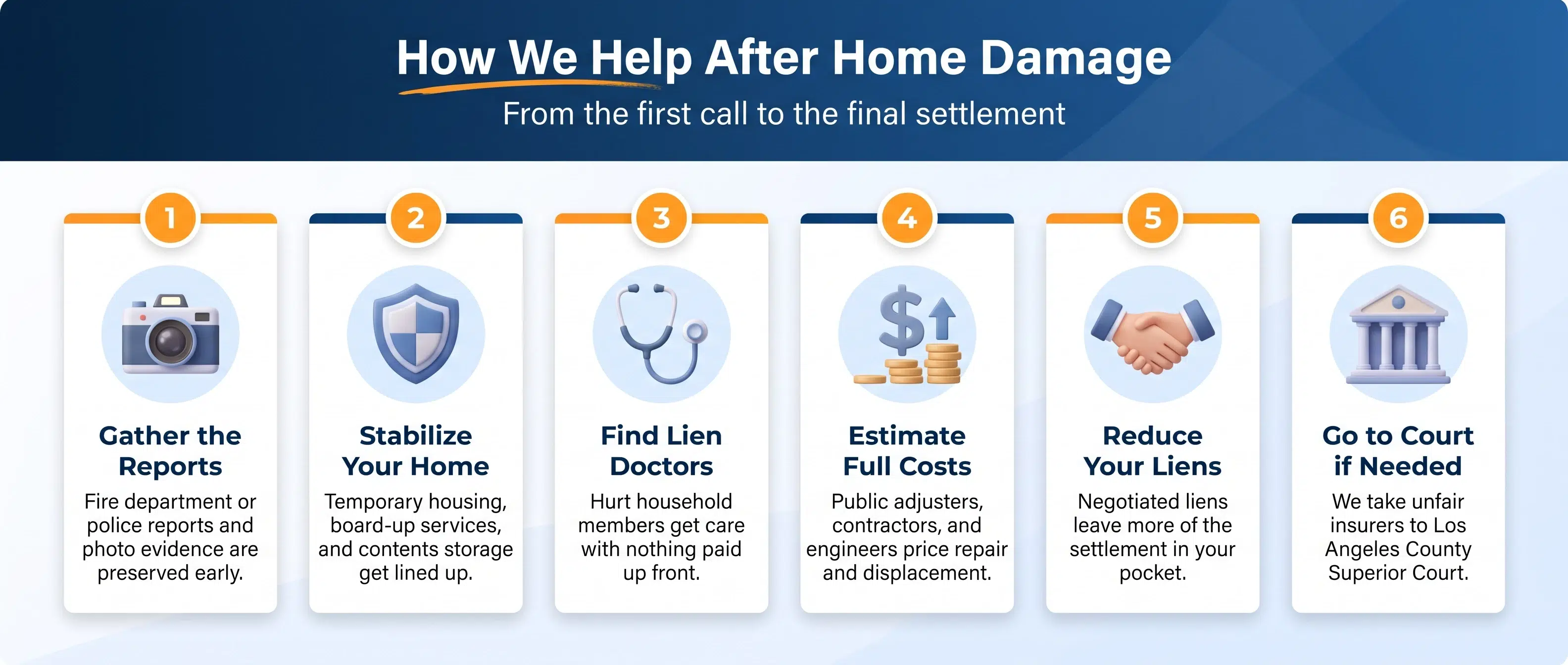
Honestly, recovery after your home gets damaged is hard enough by itself. That’s why our team gets involved early to manage the legal side, so your attention can stay on your family and your living situation. From the moment you reach out, we start gathering fire department or police reports, preserving photo and video evidence, and helping coordinate immediate stabilization. Temporary housing. Board-up services. Contents storage. Whatever you actually need to get steady.
From the day you call us through the day your settlement clears, here’s roughly how it goes. If your home is uninhabitable, we help line up temporary housing. If household members got hurt too, we connect you with local doctors we trust who treat on a medical lien, so nothing comes out of your pocket up front. Then at the end of the case, we negotiate those liens down so the dollars you actually take home land as high as possible. We know the insurance process. We know what it takes to build a strong claim. And our team works with public adjusters, contractors, engineers, and care planners to estimate the full cost of repair, replacement, and displacement.
If the insurance company won’t negotiate fairly, we’re ready to take your case into Los Angeles County Superior Court. Our trial team has tried cases to verdict in that courthouse, and the firm and its attorneys have been recognized by organizations like the National Trial Lawyers, Super Lawyers, and Best Lawyers, which honestly gives carriers a pretty clear signal that we’ll actually litigate when the facts call for it.
What makes GoSuits different is our deep knowledge of Los Angeles County’s legal field. We understand how to navigate local courts and anticipate common obstacles, which helps us move your case forward without unnecessary delays. You will receive regular case updates, secure access to your file, and a prompt response when you reach out.
Contingency fee. That’s how we work. Which means you don’t pay a thing up front. You only owe a fee if we recover compensation for you. When you work with GoSuits, you’re getting a legal team built around transparency, communication, and actual results, and you can schedule a free consultation at any time, day or night. Plenty of our clients also pull from the broader resources of our Los Angeles personal injury team when a residential property damage event injured someone in the household too.