






































How do Chicago’s scooter rules and Illinois law fit together?
Right now, where e-scooters may be ridden in Illinois depends on each city’s authorization, and Chicago runs a licensed shared-scooter program. According to the City of Chicago, shared scooters are offered through Divvy and two licensed companies, Lime and Spin. Scooters cannot be ridden on sidewalks, the Lakefront Trail, The 606 or the Chicago Riverwalk, and no shared scooter exceeds 15 mph. A first trip is limited to 10 mph, rentals run from 5 a.m. to midnight, and riders must be 18, or at least 16 with parent or guardian consent. Only one person may ride at a time.
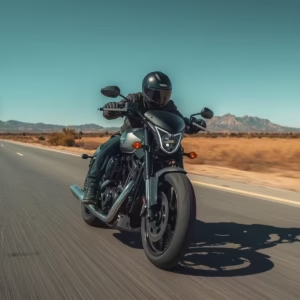
A statewide law, Public Act 104-0854, was approved on August 26, 2026 and takes effect January 1, 2027. It lowers the minimum age for low-speed e-scooters from 18 to 16. For e-bikes, which already fall into three classes, it sets minimum ages of 15 for Class 1 and 2 and 16 for Class 3, and it treats e-bikes with motors over 750 watts as motor driven cycles, which require a driver’s license and insurance, and a title for those bought new from 2027. From January 1, 2027, state law also bars low-speed e-bikes and e-scooters from sidewalks. Illinois has no statewide helmet law for e-bike or e-scooter riders, though some cities and park districts set their own rules.
Breaking a rule does not end a claim. Illinois uses modified comparative fault: your recovery is reduced by your share of fault, and barred if it exceeds 50%. A violation matters when it contributed to the crash.
Where are Chicago riders getting hurt?
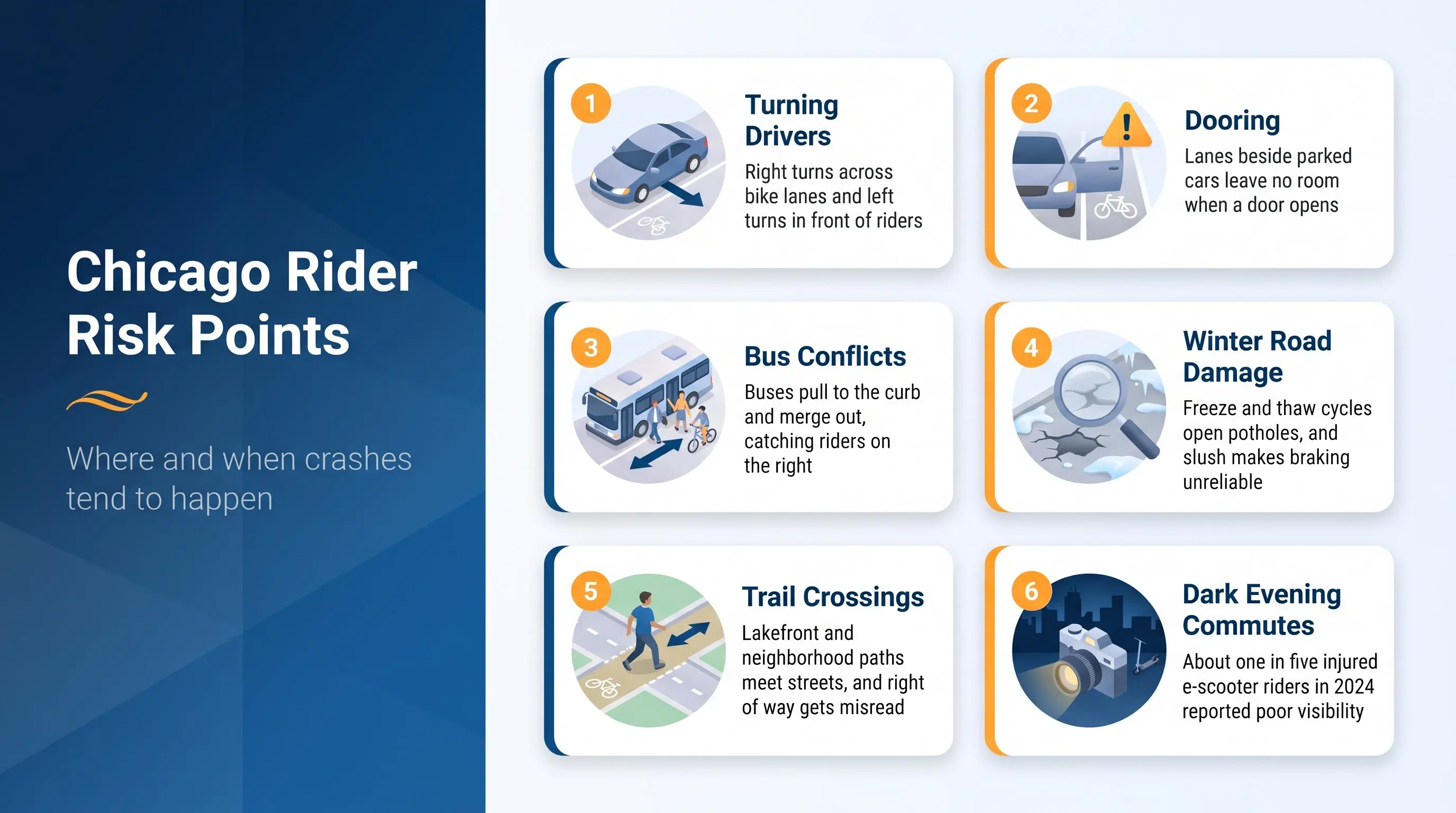
The city offers many routes and many ways for a crash to happen. Patterns we see:
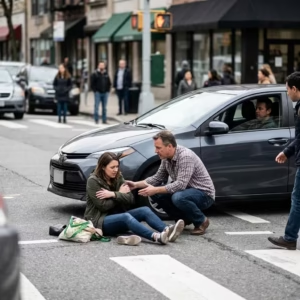
- Turning drivers: A right turn across a bike lane on a street like Milwaukee Avenue, or a left turn in front of an oncoming rider, can be catastrophic.
- Dooring: Lanes beside parked cars in neighborhoods and the Loop leave no room if a door opens.
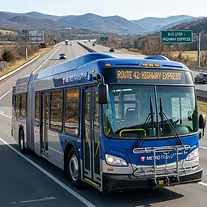
- Bus conflicts: Buses pull to the curb and merge back out, and a rider passing on the right can be caught.
- Winter and spring road damage: Freeze and thaw cycles open potholes, and salt and slush make braking unreliable.
- Trail crossings: Where lakefront and neighborhood paths meet streets, riders and drivers sometimes misread who has the right of way.
- Dark commutes: CPSC reported that about one in five injured e-scooter riders in 2024 said it was dark or hard to see, and Chicago evenings get dark early in winter.
- Device failures: Brakes, throttles and lithium-ion batteries can fail without warning.
Chicago riders are on the road in much of the year, so the season adds its own wrinkle: wet leaves in fall, ice in winter and construction in summer.
Who may be responsible for a Chicago scooter or e-bike crash?
The driver is usually first. The U.S. Consumer Product Safety Commission (CPSC) found motor vehicles involved in 140 of the 206 e-scooter deaths and 170 of the 310 e-bike deaths it reviewed for 2017 through 2024. Others who may share liability include:
- A shared-scooter operator, where poor maintenance caused a failure. CPSC found brake problems in 40 of 189 e-scooter incidents it investigated.
- A manufacturer, seller or battery maker, when a defect causes a crash or fire.
- A rideshare or delivery company, when the driver was working.
- A property owner or contractor, when a work zone or entrance created the hazard.
- A government body, when a dangerous road condition was the cause. Illinois generally allows one year to sue a local government, and a claim involving a CTA bus requires notice within six months.
Illinois requires drivers to carry at least $25,000 in bodily injury coverage per person, and every Illinois auto policy must include uninsured motorist coverage. If the at-fault driver has no insurance or too little, your own policy may help, depending on its terms.
What is a scooter or e-bike claim worth in Chicago?
It depends on what the crash did to you. CPSC reports fractures are the most common emergency-room injury, with the head and neck among the most often injured areas. In 2024, about 18% of injured e-scooter riders and 40% of injured e-bike riders were wearing helmets.
Claims can include medical expenses (including future care), lost income and earning capacity, pain, emotional distress and loss of enjoyment. A courier who relies on an e-bike may have lost the income and the means of earning it. Illinois does not cap non-economic damages in an ordinary injury claim. The 50% bar makes accurate fault evidence especially important.
Liens affect what you keep. Hospitals, treating providers and health insurers may seek repayment from a recovery, and GoSuits negotiates those balances at settlement so more of the money reaches our client.
What should you do after a crash?
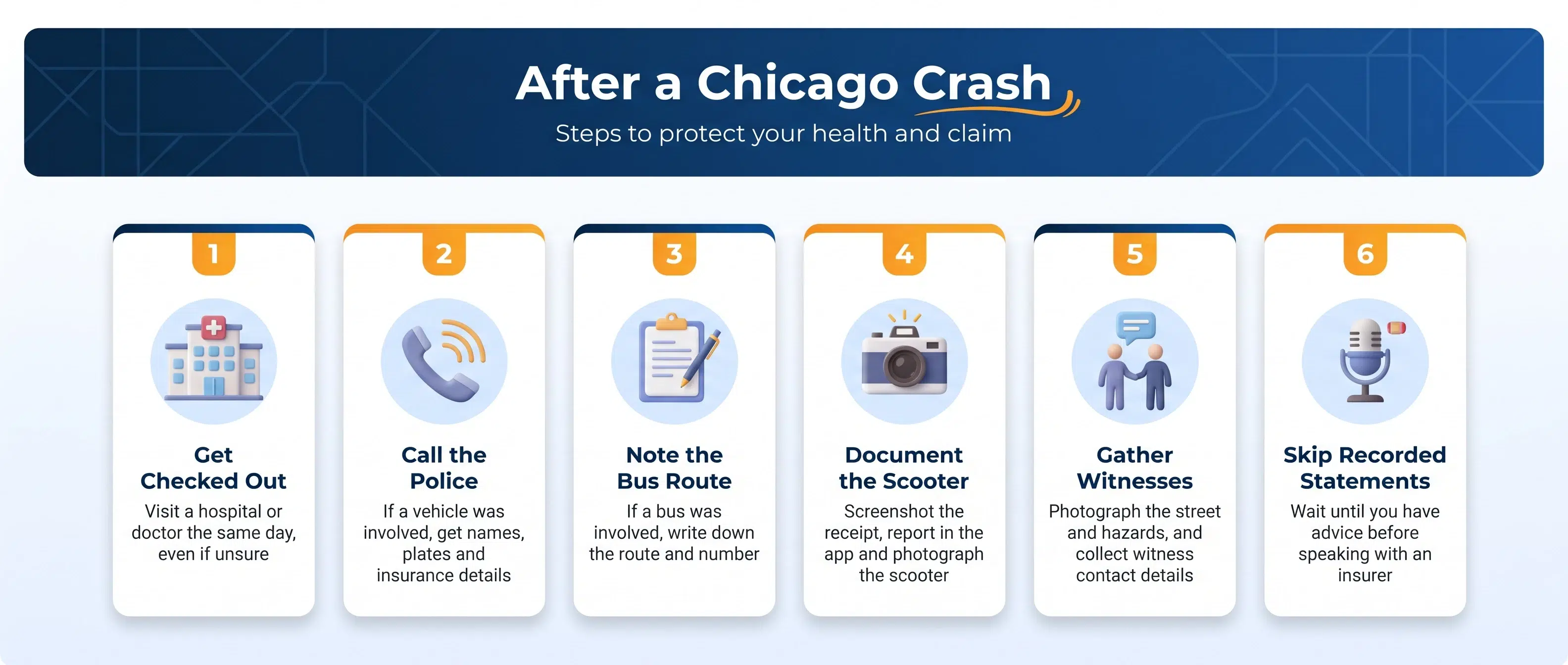
Get checked out the same day by a hospital or doctor, whether or not you think you were badly hurt. Call the police if a vehicle was involved, and get names, plates and insurance details. If a bus was involved, write down the route and number.
For a shared scooter, screenshot the ride receipt, report the crash in the app in short factual terms and photograph the scooter. If the device is yours, keep it unrepaired. Photograph the street, the intersection and any hazard, and collect witness details. Illinois gives most injured people two years to sue, but cameras do not keep footage that long.
Do not give a recorded statement before you have advice. Schedule a free consultation with our team and we will explain your options. See also our Chicago personal injury team, Chicago pedestrian accident lawyers, Chicago rideshare accident lawyers, car accident lawyers, product liability lawyers and wrongful death lawyers.