
















What makes walking in Los Angeles risky
Los Angeles was built around the car, and then people started walking in it. Boulevards such as Wilshire, Sunset, Western and Figueroa run for miles with traffic moving fast and crossings spaced far apart, so a person who needs to get across has to choose between a long detour and a risk. Add the driveways, the right-turn lanes and the bus stops, and the street asks a driver to watch a lot of places at once.
The city has acknowledged the pattern. Its Vision Zero program maps a High Injury Network, and according to the U.S. Department of Transportation’s profile of the program, that network is about 6 percent of the city’s street miles but is where 65 percent of deaths and serious injuries to people walking and bicycling occur. In other words, the dangerous streets are a short list, and people cross them every day.
Conditions vary by neighborhood. Downtown and Koreatown have heavy foot traffic and delivery vehicles stopping in crosswalks. In Hollywood, tourists and nightlife crowd the sidewalks. In the San Fernando Valley, stretches of wide boulevard stay quiet until a driver speeds up. On the Westside, near our office on Olympic Boulevard, busy commercial corridors mix office workers, shoppers, buses and cyclists. Event nights near downtown arenas and Dodger Stadium send large groups across streets at the same time as traffic leaves the freeways.
What California law says about drivers and pedestrians
Vehicle Code section 21950 requires a driver to yield to a pedestrian crossing in a marked crosswalk or an unmarked one at an intersection, and to take care for any pedestrian on the road. That duty continues even if the person is outside a crosswalk. Under section 21954, pedestrians outside a crosswalk are expected to yield to traffic, but the driver is still required to use due care.
A 2023 law known as the Freedom to Walk Act limits when police may stop someone for crossing the street outside a crosswalk. It does not make jaywalking safe, but it does matter in a claim, since a ticket or citation is less likely to appear in the report than it once was.
California applies pure comparative fault. If a jury finds you 20 percent responsible, your award drops by 20 percent. It does not drop to zero, even if you were found mostly at fault. That rule keeps many Los Angeles claims viable even when the pedestrian crossed in a risky spot.
Times and places pedestrian crashes happen in Los Angeles
Local patterns are specific, and the details change the way a case is built.
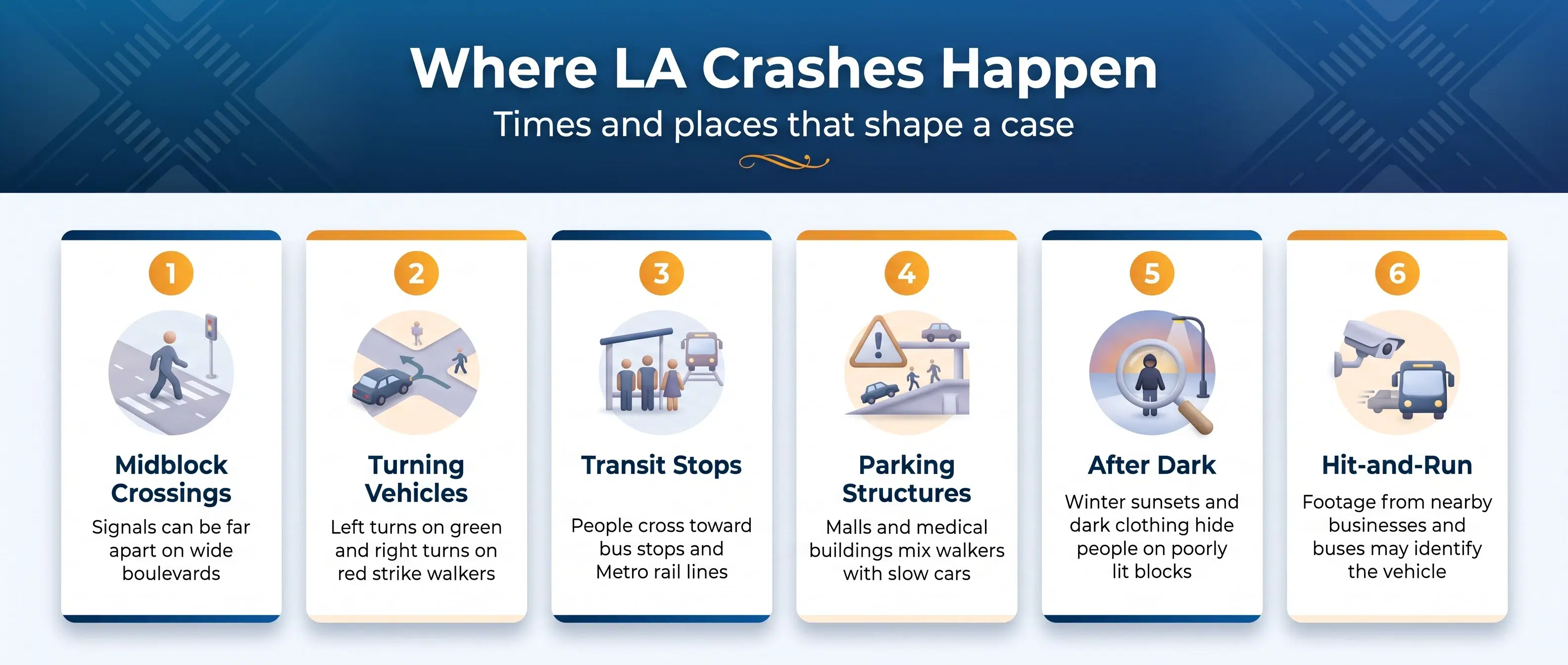
- Mid-block and unsignaled crossings: On wide boulevards, the nearest signal can be a long walk. A driver in the next lane may not see someone stepping out between parked cars.
- Turning vehicles: Left turns across a crosswalk on a green and right turns on a red are common ways pedestrians are struck at LA intersections.
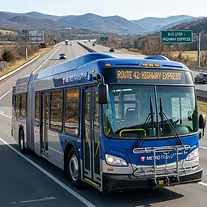
- Transit stops and rail crossings: People cross toward bus stops, and Metro light rail lines such as the A Line and E Line cross some streets at grade.
- Parking structures and lots: Malls, grocery stores and medical buildings put walkers and slow-moving cars in tight spaces.
- After dark: Sunset comes early in winter, and dark clothing blends into poorly lit blocks. Drivers must still adjust to what they can see.
- Hit-and-run: Drivers sometimes leave on busy streets. Footage from nearby businesses and buses is often the only way to identify the vehicle.
Rain is infrequent here, but when it comes after a dry spell, oil on the pavement makes stopping distances longer. Morning glare in the Valley and evening sun on west-facing boulevards can also reduce visibility. Neither excuses a driver, though both belong in the investigation.
Who may be liable for a Los Angeles pedestrian crash
The driver comes first. Employers can be responsible if a driver was working, which covers delivery vehicles, contractors and company trucks, and rideshare companies carry additional coverage in some situations. A shop or building owner with a poorly lit lot may share responsibility.
When the street itself played a part, such as a signal that failed, a crossing with faded markings, or a broken sidewalk, a public entity can be responsible if the condition was dangerous and the entity knew or should have known about it. Those claims start with a formal written claim, generally within six months of the injury, and the clock is short. Los Angeles Metro and the City of Los Angeles each have their own claim processes.
California requires liability coverage of at least $30,000 per person. Serious injuries can exceed that, so we look at your own uninsured and underinsured motorist coverage, which insurers must offer and which you keep unless you reject it in writing. Medical payments coverage may also help with bills regardless of fault.
Injuries we see in Los Angeles pedestrian cases
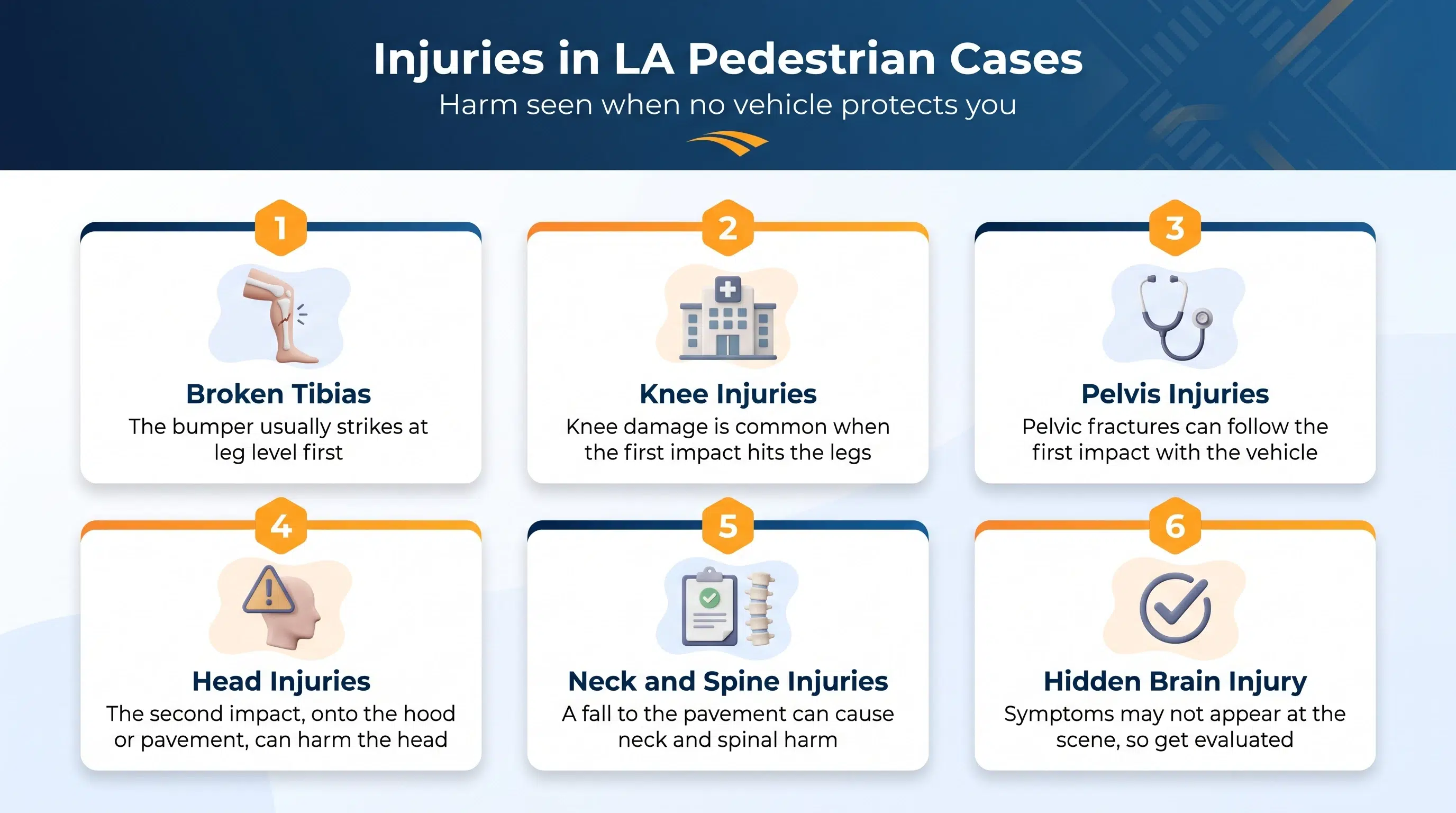
Pedestrians have no protection in a collision. NHTSA reports that people on foot made up 18 percent of U.S. traffic deaths in 2023. The first impact usually hits the legs, which means broken tibias, knees and pelvises. The second impact, onto the hood or the pavement, can cause head, neck and spinal injuries. A brain injury may not announce itself at the scene.
The injuries tend to be life-changing in a city where many people depend on walking, transit and jobs that keep them on their feet. A server with a broken ankle, a warehouse worker with a spinal injury or a student who cannot carry a backpack all need claims that reflect the way they live.
How a Los Angeles pedestrian claim is valued
Value depends on your records and how your life has changed. The parts include:
- Medical care: Ambulance, emergency treatment, surgery, hospital stays, rehabilitation and the future care your doctors anticipate.
- Income loss: Missed work, and reduced earning ability if you cannot return to the same job.
- Non-economic harm: Pain, anxiety and the loss of enjoyment. California does not cap these in an ordinary pedestrian case.
- Your share of fault: Any percentage a jury assigns to you reduces the award, but never eliminates it.
- Insurance: The driver’s policy, any employer coverage and your own UM/UIM and medical payments coverage.
- Liens: Providers that treated on a lien and health plans may seek repayment. We negotiate these before a case closes, because savings go to the client.
Families who have lost someone in a pedestrian crash may have a wrongful death claim. Our wrongful death lawyers can explain who may file in California and what to expect.
Steps to take after a crash on a Los Angeles street
Get checked out by a doctor even if you can walk. Call 911 and note the officer’s name and the report number. Photograph the intersection, the signals, the vehicle and your injuries. Collect names from anyone who saw the crash, and look around for cameras on nearby businesses and buses.
When an insurer calls, you do not have to agree to a recorded statement. Speak with a lawyer first. Our attorneys handle the insurer calls, and GoSuits investigators can go to the scene to look for video and measure what the report left out. Our Los Angeles personal injury team is available to talk with you.
For related issues, see our car accident lawyers, truck accident lawyers, rideshare accident lawyers in Los Angeles and the statewide page for California pedestrian accident lawyers.