
















Irvine Rideshare Accident Lawyers | Free Consultation 24/7

Award-Winning Irvine, CA Rideshare Accident Lawyers

30 Years of Experience Emblem

Injured? Go Smart, GoSuits.

Get your free case estimate, takes 60 seconds.

No Fees Unless You Win*
No Hidden Administrative Fees
Fast Response Time and Available 24/7

If you were injured in an Uber or Lyft crash in Irvine, the insurance questions you face are unlike almost anything else in a personal injury case. Coverage shifts depending on whether the driver had a passenger, was waiting for a match, or was simply logged off the app. GoSuits represents rideshare accident victims throughout Irvine and Orange County, handling the insurance complexity and the litigation work while you concentrate on getting better.

Rideshare crashes in Irvine tend to cluster around the Irvine Spectrum area, along Jamboree Road and Sand Canyon Avenue, and on the I-405 and I-5 corridors where drivers frequently accelerate to meet tight pickup windows. The parties involved can include the driver, Uber or Lyft as the platform, and the driver’s personal insurer, each of whom may point at the others. We sort out who owes what and move quickly to preserve the digital trip data that makes or breaks these claims.

Gosuits - Hero Image
The National Top 40 Under 40 Trial Lawyers Attorney At Law Magazine - Law Firm of The Month Super Lawyers - Sean Chalaki - Rising Star - Personal Injury Litigation Sean Chalaki - Best Lawyers 2025 Sean Chalaki - Best Lawyers Ones to Watch 2022

Reviews And Testimonials

Why choose GoSuits as your Irvine rideshare accident lawyer?

GoSuits handles rideshare accident cases across Irvine and Orange County, and the practice area shapes how we work from day one. App-based transportation claims live and die on digital evidence, and that evidence has a short shelf life. Trip logs, app-status records, and GPS route data can disappear or become unreachable within days if nobody sends a legal hold demand. We do that on the day we open your case.

Our attorneys know the local roads where these crashes happen. The I-405 through Irvine backs up hard near the SR-133 interchange, which pushes drivers onto surface streets like Culver Drive and Alton Parkway where pickup-and-drop behavior creates its own hazards. The Irvine Spectrum parking structure exits onto Spectrum Center Drive, a corridor that sees a high volume of app-summoned vehicles idling and pulling out into traffic. We have seen these conditions in real cases, and we understand how they shape liability.

Five things that matter when you choose us for an Irvine rideshare accident case:

First, we secure the digital evidence while it still exists. App trip records, driver login status at the moment of impact, and GPS route data must be preserved through a formal demand to Uber or Lyft. Waiting even a few days risks losing the most telling piece of the liability puzzle.

Second, we investigate the scene. Our attorneys visit the crash location, identify traffic camera positions near intersections like Jamboree and Barranca, note the pickup and drop-off zone configurations, and build a factual record that a jury can understand.

Third, we check all coverage layers. Uber and Lyft maintain a $1 million commercial liability policy when a driver has an accepted ride or a passenger on board. Before and after that window, coverage drops sharply or reverts to the driver’s personal policy. We identify which layer applies and hold every responsible party to their obligations.

Fourth, we look at driver conduct. Distraction from app monitoring, rushing to meet pickup timers, and fatigue from back-to-back rides are common contributors to rideshare crashes. Where the facts support it, we develop those theories and document them.

Fifth, we know how cases move through the Orange County Superior Court. Filing deadlines, local court procedures, and the specific demands of Orange County judges and mediators are familiar ground for our team. That local knowledge is a practical advantage from the first conference call through trial, if it comes to that.

Contact Us Today
30+ years of combined experience

30+ years of combined experience

Our attorneys have litigated rideshare and transportation-network claims in Irvine and across Orange County, building a track record in cases that require both accident reconstruction and a detailed understanding of platform insurance structures. That depth of courtroom and negotiation experience is what we bring to every rideshare accident file we open in Orange County.

No fees unless you win

No fees unless you win

You owe us nothing unless we recover compensation for you. Our representation is entirely contingency-based, which means a rideshare crash victim in Irvine can retain us without any upfront payment, regardless of how complex the insurance picture looks. For a full explanation of how contingency representation works and what that means for your out-of-pocket costs, see our no-fee-unless-you-win page.

No hidden administrative fees

No hidden administrative fees

Some firms reduce your net recovery by tacking on file fees, copy charges, or administrative overhead that never appeared in any conversation. We do not do that. The terms of our representation are transparent from the start, and you will not encounter surprise costs at settlement when you work with our Irvine rideshare accident lawyers.

Fast response time and 24/7 availability

Fast response time and 24/7 availability

In a rideshare accident case, the clock starts immediately. App-status records and trip logs held by Uber or Lyft are not indefinitely preserved, and surveillance footage from businesses near the crash site, intersections like Jamboree and Walnut, or Spectrum-area parking structures can be overwritten within days or weeks unless someone sends a preservation request. We move on that the same day we hear from you. Our intake team answers around the clock, day or night, and the person who picks up can begin the process of opening your file rather than simply taking a message. We also provide service in Armenian, English, Hebrew, Korean, Farsi, and Spanish, so you can explain what happened in your first language without waiting on an outside interpreter. Call us at any hour.

Contact Us Today
No Win. No Attorney Fees*

Start Your FREE Case Evaluation!

If you need immediate assistance, do not hesitate to call Irvine CA Injured Lawyers!

Call Our Lawyer

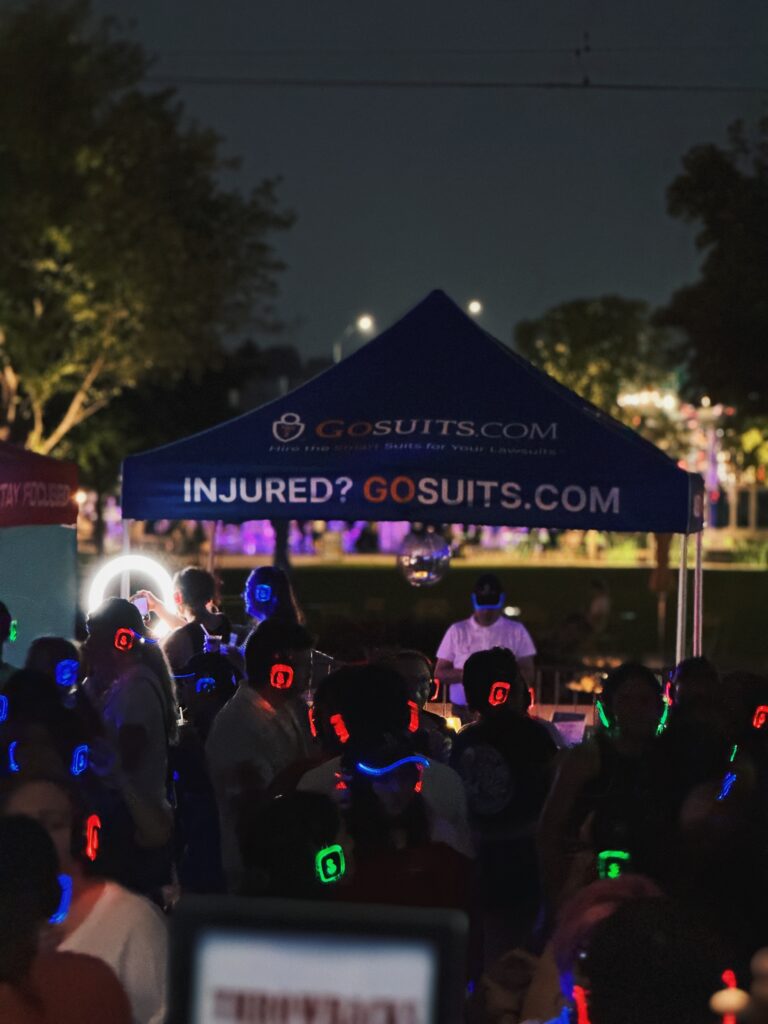
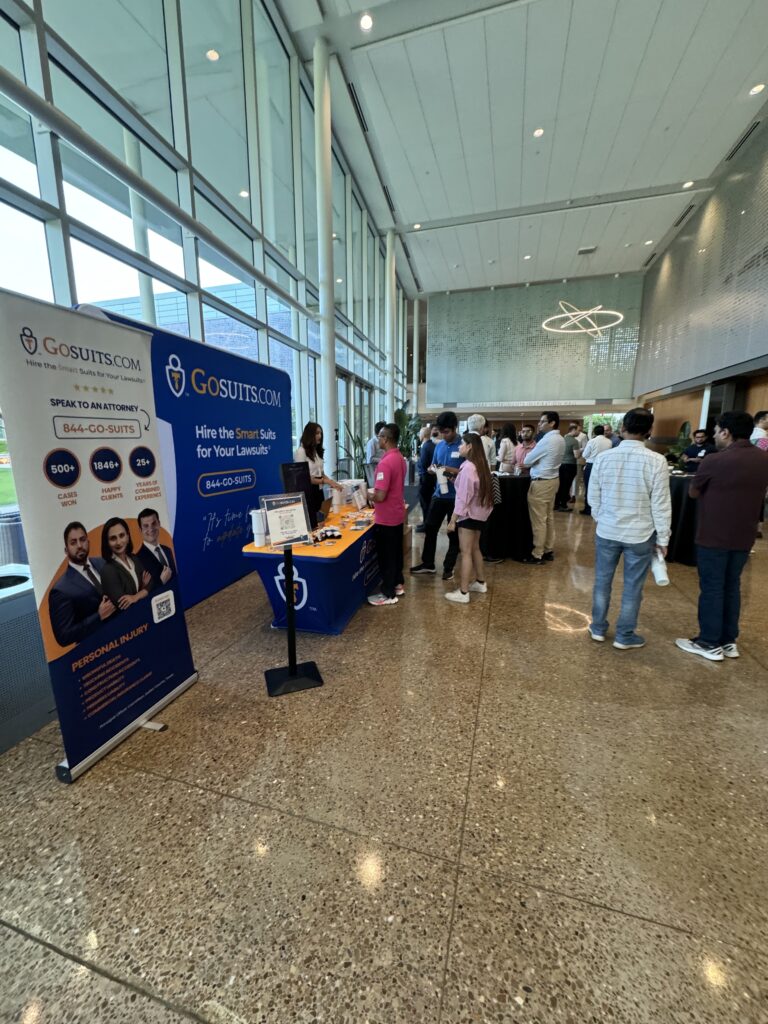
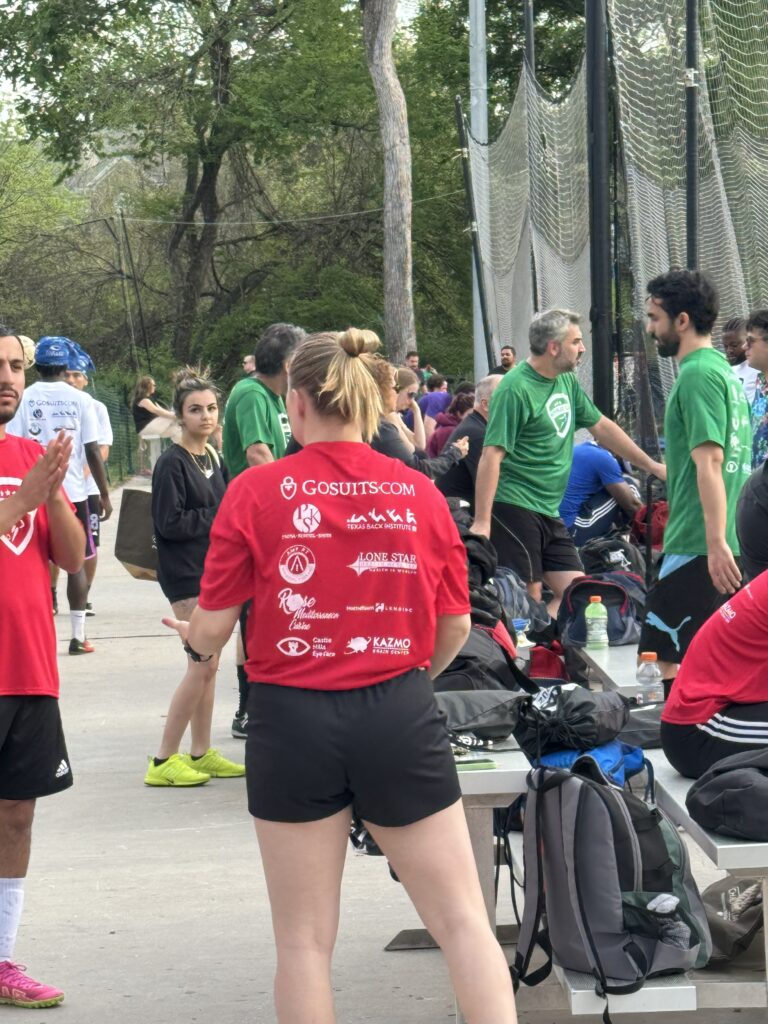
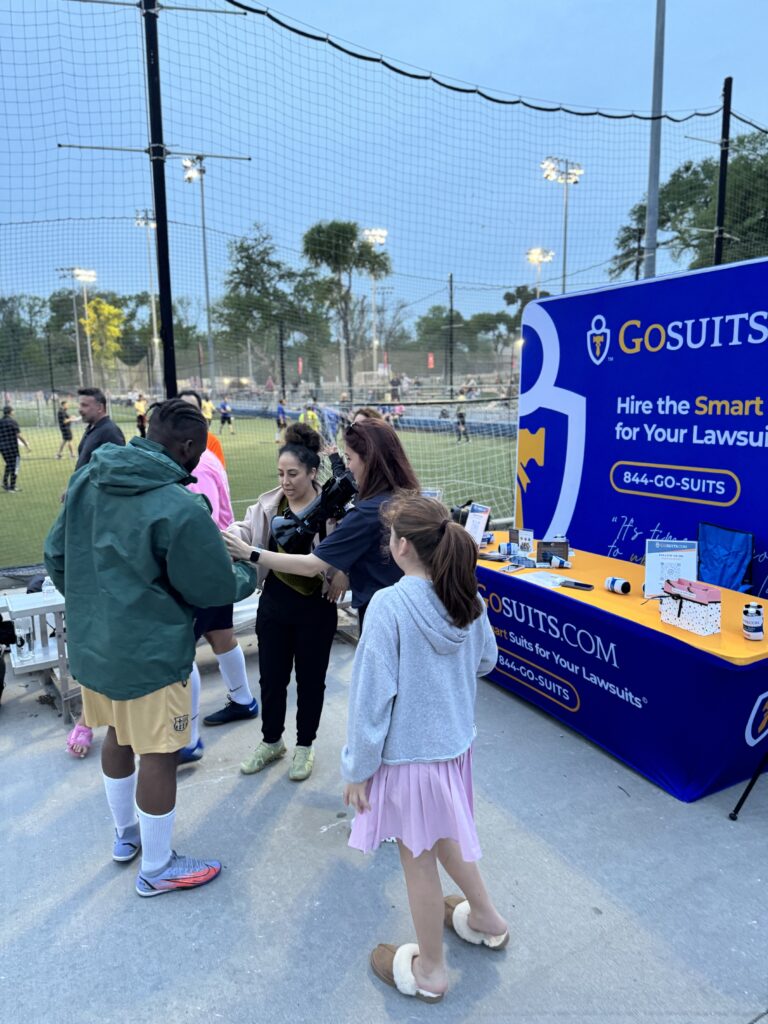
Our commitment to Irvine through events and outreach

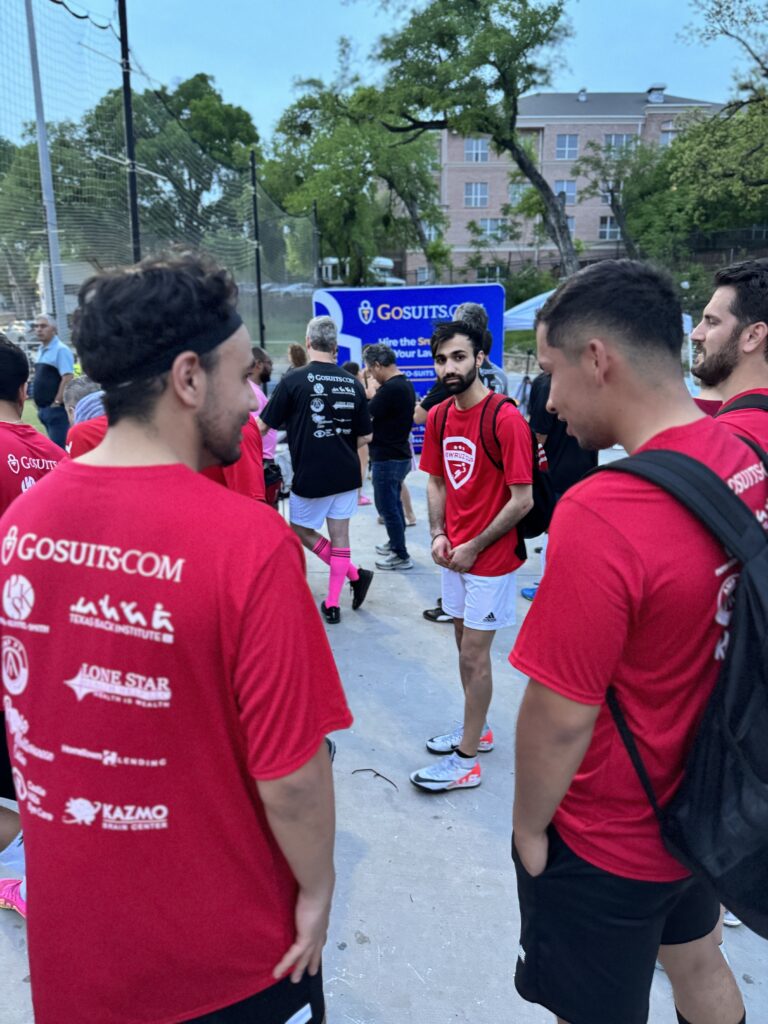
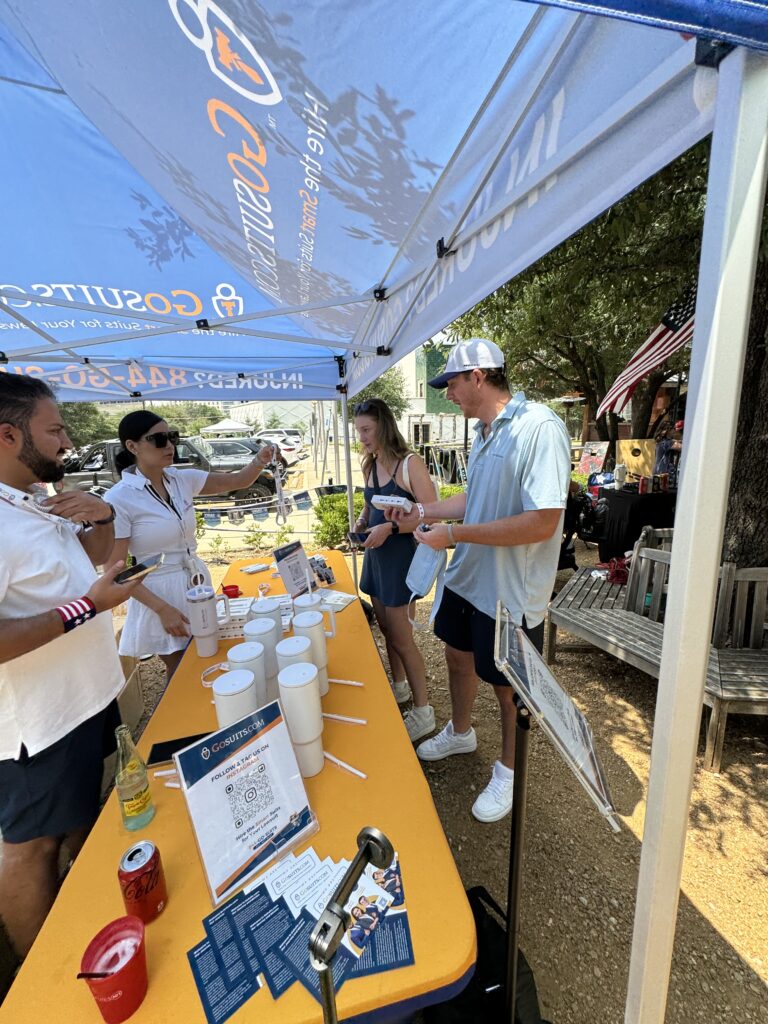
GoSuits participates in road-safety awareness initiatives in Orange County with a focus on the corridors and conditions we see most often in our cases. Jamboree Road, the I-405 interchange area, and the Irvine Spectrum district are among the most active rideshare pickup and drop-off zones in the county, and the risks that come with that volume of app-based vehicle traffic are worth talking about publicly. We support efforts to educate riders and drivers about what to do immediately after a crash, because the decisions made in those first minutes often determine what is recoverable later.

We also engage with the broader Irvine and Orange County community through legal education outreach, including information about how rideshare insurance works, what passenger rights look like under California law, and how the claims process differs when a platform vehicle is involved. Our attorneys have contributed to local conversations on transportation safety and continue to publish resources through our knowledge base for anyone navigating an accident claim in the Irvine area.

Being a part of this community means more than taking cases. It means contributing information and showing up in the conversations that affect how people understand their rights when something goes wrong on a ride they paid for and reasonably expected to be safe.

Affiliations & Community Involvement

  • Texas Trial Lawyers Association - Members, Sean Chalaki & Shawn S. Hashemi (Sean Chalaki serves on the Executive Board for Technology and Innovation)
  • Dallas Trial Lawyers Association - Members, Sean Chalaki & Shawn S. Hashemi
  • Illinois Trial Lawyers Association - Member, Shawn S. Hashemi
  • State Bar of Texas, Torts and Insurance Practice Section - Member, Shawn S. Hashemi
  • Dallas Association of Young Lawyers - Member, Shawn S. Hashemi
  • Phi Delta Phi Honor Society - Member, Shawn S. Hashemi, and graduate of the Dallas Bar Association Trial Academy
  • Orange County Bar Association - Member, Sean Chalaki
  • Irvine, Beverly Hills, and Frisco Chambers of Commerce - Member, Sean Chalaki
  • Network of Iranian Professionals of Orange County - Member, Sean Chalaki
  • Heritage Reimagined - Founding Member, Sean Chalaki
  • South Australian Bar Association and the Iran Central Bar Association - Member, Yasamin Moussavi
  • Turtle Rock Elementary School - Former PTA President, Sean Chalaki
  • Legal Aid - Volunteer, Shawn S. Hashemi
  • Supporters of local schools, nonprofits, and community organizations in every region we serve

How can I find a reliable rideshare accident attorney near me?

Our Irvine Office

2082 Michelson Dr Suite 315
Irvine, CA 92612

(949) 989-5558

Open 24/7 for Emergencies

What should I bring to my first meeting with an Irvine rideshare accident lawyer?

Bring whatever you have, and do not worry if the list is incomplete. The most useful items are: a screenshot or printout of the Uber or Lyft trip from your app (showing the driver's name, the fare, and the time), the police report number if you received one at the scene, photos of the vehicles and your visible injuries, medical records or bills you have received so far, insurance information for all involved vehicles, and any correspondence from the rideshare platform or an insurer. A written timeline of what you remember, including what the driver was doing just before the crash, helps us move quickly. For a car crash checklist adapted to Irvine conditions, we have a reference on our knowledge base.

What evidence makes or breaks an Irvine rideshare accident claim?

Most personal injury cases depend on physical evidence: vehicle damage, skid marks, medical records. Rideshare cases carry all of that, plus a layer of digital evidence that does not exist in an ordinary car crash and that can disappear without warning.

The app trip record is central. It shows whether the driver had an accepted ride, whether a passenger was in the vehicle, and the driver’s exact route and speed history at the time of the crash. Uber and Lyft do not produce this automatically, and they do not preserve it indefinitely. A legal hold demand sent within the first day or two of a crash is often the only way to protect access to that record.

Beyond the trip data, surveillance footage from nearby businesses is time-sensitive. Cameras at the Irvine Spectrum shops, along Jamboree Road, and near Sand Canyon Avenue can capture a crash from angles that no dashcam covers, but most commercial systems overwrite in 7 to 30 days. Requesting preservation early matters.

Medical documentation ties the injury to the crash. Emergency room records from Hoag Hospital Irvine or Kaiser Permanente Irvine, created on the day of the crash, establish the medical baseline that prevents an insurer from later arguing the injury predated the incident. Gaps in treatment give adjusters ammunition. Consistency in care does the opposite.

The police report establishes the basic facts of the scene: which vehicle struck which, the driver’s statements at the time, and whether citations were issued. It is not conclusive, but it matters, and the Irvine Police Department collision report is the version we request and review.

How the insurance layers actually work in a rideshare crash
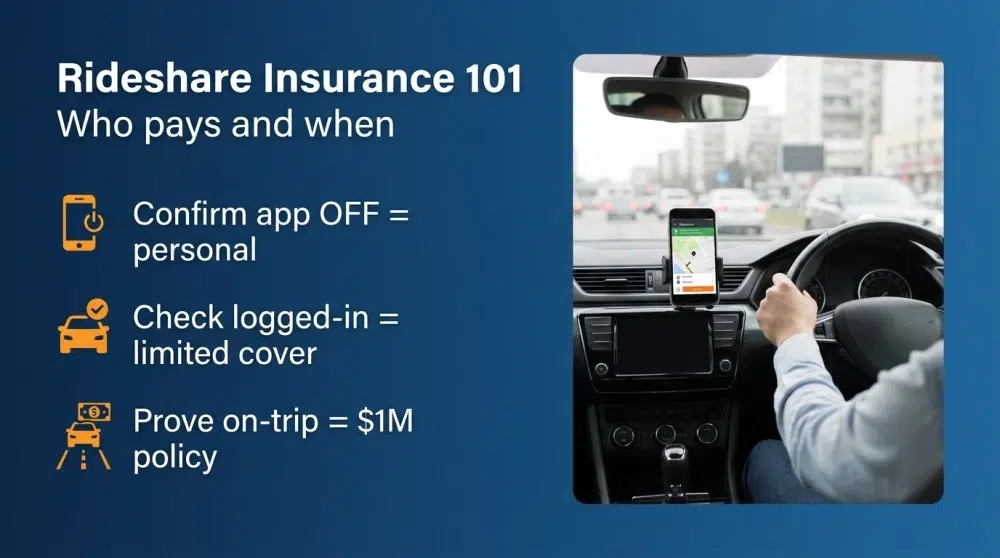
Rideshare Insurance 101 infographic: Who pays and when

This is where most people get confused, and where insurers count on that confusion.

Uber and Lyft divide a driver’s time into three phases. Phase 1 is when the app is off, the driver is using the car personally, and only the driver’s personal auto policy applies. Phase 2 begins when the driver logs into the app and is available but has not yet accepted a ride. During Phase 2, both Uber and Lyft provide contingent liability coverage, but it is limited, typically $50,000 per person and $100,000 per accident for bodily injury, along with $25,000 for property damage. That contingent coverage only applies if the driver’s personal insurer denies the claim or the coverage is insufficient.

Phase 3 starts the moment a driver accepts a ride request and continues until the passenger is dropped off. This is when the $1 million commercial liability policy is active. It applies to passengers, to pedestrians, to other drivers, and to anyone else injured during that window.

Why does this matter? Because insurers dispute phase status constantly. They may claim the driver’s app was in Phase 2 when it was actually Phase 3, or claim the driver had just ended a trip when the crash occurred. The digital trip record is the primary tool to resolve those disputes, which is why preserving it immediately is so important.

On top of the commercial liability coverage, Uber and Lyft also carry uninsured and underinsured motorist coverage (UM/UIM) for drivers and passengers when applicable. If another driver caused the crash and carried minimal coverage, UM/UIM can be the most significant available recovery.

Who can be held responsible when an Uber or Lyft crash happens in Irvine?

The driver is the obvious starting point. Distraction from the rideshare app itself, rushing to reach a pickup before the request times out, and fatigue from long stretches of back-to-back rides are recurring factors in rideshare crashes. Where driver negligence is clear, the commercial policy responds directly.

The platform’s own liability depends on facts and on California law. Proposition 22, passed in 2020, classified rideshare drivers as independent contractors rather than employees, which limits the theories under which Uber or Lyft can be held directly liable for a driver’s negligence. That said, our Irvine personal injury team evaluates every case for theories including negligent hiring, retention, and inadequate safety systems where the facts support them.

A third driver may be at fault. Many rideshare crashes are intersection collisions where the rideshare vehicle was not the one that ran the light or failed to yield. In those cases, the at-fault driver’s insurer is the primary target, and the rideshare commercial coverage may come in as a secondary resource under UM/UIM if the third driver’s policy is insufficient.

Vehicle defects occasionally contribute. If a mechanical failure played a role, a product liability claim against the manufacturer may run alongside the negligence claim against the driver.

The injuries, and what drives a claim’s value up or down

Soft-tissue injuries, meaning neck and back strains, are the most common outcome of rideshare crashes. They are also the most frequently disputed. Insurers routinely argue that soft-tissue injuries are minor, pre-existing, or unrelated to the crash. Early medical evaluation, consistent treatment, and clear documentation are the defenses against those arguments.

More serious crashes produce traumatic brain injuries, spinal fractures, fractured extremities, and internal injuries. These cases carry higher values but require more documentation of long-term impact: future medical costs, reduced earning capacity, and the effect on daily function. We work with qualified medical professionals and financial professionals to build those projections when the injuries warrant it.

What drives a claim’s value down is predictable: gaps in medical treatment, recorded statements to insurers made without legal counsel, and accepting an early settlement before the full scope of injury is understood. An adjuster who calls within days of a crash is not calling to help you. The offer they make at that stage is designed to close the file before your medical picture develops.

What drives value up is equally predictable: clear liability, documented injuries tied directly to the crash, evidence of the platform’s Phase 3 coverage, and an attorney willing to file suit if the negotiated number does not reflect reality. Beyond pursuing the gross recovery from the at-fault insurer, we negotiate with hospitals, emergency groups, and medical-lien holders at settlement to reduce what you owe out of the award, so more of the money actually reaches you rather than going back to pay medical bills at face value.

What to do in the days after a rideshare crash in Irvine
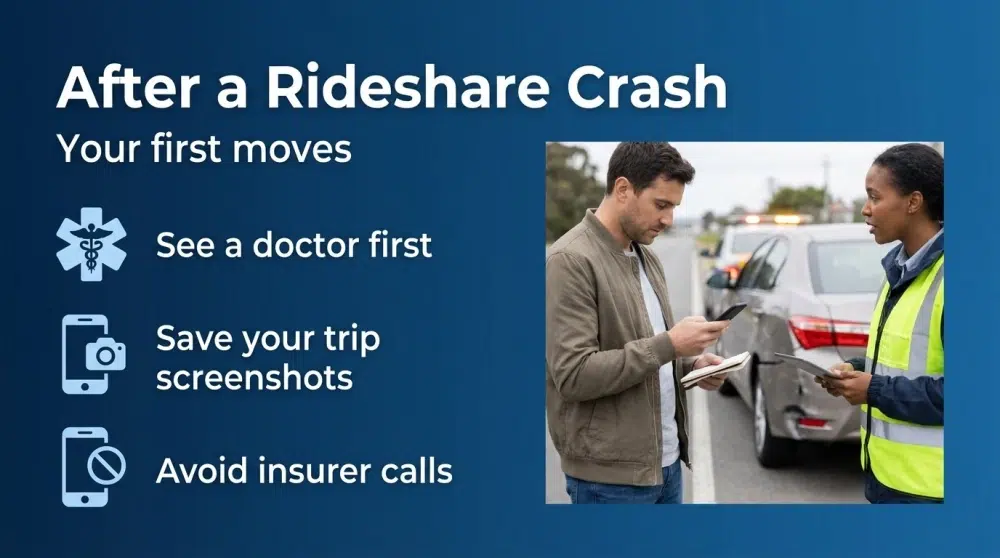
After a Rideshare Crash infographic: Your first moves

Get medical attention the same day if you can. Some injuries, including concussions and soft-tissue damage, present symptoms gradually. An emergency room visit or urgent care appointment on the day of the crash creates a medical record that connects the injury to the event. Waiting weakens that connection.

Screenshot your ride history in the Uber or Lyft app before doing anything else with the app. The trip record showing the driver, the route, the time, and the fare is one of the most important pieces of evidence in your case. It can be harder to retrieve later.

Do not speak to the rideshare platform’s claims team or to any insurer without first consulting an attorney. Anything you say can and will be used to limit what you recover. “I’m okay” said in a moment of adrenaline can come back in a recorded statement. The adjuster’s job is to resolve your claim for as little as possible.

Photograph everything at the scene if you are physically able: both vehicles, the road and intersection, any visible injuries, the street signs. If the crash happened at an intersection like Jamboree and Barranca or near a shopping center on Alton Parkway, note which businesses might have exterior cameras.

Call us. The sooner we can send preservation demands for the trip data and the surveillance footage, the better your position.

How long do you have to file a rideshare accident claim in California?

California’s statute of limitations for personal injury claims is generally two years from the date of the injury, under California Code of Civil Procedure section 335.1. For claims involving a government entity, such as when a public transit driver caused a collision while you were in a rideshare vehicle, the window is much shorter and a government claim must typically be filed within six months. Missing either deadline almost always means losing the right to pursue compensation entirely.

Two years can feel like a long time, but rideshare cases benefit from early action for the evidence reasons described above. A case opened in year two is a case built on degraded or unavailable digital records, overwritten surveillance footage, and witnesses whose memories have faded. Contact our team now, while the evidence is still intact.
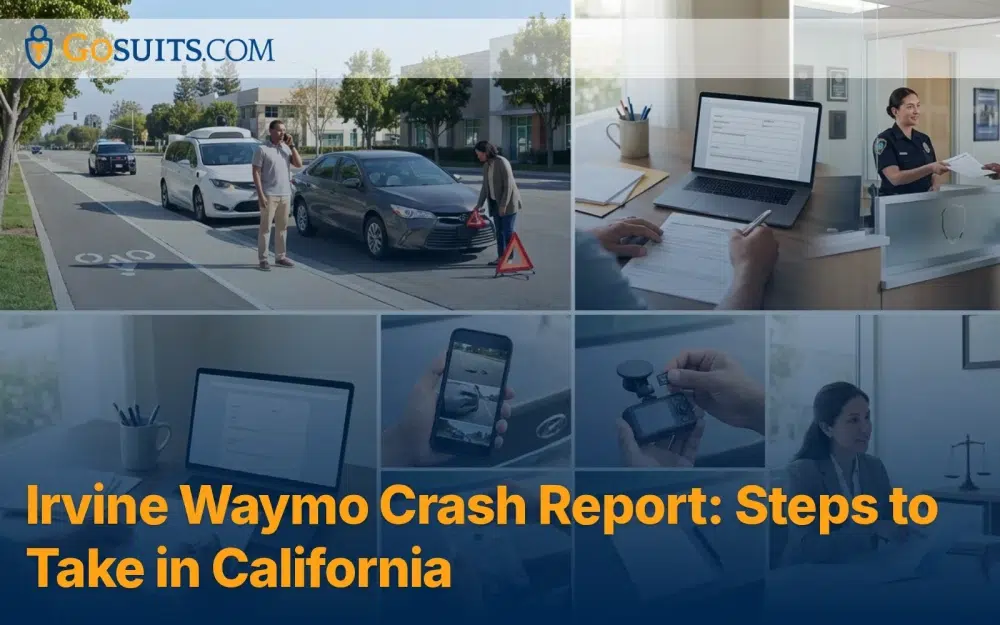
Irvine California rideshare accident lawsuit steps and process

Collect all available evidence after a rideshare incident

We begin by securing the evidence that is most time-sensitive in a rideshare case. That means sending legal hold demands to Uber or Lyft for trip records, driver app-status data, and GPS route logs before they are overwritten or archived. We also request preservation of any dashcam footage, collect the police report from the Irvine Police Department, photograph the crash scene, gather witness contact information, and obtain surveillance footage from nearby businesses along corridors like Jamboree Road, Sand Canyon Avenue, or the Irvine Spectrum before retention windows expire.

Write a demand letter to the insurance company

Once we have a clear picture of your injuries and losses, we prepare a demand letter addressed to the responsible insurer, which in a Phase 3 rideshare crash is typically Uber or Lyft’s commercial carrier. The letter documents liability, the full scope of medical treatment and bills, lost wages, and non-economic damages including pain and reduced quality of life. It also identifies future costs where your injuries have ongoing consequences. The demand is grounded in the evidence we collected, not in estimates.

Negotiate a settlement with the insurance adjuster

Rideshare insurers are experienced at negotiating down claims, and they will use phase disputes, pre-existing condition arguments, and early low offers as standard tools. We counter those tactics with the digital trip record, consistent medical documentation, and an honest appraisal of what the case is worth at trial. We also negotiate with hospitals and medical-lien holders to reduce what you owe at settlement, increasing your actual take-home recovery beyond just the gross number from the carrier.

File a rideshare accident lawsuit in Orange County

If negotiations do not produce a fair resolution, we file suit in Orange County Superior Court. Filing shifts leverage. The insurer must now defend the case through formal litigation, the platform can be compelled to produce internal records through discovery, and the timeline becomes controlled by the court rather than by the carrier’s adjustment calendar. We name the correct defendants, which may include the driver, the platform, and any other at-fault parties, and we serve them properly to avoid procedural dismissal.

Begin the discovery process in a lawsuit

Discovery in a rideshare accident case goes further than in a standard car crash. We serve interrogatories and document requests on the driver for their driving history, prior incidents, and communication records. We also pursue platform-level discovery on driver background check practices, safety protocols, and the app’s performance at the time of the crash. Depositions of the driver, any witnesses, and in some cases platform representatives add to the factual record. This phase often surfaces information that was not available before filing.

Mediate the case before trial

Most rideshare cases settle before trial, and mediation is usually the last structured opportunity to do that. A neutral mediator in Orange County reviews both sides’ positions and facilitates negotiation. Mediation is not binding unless both parties agree to a number, but it is a setting where fully developed evidence and credible trial preparation produce the most movement from a platform insurer who would otherwise prefer to delay. We prepare thoroughly so that our position at mediation reflects the strength of the case we would bring to a jury.

Go to trial in an Irvine rideshare accident case

When a fair settlement cannot be reached, we try the case in Orange County Superior Court. We present the digital trip evidence, the medical records, the testimony of qualified professionals on causation and damages, and the physical evidence from the crash scene to a judge or jury. Rideshare cases can be complex to present because of the insurance layer analysis, and we structure that explanation so a jury understands it without requiring them to already know how app-based transportation works.

Finalize a rideshare accident settlement

A settlement, whether reached before or after filing, is documented in a written release that resolves your claims against the responsible parties. Before you sign, we confirm that the settlement covers your documented damages, that the release language does not inadvertently extinguish claims you did not intend to release, and that any outstanding medical liens have been reduced to the extent possible. What you receive is the net amount after attorney fees and resolved liens, and we walk through those numbers with you before anything is signed.

Appeal a verdict if a legal error affected the outcome

If a trial produces an adverse result and a legal error contributed to it, we evaluate appellate options. Appeals in California personal injury cases involve briefing to a higher court on questions of law, not a re-trial of the facts. The standard is whether the error was prejudicial, meaning it affected the outcome. Where a viable ground exists, we pursue it. An unfavorable verdict is not necessarily the end of the case, and we do not treat it as such without reviewing the record carefully.

Talk to a Lawyer. NO WIN. NO ATTORNEY FEES.*

Call Us Now

Meet our Irvine rideshare accident attorneys

It's time we do things the SMART way rather than the hard way
“Hire the Smart Suits for Your Lawsuits”

We'll Evaluate Your Case - Totally Free

(949) 989-5558

Frequently asked questions

Does Uber or Lyft's $1 million policy cover me as a passenger in Irvine?

Yes, when a driver has accepted a ride request and you are on board, the platform’s $1 million commercial liability policy is active. That coverage applies to passengers injured in crashes caused by the rideshare driver or by another negligent driver. If another vehicle caused the crash and carries inadequate insurance, Uber and Lyft’s uninsured and underinsured motorist coverage may also be available to you.

More Questions?

Call Our Lawyer

Sources Reviewed for This Page

Statutory and agency materials consulted when preparing the legal and factual statements on this page. Links open external government and bar resources.

Reviewed by Sean Chalaki , Attorney · Jurisdiction: Orange County, California

CONTACT US TODAY - 24/7 (949) 989-5558

Limited time to file your claim. Don't wait!

We’re here to help you get the compensation you deserve.

No Win. No Attorney Fees*

Start Your FREE Case Evaluation!