










































Different Types of Buses
It’s no secret that buses are a common means of public transportation. Buses are popular because they are inexpensive, easy to use, and help people lessen their carbon impact. In addition to eliminating the hassle of finding a parking spot, taking public transportation reduces the stress of getting to your destination. The most popular kinds of buses are listed below.
- Single Deck Bus– One type of bus utilized often by public transportation, travel agencies, and charter services is the single-decker. A single-level, full-size bus can be anywhere between 16 to 39 feet long, and it can seat anywhere from 60 to 120 people.
- Double Decker Bus– serves a dual purpose as public transportation and tourist transportation. The upper level of these buses is accessible by a stairway. Double decker buses, also referred to as “double tall buses,” are a common kind of public transportation in some areas.
- Articulated Bus – often called accordion buses, are distinguished by a joint that pivots to connect the bus’s two halves. The articulated bus can be as long as 66 feet and have the capacity to transport as many as 270 people.
- School Bus– a crucial feature of the American educational system. Over 25 million children in the United States rely on school buses every day to go to and from school. School buses are required by law to include certain safety measures, such as flashing lights and longer stop arms, and they are required to be painted the standard color of School Bus Yellow.
- Electric Bus– is becoming increasingly common as public transportation agencies switch to using renewable energy in their bus fleets.
Bus Accident Injuries
Every day, a large number of individuals use the bus system. In many major urban areas, using the bus is the most productive means of getting around. The Federal Motor Carrier Safety Administration estimates that there had been about 10,100 bus accidents in the United States in 2020. Accidents involving buses are among the most hazardous on the road; in certain cases, they can be far more severe than those involving two vehicles.
Since buses transport far more people and are much larger than regular cars or SUVs, serious injuries are more likely to occur in the event of an accident involving a bus. Talk to a qualified lawyer about your options if you have been in a bus accident and are considering filing a personal injury claim. Here are some common bus accident injuries:
- internal bleeding
- injuries to the brain
- severe abrasions and burns to the skin
- lacerations
- spinal cord injuries
- sprained and torn ligaments
- broken bones
- bulging or herniated discs
- severed limbs
How to File for a Bus Injury Claim?
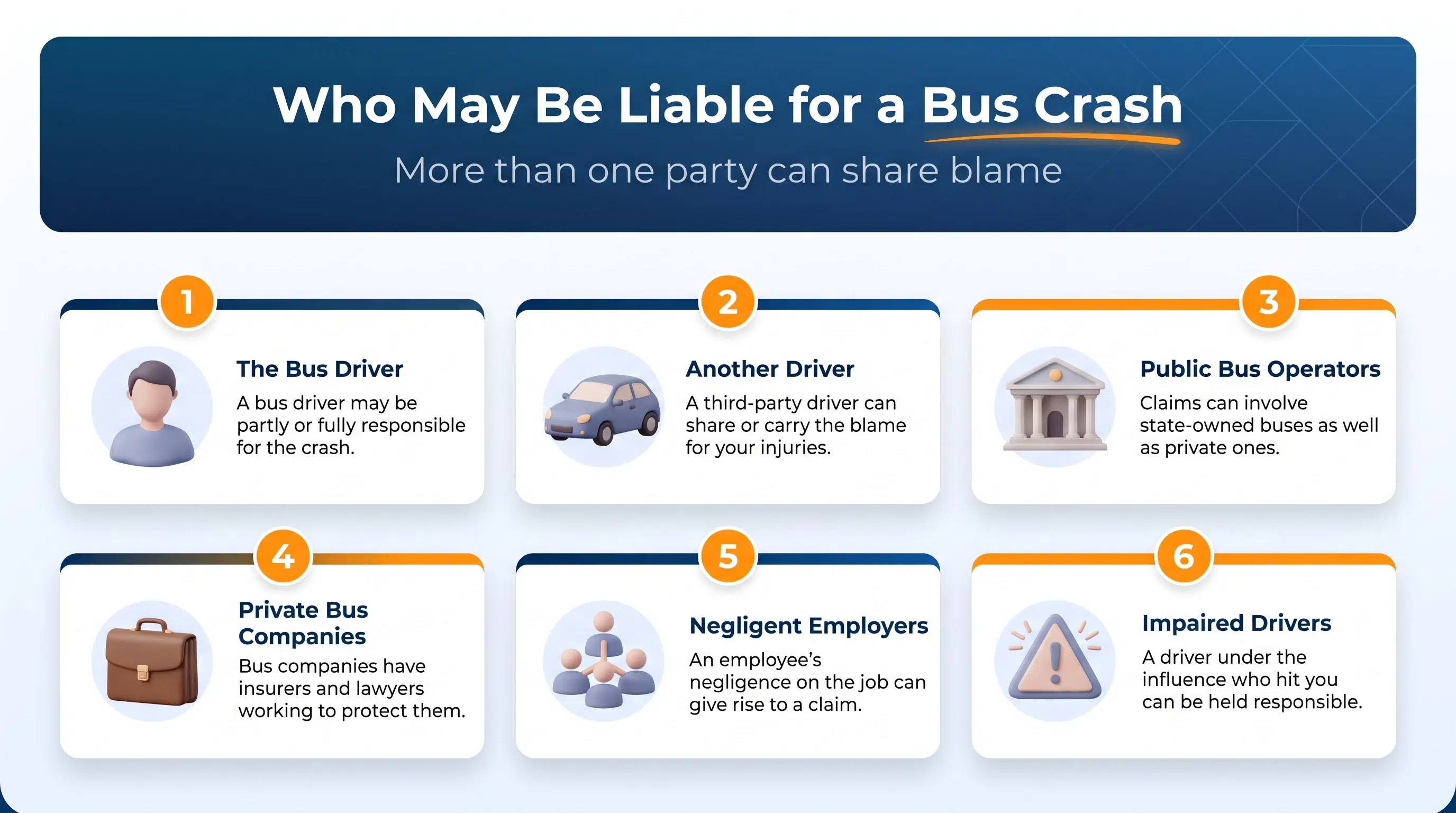
In the event of a bus accident, you may wonder how you can recover for your losses. Bus passengers and other motorists may hold various parties accountable for injuries, such as the bus driver or a third party driver, who may be partly or fully responsible for the accident. In most cases, you will need a bus accident lawyer to determine who is liable and how much they should pay. You can contact our firm to learn more about what we have done for others in this situation.
If you are injured in any type of bus accident involving a state-owned or privately owned bus, or when an employee’s negligence caused it while on the job, or someone else was driving the vehicle that hit yours while under the influence, or if there is another reason why you feel like you deserve financial compensation, it is best to contact a personal injury attorney. The sooner you do it, the better, because the average person is not aware of the process. Mistakes with the process can be costly. Bus companies and their multi-million dollar insurance industry henchmen will have bus accident lawyers representing them, so it is imperative that you have yours to protect your rights.
How a Bus Accident Personal Injury Attorney Can Help You File for a Claim
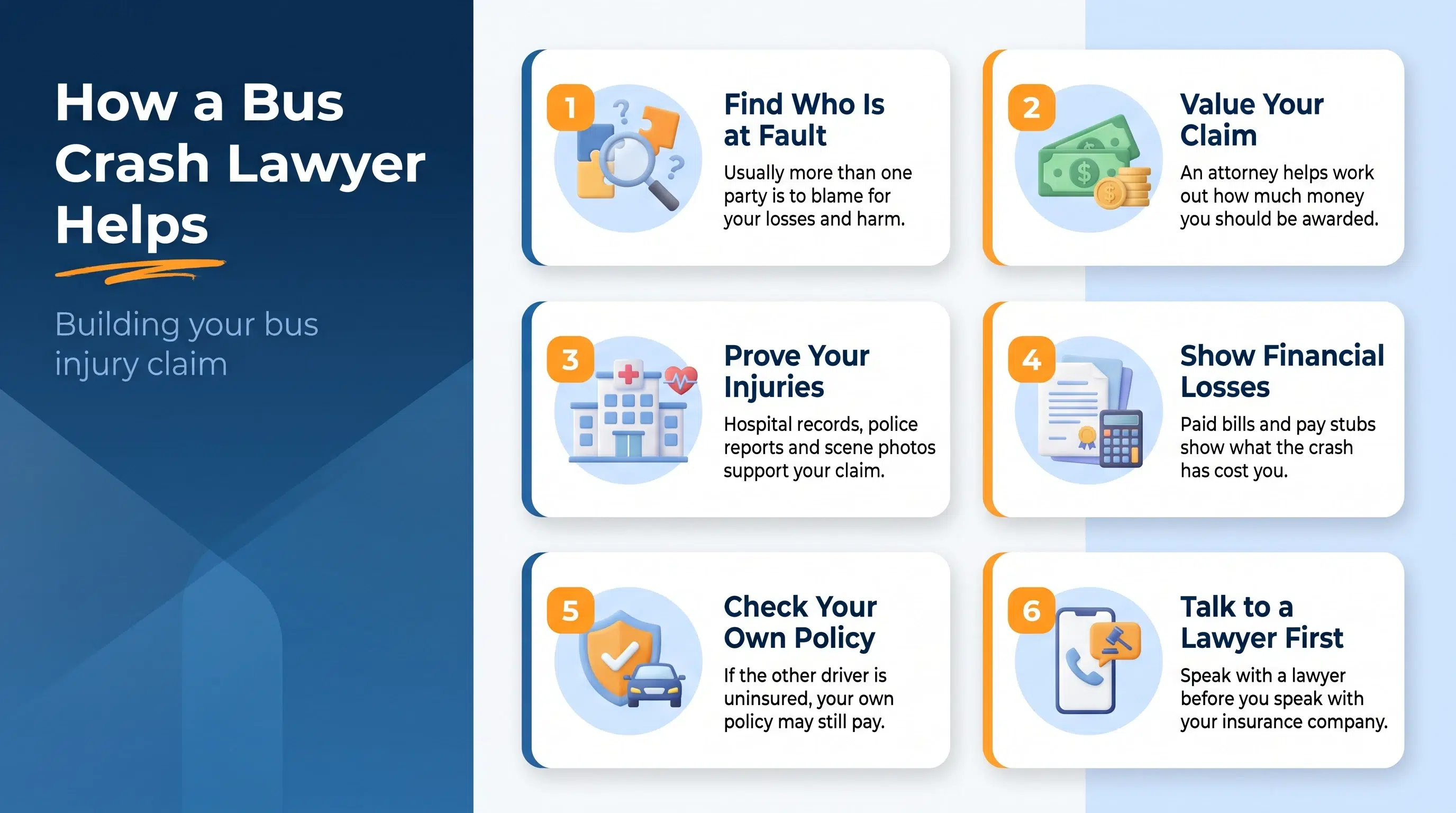
It’s crucial to understand the claims process if you’ve been hurt in a bus accident. Usually, more than one entity is to blame for your losses and harm. An attorney can help you figure out who is at fault and how much money you should be awarded.
You’ll need proof of your injuries to pursue a personal injury claim after an accident. These can include documentation from the hospital, the police station, and any photographs taken at the scene of the accident. Proof of your financial losses, such as bills paid and pay stubs, will also be required. Your insurance company should also be contacted.
If the other motorist is uninsured or found to be at fault, you may be able to file a claim under your own vehicle insurance policy. Talk to a lawyer first, rather than your insurance company.