- What we know from CHP about the I-680 wrong-way crash
- Where and when it happened in Walnut Creek
- Injuries, fatality, and known parties
- Immediate traffic and community impacts
- Why wrong-way crashes are so dangerous
- Impairment, wrong-way driving, and civil liability in California
- What families and injured people can do now: records and points of contact
- Practical steps for those injured in a multi-vehicle freeway collision
- Insurance paths after a wrong-way DUI crash on a freeway
- Multi-vehicle claims and allocation of fault
- Time limits for civil claims in California
- Local context along I-680 in Walnut Creek
- Working with insurers without hurting your claim
- Commentary from Gosuits Los Angeles Personal Injury Attorney
- References
What we know from CHP about the I-680 wrong-way crash
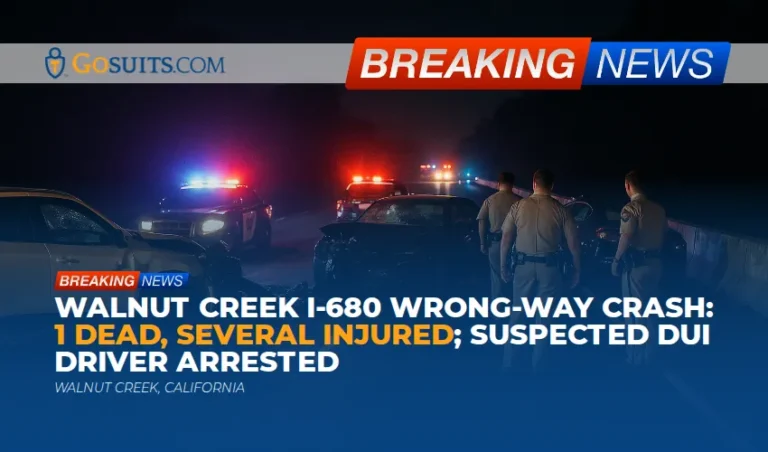
Late Friday night, a wrong-way driver traveling south in the northbound lanes of Interstate 680 just north of Treat Boulevard in Walnut Creek collided with multiple vehicles. According to the California Highway Patrol, the chain of crashes involved six vehicles around 11:23 p.m. One passenger in a northbound vehicle died at the scene. Four people, including the wrong-way driver, suffered major injuries. Three others had minor injuries. CHP said the woman driving the wrong-way Dodge Charger was taken to a local hospital and determined to have been impaired at the time. She was placed under arrest while receiving treatment. Northbound I-680 lanes were blocked until about 3:35 a.m. as investigators documented the scene and cleared wreckage.
At this early stage, the agency has not released the names of those involved. The investigation typically includes a collision report, scene measurements, photographs, witness statements, and toxicology testing when impairment is suspected. On a busy corridor like I-680, investigators also look at traffic camera footage if available, vehicle data recorders, and roadway design factors, though wrong-way driving itself is a major hazard that often explains the severity of outcomes. Families can expect additional details as reports are finalized.
Where and when it happened in Walnut Creek
The crash location was on northbound I-680 just north of Treat Boulevard, a familiar point for Walnut Creek residents. Treat connects neighborhoods near Heather Farm Park and the Shadelands Business Park to the freeway, and it sits not far from the Walnut Creek BART station and Broadway Plaza. Late on a Friday, traffic can still be steady as people return from the city or from regional commutes down to Pleasanton or up toward Concord and Martinez. Wrong-way travel on a divided freeway in that area places oncoming drivers at immediate risk because speeds are high and sight lines are limited by roadway curvature, medians, and traffic flow.
Injuries, fatality, and known parties
CHP reported one death at the scene, with multiple injured patients transported by ambulance. In Contra Costa County, the Sheriff-Coroner’s Office typically handles identification of the person who died, notification of next of kin, and the death investigation. When CHP reports impairment, the coroner’s toxicology and autopsy documentation add official medical context, even though civil liability focuses on whether negligence caused the harm.
For the injured, trauma evaluation often begins at nearby hospitals. In Walnut Creek, John Muir Health’s medical campus is a frequent destination for serious injuries. Patients transferred to Oakland or further afield may be evaluated at regional trauma centers depending on injury profiles. In multi-vehicle freeway collisions, injuries vary widely: head trauma, fractures, internal injuries, and long-term pain conditions are all possible. Those differences affect medical decisions and, later, any civil claims valuation.
Immediate traffic and community impacts
All northbound lanes being closed until about 3:35 a.m. meant extended delays and detours along Treat Boulevard, Cherry Lane, and Ygnacio Valley Road as drivers sought alternate routes. Late-night closures also affect first responders and hospital staffing because critical care teams sometimes receive multiple trauma patients at once. For the community, a fatal freeway crash close to neighborhoods is not just a traffic update. It is a reminder of how quickly lives can change on a familiar stretch of road.
Why wrong-way crashes are so dangerous
Wrong-way driving on divided highways frequently leads to head-on or near head-on impacts at freeway speeds, which dramatically increases the forces involved and the likelihood of catastrophic injuries. National transportation safety investigators have long recognized the outsized danger of wrong-way events. The National Transportation Safety Board has studied the problem and highlighted strategies to reduce wrong-way entries, like improved signage and ramp countermeasures [1]. In California, Caltrans has piloted wrong-way detection and warning systems on select corridors to reduce these tragedies [2]. Alcohol impairment is consistently identified as a leading factor in wrong-way freeway crashes across national data sets [1].

Impairment, wrong-way driving, and civil liability in California
Civil cases ask a different question than criminal proceedings. Rather than punishment, the civil law focuses on accountability for harm. Driving under the influence is prohibited by the California Vehicle Code [3], and operating a vehicle the wrong way on a divided freeway breaches a basic duty of care to other motorists. In many civil claims, violating a safety statute can serve as strong evidence of negligence.
Where impairment is proven in a crash that causes death or significant injuries, California law allows for a range of civil claims. Families may consider a wrongful death claim seeking compensation for specific losses associated with their loved one’s death [4]. In limited cases where conduct shows a conscious disregard for safety, California’s punitive damages statute may allow exemplary damages to punish and deter particularly dangerous behavior [5]. Each case depends on its facts, and these remedies are not automatic.
Because this was a multi-vehicle event, any civil analysis must also look at traffic patterns immediately before the impact sequence, visibility, lighting, and vehicle positioning. Still, a wrong-way impaired driver striking northbound motorists on I-680 sets a strong liability baseline, with additional details filled in by the CHP collision report, physical evidence, and medical records.
What families and injured people can do now: records and points of contact
Request the CHP traffic collision report
For freeway crashes in unincorporated or state-jurisdiction areas, CHP is typically the reporting agency. Families and involved drivers can request the CHP Traffic Collision Report using the CHP 190 process. Requests usually require proof of involvement or a legal interest and are submitted to the area office that investigated the collision [6] [7]. The report will contain diagrams, officer narratives, preliminary fault assessments, and often contact information for witnesses. It is the backbone of many insurance and civil claim evaluations.
Obtain coroner documents from Contra Costa County
The Contra Costa County Sheriff-Coroner’s Office handles death investigations for incidents like this. Next of kin can request information about the death investigation, including autopsy findings when available, consistent with California law and local procedures [8]. While a full autopsy report may take time, the office can explain the process and timelines.
Victim compensation resources
California’s Victim Compensation Board (CalVCB) may help eligible families with funeral and burial costs and certain related expenses. The program has specific application requirements and deadlines [9]. These benefits are separate from any civil claim and can be a bridge for urgent costs during a difficult period.
Medical records and HIPAA-compliant releases
Hospitals will provide medical records to patients or authorized representatives upon a valid request. For those managing the affairs of a deceased loved one, additional documentation such as letters of administration may be needed. Keeping discharge summaries, imaging reports, and billing statements organized will help later when insurance carriers evaluate claims.
Public records considerations
Some materials are available through California’s Public Records Act, though privacy exemptions apply to active investigations and medical information. When in doubt, an agency’s records unit can explain what is releasable and how to submit a request [10].
Practical steps for those injured in a multi-vehicle freeway collision
After a high-speed collision, health comes first. Follow medical advice, attend all follow-up visits, and track symptoms that change over time. Keep a running log of pain, sleep disruption, missed work, and daily limitations. Save every receipt related to the crash, from prescriptions to rides to therapy appointments. Photographs of injuries, vehicle damage, and the roadway area can be helpful for later analysis.
To make evidence collection easier, this quick guide can help with a systematic approach: how to gather strong evidence for personal injury cases in california. Organizing early avoids gaps that insurers sometimes point to when challenging claims.
If you received a citation or notice to contact CHP, respond by the stated deadline. However, before making statements to any insurance company, consider first consulting a qualified attorney. What you say to an adjuster can be used to challenge liability or minimize damages later in the process.
Insurance paths after a wrong-way DUI crash on a freeway
In a typical scenario, the at-fault driver’s liability carrier is the primary source of recovery for bodily injury and property damage. When impairment is documented, insurance analysis still proceeds through the policy’s limits and coverage terms. If a driver carried only the minimum liability limits, those funds can be exhausted quickly in a multi-injury crash. In that situation, your own uninsured or underinsured motorist coverage may become crucial, especially when multiple claimants are seeking compensation. For a California-focused overview, consider this explainer: dealing with insurance companies after an accident in california what you need to know.
Many people wonder where to start. Some first talk to the at-fault driver’s insurer. A cautious approach is to consult with counsel first, then provide a succinct notice of claim. Do not provide a recorded statement without advice. Certain keyword phrases are important to understand in this context, including car accident lawyers and car accident lawyers in Los Angeles. These services focus on gathering medical proof, establishing fault, and coordinating benefits in a way that protects you from common adjuster tactics.
Underinsured motorist claims are especially relevant when there are multiple seriously injured people. California’s underinsured motorist rules have specific sequencing requirements, and settlement with the at-fault driver should be structured with those in mind. For a quick primer on limited policies and what UM or UIM can fill, review california um/uim recovery when at-fault has 30k gosuits.
Multi-vehicle claims and allocation of fault
When six vehicles are involved, multiple insurers may conduct parallel investigations. California’s comparative fault rules allocate responsibility by percentage among negligent parties. In wrong-way freeway crashes, fault commonly centers on the wrong-way driver, but investigators still examine speed, following distance, evasive action, and timing for all involved vehicles. Evidence such as dash camera footage, 911 call timing, and traffic management center video can clarify sequences. If a governmental agency’s infrastructure or maintenance were credibly implicated, potential public entity claims require careful pre-lawsuit steps and short deadlines. Avoid speculation and let the documented facts guide the analysis.
Time limits for civil claims in California
Most injury-based civil claims in California must be filed within two years of the date of injury [6] [11]. Wrongful death claims generally share that two-year period [4]. If a public entity is a potential defendant, a government claim usually must be presented within six months of the incident under the Government Claims Act [12]. Because deadlines can be unforgiving, acting with urgency helps protect options. It also helps preserve evidence that can fade quickly, from skid marks to surveillance video that is overwritten in a matter of days or weeks.
Local context along I-680 in Walnut Creek
Residents know that I-680 through Walnut Creek carries steady traffic between the 24 interchange and the Pleasant Hill and Treat Boulevard area. At night, sight distance can change quickly as you crest curves north of Treat. The corridor also mixes local trips to Broadway Plaza and John Muir Health with regional flows to San Ramon, Danville, and Concord. A driver heading the wrong way in this environment leaves other motorists with almost no time to react. Community awareness remains vital, but preventing wrong-way entries is primarily about roadway treatments and driver choices. People who work late at Shadelands or return from events near the Lesher Center for the Arts know that freeway ramps can be confusing to visitors. Caltrans’ pilot countermeasures aim to reduce wrong-way ramp entries in selected locations [2].
Working with insurers without hurting your claim
Insurance adjusters sound friendly, but their job is to limit what the carrier pays. Before you speak with any insurer, consider your rights. State your name, contact information, and that you will provide a written statement after you have a chance to review the police report and your medical status. Do not guess about speeds, distances, or injuries. Do not sign blanket medical authorizations without advice. If property damage needs to move forward quickly, separate that discussion from bodily injury questions.
At this stage, many people look for guidance from professionals who do this work every day. That is where personal injury lawyers can help coordinate medical records, protect you from aggressive recording tactics, and prepare a full demand package that accounts for the true impact of the crash. In major freeway crashes with life-changing harm, wrongful death lawyers and wrongful death lawyers in Los Angeles may be needed to help families navigate a unique set of decisions and documents.
Timing matters. California’s deadlines are strict, and evidence disappears quickly. If you want to talk through next steps and understand your rights before you contact any insurer, you can schedule a free consultation.

Commentary from Gosuits Los Angeles Personal Injury Attorney
Our hearts go out to the family grieving a loved one and to everyone injured in the I-680 crash near Treat Boulevard. Articles like this are meant to share general information and community-focused guidance. They are not a substitute for a case evaluation tailored to the facts.
From what CHP has shared, a wrong-way, late-night freeway impact with suspected impairment is exactly the type of event that leaves families asking how such a thing could happen on a familiar corridor. In civil claims, the focus turns to accountability and documentation. The collision report, autopsy findings, medical records, and any available camera footage tend to shape the path forward. Even with very strong facts, multi-vehicle freeway cases benefit from early, careful evidence preservation.
Insurance companies move fast to frame these events in narrow ways. That can include quick contact seeking recorded statements, requests for broad medical releases, or offers that sound helpful but undervalue long-term harm. Large carriers also know how to leverage low policy limits in crashes with multiple injured people, which can pressure families into early decisions long before the true medical picture is known.
There is real value in speaking with a seasoned legal team early, at no cost. A free consultation helps clarify rights, deadlines, and options before any contact with adjusters. It can also prevent missteps that later get used to minimize claims. For families across the Bay Area and Northern California who find themselves dealing with loss and injuries after a freeway disaster, clear information and steady guidance can make a difficult time a little more manageable.
References
- Wrong-Way Driving Special Investigation Report – National Transportation Safety Board
- Wrong-Way Driving Pilot Program – Caltrans
- Vehicle Code §23152 DUI Offenses – California Legislature
- Code of Civil Procedure §377.60 Wrongful Death – California Legislature
- Civil Code §3294 Punitive Damages – California Legislature
- How to Obtain a Traffic Collision Report – California Highway Patrol
- CHP 190: Application for Release of Information – California Highway Patrol
- Coroner Division – Contra Costa County Sheriff-Coroner
- Victim Compensation Program – California Victim Compensation Board
- Public Records Act Guidance – California Office of the Attorney General
- Code of Civil Procedure §335.1 Two-Year Statute for Injury or Death – California Legislature
- Government Code §911.2 Claims Presentation Deadline – California Legislature
- Driving Under the Influence Overview – California Office of Traffic Safety