






































Why do crashes on the Antelope Valley’s highways hurt so badly?
Speed. The Antelope Valley Freeway runs straight and open through Lancaster, and traffic there often moves faster than it does in the basin. Highway 138 and the outlying avenues have long sight lines that invite drivers to pass, speed up or look away. When two vehicles collide at those speeds, the energy involved is much higher.
The injuries tend to match. Spinal fractures, head trauma and internal bleeding are common in high-speed crashes, and they are the injuries we see in many cases from this area. That raises both the medical costs and the amount in dispute, which in turn raises the stakes for how the evidence is collected.
It also means insurers push back harder. A serious claim near a policy limit gets a closer look, so we assemble the medical proof and the crash reconstruction before we make a demand.
Heat, wind, dust and glare
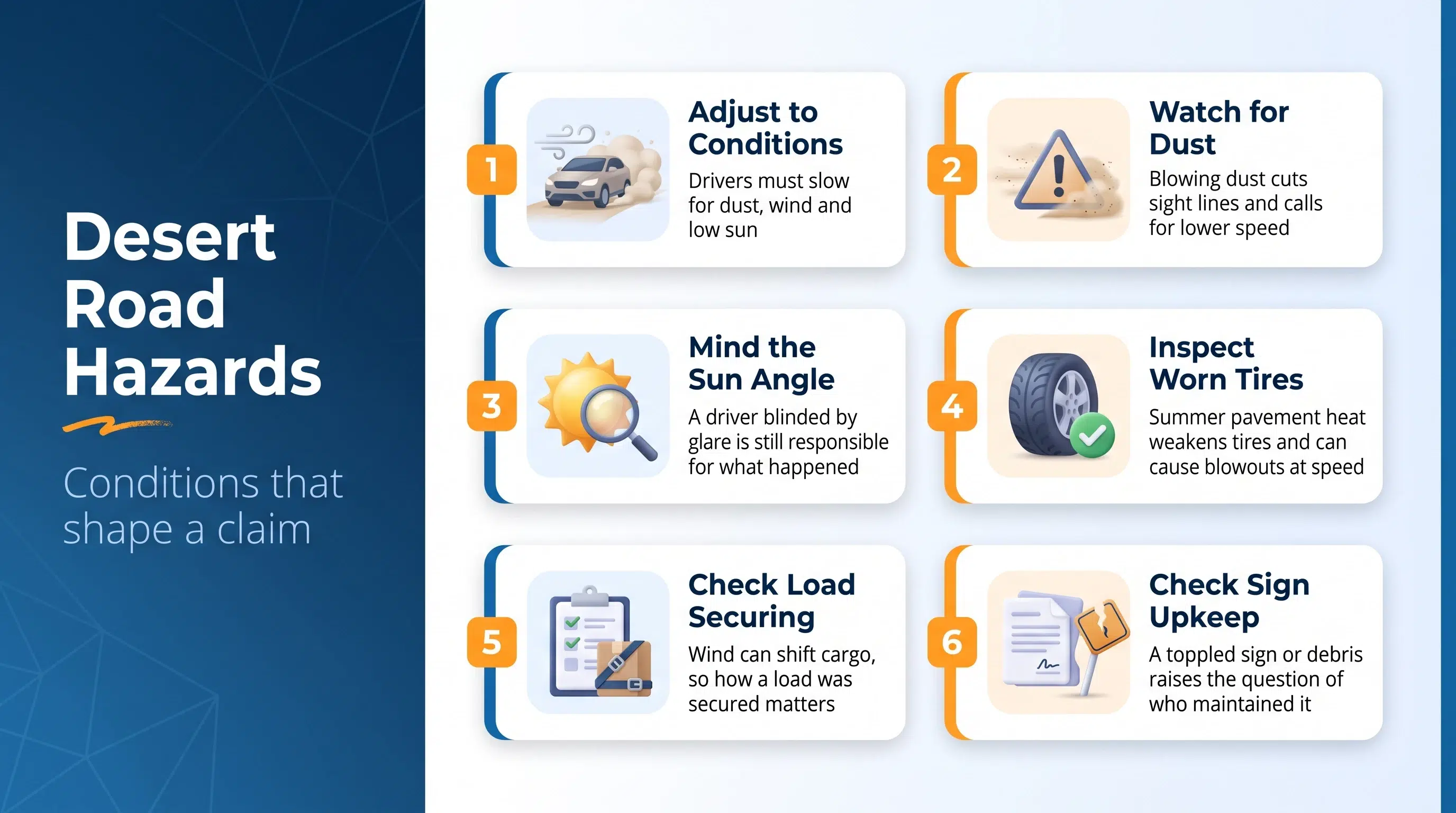
Weather in the high desert is a fact of life, but it is not an excuse that cancels fault. A driver is expected to adjust to conditions. If strong winds blow dust across a road, the careful response is to slow down. If the sun sits low on the horizon, the driver whose visor was down is responsible for what they could not see.
Heat matters in a different way. Summer pavement temperatures wear and weaken tires, and a blowout at highway speed can send a vehicle across lanes or into a rollover. Whether the tire failed because of a defect, bad maintenance or a repair shop’s mistake affects who can be held responsible. That is why we ask to see the tire, not just the photograph of it.
Wind can move a trailer, topple a sign or send debris into traffic, so the question of who maintained the sign or secured the load can also become part of a case.
What happens when help is far away
Distance changes injury cases. Emergency crews may take longer to reach a crash on a remote road, and the most seriously hurt patients can be moved from Antelope Valley Hospital on West Avenue J to a hospital elsewhere in the county. Those transport times, records and treatment choices are part of the story an adjuster reads.
Ask the hospital for records of every facility you were in. Keep a note of each ambulance, helicopter or private transport, since bills can come from separate companies and some of them end up as liens against your settlement. Tell your lawyer about all of them early, so that none are missed.
Freight on the 14 and the 138
Heavy trucks use these highways to move goods between the Antelope Valley, the Central Valley and the Los Angeles basin. Long grades and steady speeds tire drivers, and a loaded truck takes a long distance to stop. A collision with one is rarely minor.
Responsibility may sit with the driver, the carrier, the company that loaded the cargo or a maintenance shop. Carriers keep logs, inspection files and electronic data that show driving hours and brake service, and those records are the first things we ask them to keep. Our article on truck crash evidence preservation in California lists what to request and how soon.
If you are hurt on a remote stretch of road
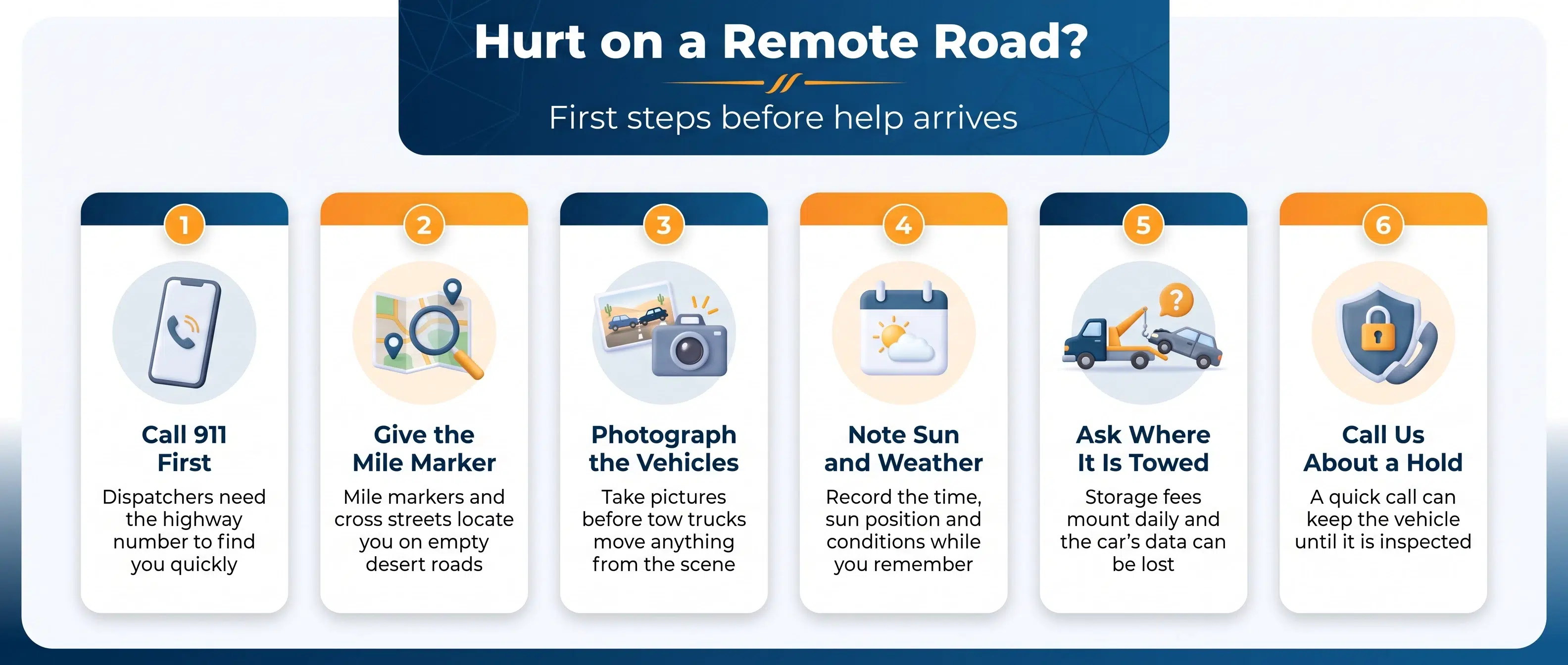
Call 911 first and give the highway number and the nearest mile marker or cross street, because a dispatcher cannot find “past the second dip” on a desert road. If you can move safely, photograph the vehicles before they are towed, and note the time, the sun’s position and the weather.
Ask who is towing your car and where it is going. Tow yards charge storage by the day, and a car that sits there can lose its data or be released. A quick call to us can put a hold on the vehicle until it is inspected.
Rollovers and the vehicles that tip
Rollovers are among the most dangerous kinds of crash on open roads like these. A tire failure, an overcorrection after drifting onto a soft shoulder, or a sudden swerve to avoid a stopped vehicle can all start one, and taller vehicles tip more easily.
Injuries include crushed roofs, ejection and spinal damage. Seat belt use, roof strength and the condition of the tires all enter the claim. A manufacturer may bear some responsibility if a roof collapsed unusually easily or a tire was defective, so we keep the vehicle intact until it has been examined.
Head injuries that do not show up right away
Concussions and mild traumatic brain injuries often appear normal on a first scan. Headaches, memory trouble, irritability and sleep problems can surface days later. People sometimes dismiss these as stress, and insurers use the delay to argue that the crash was not the cause.
Tell your doctor about every symptom, even the vague ones, and keep a simple log. A neurologist’s evaluation and neuropsychological testing can document problems that imaging does not show.
Sheriff’s Station or CHP: which report do you need?
Crashes on city streets in Lancaster are normally handled by the Los Angeles County Sheriff’s Department out of the Lancaster Station on West Lancaster Boulevard. The California Highway Patrol covers state routes such as the 14 and the 138 and many unincorporated roads.
Reports can take days to become available, and they sometimes contain mistakes about direction of travel or lane position. We request the report as soon as it is released and compare it with the physical evidence. If a witness gave a statement that never made it into the narrative, we find that person ourselves.
Aircraft plants, warehouses and farms
Lancaster and the nearby Palmdale area have a long aerospace history, and the economy now also includes distribution centers, solar and wind projects and agriculture. Each setting has its own injury risks: heavy components, forklifts, ladders, extreme heat and long shifts outside.
Your employer’s workers’ compensation covers medical care and some wage loss regardless of fault. If a subcontractor, equipment manufacturer or property owner outside your employer helped cause the injury, you may have a separate lawsuit against them, which can include compensation for pain and suffering. Heat illness is a particular concern for outdoor workers, and we look at whether required water, shade and rest breaks were provided.
Walking, biking and waiting for the bus
Lancaster Boulevard and the BLVD area draw foot traffic, and many other parts of town have sidewalks that end abruptly, long blocks and few crossings. A pedestrian hit at night on a road with limited lighting often faces an insurer who says the person was hard to see.
Where the road itself played a part, such as a missing crosswalk, a broken curb or a dark intersection, the city, the county or the state may share responsibility. Written claims against public entities generally have to be presented within six months under Government Code section 911.2, so tell us about those details quickly.
Motorcycles and the open road
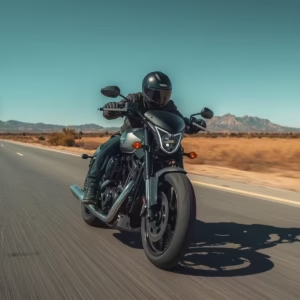
Riders are drawn to the Antelope Valley’s long roads, including the routes near Quartz Hill, Highway 138 and the approaches to Saddleback Butte State Park. A rider at speed has little room to react when a driver drifts, turns left across a lane or opens a door at a roadside stop.
Gravel, sand drift and sudden crosswinds add hazards that a car driver does not feel in the same way. When a road defect was part of the cause, the agency in charge of that road may share the responsibility, so we check who maintains it.
Fault, insurance and what you actually keep
California uses pure comparative fault. If you share some blame, your recovery drops by your percentage but is not eliminated. Insurers know this and routinely try to increase the percentage, so evidence that fixes it low is worth the effort.
The settlement number is also not what you take home. Hospitals, ER groups and health plans may claim part of it. We negotiate those liens at settlement so more of the money reaches you, and we report the reductions on your closing statement.
When a loved one dies on a Lancaster road
Families sometimes face a fatal crash on a road they have driven for years. California law lets a spouse, domestic partner, children and certain other relatives, or the estate’s personal representative, bring a wrongful death claim under Code of Civil Procedure section 377.60. The general deadline is two years under section 335.1.
We handle these cases patiently and in close contact with the family. Early priorities include securing the vehicles, sending legal hold letters and getting the coroner’s and CHP reports.
Where a Lancaster case is filed, and how long you have
A Lancaster injury lawsuit is filed in Los Angeles County Superior Court. Which courthouse hears a case depends on the court’s filing rules at the time, so we confirm that before we file.
Most personal injury lawsuits must be filed within two years. Claims against a public entity must start sooner. To have someone check your dates, schedule a free consultation, or reach out through our Los Angeles personal injury team page.
Which Lancaster cases do we take?
Most of the Lancaster cases we see begin on the road. Collisions on State Route 14 and State Route 138, and crashes on Sierra Highway and Avenue K, are handled by our Los Angeles County car accident lawyers. When a loaded truck on the 14 or the 138 is involved, a carrier and its insurer enter the case, and our Los Angeles County truck accident team works it from the start.
When a crash or another person’s negligence takes a life, the family’s claim follows its own rules about who may bring it and what it can recover. Our Los Angeles County wrongful death lawyers handle those cases. We also take pedestrian, motorcycle, workplace and premises injury cases from Lancaster.


