- What we know about the I-880 crash near San Leandro
- Local agencies and records families can request
- Safety and California legal context relevant to this crash
- Potential civil liability analysis from a personal injury perspective
- Insurance issues after multi-vehicle freeway crashes
- Preserving evidence and why it matters on busy corridors like I-880
- Practical next steps for those affected
- Time sensitivity and key California deadlines
- Community context along the I-880 corridor
- References
- Commentary from Gosuits Los Angeles Personal Injury Attorney
What we know about the I-880 crash near San Leandro
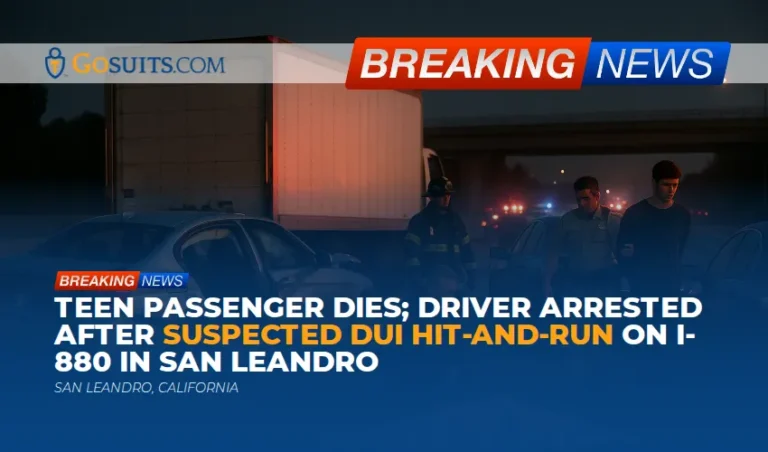
Before sunrise on a quiet Sunday morning, two sedans collided on northbound I-880 just south of the Davis Street interchange in San Leandro. Investigators with the California Highway Patrol reported the initial impact occurred around 4:20 a.m. The collision involved a BMW 535i driven by a 19-year-old and a Honda Accord, and a box truck entered the chain of events moments later. According to CHP’s preliminary statements, the teenage girl riding in the left rear seat of the BMW was ejected during the crash sequence. A box truck then struck one of the vehicles and, as officers described, also struck parts of the ejected passenger. She was believed to be 15 or 16 years old and tragically died at the scene.
Authorities said the BMW’s driver and a 15-year-old front passenger fled immediately after the impact. CHP later arrested the 19-year-old driver at the vehicle’s registered address on suspicion of DUI, felony hit-and-run, and vehicular manslaughter. The BMW’s left rear passenger, a man, was transported to Eden Medical Center with severe pain and facial lacerations. The driver of the Honda Accord was hospitalized with a fractured left shoulder. The box truck, which was hauling thousands of pounds of meat, came away without reported injuries to its two occupants. The northbound freeway was fully closed for more than an hour while investigators documented the scene and crews cleared the roadway.
Crashes along this stretch of I-880 are not unusual given pre-dawn low visibility, weekend traffic mixing commercial trucks and small sedans, and proximity to busy on-ramps at Davis Street serving the industrial corridor near the San Leandro Marina. As always, CHP will complete a reconstruction and collision report to clarify sequence, speeds, impairment indicators, occupant positions, and safety restraint use.
In the hours and days after a wreck like this, families often need immediate information and guidance. That can begin with requesting official reports, safeguarding evidence, and understanding how California law treats DUI, hit-and-run, and wrongful death claims.
Local agencies and records families can request
It’s difficult to know who to call and what to ask for when you are grieving or helping an injured loved one. Here’s a practical, locally focused list that aligns with the way serious freeway crashes are handled in the Bay Area.
Collision report from CHP
CHP is the primary investigating agency for interstate collisions. Families and involved parties may request the official collision report using CHP’s process outlined in the state portal [1]. The report number will be needed; if it’s not on hand, you can give the date, approximate time, highway, and location “northbound I-880 just south of Davis Street, San Leandro,” and the investigating area office can help identify the incident.
- What it contains: diagram, narrative, involved parties, contributing factors like suspected DUI, citations or arrests, and statements.
- Why it matters: insurance carriers rely on it to evaluate claims; it can shape liability arguments.
Medical records
For those treated after the crash, request complete medical records and itemized bills from the treating hospital and any follow-up providers. In this incident, some patients were transported to Eden Medical Center. Records demonstrate injury mechanism, imaging findings, procedures, prognosis, and costs that insurers evaluate. Keep copies of discharge instructions and any work restrictions.
Death certificate and coroner findings
In California, death certificates are issued by the state’s vital records department. Certified copies can be requested through the California Department of Public Health’s Vital Records portal [9]. Coroner or medical examiner findings can be critical in wrongful death matters, particularly when questions arise about the precise sequence of injuries and cause of death. California law sets out the duties of coroners when a death is sudden or involves a collision [4]. In Alameda County, the Sheriff’s Coroner’s Bureau typically manages these cases and provides guidance on next of kin notifications, personal effects, and report release timelines.

Victim support
California’s Victim Compensation Board offers assistance with certain funeral/burial costs and counseling for qualifying victims and families of violent crimes, which can include vehicular crimes arising from DUI and hit-and-run. Learn more through CalVCB [10].
Safety and California legal context relevant to this crash
Several legal and safety principles intersect in a multi-vehicle, early-morning freeway crash with suspected DUI and ejection. Understanding them can help families make informed decisions.
DUI and under-21 drivers
California’s DUI laws prohibit impaired driving and include a zero-tolerance policy for drivers under 21 regarding alcohol in their system [2]. For civil claims, impairment can be a powerful factor in negligence determinations and can influence how insurers evaluate responsibility.
Hit-and-run obligations
California Vehicle Code section 20001 requires drivers involved in crashes that result in injury or death to stop, provide information, and render reasonable aid. Fleeing is a felony when there’s injury or death [3]. From a civil perspective, leaving the scene can complicate a defense narrative and impact available insurance provisions, including potential uninsured motorist claims for victims when the at-fault party cannot be promptly identified or is otherwise unavailable.
Seat belts, ejection risk, and teens
CHP emphasizes proper restraint use for all ages, with added focus on teens who ride in back seats and may be less consistent about buckling up [6]. Federal safety data show that seat belts are the single most effective safety device for preventing ejection and fatal injury in crashes [7]. Teen crash risk and injury severity are heightened during late-night and early-morning hours [8].

Heavy trucks in chain-reaction crashes
Box trucks and other commercial vehicles can require much longer stopping distances and have more limited fields of view than passenger cars. FMCSA safety materials for sharing the road with large vehicles highlight these realities [5]. In a chain reaction, a truck’s presence may aggravate the severity of an already dangerous scene even when the truck driver is operating lawfully.
Families sometimes search for guidance by looking up what should you do immediately after a car crash in california. That resource can help organize first-week priorities specific to California.
Potential civil liability analysis from a personal injury perspective
We are not speculating about guilt or criminal charges; that process is handled by prosecutors based on CHP’s investigation. The focus here is on the civil side, where victims and families may pursue claims for injuries and wrongful death.
How fault may be evaluated
- Primary negligence by an impaired driver: If the BMW driver was impaired or reckless and initiated the first collision, that conduct can be central to liability for the entire chain of harm that followed.
- Hit-and-run aggravation: Fleeing the scene can also heighten civil exposure. It deprives victims of immediate aid and undermines later defenses about what happened and when.
- Comparative fault and multi-vehicle causation: California’s comparative negligence rules allow apportioning fault among multiple drivers if evidence shows more than one breach of duty caused harm. Even so, a later-arriving box truck may bear little or no fault if it reasonably could not avoid wreckage created seconds earlier.
- Ownership and permissive use: If the BMW or other involved vehicles were owned by someone other than the driver, California’s permissive use rules and potential negligent entrustment theories may be explored, depending on who allowed whom to drive.
- Restraint use and injury mechanics: Insurers often scrutinize seat belt use in ejection cases. While it may be raised in defense negotiations, the overarching question remains whether another party’s negligence caused the collision and injuries.
Families sometimes ask whether cases like this are best handled by car accident lawyers or truck accident lawyers. In complex, multi-vehicle incidents that include a commercial truck, both domains can be relevant. The presence of the box truck and a fatality makes it natural to discuss wrongful death lawyers as well. Mentioning these practice areas is not about labels. It’s about making sure every potentially responsible entity, policy, and defense argument is identified and addressed.
If you want a single point of contact for questions about multi-vehicle liability and insurance layers, you can review our Los Angeles personal injury team to see how a PI-focused approach coordinates investigations in complex crashes.
Insurance issues after multi-vehicle freeway crashes
When a crash involves multiple sedans and a commercial vehicle, the insurance picture becomes layered quickly. Here are the typical paths we see in Bay Area freeway claims.
- Liability coverage and policy limits: The at-fault driver’s insurer will evaluate negligence and available limits. In severe injury and fatal cases, limits are sometimes too low. California has rules on policy limits disclosure that can matter early in a claim negotiation; see the state-focused discussion on california policy limits disclosure insurer requirements gosuits.
- Commercial policies: If a box truck is involved, the trucking company’s commercial policy, motor carrier filings, and safety records may be relevant where the evidence suggests fault or aggravation by the truck.
- Uninsured and underinsured motorist coverage: UM/UIM on a victim’s own auto policy can fill gaps when the at-fault driver flees or carries low limits. Certain California UM/UIM recoveries have nuances even when the at-fault party has minimal coverage [11].
- Wrongful death claims and survivors’ damages: In a fatal crash, California allows statutory wrongful death claims and a separate survival claim in some cases. How each is valued depends on evidence and on who qualifies as a claimant.
People commonly look up car accident lawyers because passenger-vehicle claims are the starting point for many families. When a heavy vehicle is part of the chain, truck accident lawyers may also become relevant due to commercial policy questions, preservation of driver logs, and potential corporate liability. And in the most tragic situations, families search for wrongful death lawyers to understand who can bring claims and what damages may be available.
Preserving evidence and why it matters on busy corridors like I-880
On a high-traffic freeway such as the Nimitz, scenes get cleared fast. That makes early evidence preservation crucial.
- Request traffic camera, CHP dashcam, and body-worn video quickly: California public records and agency policies govern retention; delays can mean deletion or overwriting. A helpful primer is here: request cctv footage after a california car accident gosuits.
- Secure vehicle black box data: Passenger vehicles and commercial trucks may store speed, braking, and other pre-crash data. Rapid notice is often needed to prevent spoliation.
- Preserve the truck’s documents: Where a commercial vehicle is involved, preservation requests often include driver qualification file, time records, maintenance logs, and bill of lading showing the load.
- Witness outreach: Early calls to anyone who stopped, tow operators, and first responders can surface photos or observations not captured elsewhere.
On the human side, keeping a personal pain and recovery journal, photographing bruising or surgical sites, and consolidating bills and EOBs helps substantiate claims.
Practical next steps for those affected
No two families have the same needs, but the following step-by-step outline fits many serious freeway incidents in the East Bay.
- Start with safety and care: Get medical evaluations even if injuries feel “minor.” Adrenaline can mask head, spine, and internal trauma.
- Organize documentation: Keep hospital discharge papers, imaging CDs, pharmacy receipts, and employer notes regarding missed work.
- Request the CHP report: Use the CHP collision report process [1] and note the exact location and approximate time.
- Ask about the coroner timeline: In Oakland and San Leandro cases, the coroner’s process often runs in parallel with CHP’s investigation. California statutes describe required investigations after sudden or violent deaths [4].
- Do not rush into recorded statements: What someone says to an insurer can be used against them. It is generally wise to consult an attorney before speaking with any carrier, even your own.
- Consider grief and counseling resources: CalVCB may help eligible families with counseling and certain funeral expenses [10].
- Plan for the first call with counsel: Bring the incident date, location details, insurance cards, and any photos or witness contacts to an initial consultation. You can also schedule a free consultation to understand your rights without committing to any course of action.
For many, learning the basics of dealing with insurers in California can reduce stress. This plain-language guide may help: dealing with insurance companies after an accident in california what you need to know.
Time sensitivity and key California deadlines
Timing matters. The sooner key steps are taken, the better the chance important evidence and rights are preserved.
- Wrongful death statute of limitations: California generally provides two years from the date of death to file a wrongful death action [12].
- Government claims: If a public entity might be implicated, a government claim can be required within six months of the incident [13].
- Evidence retention: CCTV and dashcam footage can be overwritten quickly. Medical imaging and EDR data should be requested as soon as possible.
- Insurance communications: Early statements can narrow a claim’s value or create unnecessary disputes. Talking with counsel before speaking to any adjuster reduces those risks.
What is the exact thing to do now? Document care; request the CHP report; avoid recorded statements; send preservation notices; and calendar the two-year wrongful death window while accounting for any shorter government-claims deadlines if they apply. The benefit of acting promptly is straightforward: crucial video and electronic data are more likely to be saved, witnesses are easier to locate, and policy-limit issues can be identified earlier. That urgency is highest in the first two to three weeks after a major freeway crash.
Community context along the I-880 corridor
Anyone who drives I-880 between San Leandro and Oakland knows how quickly conditions change near Davis Street and Marina Boulevard. The corridor links industrial yards, warehouse districts, and the airport supply chain with everyday commuters heading to Fruitvale, downtown Oakland, and points north. Before dawn, this mix often includes box trucks and delivery vehicles on tight schedules alongside cars returning from night shifts or early airport runs. As seasons shift, sun glare, rain-slick pavement, and fog pockets can add risk. CHP and Caltrans continue to manage everything from debris strikes to multi-car spinouts here, but community awareness and restraint use make a difference too.
In these moments, families from San Leandro to East Oakland come together, holding vigils, sharing memories, and navigating difficult logistics. If you or someone you know is processing a loss or a serious injury from a freeway crash, accurate information and steady support are essential.

How common search terms in these cases fit your situation
People in the Bay Area often search for personal injury lawyers after a serious wreck. That phrase simply reflects the type of legal help that coordinates liability investigations, medical documentation, and insurance communications across all vehicle types. In a case involving both sedans and a commercial truck, some families naturally look for truck accident lawyers because trucking evidence, policies, and regulations can differ from passenger cars. When a loved one is lost, families also turn to wrongful death lawyers to understand who may bring claims and how damages are evaluated.
Because this collision involved cars and a box truck and resulted in a fatality, all of these lenses may apply. Los Angeles personal injury lawyers are sometimes searched by Californians statewide who want general PI guidance written for California rules and courts. For victims and families who prefer to focus searches by vehicle type, car accident lawyers and truck accident lawyers are common starting points. And in the most serious outcomes, families often add wrongful death lawyers and related terms while seeking educational resources, not promises.
To keep the language consistent with statewide reading habits, you will see these terms used here as plain-text signposts: personal injury lawyers, Los Angeles personal injury lawyers, car accident lawyers, car accident lawyers in Los Angeles, truck accident lawyers, Los Angeles truck accident lawyers, wrongful death lawyers, and wrongful death lawyers in Los Angeles. They’re included to help readers find California-specific information about rights and options without guessing at jargon.
References
- Request a Collision Report – California Highway Patrol
- DUI Laws – California DMV
- California Vehicle Code §20001 – Duty to Stop at Scene of Accident
- California Government Code §27491 – Coroner’s Duties
- Share the Road Safely with Large Vehicles – FMCSA
- Child Safety Seats – California Highway Patrol
- Seat Belts Save Lives – NHTSA
- Teen Drivers: Get the Facts – CDC
- Obtaining Certified Copies of Vital Records – California Department of Public Health
- California Victim Compensation Board – CalVCB
- California UM/UIM Recovery When At-Fault Has $30K | GoSuits
- California Code of Civil Procedure §335.1 – Two-Year Limit for Wrongful Death
- California Government Code §911.2 – Government Claims Deadline
Commentary from Gosuits Los Angeles Personal Injury Attorney
Our hearts are with the families and friends affected by the I-880 crash near Davis Street. Losing a young person in a sudden collision is devastating, and nothing written here can capture that pain. This article is intended for education and general information, to help our neighbors understand the civil process that often follows a serious or fatal crash in California.
Based on what CHP has shared so far, a pre-dawn two-sedan collision that led to a passenger ejection and a subsequent strike in a high-speed corridor raises several civil issues we routinely see in Northern California freeway cases: potential DUI, a driver who fled, and a heavy commercial vehicle entering a chain reaction that was already in motion. In civil claims, investigators will evaluate who caused the first impact, whether impairment played a role, how seat restraints factored into injury mechanics, and whether any later impacts were reasonably avoidable. Multiple policies and parties can be involved, and early preservation of evidence can shape the outcome.
In the days after a crash, insurance companies and, in commercial contexts, corporate risk managers move quickly. They often ask for recorded statements before people have a full picture of injuries or police findings. They may point to partial facts, such as restraint use or vehicle damage patterns, to limit or shift responsibility. Without context, families can unintentionally say things that are later used against them.
That’s why a free consultation before talking to any insurer can be so important. A conversation with a seasoned injury team can clarify rights, help prioritize evidence preservation, and prevent early missteps that weaken claims. No one has to sign anything to learn about options, and the goal of that first meeting is to provide clarity during a very difficult time.