- What we know about the Garden Grove chemical tank emergency
- Who is impacted, evacuation boundaries, and local closures
- The chemical at issue: what methyl methacrylate is and why overheating is dangerous
- Health and safety guidance for evacuees, neighbors, and on-site workers
- What to document right now if you were evacuated or affected
- Possible civil liability and how investigation typically unfolds after an industrial release
- Insurance, property losses, and injury claims after a mass-evacuation incident
- Where to get official records and assistance in Orange County
- Immediate next steps and time sensitivity
- References
- Commentary from Gosuits Irvine Personal Injury Attorney
What we know about the Garden Grove chemical tank emergency
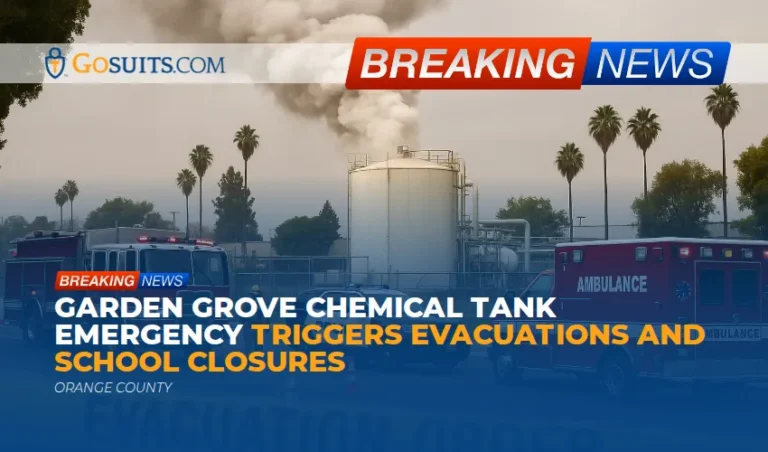
Residents across West Garden Grove woke up to an ongoing industrial emergency centered at the GKN Aerospace facility, where a large chemical storage tank has remained unstable for several days. According to public updates, the tank is overheating and pressurized, with interior temperatures reportedly rising at roughly one degree per hour since early Thursday. Authorities have warned that, without intervention, the tank is on a path to failure. If it fails, officials have outlined two potential outcomes: a spill of thousands of gallons of a hazardous liquid, or a more catastrophic explosion.
Out of an abundance of caution, local agencies ordered large-scale evacuations, impacting an estimated 50,000 residents. Some schools closed, traffic controls were put in place, and shelters opened throughout West Orange County to help people who had to leave on short notice. State officials also mobilized resources, and a state of emergency was announced to help coordinate response and shelter support. As of the latest updates, no injuries have been reported and the root cause of the overheating has not been confirmed publicly.
For neighbors in West Anaheim, Stanton, Cypress, and Buena Park, the sirens, roadblocks, and shelter lines have made this feel like a slow-motion disaster. Families from Garden Grove Park to the Valley View corridor have been packing essentials, checking on older relatives, and refreshing city feeds for the latest instructions. It is a stressful and confusing time. This article aims to explain what is known, what risks methyl methacrylate can pose, and practical steps people can take to protect health, preserve evidence, and understand the civil claims landscape that typically follows an incident like this.
Who is impacted, evacuation boundaries, and local closures
Officials delineated a large evacuation zone around the plant. The footprint includes the area north of Trask Avenue, south of Ball Road, east of Valley View Street, and west of Dale Street. Portions of neighboring communities are also affected, including parts of West Anaheim, Cypress, Buena Park, and the City of Stanton. Reverse 911 calls and door-to-door notifications have been ongoing, and two public hotlines were announced for updates: 714-628-7085 and 714-741-5444. Road closures are dynamic and may expand or contract based on changing tank conditions and wind.
Local schools announced rolling closures and relocations to keep students and staff out of the evacuation zone. Recent notices included closures or relocations in Garden Grove Unified (for example, Barker, Enders, Garden Park, Lawrence, Wakeham, Patton, Bell Intermediate, Alamitos Intermediate, Pacifica High School, Rancho Alamitos High School, and more), Magnolia (Esther L. Walter and Robert M. Pyles STEM Academy relocations), Savanna (Hansen Elementary relocations), Westminster (Finley, Johnson, Sequoia, Anderson, Fryberger, Meairs, Schmitt relocations), and Cypress (Frank Vessels and Juliet Morris). Families should continue checking their district’s official channels for the latest instructions about when and where to resume classes.
On the ground, it looks like any major emergency. At John F. Kennedy High School in La Palma and other shelter sites, Red Cross personnel and volunteers have been distributing cots, food, and hygiene items. Many people tried to find hotel rooms closer to relatives in Stanton or Buena Park, only to learn that vacancies were tight or gone. Others opted to stay with friends in Cypress or Garden Grove east of Brookhurst Street to keep commutes manageable once work and school restart. It is completely normal to feel frustrated about the uncertainty and pace of the response; the goal of the operation is to keep people and first responders safe while engineers evaluate options to stabilize the tank.
The chemical at issue: what methyl methacrylate is and why overheating is dangerous
Officials and reporting indicate the tank contains methyl methacrylate, commonly called MMA. MMA is a highly flammable liquid used to make acrylic plastics, coatings, and adhesives. It evaporates readily, produces strong vapors, and can irritate the eyes, nose, throat, and lungs. At higher concentrations, vapors can cause headaches, dizziness, and other neurological symptoms. MMA belongs to a class of chemicals that can undergo vigorous exothermic polymerization when heated or contaminated, meaning it can heat up further and build pressure faster in a runaway scenario if stabilizers are depleted or controls fail. That combination of volatile vapors and pressure makes overheating particularly risky in an industrial storage context. See public health and hazardous materials references for MMA’s health and fire behavior characteristics [1] [2] [3].
Emergency response guidance emphasizes that MMA vapors are heavier than air and can travel along the ground to ignition sources. In an uncontrolled failure, vapors can ignite or a tank can rupture, propelling shrapnel and spreading burning liquid. These hazards are why officials use conservative evacuation distances and why entry points near the tank are held by hazmat technicians in full protective equipment. For broad emergency-response context, see the federal Emergency Response Guidebook framework used by hazmat teams across the country [3].
Health and safety guidance for evacuees, neighbors, and on-site workers
When officials order an evacuation for a volatile industrial hazard, the safest choice is to leave as directed. If you are outside the formal boundary but close to the zone, consider limiting time outdoors, keeping windows shut, and minimizing activities that draw outside air into the home. If you are in a shelter-in-place area, follow local directions carefully. The federal preparedness guidance for evacuation planning offers a helpful overview of what to bring and how to travel safely during these events [4].
For families from Garden Grove to Stanton juggling kids, pets, and work, a short checklist helps:
- Bring essentials such as medications, chargers, important documents, and a couple of days of clothing. Snap photos of prescriptions and IDs before you leave.
- Limit exposure by staying upwind and uphill from the hazard area when possible. If any unusual chemical odors are noted, move further away and notify shelter staff or responders.
- Mind symptoms like coughing, throat irritation, headaches, dizziness, or eye irritation. Seek medical care if symptoms worsen or do not improve with fresh air. MMA health effects are summarized by federal and research resources [1] [2].
- Avoid returning too early. Even if the neighborhood seems calm, vapors may pool near low areas or structures, and ignition risks can persist until the site is stabilized and air monitoring clears the area.
If you need a practical, locally focused walk-through of your rights and choices during this Orange County evacuation, this resource may help: garden grove chemical leak evacuation rights guide.

What to document right now if you were evacuated or affected
In mass-evacuation scenarios, it is easy to lose track of receipts and timelines. That documentation is exactly what often supports later insurance or civil claims. A few time-saving tips:
- Track displacement costs: Keep receipts for hotels, mileage, meals, pet boarding, and any out-of-pocket purchases made because of the evacuation. Save confirmations for canceled reservations, rideshares to shelters, and parking fees.
- Log time and wages: Note missed shifts, lost tips, canceled gigs, and childcare costs. Save employer messages confirming changes to schedules due to the Garden Grove emergency.
- Record conditions: If you briefly re-entered to grab belongings, photograph any visible residue, unusual odors noted, air purifier filter discoloration, or alarm events on home monitors. Do not take risks to get photos.
- Preserve communications: Save city alerts, school notices, shelter intake records, and any messages from your insurer. Screenshots are fine.
- Business impacts: For small businesses near Valley View Street, Dale Street, or Ball Road corridors, keep records of perishable inventory losses, canceled orders, and supplier delays tied to closures or the evacuation perimeter.
If any symptoms appear after potential exposure, document the onset and duration in a brief health log and consider timing of care. Accurate, contemporaneous notes tend to carry more weight later if there is a dispute.
Possible civil liability and how investigation typically unfolds after an industrial release
Industrial chemical events often prompt multi-agency investigations that run in parallel. Typically, that includes local fire and hazmat teams, environmental health authorities, and sometimes federal partners, depending on the chemical and scale. Investigators look at the tank’s condition, instrumentation, thermal history, and any alarms or prior maintenance records. They also evaluate vendor quality, stabilization protocols for MMA, site ventilation, and emergency response steps taken as the tank heated up.
From a civil perspective, potential responsibility can extend beyond the on-site operator. Contractors involved in maintenance, instrumentation, or software controls may come under scrutiny. Suppliers of the chemical and inhibitor package, or of the tank and relief devices, may be relevant if product performance or warnings are implicated. These facts do not assign blame; they outline the usual avenues an independent inquiry examines.
Chemical-release cases can involve product defect theories if a component failed or if adequate warnings about thermal runaway risks were not provided. People who believe they were harmed often consult product liability lawyers to understand whether strict liability, failure-to-warn, or negligence theories may apply based on the evidence gathered.
Where injuries occur, complex questions arise about exposure, causation, and damages. Investigations may involve industrial hygienists, chemical engineers, and toxicologists, as well as environmental sampling and air monitoring records near West Garden Grove neighborhoods and schools on the edge of the perimeter.
If you need a simple point of contact for broader injury questions in this context, you can speak with our Irvine personal injury team about what information to preserve while the facts develop.
It is also common for affected residents to feel pressure to accept quick resolutions. Before speaking with any insurance company or corporate representative, consider the value of talking first with a neutral professional who can help you understand potential claims and pitfalls. Statements made early can be taken out of context and used later to limit recovery.
Understanding the role of product defect and industrial safety standards
MMA storage typically relies on temperature control, inhibitor levels, and relief systems to prevent runaway polymerization. If the post-incident record shows a failure in those layers of protection, claims may focus on whether reasonable steps were taken to prevent the hazard or whether a defect in a component contributed. That is the realm where product liability and toxic tort lawyers often work, assembling evidence about design, manufacturing controls, labeling, and foreseeable misuse.
When investigations lead to findings tied to a product, toxic chemicals, property damage, affected people sometimes look for toxic tort, product liability, residential and commercial property lawyers in Garden Grove to evaluate next steps without having to travel far or navigate Los Angeles traffic as shelters wind down and normal life resumes.
If injuries or fatalities are later reported
As of the latest public updates, no injuries have been reported. If that changes, civil claims can evolve. Serious injuries may lead families to consult personal injury lawyers to understand immediate needs like medical bills, lost wages, and long-term care planning. In the rare but devastating event of a death tied to an industrial release, families sometimes consult wrongful death lawyers to learn what rights California law provides to survivors and which damages may be available.
When events are sudden and severe, people often prefer to speak with wrongful death lawyers in Irvine for local support while navigating grief and logistics close to home.
Insurance, property losses, and injury claims after a mass-evacuation incident
Evacuations like this often trigger a tangle of overlapping coverages. If a government order prevents access to your home or business, some policies include “civil authority” coverage that can help with additional living expenses or lost income. Coverage language varies widely. Save all notices and understand what your insurer requests before you provide recorded statements.
Injury or exposure claims are different from pure property claims. For those, many people start by talking with personal injury lawyers to understand thresholds for proving exposure, causation, and damages. Air monitoring data, symptom timelines, and medical records can matter. What you say to an insurance company can be used to narrow or deny a claim later, so it is wise to get guidance first.
People seeking neighborhood-specific help may look for personal injury lawyers in Orange County so conversations and any necessary signings are easier while families are still juggling school relocations and work disruptions in West Orange County.
If defective components or inadequate warnings surface in the record, residents, workers, or first responders who sustained injuries sometimes consult product liability lawyers about their rights in parallel with property claims. Those who prefer to coordinate close to the evacuation zone often search for product liability lawyers in Irvine to keep things local.
For readers who prefer a concise primer on potential claim types after a toxic tort or product-related incident in a community setting, this regional overview offers a helpful start: local toxic and product defect guidance.

Where to get official records and assistance in Orange County
Emergency updates and public hotlines
Public hotlines reported for this incident include 714-628-7085 and 714-741-5444. These lines were set up to help residents confirm evacuation status, shelter availability, and reentry timing. Because shelter capacity changes throughout the day, calling ahead can spare an extra trip.
Police and fire records
- Police incident logs: For evacuation perimeter enforcement, road closures, or assistance calls, request records from the Garden Grove Police Department Records Unit. Reference dates, times, and nearest cross streets. For residents in small portions of West Anaheim, Cypress, Stanton, or Buena Park inside the map boundaries, your local agency may also have relevant logs.
- Fire and hazmat incident reports: The Orange County Fire Authority typically maintains incident reports and, in hazmat events, technical summaries. These are requested through the agency’s records or risk management portal. Ask for the incident number if you spoke with crews at a barricade or shelter.
Environmental health and air monitoring
- County environmental health: Orange County environmental health authorities coordinate with hazmat teams on air sampling and public health guidance. Residents can request summaries of neighborhood air readings and clearance criteria that permitted reentry.
- Regional air quality data: In some events, readings may be shared with or mirrored by regional air quality regulators. Ask whether any neighborhood measurements were archived and how to obtain them.
Schools and shelter records
- School districts: Keep copies of closure notices and relocation assignments. Districts can confirm attendance waivers or independent study accommodations during the evacuation days.
- Shelter documentation: If you checked in at a shelter site such as JFK High School in La Palma or at facilities in Stanton or Buena Park, request an intake confirmation or discharge note to substantiate dates displaced.
Medical documentation
- Care visits: If anyone in your household sought evaluation for throat irritation, headaches, or other symptoms, ask for visit summaries and discharge instructions. Note symptom onset date and time.
- Pharmacies: Save records of medication refills needed because your normal supply was left behind during the evacuation.
If a fatality is later reported
- Coroner’s office: In a death investigation, next of kin can request records from the county coroner. The office can advise on timelines for autopsy and toxicology results and what documents are released to families in industrial incidents.
- Death certificates: Certified copies are typically obtained through the county vital records office. Ask about processing times when an industrial event is involved.
Immediate next steps and time sensitivity
Because this emergency is active and facts are still developing, timing matters. Evidence goes stale, air-monitoring snapshots get filed away, and receipts disappear. Before contacting any insurance company about injury or property claims arising from the Garden Grove area evacuations, consider speaking with an attorney to understand your rights. Statements made to insurers now can be used to narrow, delay, or deny claims later.
- First: Gather and organize receipts, logs, and photos described above. Note names of agencies you spoke with and any incident numbers provided at barricades or shelters.
- Second: If you plan to discuss a claim, do it on your terms. You can schedule a free consultation to understand which documents to preserve and what to expect before you make any recorded statement.
- Third: Keep monitoring official instructions for reentry and school operations. Follow safety guidance from local authorities. When it is safe and permitted, inspect your property carefully and keep detailed notes.
Many people prefer to take a day to gather their thoughts and evidence before making any calls. That breathing room often pays off in better documentation and fewer missteps.

References
- Methyl methacrylate compound summary – NIH PubChem
- NIOSH Pocket Guide to Chemical Hazards – CDC/NIOSH
- Emergency Response Guidebook (ERG) overview – U.S. DOT PHMSA
- Evacuation preparedness and guidance – Ready.gov
- California Governor’s Office of Emergency Services – Cal OES
Commentary from Gosuits Irvine Personal Injury Attorney
Our hearts are with everyone across West Garden Grove and nearby neighborhoods who have been displaced and living with uncertainty. This article is meant for general information and community support. It does not replace individual guidance. Every person’s situation is unique, and the facts are continuing to develop.
From a civil-injury perspective, the key concerns in an industrial chemical emergency are health risks from potential exposure, the danger of a pressure-driven failure, and the disruption caused by evacuations. The combination of an overheating tank and a volatile monomer like MMA is exactly the sort of scenario where responders adopt conservative safety distances. Once the site is stable and air data are collected, the focus usually shifts to determining what went wrong, what controls functioned or failed, and how quickly information was shared with the public.
Large companies and their insurers often move quickly to shape the narrative and narrow the scope of potential claims. That can include early outreach that feels helpful in the moment but is designed to collect statements that minimize your losses or cast doubt on symptom timelines. Adjusters may also press for authorizations or documents that are not strictly necessary at this stage. When people feel pressured to give recorded statements right away, important details can be missed or taken out of context.
That is why speaking with a lawyer for a no-cost case review before engaging with insurance carriers can be so important. A short conversation can help you decide what to preserve, how to talk about evacuation-related expenses, and when to obtain certain records. It is also a chance to ask questions about how product-related claims are evaluated if an equipment defect is suspected. Free consultations are a way to understand options without any obligation, especially while families across North Orange County are still focused on safety and stability.