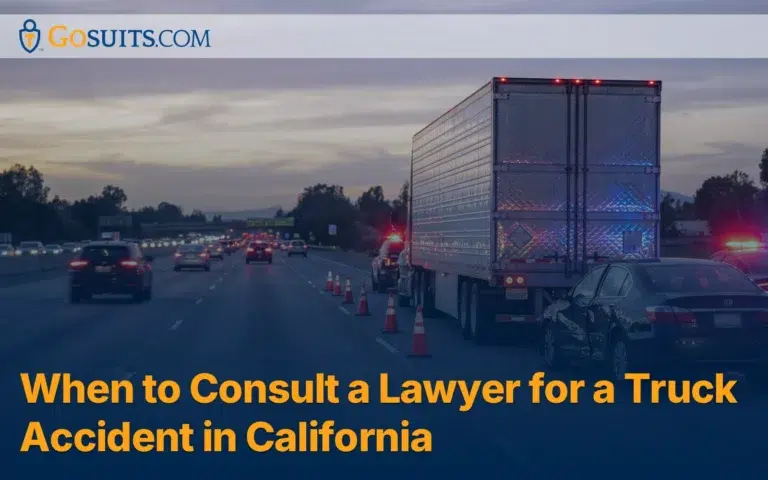
As soon as practical. Under California law, a person hurt in a truck crash generally has two years from the date of injury to file a civil lawsuit, but waiting that long is rarely wise. Commercial trucking cases can involve a driver, a carrier, a vehicle owner, and several insurers, and some of the most useful evidence, such as driver duty records and electronic logging data, is subject to federal retention rules that can be as short as six months. If a public agency may share fault, a written claim may be due in six months. Consulting a lawyer early lets someone review the facts, identify the deadlines that apply, and send preservation demands before records are lost.[1][4]
Legal Snapshot
-
Legal Topic: Timing of legal consultation after a commercial truck collision (civil claims only)
-
Jurisdiction: California state law, plus federal motor carrier safety regulations that apply to many commercial trucks
-
Case Stage: Pre-claim and early investigation
-
Primary Legal Issue: Preserving evidence and meeting filing deadlines while fault is investigated
-
Primary Authority: Cal. Code Civ. Proc. § 335.1; Cal. Gov. Code § 911.2; 49 C.F.R. Parts 387, 395 and 396; Cal. Civ. Code § 1431.2; Li v. Yellow Cab Co. (1975) 13 Cal.3d 804
-
Date Legal Authority Last Reviewed: October 13, 2026 (attorney verification recommended before publication)
What Does “Consulting a Lawyer” After a Truck Accident Involve?
A consultation is a conversation in which a lawyer reviews what happened, who may be legally responsible, what evidence exists, and which deadlines apply. It is not a commitment to file a lawsuit. Most truck cases never involve just one at-fault party and one insurer, so early questions often include: who employed or hired the driver, who owned the truck and trailer, who loaded the cargo, and who maintained the equipment.
This article covers civil injury claims only. It does not address traffic citations or criminal charges, and it is general information rather than advice about any particular crash.
What Does California Law Say?
California applies the general negligence duty of ordinary care to truck drivers and the companies behind them. A claim for injury or death caused by another’s wrongful act or neglect must generally be filed within two years under Code of Civil Procedure section 335.1.[1] For wrongful death, the same section generally applies, with the period running from the date of death.[1]
California follows pure comparative fault. In Li v. Yellow Cab Co. (1975) 13 Cal.3d 804, the California Supreme Court replaced the all-or-nothing contributory negligence rule with a system that reduces damages in proportion to the injured person’s own share of fault.[9] That means an injured person who is partly blamed may still recover, but the percentage assigned to them matters. Insurers know this, which is one reason early statements about fault deserve care.
When more than one defendant is responsible, Civil Code section 1431.2 (Proposition 51) makes each defendant liable for noneconomic damages only in proportion to that defendant’s percentage of fault, while economic damages are treated differently.[10] In a truck case, how fault is divided among a driver, a carrier, and other companies can therefore affect who may be asked to pay what.
What Legal Rules Apply?
Several layers of law can apply to one truck crash.
|
Authority |
Level |
What it addresses |
|---|---|---|
|
Code Civ. Proc. § 335.1 |
California statute |
Two-year filing deadline for injury and wrongful death claims[1] |
|
Gov. Code § 911.2 |
California statute |
Six-month written claim deadline for injury claims against public entities[2] |
|
Civ. Code § 1431.2 |
California statute |
Several liability for noneconomic damages[10] |
|
Veh. Code § 34501.2 and Cal. Code Regs., tit. 13, § 1212.5 |
California statute and CHP regulation |
Hours-of-service rules for drivers, including intrastate truck drivers[7][8] |
|
49 C.F.R. Part 395 |
Federal regulation |
Hours of service, records of duty status, electronic logging devices[4] |
|
49 C.F.R. § 396.3 |
Federal regulation |
Inspection, repair and maintenance records[5] |
|
49 C.F.R. § 387.9 |
Federal regulation |
Minimum insurance levels for covered motor carriers[6] |
|
Code Civ. Proc. §§ 377.60 to 377.62 |
California statute |
Who may bring a wrongful death action and what damages may be awarded[12][13] |
California law requires hours-of-service rules for trucks to be consistent with federal rules, with certain exceptions for trucks that operate only within California.[7] Under California regulations, an intrastate truck driver generally cannot drive more than 12 hours after 10 consecutive hours off duty, cannot drive after the 16th hour after coming on duty, and cannot drive after being on duty for 80 hours in any eight consecutive days.[8] Interstate truck drivers must follow the federal hours-of-service rules in 49 C.F.R. Part 395.[8]
A trucking company can be held legally responsible for its driver’s conduct, and in California, calling the driver an independent contractor often does not change that. Other companies, such as freight brokers or shippers, may also share responsibility based on their own conduct, such as hiring an unsafe carrier or loading cargo improperly. Who is responsible depends on each company’s relationship to the driver and the facts of the crash.
How Does This Apply to a Real Case?
Truck crashes in California often involve highway conditions that are easy to picture: stop-and-go traffic on Interstate 5, heavy freight movement on the I-710 near the Ports of Los Angeles and Long Beach, or long hauls across the Inland Empire on I-10. These are generic driving conditions, not specific incidents, but they illustrate why one collision can involve a local delivery company, an out-of-state carrier, and a leasing company at the same time.
Example (hypothetical, not a GoSuits case): A driver is stopped in congestion on a Southern California freeway when a tractor-trailer hits the rear of the car. The driver goes to the emergency room and feels sore but assumes the injuries are minor. Three weeks later, imaging shows a spinal injury. The truck’s electronic data and the carrier’s duty records are still within the minimum retention periods, but only if someone asks for them to be preserved. A consultation at this stage can address both the medical picture and the evidence clock.
Example (hypothetical, not a GoSuits case): A flatbed truck owned by one company is driven by someone hired through a second company, hauling cargo loaded by a third. After a crash, each company blames the others. Under California Civil Code section 1431.2, each defendant generally pays only its own share of noneconomic damages, such as pain and suffering, based on its percentage of fault[10] That is why identifying every possibly responsible party early can matter to the claim.
Example (hypothetical, not a GoSuits case): A county-owned utility truck is involved in a crash. Because a public entity is involved, a written claim generally must be filed with the county within six months, far sooner than the two-year lawsuit deadline that applies to private defendants.[2]
When Are the Strongest Reasons to Consult a Lawyer Sooner Rather Than Later?
Certain facts make early consultation especially important. Each of the following is a reason to speak with a lawyer promptly:
-
Serious or lasting injury. Fractures, spinal injuries, head injuries, burns, or surgery usually mean larger medical records, future-care questions, and higher stakes.
-
A death in the family. A wrongful death claim has its own rules about who may sue.[12]
-
A commercial or company vehicle. Logos, DOT numbers, or a trailer suggest a carrier and corporate insurer may be involved.
-
Disputed fault. If the driver or insurer blames you, the percentage of fault can reduce a recovery.[9]
-
Possible government involvement. A city, county, or state vehicle, or a road condition maintained by an agency, can trigger the six-month claim rule.[2]
-
Requests for a recorded statement or a quick settlement. Statements and releases can affect the claim before the full extent of injuries is known.
-
Multiple vehicles or multiple companies. More parties usually means more insurers and more fault arguments.
What Evidence Can Matter?
No single item proves a case by itself, but several categories commonly matter in truck claims.
-
Driver duty records and ELD data. Hours-of-service records can show whether the driver was within legal limits. Federal rules require a motor carrier to keep records of duty status and supporting documents for at least six months, and to retain a backup copy of electronic logging device records for six months.[4]
-
Maintenance and inspection records. Brake, tire, and inspection records may bear on equipment failure. Federal rules call for these to be kept for one year at the place the vehicle is housed or maintained, and for six months after the vehicle leaves the carrier’s control.[5]
-
Vehicle data and dashcam video. Engine data and camera footage may be recorded over during normal use, and how long they are kept varies by system and trucking company, so acting quickly matters.
-
Police report, photographs, and scene video. These help document positions, road conditions, and signs of impairment or distraction. Nearby business cameras and traffic cameras may be recorded over quickly.
-
Witness statements. Independent witnesses can support or contradict a driver’s account.
-
Medical records and bills. These connect the crash to the injuries and support the damages claim. Gaps in treatment can be used to argue the injuries were unrelated.
-
Employment and income records. These support lost wages and, where applicable, reduced earning capacity.
-
Insurance documents. Policies and declarations pages identify available coverage.
-
Accident reconstruction analysis. In some cases, engineers analyze speed, braking, and sight lines.
The federal retention periods above are minimums, not guarantees that every record will still exist. A written demand to preserve evidence, sent early, puts the trucking company on notice to keep what it has. If a party destroys evidence after that, a California court can impose penalties, including allowing the jury to assume the missing evidence would have hurt that party.
What Damages or Remedies May Be Available?
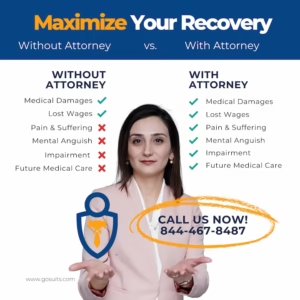
Recoverable damages depend on California law and the specific facts. In a personal injury case, they commonly include:
-
Past and future medical expenses
-
Lost income and, in some cases, loss of earning capacity
-
Physical pain, mental suffering, and other noneconomic losses
-
Property damage to the vehicle and belongings
Civil Code section 1431.2 distinguishes economic damages, such as medical expenses and lost earnings, from noneconomic damages, such as pain and suffering.[10]
If a crash is fatal, eligible family members may bring a wrongful death action under Code of Civil Procedure section 377.60, and a court may award damages under all circumstances, excluding certain damages that belong to a separate survival claim.[12][13] Families facing this situation may wish to speak with wrongful death lawyers who can explain who has standing to sue. Punitive damages are sometimes sought when conduct is especially serious, but they have a higher standard. Under California Civil Code section 3294, the injured person must prove by clear and convincing evidence that the defendant acted with oppression, fraud, or malice. A trucking company can be held liable for punitive damages based on its driver’s conduct only in limited situations, such as when a manager approved the conduct or knowingly kept an unfit driver on the road. Nothing here predicts or promises any outcome.
What If the Other Party Disputes Liability?
Disputes are common. A driver may say the injured person changed lanes unsafely. A carrier may say a mechanical failure was unforeseeable, or that the driver was an independent contractor. A defendant may also argue that another company is responsible. Under California’s pure comparative fault rule, these arguments can reduce, though not automatically eliminate, recovery.[9]
Drivers, carriers, and other companies facing a claim have their own reasons to consult counsel promptly, including preserving their own records and understanding their insurance coverage. The same evidence that may support an injured person’s claim can also support a defense, and both sides benefit from knowing what the records actually show.
What If Insurance Is Involved?
Several policies may be in play: the trucking company’s liability coverage, the driver’s own policy, the injured person’s own auto insurance, and possibly coverage held by other businesses. Federal regulations set minimum financial responsibility levels for covered motor carriers. For example, a for-hire carrier moving nonhazardous property in interstate commerce in a vehicle with a gross vehicle weight rating of 10,001 pounds or more must carry at least $750,000 in public liability coverage, with higher minimums for certain hazardous cargo.[6] These are minimums, not a measure of what a claim is worth, and the amount of available coverage does not decide the amount of damages. For trucks operating only within California, state law generally requires trucking companies to carry at least $750,000 in liability coverage to hold a DMV motor carrier permit, with higher minimums for those hauling petroleum or hazardous materials.
Insurance adjusters may call soon after the crash, ask for a recorded statement, or offer a quick settlement. Anything you say or sign can affect your claim, so it helps to speak with a GoSuits attorney before you respond. Your own auto policy may also require you to report the crash within a set time, and that deadline varies by policy, so review your policy soon after the crash.
How Long Do I Have to Act?
Filing deadlines depend on who may be responsible and what type of claim you have. The table below shows the general rules, but exceptions can apply, so a GoSuits attorney can confirm the deadlines for your situation.
|
Situation |
General deadline |
Authority |
|---|---|---|
|
Personal injury lawsuit against a private defendant |
Two years from the date of injury |
Code Civ. Proc. § 335.1[1] |
|
Wrongful death lawsuit |
Generally two years, running from the date of death |
Code Civ. Proc. § 335.1[1] |
|
Written claim for injury or death against a public entity |
Six months after the claim accrues |
Gov. Code § 911.2[2] |
|
Lawsuit after a public entity rejects the claim |
Generally six months from the rejection notice; two years if no proper written rejection |
Gov. Code § 945.6[3] |
|
Property damage claim |
Generally three years |
Code Civ. Proc. § 338(c)[14] |
The two-year period keeps running while you negotiate with an insurer. Different rules may apply to minors, people who lack legal capacity, and injuries that are not discovered right away, and a GoSuits attorney can confirm which rules apply to you. Separately, the federal record retention periods discussed above can end long before the lawsuit deadline does, which is why the practical window to act is often much shorter than the legal one.[4]
What Should I Do Next?
-
Get medical care and follow the treatment plan. Health comes first, and records link the injury to the crash.
-
Write down what you remember. Note the truck’s markings, company name, DOT number, and plate if visible, and keep photographs or video you have.
-
Keep documents together. Save the police report number, medical bills, insurance letters, and proof of missed work.
-
Be careful with statements. Consider speaking with a lawyer before giving a recorded statement or signing a release.
-
Do not post about the crash. Social media posts can be used to dispute injuries.
-
Ask about preservation. A lawyer can send a written demand asking the carrier to keep driver, vehicle, and maintenance records.
-
Check for a public entity. If a government vehicle or road condition may be involved, ask about the six-month claim rule right away.[2]
Truck claims involve medical proof, multiple insurers, contested fault, and strict deadlines. Handling them without legal help can put a recovery at risk, so speaking with truck accident lawyers early is generally the safer course.
Related California Personal Injury Resources
For a broader overview of injury claims in the state, see the GoSuits California injury claim information page. Readers who want to talk with a firm about their own situation can also review options with California personal injury lawyers through the contact page below.
Talk With a GoSuits Attorney
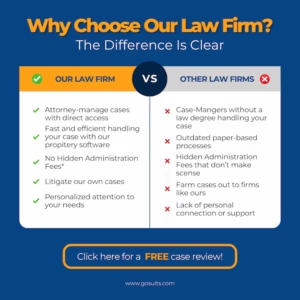
A truck accident claim can involve medical evidence, federal and state safety rules, insurance disputes, and short legal deadlines. If you were injured in a California truck crash, a GoSuits personal injury attorney can review the circumstances and explain your options. You can schedule a free consultation. Past results do not guarantee a similar outcome, and no recovery is promised.
This article is general legal information for California and is not legal advice. Reading it does not create an attorney-client relationship.
References
-
CCP § 335.1: California’s 2-Year Statute of Limitations – Gammill Law
-
Government Code § 911.2 Text and Overview – Impact Attorneys
-
Government Claim and Lawsuit Deadlines (Gov. Code §§ 911.2, 945.6) – Gammill Law
-
49 CFR 387.9, Financial Responsibility, Minimum Levels – eCFR
-
13 CCR § 1212.5, Maximum Driving and On-Duty Time – California Code of Regulations
-
California Code of Civil Procedure § 377.60 – California Legislative Information
-
Code of Civil Procedure §§ 377.60 to 377.62, Wrongful Death – Justia
-
California Personal Injury Limitations Statutes Overview – Maho Prentice and related FAQ