- What We Know About the Huntington Beach Wetlands Crash
- Local Context: Pacific Coast Highway, Warner Avenue, and the Wetlands
- Key Investigation Questions After a Rear-End Crash Into Water
- Civil Liability Snapshot Under California Law
- Practical Steps in the First 72 Hours
- Where to Get Official Records and Information
- Insurance and Claims After a Fatal Rear-End Collision
- Evidence to Preserve Right Away
- Safety Reflections for Nighttime Driving Near Coastal Wetlands
- Rights, Timelines, and California Deadlines
- Why Timely Action Matters and What to Do Next
- Commentary from Gosuits Huntington Beach, California Personal Injury Attorney
- Resources
What We Know About the Huntington Beach Wetlands Crash
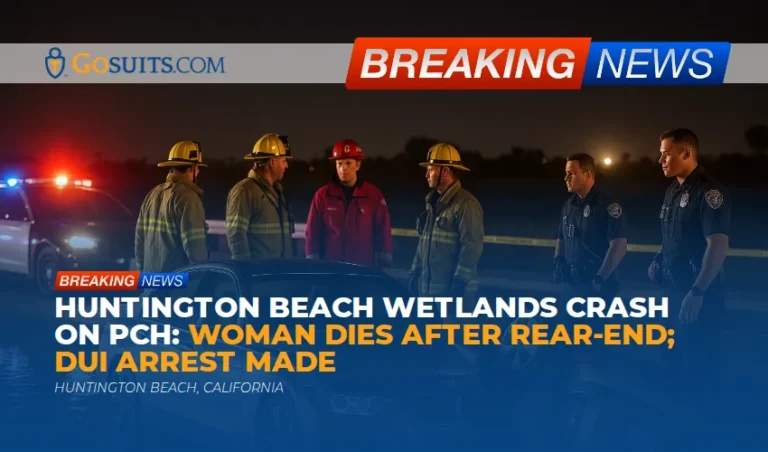
On Wednesday night, April 15, along Pacific Coast Highway just south of Warner Avenue in Huntington Beach, a northbound BMW sedan reportedly rear-ended a Kia Soul around 10:40 p.m. The impact pushed the Kia off the roadway and into nearby wetlands, where it overturned and was largely submerged. Huntington Beach Fire Department lifeguards and other first responders worked to remove the driver, a 53-year-old Long Beach woman, who was taken to a hospital and later pronounced deceased. It was not immediately clear whether the fatality was due to the collision trauma or drowning. Huntington Beach Police said the other driver, a 23-year-old Long Beach man, was arrested on suspicion of DUI. The case remains under investigation.
While details continue to develop, this crash highlights several legal and safety questions familiar to coastal Orange County: rear-end liability principles, potential alcohol impairment, vehicle submersion risks, and the unique rescue conditions present where PCH runs alongside tidal wetlands.
Local Context: Pacific Coast Highway, Warner Avenue, and the Wetlands
Local drivers know the stretch of PCH south of Warner Avenue well. It runs beside ecologically sensitive wetlands and is close to Bolsa Chica State Beach and the Bolsa Chica Ecological Reserve. At night, this corridor can feel deceptively open, with long straightaways, intermittent lighting, and changing coastal visibility. The off-shoulder terrain near the wetlands can be uneven or soft, making post-impact vehicle dynamics unpredictable. If a vehicle leaves the roadway, it can reach water quickly in certain sections, especially during higher tides.
Huntington Beach Fire Department lifeguards often assist with water-related emergencies along this corridor. Their rapid response is vital when seconds matter in submersion scenarios. Regardless of how this investigation develops, it underscores a shared community concern: how quickly a typical traffic collision can become a life-threatening water rescue along our coastline.
Key Investigation Questions After a Rear-End Crash Into Water
In a serious rear-end collision that culminates in an overturned vehicle in water, investigators typically consider several lines of inquiry. Families often ask similar questions, so here are common areas officials review.
- Collision dynamics. How fast were the vehicles going, what was the distance between them, and were there any evasive maneuvers or hard braking before impact.
- Impairment or distraction. Whether any driver was impaired by alcohol or drugs, and whether distraction or fatigue may have contributed. Alcohol impairment is a known risk factor for reduced reaction time and judgment [3].
- Roadway and environmental conditions. Nighttime visibility, glare, traffic flow along PCH, and the condition of the shoulder and wetlands embankment.
- Restraints and safety systems. Seat belt use, airbag deployment, and whether vehicle design affected the rollover or submersion.
- Submersion timeline. How quickly water entered the passenger area, whether doors or windows were obstructed, and how tides or mud flats might have impeded rescue. Drowning can occur in minutes without prompt extraction [8].
- Post-crash response. 911 call timing, lifeguard and fire response intervals, and extraction logistics.
Technical evidence often supports these answers. That can include vehicle event data recorders, road and intersection cameras, and physical inspections of the vehicles and crash site.

Civil Liability Snapshot Under California Law
Every collision analysis is fact specific, and fault is never assigned by a single rule. That said, California law requires drivers to avoid following another vehicle more closely than is prudent and reasonable, considering speed, traffic, and roadway conditions [1]. Rear-end collisions frequently raise questions about how much spacing existed and whether the trailing driver could have avoided impact with safe following distance and attention.
Allegations of impaired driving also matter in civil cases. California prohibits driving under the influence of alcohol or drugs, including with a blood alcohol concentration at or above the statutory limit [2]. Evidence that a driver was impaired can be relevant to negligence analysis and may affect how insurers approach liability. Public safety agencies emphasize that impaired driving dramatically increases crash risk and severity [3][10]. For a deeper statewide discussion of how rear-end fault is assessed, see Who is at fault for a rear end collision in California?.
Practical Steps in the First 72 Hours
It can feel overwhelming to navigate the initial days after a deadly collision. The following practical steps are commonly helpful in Orange County cases like this.
- Prioritize respectful communication with investigators. Keep the incident number handy and note which agency is lead. Along PCH inside the city, Huntington Beach Police Department is typically primary for traffic collisions.
- Identify the coroner’s office. In Orange County, the Sheriff-Coroner’s Office manages examinations and next-of-kin notifications. Families can ask about timelines for autopsy and toxicology reports, which often take weeks or longer to finalize [7].
- Preserve evidence early. Save photos, dashcam files, phone location history, and witness contact information. Vehicle black box data and nearby traffic cameras may be time sensitive. NHTSA explains how event data recorders can capture pre-crash metrics like speed and braking [12].
- Use care with insurance communications. Many people choose to speak with an attorney before giving recorded statements. Statements can be used later in ways that may be misunderstood or out of context, and California’s insurance regulator offers consumer guidance on claim handling [11].
- Plan for vital records. Death certificates in California are issued through the Department of Public Health’s Vital Records division, often requested by funeral homes or directly by family [9].
- Consider DMV reporting obligations. If statutory reporting thresholds are met, accidents must be reported to the DMV within 10 days using form SR-1 [5].
Seasoned Irvine car accident lawyers often recommend focused documentation during this period, including a timeline of events and a secure folder for all official correspondence.
Where to Get Official Records and Information
Obtaining accurate records protects both understanding and accountability. Here are common points of contact for Orange County traffic fatalities that occur inside Huntington Beach city limits.
- Huntington Beach Police Department collision report. The Police Department’s Records Unit can advise on when the report will be available and how to request it. The City’s website maintains public guidance for report and records requests [6].
- Orange County Sheriff-Coroner’s Office. Families may request information regarding autopsy status, examination findings, and next steps for release [7].
- California Department of Public Health, Vital Records. For certified death certificates and related documentation used in estate and insurance matters [9].
- California DMV accident report (SR-1). When reporting thresholds apply, the DMV provides the required form and instructions online [5].
- California Public Records Act (CPRA) requests. For certain city-held records like 911 logs, traffic signal timing sheets, or municipal camera footage, the CPRA provides a framework for requesting government documents, with exemptions and privacy limits that may apply [13].
Because the scene borders sensitive wetlands, environmental or right-of-way records could exist with multiple agencies. A concise written request that identifies date, time, location, and the type of record can expedite responses.

Insurance and Claims After a Fatal Rear-End Collision
Fatal roadway collisions create layered insurance issues. Families often face property claims, potential uninsured or underinsured motorist coverage questions, and wrongful death claims against at-fault drivers. While each policy is different, a few principles are common.
- Recorded statements and authorizations. Insurers may request recorded statements or broad medical authorizations early. Many people choose to consult an attorney before agreeing. California’s Department of Insurance publishes consumer guides and outlines fair claims practices that insurers must follow [11].
- Evidence of impairment or following too closely. Insurers will review any evidence of impaired driving and spacing violations. California law addresses both following distance and DUI [1][2].
- Wrongful death claim alignment. A civil wrongful death claim typically runs in parallel with any criminal investigation. The civil claim focuses on damages allowed by statute and is independent of criminal outcomes.
- Preserving benefits and time limits. Notifying all relevant insurers preserves coverage opportunities, including potential UM or UIM claims if applicable. Policy language and California timelines govern these steps.
People often look for car accident lawyers to help coordinate these moving parts, especially with multiple carriers, medical billing, and benefits involved.
Evidence to Preserve Right Away
Important evidence can be lost quickly along PCH, especially near water and tidal flats. Consider these focus areas.
- Vehicle event data recorders. Modern vehicles often store pre-crash data on speed, braking, and throttle. These may require prompt retrieval and professional handling to avoid overwriting, as described by NHTSA [12].
- Witnesses and nearby businesses. PCH restaurants, beach parking lots, and trailheads sometimes have cameras facing the roadway. Contact information and copies of footage are time sensitive.
- Municipal cameras and logs. City traffic management systems and signal timing logs may provide context for traffic flow. Such records may be requested through lawful channels like CPRA [13].
- Scene measurements and photos. Skid marks, gouges, and fluid paths can wash away. Documenting these quickly can be crucial later.
For a grounded overview of burden and proof in rear-end scenarios, see the internal guide noted earlier: Who is at fault for a rear end collision in California?
Safety Reflections for Nighttime Driving Near Coastal Wetlands
Coastal corridors like PCH near Huntington Beach can be beautiful and unforgiving. Tidal conditions, nighttime glare from oncoming headlights, and limited shoulders can change a driver’s available time to react. Public safety agencies have long warned about impaired driving risks on any roadway, and that holds true here given the speed and exposure near water [3][10]. Drowning remains a leading cause of injury-related death across all ages, and in a crash that ends in water, seconds count for escape and rescue [8].
A few reminders that fit this corridor specifically: maintain extended following distance on PCH at night, scan for brake lights several vehicles ahead, and keep windows unlocked if you approach areas where open water is close to the roadway. Simple choices can expand your margin for error if the unexpected happens.
Rights, Timelines, and California Deadlines
California law provides a general two-year statute of limitations for wrongful death and most personal injury claims, measured from the date of death or injury. There are exceptions and special rules for public entities and other contexts, so timelines can vary by case. The basic two-year period is codified at Code of Civil Procedure section 335.1 [4].
These timing rules intersect with the practical reality that technical reports often take time. Police collision reports can take weeks, and coroner toxicology can take longer to finalize. That uncertainty makes early evidence preservation more important. It is also a reason why many people choose to consult with an attorney early, before contacting insurers. car accident lawyers can help coordinate fact gathering, protect against inadvertent misstatements, and track legal deadlines while families focus on immediate needs.
In some situations, there are also reporting obligations to state agencies. For example, California requires that certain traffic collisions be reported to the DMV within 10 days using the SR-1 when injury, death, or qualifying property damage is involved [5].
Why Timely Action Matters and What to Do Next
Here is what tends to matter most, and why acting sooner rather than later can make a difference.
- Secure the records trail. Request the police collision report number, note the incident date and exact location, and calendar estimated release dates. Doing this early reduces the chance of delays later.
- Preserve electronic evidence. Vehicle EDR data, dashcams, and nearby cameras can be overwritten quickly. Early requests can be the difference between having objective speed and braking data and having none [12].
- Coordinate with the coroner and vital records. Understanding when autopsy and toxicology may be available helps families plan and ensures that civil decisions are based on complete information [7][9].
- Approach insurance communications with caution. Claims adjusters are trained to gather information quickly. Many choose to contact an attorney before giving any recorded statement. What is said can be used later, and California’s consumer guidance provides insight into claim practices and policyholder rights [11].
- Track deadlines. California’s general two-year statute for wrongful death means time is not unlimited, and additional shorter deadlines may apply if public entities or special coverages are involved [4].
For those seeking location-aware legal guidance, car accident lawyers in Irvine regularly handle matters that cross city lines throughout Orange County, including along PCH in Huntington Beach.

Commentary from Gosuits Huntington Beach, California Personal Injury Attorney
Our hearts are with the woman’s family and everyone affected by this crash near the wetlands. Articles like this are intended for general information and community awareness. They are not a substitute for case-specific guidance.
From a civil perspective, the reported facts raise familiar issues we see on coastal corridors. A rear-end impact on PCH at night is already dangerous due to higher speeds and tighter reaction windows. Add a roadside environment where a vehicle can leave the pavement and enter water, and the risk becomes life threatening almost immediately. If impairment evidence is confirmed, it will likely factor into fault analysis in the civil arena, regardless of how the criminal process proceeds.
Insurance carriers know that families in grief are vulnerable. Adjusters may call for quick statements, seek broad authorizations, or press for early resolutions before the full picture is known. Corporations and insurers have sophisticated playbooks that rely on information asymmetry. That is why people benefit from learning their rights and options early. Even a brief, no-cost consultation can clarify deadlines, preserve crucial evidence like EDR data, and prevent missteps that could narrow recovery paths later.
Resources
- California Vehicle Code § 21703 Following Too Closely – California Legislature
- California Vehicle Code § 23152 DUI – California Legislature
- Drunk Driving – NHTSA
- Code of Civil Procedure § 335.1 Two-Year Statute – California Legislature
- Report of Traffic Accident Occurring in California (SR-1) – California DMV
- Police Department Reports and Records – City of Huntington Beach
- Orange County Sheriff-Coroner – OCSheriff.gov
- Unintentional Drowning: Get the Facts – CDC
- Vital Records, Death Certificates – California Department of Public Health
- Impaired Driving Campaign – California Office of Traffic Safety
- Automobile Insurance Guides for Consumers – California Department of Insurance
- Event Data Recorders (EDRs) – NHTSA
- California Public Records Act Overview – Attorney General