














































Ridesharing Accident Statistics
There are clear benefits of ridesharing services, but this increased popularity has caused an increased number of vehicles on the road which led to a rise in traffic and pedestrian accidents and fatalities. This was opposite from the intended effect when these companies were established because traffic accidents were at an all-time low in 2010, before the popularization of these services. However, a study by BFI University of Chicago reported that fatalities have increased by about 3% annually since ridesharing was introduced. Uber has disclosed in a safety report that there have been 91 fatal Uber accidents that caused the deaths of 101 people in 2019-2020.
Speeding and driving under the influence (by another driver) are two of the most common causes of ridesharing accidents, accounting for 32% and 23% of the total incidents, respectively. Of the 91 reported fatal Uber accidents, 42% were vulnerable road users. They are further divided into 64% pedestrians, 29% motorcyclists, and 7% bicyclists.
Most Common Injuries Sustained In A Ridesharing Accident In California
Traumatic Brain Injuries
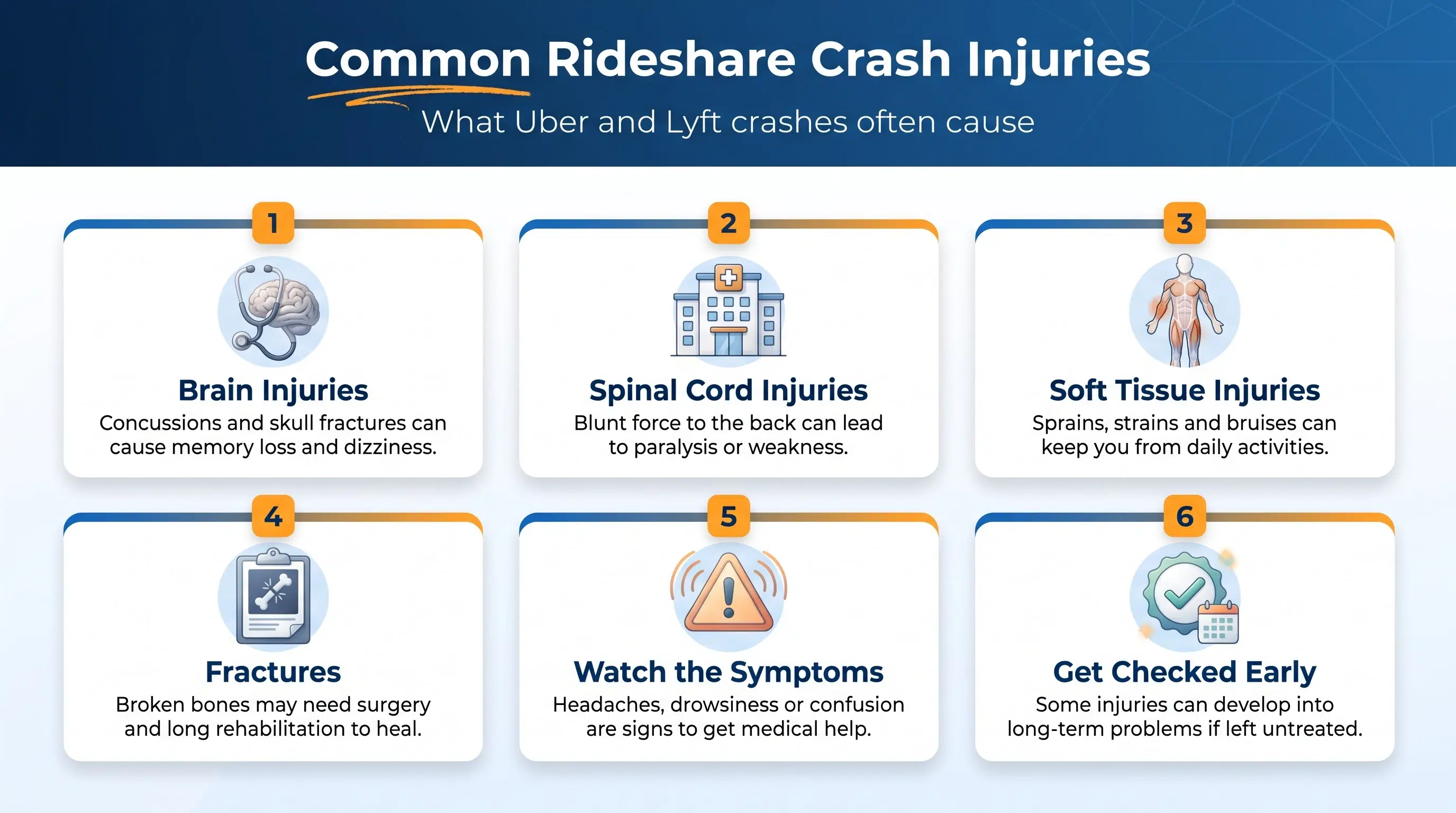
These may include concussions, skull fractures, and brain hemorrhage that result from the strong impact of a ridesharing accident. Some symptoms include headaches, dizziness, drowsiness, forgetfulness, emotional agitation, memory loss, and even loss of consciousness. If you experience these symptoms, it might be a good idea to seek medical help because this can potentially develop into a long-term injury that can compromise your daily living.
Spinal Cord Injuries
Also referred to as SCIs, these injuries often result from blunt force trauma to the back that impacts the spinal cord. The spinal cord connects your brain to the rest of your body through a network of nerves that send signals all over. Therefore, injuring the spinal cord may compromise your everyday living by causing life-long consequences like paralysis, loss of sensation, and body weakness.
Soft Tissue Injuries
These injuries include sprains, cuts, abrasions, strains, and bruises that affect non-bony parts of the body. These injuries are not likely to cause you long-term pain, but they can lead to major inconveniences in your life that can render you unable to do your daily activities.
Fractures
Depending on the severity of a collision, you may experience serious injuries, such as fractures. These are also known as broken bones which may need long-term medical treatment, surgeries, and rehabilitation to fully heal.
What Compensation Can You Receive After A Ridesharing Accident?
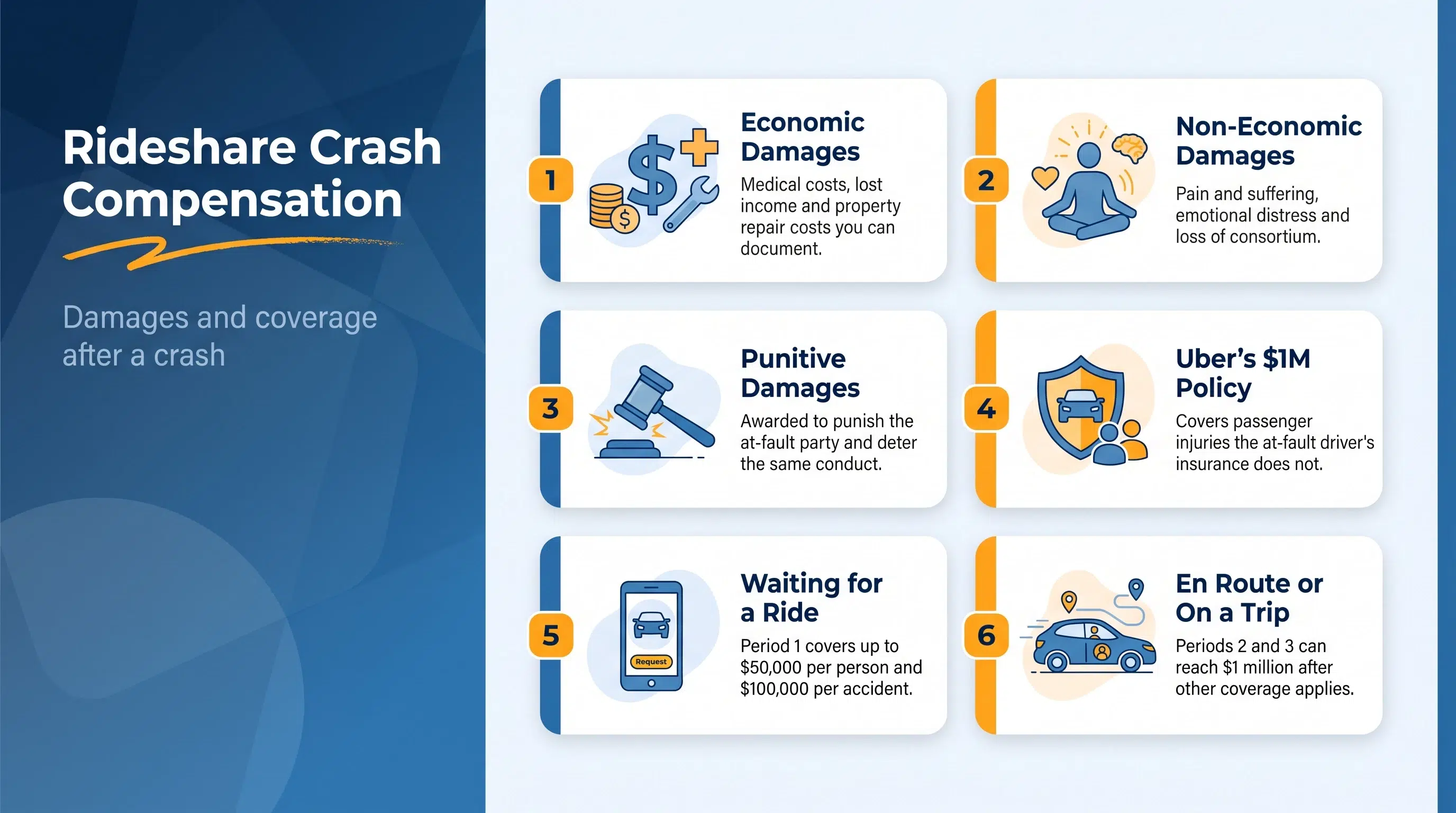
Generally speaking, you may receive economic damages, non-economic damages, and punitive damages as compensation for your injuries resulting from a ridesharing accident. Economic damages, also known as special compensatory damages, are quantifiable costs that seek to compensate for all the expenses you may have spent due to the accident, like medical costs, loss of income, and repair costs for property damage. Non-economic damages, also known as general compensatory damages, will compensate you for pain and suffering, loss of consortium, and emotional distress. Finally, punitive damages are awarded to you to punish the at-fault party and deter them from committing the same act in the future.
On top of these, Uber and Lyft carry their own insurance. For passengers hurt by an uninsured or underinsured driver, the uninsured/underinsured motorist coverage they must carry has been $60,000 per person and $300,000 per incident since January 1, 2026 (California Public Utilities Code section 5433). Uber’s liability coverage applies in three instances, referred to as Period 1, Period 2, and Period 3.
Period 1 is when an accident happens while the driver is waiting for a ride request. If an accident occurs during this period, Uber’s insurance policy will cover bodily injury damages of up to $50,000 per person, $100,000 per accident, and $30,000 in property damage.
Period 2 is when the driver has accepted a request and is on their way to pick up the passenger. During this period, Uber carries $1 million in liability coverage for crashes its driver causes.
Period 3 is when the driver is traveling with the passenger to the destination. Same with period 2, Uber will cover damages of up to $1 million, except that during this period, the coverage now extends to the passenger who was with the rider during the accident.