Your injury case is not too small to ask about. Whether it makes sense to hire a lawyer depends on how badly you were hurt, how clear the fault is, how much insurance is available, and how much time and stress you can take on yourself. Some minor claims can be handled directly with an insurer or in small claims court. In California, small claims court generally hears cases up to $12,500 for individuals [1]. In Texas, a justice court small claims case can be up to $20,000 [2]. In Illinois, a small claim is one for $10,000 or less [3]. In all three states, most injury lawsuits must be filed within two years [4][5][6]. A short, free conversation with a lawyer can help you decide which path fits.
Legal Snapshot
- Legal Topic: Deciding whether a minor injury claim needs a lawyer in California, Texas or Illinois
- Case Stage: Early, before an offer is accepted or a lawsuit is filed
- Primary Legal Issue: Claim value, small claims limits, comparative fault and deadlines
- Primary Authority: California Code of Civil Procedure Sections 116.221, 116.530 and 335.1; Texas Rule of Civil Procedure 500.3 and Civil Practice and Remedies Code Sections 16.003 and 33.001; Illinois Supreme Court Rule 281 and 735 ILCS 5/13-202 and 5/2-1116
- Last Updated: November 2026
What Makes a Case “Small”?
People often call a case small when the injury healed quickly, the medical bills were low, or the car damage was minor. Those are fair points, but a few facts can change the picture:
- Symptoms that last. Neck, back and head injuries sometimes feel minor at first and get worse over weeks.
- Medical bills you have not seen yet. Emergency room, imaging and therapy bills can arrive months later.
- Time missed from work. Lost wages count, even for a short absence.
- Disputed fault. If the other driver blames you, a small claim can quickly become harder.
- Repayment claims. A health plan or hospital may expect to be repaid from what you receive.
A claim that seems small on day one can look different once these are counted. It is also possible that, after counting them, the claim really is small. Both answers are useful.
When Might You Not Need a Lawyer?
Some claims can reasonably be handled on your own. This may be true when:
- You had no injury, or a minor injury that fully healed within days with little or no treatment
- The other driver’s insurer accepts fault in writing
- The only real loss is vehicle damage, and the insurer is paying for repairs or a fair value
- Your out-of-pocket costs are low and clearly documented
Even then, read any release carefully before you sign it. A release usually ends every claim from the incident, including injuries you did not know about yet.
When Is It Worth Talking With a Lawyer?
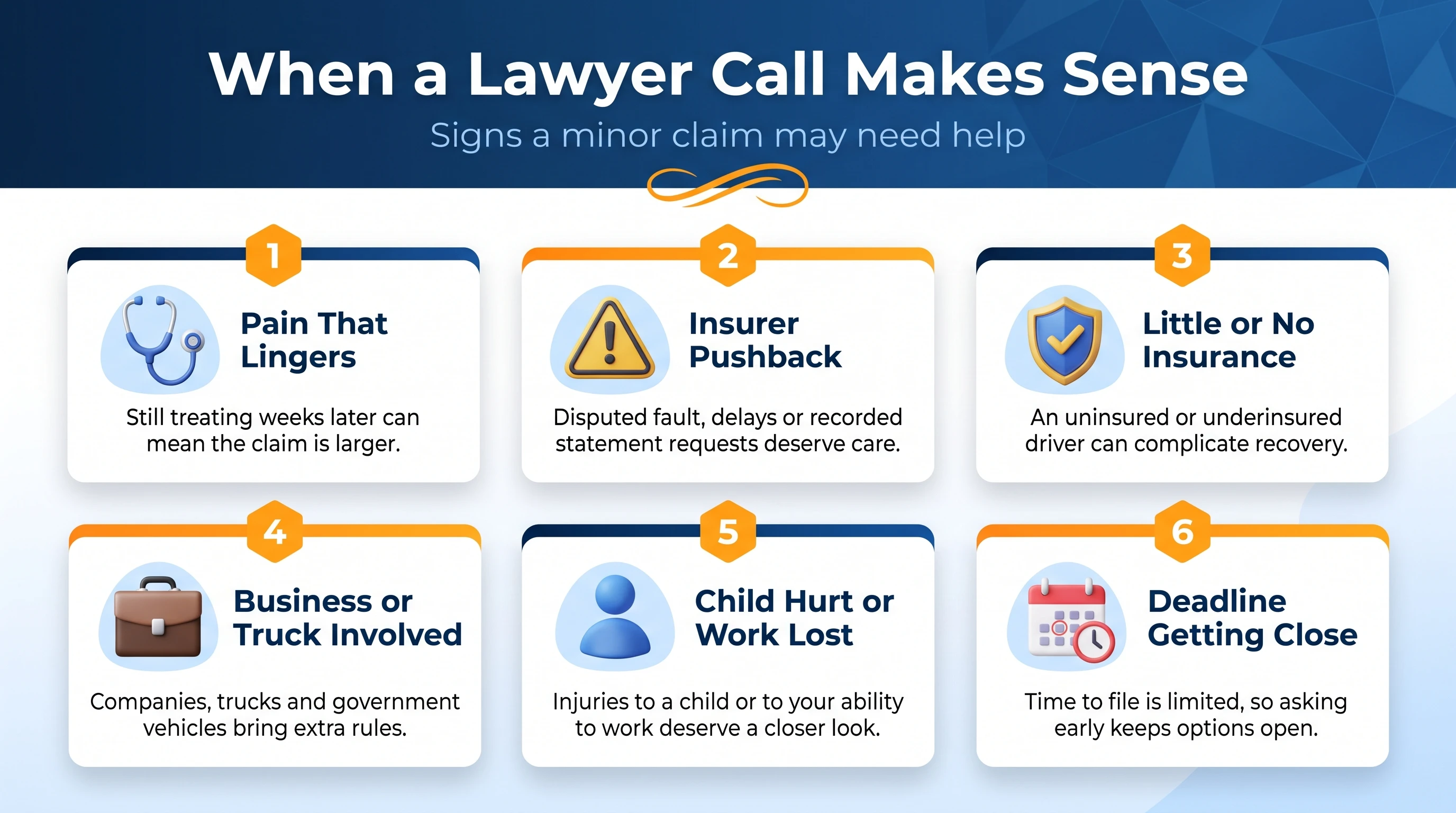
It can be worth a call to personal injury lawyers when:
- You are still in pain or still treating weeks after the incident
- The insurer disputes fault, delays, or asks for a recorded statement
- The other party had no insurance or too little insurance
- A business, government vehicle or commercial truck was involved
- A child was hurt, or the injury affects your ability to work
- A deadline is getting close
Many injury firms, including GoSuits, offer a free consultation, so asking the question does not cost anything. A lawyer can also tell you honestly when a case may be better handled without one.
What Do the Small Claims Limits Look Like?
| State | Court | General limit for an individual |
|---|---|---|
| California | Small claims division of the Superior Court | $12,500 [1] |
| Texas | Justice court (small claims case) | $20,000, excluding statutory interest and court costs [2] |
| Illinois | Circuit court small claims | $10,000, exclusive of interest and costs [3] |
Small claims court is simpler and faster, but it has limits. In California, lawyers generally may not represent parties in small claims court, so you would present the case yourself [7]. Filing a small claims case for more than the limit is not allowed, so a person whose losses are greater may give up part of the claim to fit within it. Before choosing small claims, it helps to know what the full claim may be worth. Our article on whether it is worth hiring a personal injury attorney covers more of the trade-offs.
How Does Fault Affect a Smaller Claim?
Shared fault can reduce any claim, and in smaller cases it can make a big difference. The rules differ by state:
- California: pure comparative fault. Your recovery is reduced by your share of fault, but you can still recover even if you were mostly at fault [8].
- Texas: your recovery is reduced by your percentage of responsibility, and you cannot recover if your share is greater than 50 percent [9].
- Illinois: your recovery is reduced by your share of fault, and you cannot recover if your share is more than 50 percent [10].
Insurers sometimes argue fault in small cases because they expect people not to push back. If you believe the other driver caused the crash, write down what happened and keep photos and witness names.
Example: A Parking Lot Crash
Example (hypothetical): A driver in a Carrollton shopping center parking lot is backed into at low speed. Her bumper is cracked and her neck is sore. She sees her doctor twice and misses two days of work. The other driver’s insurer offers to pay the repair bill and a small extra amount if she signs a release within a week.
If her neck has fully healed and the offer covers her medical bills, repair costs and lost wages, she may decide to accept it without a lawyer. If her pain is still there, or the bills from her visits have not all arrived, signing now could leave her paying later costs herself. A short call to a lawyer before signing can help her make that choice with the full picture. This example is for illustration only and is not a GoSuits case.
How Long Do I Have to Decide?
In California, a personal injury lawsuit generally must be filed within two years [4]. In Texas, the general limit is also two years [5]. In Illinois, personal injury actions generally must be filed within two years after the cause of action accrued [6]. Claims against government agencies often have shorter notice deadlines, and other rules, such as those for minors, can change these periods. Small claims cases follow the same filing deadlines.
What Should I Do Next?
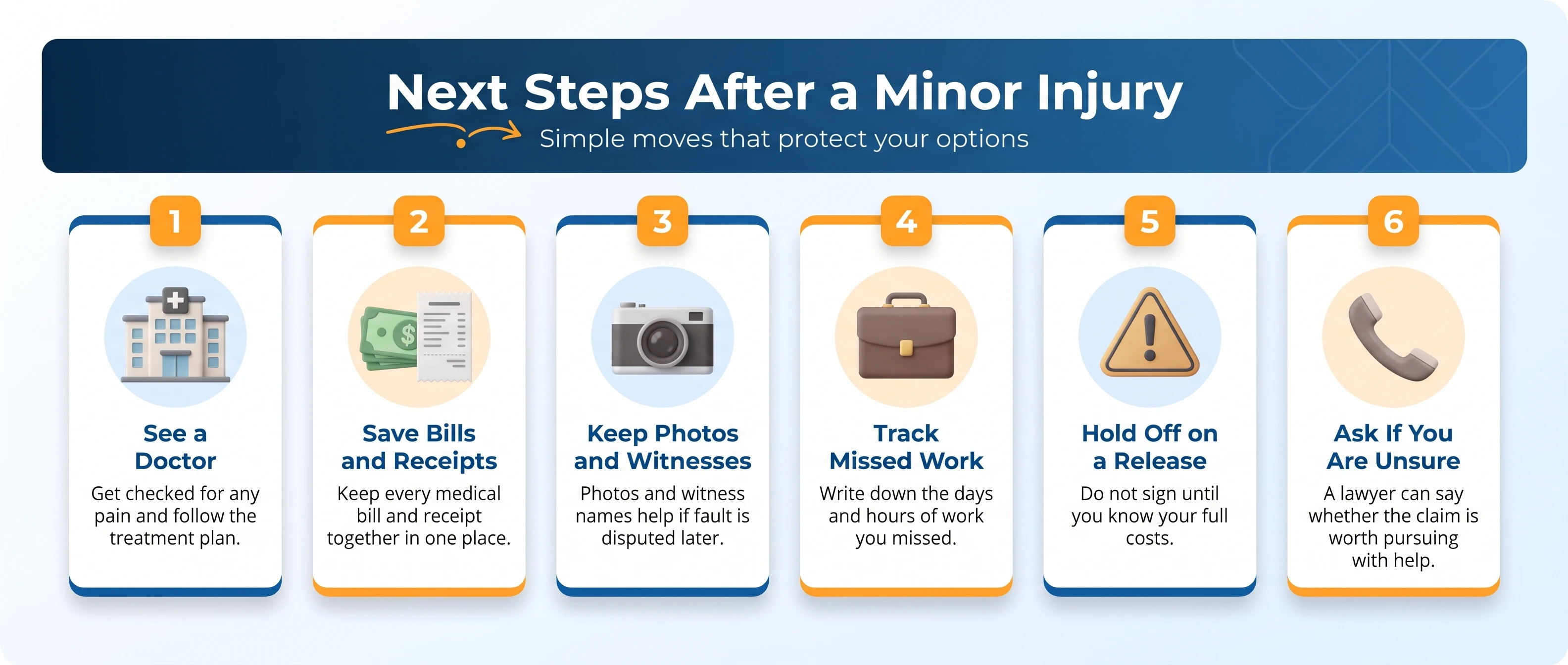
- Get checked by a doctor if you have any pain, and follow the treatment plan.
- Keep bills, receipts, photos and the names of witnesses in one place.
- Write down how much work you missed.
- Do not sign a release until you know your full costs.
- If you are unsure, ask a lawyer whether the claim is worth pursuing with help.
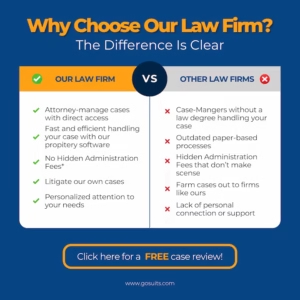
Talk With a GoSuits Attorney
A smaller claim still involves insurance rules, fault and deadlines. If you were injured in California, Texas or Illinois and are not sure whether your case needs a lawyer, a GoSuits attorney can listen, look at the facts and give you a straight answer, including when you may not need us. You can schedule a free consultation by phone, video or in person. Free consultation. No attorney fee unless there is a recovery. Case costs may still be owed if there is no recovery; the written agreement explains how they are handled.
You can also read about our prior cases, which list each court and case number so you can look them up in the public record.
This article is general legal information, not legal advice. Reading it does not create an attorney-client relationship. Every case depends on its own facts.
References
- California Code of Civil Procedure Section 116.221 – California Legislative Information
- What Is the Maximum Amount I Can Sue for in Small Claims? – Texas State Law Library
- Illinois Supreme Court Rule 281, Definition of Small Claim – Illinois Courts
- California Code of Civil Procedure Section 335.1 – California Legislative Information
- Texas Civil Practice and Remedies Code Section 16.003, Two-Year Limitations Period – Texas Public Law
- 735 ILCS 5/13-202, Personal Injury – Illinois General Assembly
- California Code of Civil Procedure Section 116.530 – California Legislative Information
- Li v. Yellow Cab Co. (1975) 13 Cal.3d 804 – Justia
- Texas Civil Practice and Remedies Code Section 33.001, Proportionate Responsibility – Texas Public Law
- 735 ILCS 5/2-1116, Limitation on Recovery in Tort Actions – Illinois General Assembly