






































What does Texas law require rideshare companies to insure?
Chapter 1954 of the Texas Insurance Code sets the floor. While a driver is logged on to the app but has not accepted a ride, the required liability coverage is $50,000 per person and $100,000 per incident for injury or death, plus $25,000 for property damage. Once a driver is on a prearranged ride, the required coverage rises to $1 million for death, bodily injury and property damage. Those are minimums, and the policy actually in force on your date of loss controls.
The statute also says that if a driver’s own policy has lapsed or falls short, the rideshare company must provide the required coverage from the first dollar of a claim. And the company’s coverage does not depend on the driver’s personal insurer denying the claim first. Uninsured and underinsured motorist coverage and personal injury protection apply where Chapter 1952 of the Insurance Code requires them.
Insurers do not always describe these tiers accurately in their first letter. We ask for the declarations pages and the app records, then match them to the facts.
What was the driver doing in the app when the crash happened?
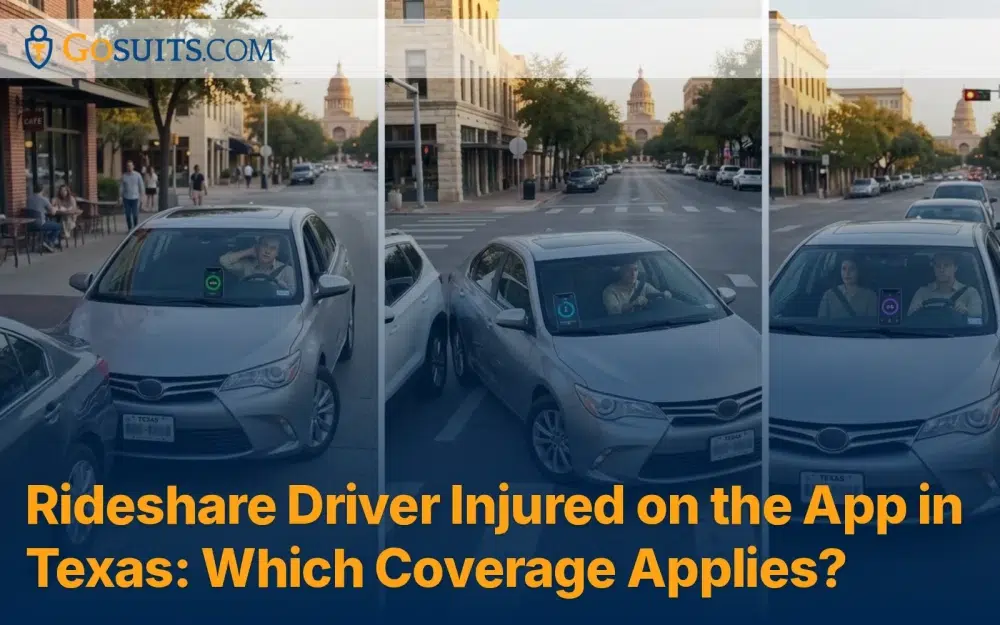
Three situations come up again and again. The driver is logged on and waiting. The driver has accepted a request and is driving to the pickup. Or the passenger is in the car. The first leads to the lower tier, the second and third to the $1 million tier.
A driver who says “I was off” is not the last word. The company has timestamps, location pings and trip logs, and those records can contradict a driver’s memory in either direction. Texas law requires a driver to say, on request after a collision, whether he or she was logged on or on a prearranged ride, and that answer can be tested against the company’s data.
Who can be held responsible for a Texas rideshare crash?
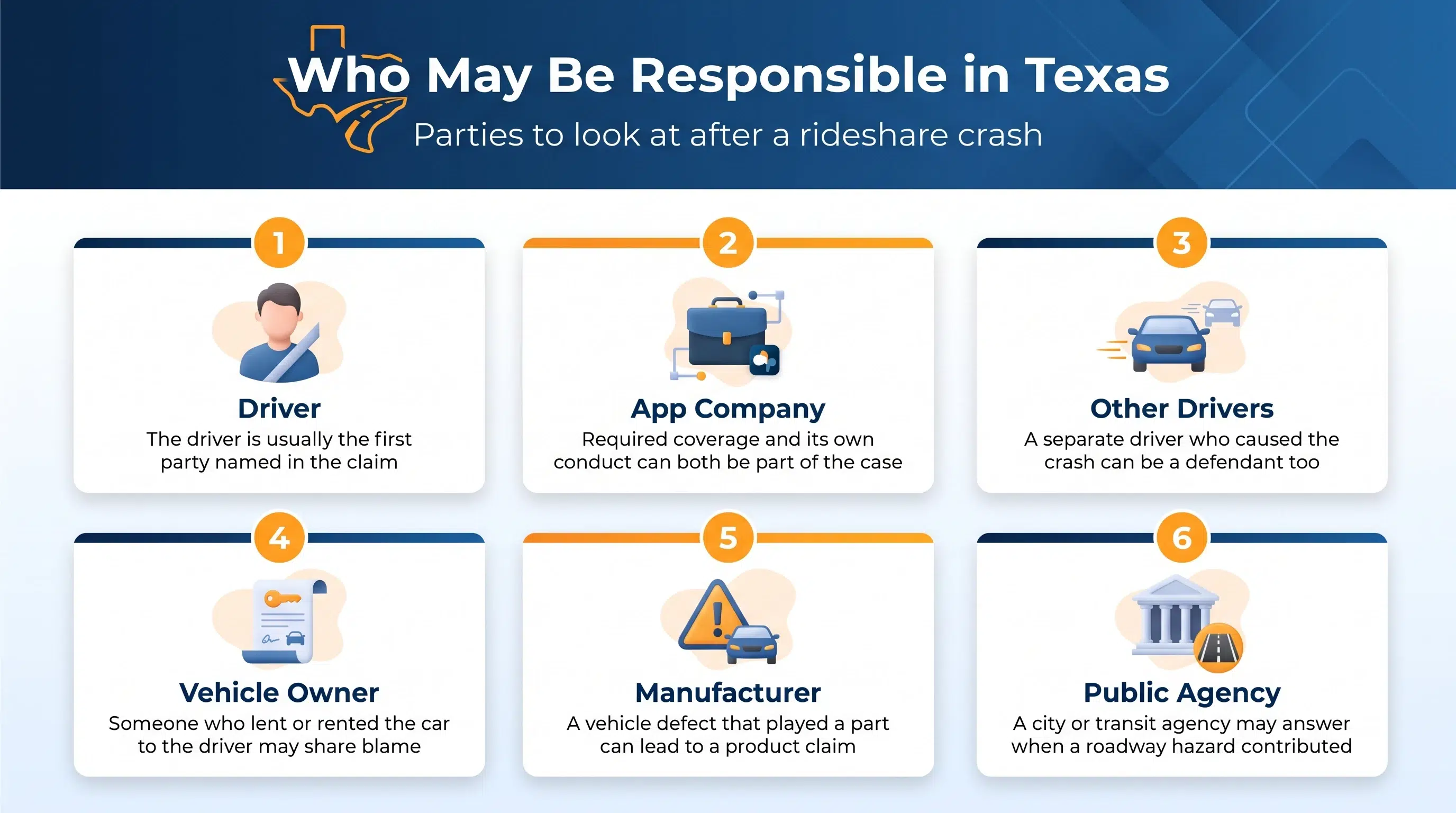
The driver comes first. The app company may be responsible too, through its required coverage and, in some cases, through its own conduct. A separate driver who caused the crash can be a defendant in a rideshare case just as in any other. So can a vehicle owner who lent or rented the car, a manufacturer when a defect played a part, or a city or transit agency when a roadway hazard did.
Driverless services have started carrying public riders in Texas, including in Dallas. In a crash involving one, the operating company is generally the party answerable for how the vehicle drove, and the proof is camera feeds, sensor data and software logs rather than a driver’s testimony. Those records need a written demand fast.
What causes rideshare crashes on Texas roads?
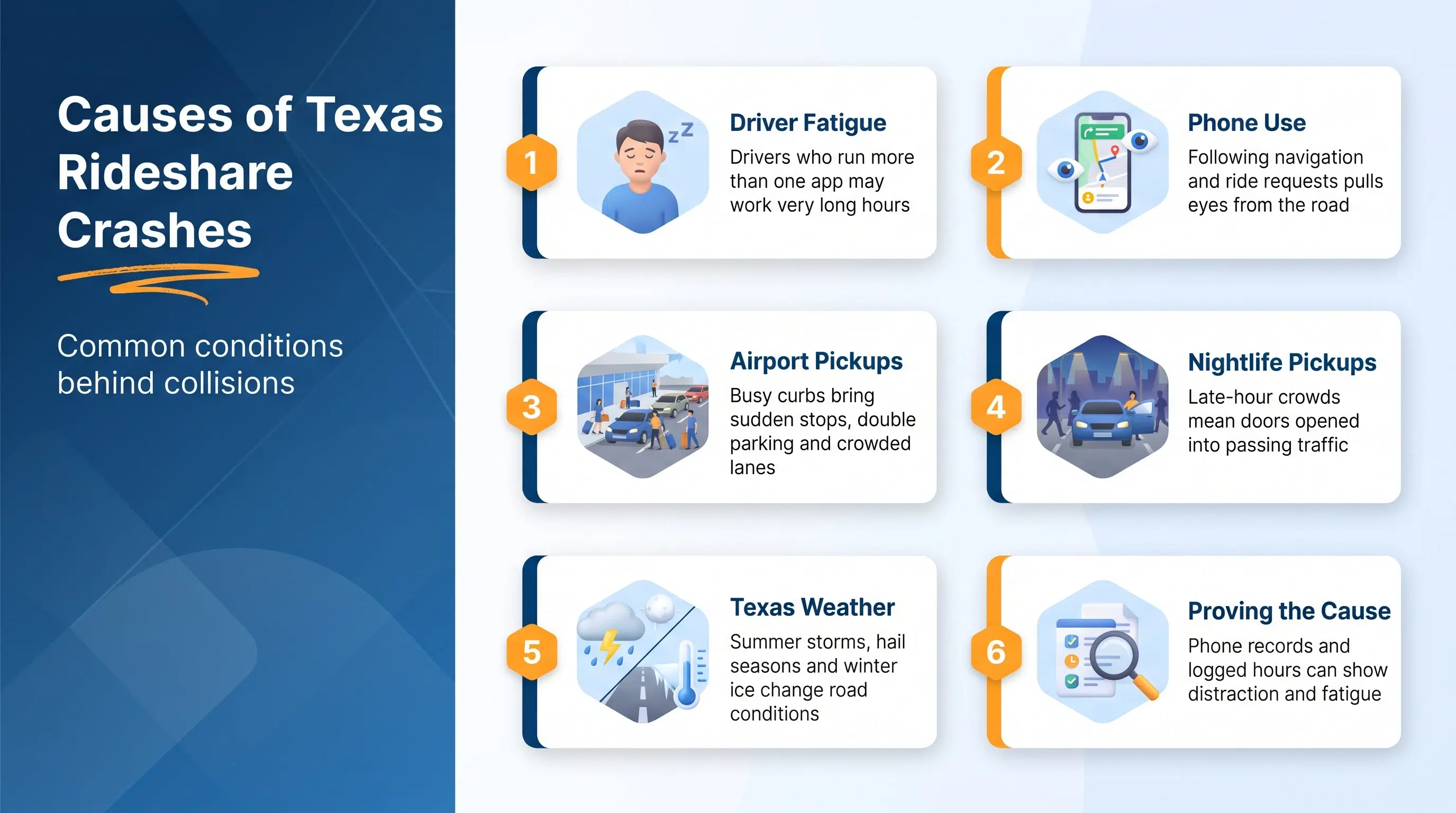
Texas is a big state with long, fast highways, and rideshare work puts drivers on them at all hours. Fatigue is one cause, particularly for drivers who run more than one app. Phone use while following navigation and ride requests is another. Airport and nightlife pickups bring sudden stops, double parking and doors opened into traffic. Summer thunderstorms, hail seasons and the occasional winter ice event add conditions that a driver may not adjust for.
The cause matters for the claim. Distraction can be shown through phone and app records. Fatigue can show up in a driver’s logged hours across platforms.
How does Texas shared fault affect a rideshare claim?
Texas follows a modified comparative fault rule. Your compensation is reduced by your percentage of fault, and you cannot recover at all if you are found more than 50% at fault. Insurers use this rule aggressively, often arguing that a passenger or another driver did something to contribute. We look closely at those arguments and at the evidence behind them.
Texas also requires that auto policies offer personal injury protection, which can pay certain medical costs and lost income regardless of fault, unless the policyholder rejects it in writing. Texas drivers must carry at least $30,000 in liability coverage per person, which is often not enough in a serious crash. If the at-fault driver is uninsured or underinsured, your own coverage may be needed.
How are Texas rideshare cases valued?
- Medical care: Emergency treatment, surgery, therapy and future care, backed by records.
- Lost income: Time away from work, and reduced earning ability if the injury limits what you can do.
- Pain and loss of normal life: The physical pain and the activities you can no longer do.
- Available coverage: The tier the driver’s app status triggers, plus any personal and uninsured motorist coverage.
- Liens: Hospitals and health plans may claim repayment from a settlement. We negotiate those balances so more of the recovery reaches you.
How long do you have to file in Texas?
Most Texas personal injury lawsuits must be filed within two years of the injury. Wrongful death claims after a fatal crash also generally carry a two-year period. If a city, county or transit agency vehicle or a road defect is involved, the Texas Tort Claims Act requires written notice within six months, which is much shorter, so do not wait on a government-related claim.
Rideshare passengers also agree to the app’s terms when they sign up, and those terms often contain an arbitration provision. We read them in every case. They often do not apply to people who never agreed to them, such as another motorist or a pedestrian.
What should you do after a rideshare crash in Texas?
See a doctor now. Concussions, whiplash and internal injuries can show up hours or days later.
Call 911 and get the crash report number. Report the crash in the app with a short, factual description.
Save the trip record. Screenshot your receipt, driver name, vehicle, plate and route before the app history changes.
Photograph everything. Vehicles, road, signs, your injuries and any cameras you notice.
Do not give a recorded statement. Speak with a rideshare accident lawyer first. We handle the insurer calls so you can focus on getting better.
Related pages: Dallas rideshare accident lawyers, Texas personal injury lawyers, Dallas personal injury lawyers, Uber, Lyft and Waymo accident lawyers, car accident lawyers, truck accident lawyers, pedestrian accident lawyers and wrongful death lawyers. To talk about your own case, contact our team.