


















































Why you should not wait to act after a dog bite
Reports start the paper trail. Dog bites are generally reported to local animal control, and the dog is held for a rabies observation period. Those records name the dog and the owner and show its vaccination history, and insurers look at them early.
Proof of what the owner knew is time sensitive. Because Texas turns so often on knowledge, the earlier history carries weight. Animal control files, neighbor complaints, prior bite reports and any formal dangerous dog findings are held by different offices, and each can be requested directly.
Camera footage is short-lived. Some doorbell cameras store nothing without a paid plan, and businesses write over recordings on a regular cycle. A prompt request can save the clip that shows what happened.
Injuries look different over time. Photographs taken in the first days document the wound before swelling goes down and healing begins to change it.
In Texas, you generally have two years from the date of the attack to file a personal injury lawsuit. A claim against a city, county or other government body is on a shorter clock, with notice generally due within six months under the Texas Tort Claims Act. Collect your evidence now and talk with a lawyer about the exact deadline.
How does Texas dog bite law work?
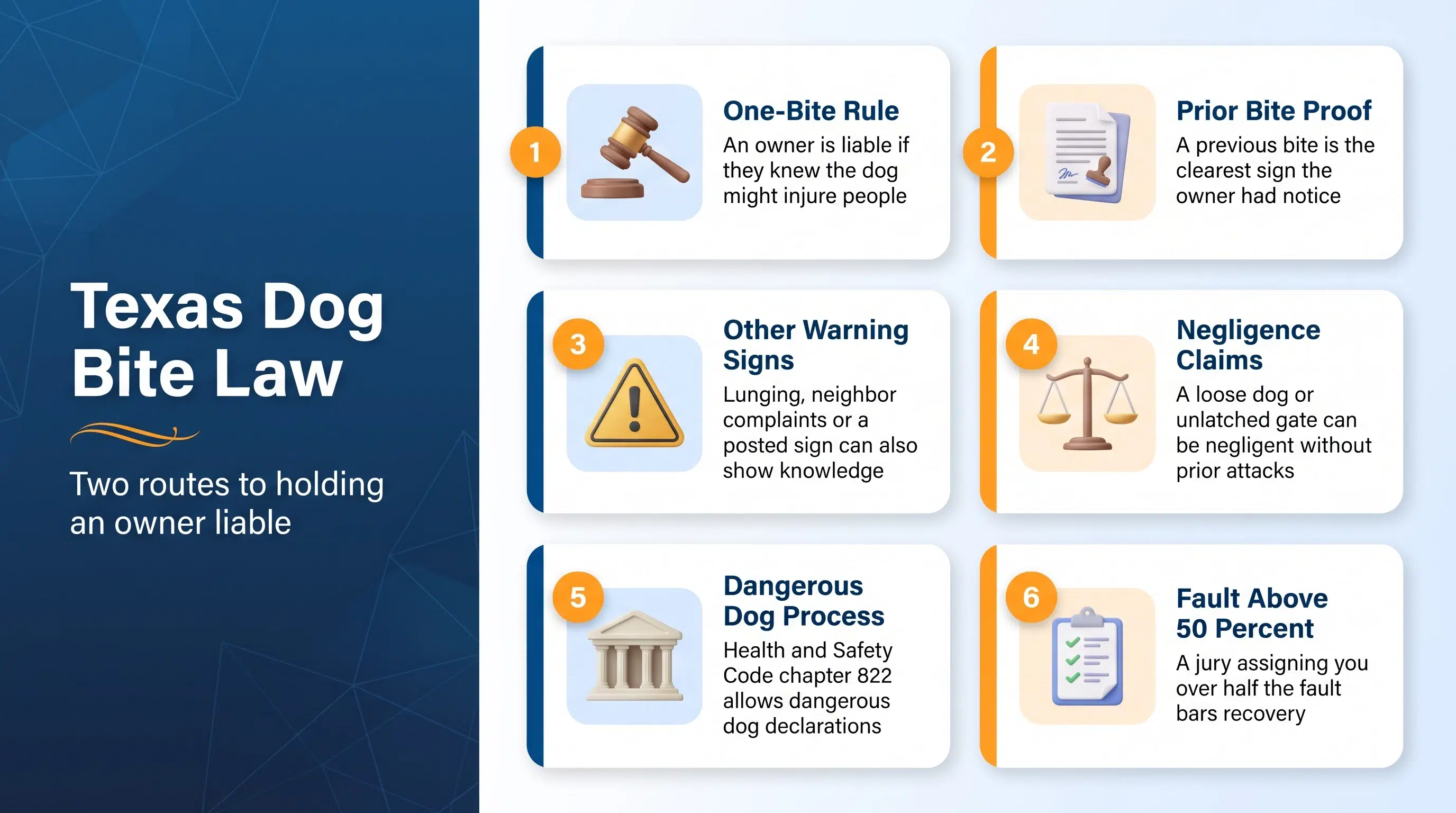
Texas has no statute that makes every dog owner liable for every bite. Instead, courts apply two general routes. Under the one-bite rule, an owner is liable when the owner knew or had reason to know the dog was likely to injure someone. A previous bite is the clearest proof, but other facts can show the same thing, such as earlier attacks on animals, lunging at passersby, complaints from neighbors or a sign warning visitors about the dog.
The second route is ordinary negligence. An owner who lets a dog roam, leaves a gate unlatched, or ignores a local leash rule may be found negligent even if the dog had never hurt anyone. Violating a leash or restraint ordinance can support that argument.
The Texas Health and Safety Code adds a separate framework. Chapter 822 provides a process for declaring a dog dangerous after an unprovoked attack, and section 822.005 makes it a felony for an owner to fail to secure a dog, or to keep a known dangerous dog unsecured, when the dog’s unprovoked attack causes serious bodily injury or death. A criminal case is separate from your claim for damages, but the facts developed there can help.
Texas follows proportionate responsibility. Your compensation is reduced by your percentage of fault, and if a jury assigns you more than 50 percent, you cannot recover. For that reason, insurers often argue that the injured person provoked the dog.
Who can actually be held responsible?
The owner is usually the main defendant, and the owner’s homeowners or renters insurance usually pays any resulting claim.
Others may share the blame. A person who keeps or watches a dog can be held to a negligence standard, and a landlord who knows a tenant’s dog is dangerous and has the power to act may be responsible for failing to do so. A business that houses or controls a dog on its premises can also be a defendant.
Coverage varies. Some policies exclude specific breeds, and some cap dog liability at a set amount. An umbrella policy can add more protection. We identify every policy that might apply before making a demand.
What situations lead to dog attacks?
Dog attacks tend to arise from ordinary circumstances that an owner could have prevented. Common ones include:
- At the front door: Mail carriers and delivery drivers approach homes every day. The U.S. Postal Service reported more than 5,200 dog attacks on its employees in 2025, including 358 in Texas.
- On walks and in public spaces: Joggers, cyclists and people walking their own dogs can meet a loose dog with no warning.
- In apartment complexes and rentals: Shared walkways and entrances leave little room to avoid a dog.
- Through open gates and weak fences: A dog that gets out can reach the street or a neighbor’s yard in seconds.
- When warning signs are ignored: Earlier aggression is the kind of fact that decides a Texas case. An owner who saw it and took no step to protect others has a harder case to defend.
How do dog bite injuries differ from other personal injury cases?
The American Veterinary Medical Association (AVMA) estimates about 4.5 million people are bitten by dogs each year in the United States, and about 800,000 of those require medical attention.
Bites can be deeper than they appear and may affect nerves, tendons and joints. If the dog’s rabies shots cannot be confirmed, doctors may advise a course of preventive treatment. The bacteria in a dog’s mouth can also lead to infection that needs antibiotics or more care.
Scarring, especially on the face, arms and hands, can last for years. Children may carry the emotional impact long after the wound heals. Steady medical documentation from the first visit onward is what turns these effects into a claim an insurer must take seriously.
How is a Texas dog bite case valued?
Value depends on the injuries, the treatment needed and how the attack has changed daily life and work. The main elements are:
- Medical expenses: Emergency care, wound treatment, rabies prevention, follow-up and surgery, plus future costs such as scar revision or counseling.
- Lost income: Missed pay during recovery and any lasting effect on your ability to earn.
- Non-economic damages: Pain, distress, disfigurement and fear of dogs. Texas does not cap these in an ordinary dog bite case, but they need support from records and testimony.
- Shared fault: A share of responsibility assigned to you lowers the award, and more than 50 percent bars recovery.
- Medical liens: Providers and health plans may claim repayment from the recovery. We seek to reduce these balances before the case closes.
If you want to know what your claim might be worth, schedule a free consultation and we will go over it with you.
What should you do in the days after a dog bite?
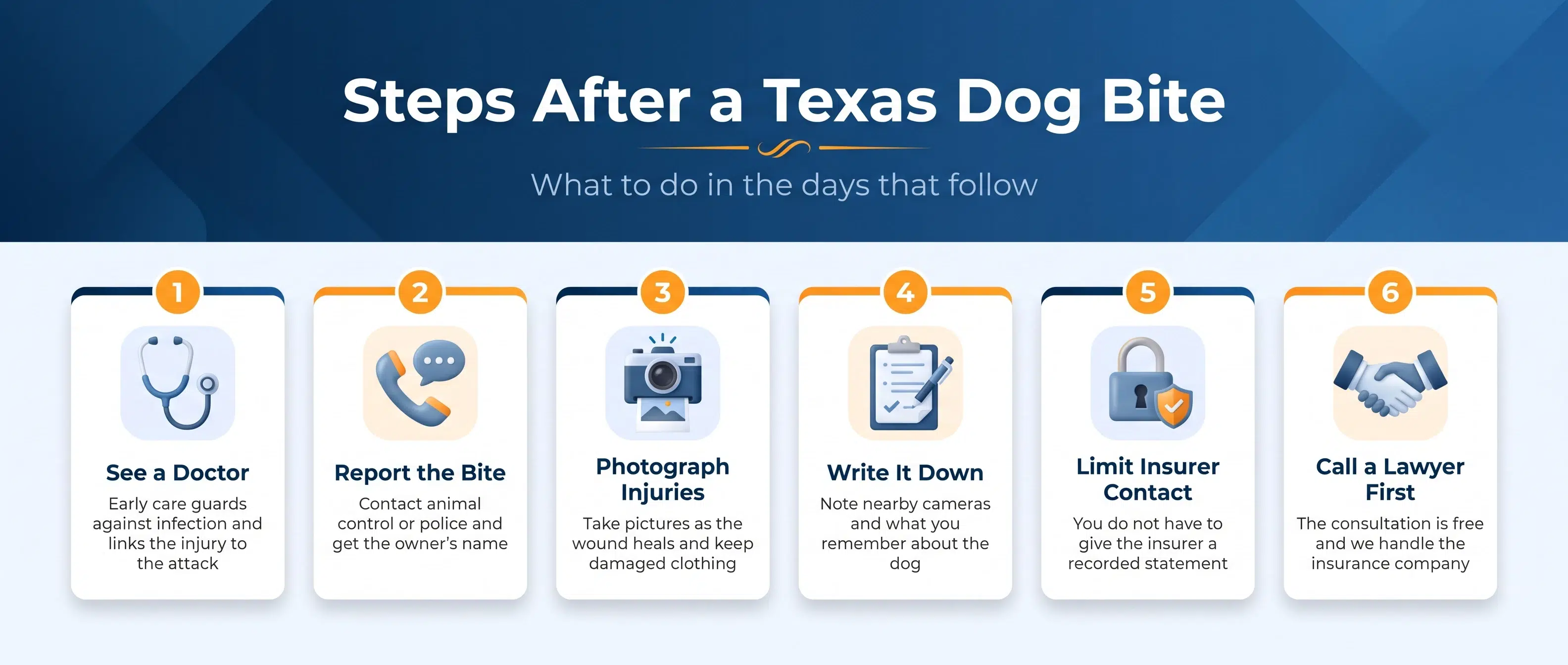
See a doctor the same day. Get away from the dog and have the wound checked, even if it looks small. Early care guards against infection and creates a record linking the injury to the attack.
Report it and identify the owner. Contact local animal control or the police and get the owner’s name and address if possible. Ask about rabies vaccination.
Collect evidence. Photograph your injuries as they heal, keep damaged clothing, and note any cameras nearby. Write down what you remember, and anything you know about the dog’s past.
Think twice before giving a statement. You do not have to give the owner’s insurer a recorded statement, and offhand comments can be turned against you later.
Talk to a lawyer first. A free consultation costs nothing, and we deal with the insurance company so you can focus on healing.
Related pages: dog bite attorneys in Dallas, Texas personal injury lawyers, slip and fall accident lawyers, and wrongful death lawyers.