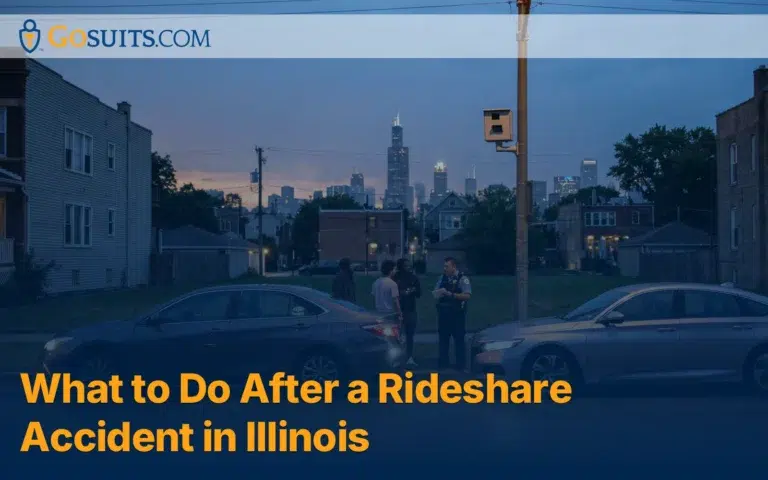
After a rideshare accident in Illinois, the first priorities are safety, medical care, and a documented record of what happened. Illinois treats a rideshare crash as a fault-based claim, so an injured passenger, driver, pedestrian, or other motorist may have a civil claim against whoever caused the collision. The rideshare company’s insurance may also come into play, and the amount of required coverage under the Transportation Network Providers Act depends on what the driver was doing in the app at the moment of impact [1][2]. Most Illinois injury lawsuits must be filed within two years of the injury, so early action matters [6]. Recovery is never automatic or guaranteed and depends on the facts and the law.
Legal Snapshot
-
Legal Topic: Illinois rideshare (transportation network company) collisions and injury claims
-
Case Stage: Immediate aftermath through pre-lawsuit investigation and insurance claims
-
Primary Legal Issue: Who is legally responsible and which insurance policy applies, based on the driver’s app status at the time of the crash
-
Primary Authority: Transportation Network Providers Act (625 ILCS 57/); 735 ILCS 5/2-1116 (comparative fault); 735 ILCS 5/13-202 (limitations period)
-
Date Legal Authority Last Reviewed: November 10, 2026 (research review; attorney verification pending)
What Does “Rideshare Accident” Mean Under Illinois Law?
Illinois regulates rideshare companies such as Uber and Lyft as “transportation network companies,” or TNCs, under the Transportation Network Providers Act, 625 ILCS 57. Under section 57/5, a rideshare trip legally begins when the driver accepts a ride request through the app, continues while the passenger is in the vehicle, and ends when the passenger gets out. The Act also states that rideshare service is not a taxicab, for-hire vehicle, or street hail service.[2]
That definition matters because a “rideshare accident” isn’t one single legal situation. A passenger hurt on the Kennedy Expressway during a trip, a pedestrian hit by a driver on the way to a pickup in the Loop, and a driver hit by a rideshare driver who was logged in to the app but waiting for a request may each fall under different insurance rules.
What Does Illinois Law Say About Rideshare Insurance?
Illinois sets minimum insurance requirements for TNCs and participating drivers in 625 ILCS 57/10, and the amounts change with the driver’s app status [2]. The table below summarizes the statute’s main coverage periods.
|
Driver’s app status |
Minimum liability coverage required by the Act |
|---|---|
|
Logged in, no ride request accepted |
At least $50,000 per person and $100,000 per incident for death and personal injury, plus $25,000 for property damage [3] |
|
Ride request accepted through passenger exit |
Primary liability coverage of $1,000,000 for death, personal injury, and property damage [2] |
|
App off or driver not logged in |
Ordinary Illinois auto insurance rules apply rather than the TNC coverage periods |
Several other parts of section 57/10 can affect an injured person. While a passenger is in the vehicle, the required coverage must include $50,000 in uninsured and underinsured motorist coverage, from the moment the passenger gets in until they get out [4]. During an accepted ride, the rideshare coverage cannot depend on the driver’s personal auto insurer denying the claim first [4]. And if the driver’s own insurance has lapsed, the rideshare company must provide the required coverage starting with the first dollar of the claim [4].
Section 57/10 also says it does not limit a rideshare company’s liability in a lawsuit seeking damages above the required coverage amounts [4]. The Act is currently in effect and is scheduled to be repealed on September 1, 2028, unless the General Assembly extends it, as it has before [1].
What Legal Rules Apply Beyond Insurance?
Comparative fault. Illinois uses modified comparative negligence under 735 ILCS 5/2-1116. An injured person who is more than 50% at fault cannot recover damages, while one who is 50% or less at fault can recover damages reduced by their share of fault [8]. The Illinois Department of Insurance describes the same rule in its consumer guidance [7]. Passengers are rarely found at fault, but an insurer may still argue that a passenger contributed to a crash, for example by distracting the driver, depending on the facts [9]. In Illinois, not wearing a seat belt generally can’t be used as evidence of negligence.
Duties at the scene. Under 625 ILCS 5/11-403, a driver involved in a crash must give their name, address, vehicle registration number, and the name of the vehicle’s owner, show their driver’s license on request if available, and give reasonable assistance to anyone injured [5]. Under 625 ILCS 5/11-407(a), if no officer is at the scene, the driver must notify police right away when a crash causes injury or death, or more than $1,500 in damage to any one person’s property ($500 if any vehicle involved is uninsured) [5]. If police do not come to the scene, the Illinois State Police say to file a crash report within 10 days.
Medical liens. Illinois’s Health Care Services Lien Act, 770 ILCS 23/10, gives doctors, hospitals, and other treating providers a lien on an injured person’s claim for their reasonable charges [10]. All liens under the Act together are generally limited to 40% of the recovery, and no single category of provider, such as all physicians or all hospitals, can receive more than one-third [10]. Health insurers, Medicare, Medicaid, and employer health plans may have separate rights to be repaid from a settlement, and those rights are not limited by this Act.
How Does This Apply to a Real Case?
Hypothetical example, not a GoSuits case: A passenger is riding to the Loop from the suburbs when a third driver rear-ends the rideshare vehicle in stop-and-go traffic on the Kennedy Expressway. The ride was in progress, so the $1,000,000 primary coverage period would be the starting point for the insurance analysis. The passenger’s claim may also run against the third driver, whose policy might carry lower limits. Which parties and policies are involved is a question for a careful review of the facts.
Hypothetical example, not a GoSuits case: A driver who has accepted a request is heading to a pickup along Lake Shore Drive and collides with a cyclist. Because the request was already accepted, the higher coverage period may apply even though no passenger was in the car. If the driver had been logged in but had not accepted any request, the lower $50,000 and $100,000 minimums would be relevant. Proving the driver’s exact app status is often central to the claim.
What Evidence Can Matter?
Evidence helps establish fault, coverage, and the extent of injury, but no single item automatically proves a case. Categories that commonly matter include:
-
App trip records and screenshots: These can show the driver’s name, vehicle, pickup and drop-off points, and timing, which may help establish app status.
-
Police and crash reports: They record the officer’s observations, citations, and statements, though the report’s conclusions are not binding in a civil case.
-
Photographs and video: Scene photos, dashcam footage, in-vehicle cameras, and nearby business or traffic camera video may capture vehicle positions and conditions before they change. Footage is often overwritten quickly.
-
Witness information: Names and contact details of other drivers, passengers, and bystanders.
-
Medical records and bills: They connect the injuries to the crash and document treatment over time, including follow-up visits.
-
Employment and wage records: They support lost income and earning capacity claims.
-
Vehicle and phone data: Event data recorders and phone records may be relevant to speed, braking, or distraction, and may require formal requests to obtain.
-
Insurance correspondence: Letters, claim numbers, and adjuster communications show what was offered, denied, or requested.
In complex collisions, accident reconstruction and medical opinion testimony may also be used. Social media posts about the crash or your activities can be used by the other side, so careful handling is wise.
What Damages or Remedies May Be Available?
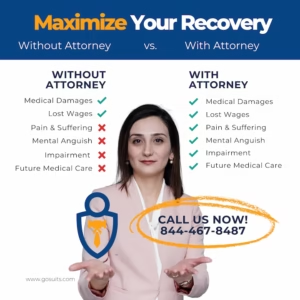
Illinois law may allow an injured person to seek compensation for economic losses such as past and future medical expenses, lost income, loss of earning capacity, and vehicle or property damage. Non-economic damages, such as pain and suffering, emotional distress, disfigurement, and loss of a normal life, may also be claimed. Punitive damages are uncommon in Illinois, and under 735 ILCS 5/2-604.1, they can’t be requested in the original lawsuit; the court must first allow them after a hearing.
When a rideshare crash is fatal, family members may have claims under Illinois’s wrongful death statute, which has its own rules for who may bring the action and which damages are recoverable. Families facing that situation may wish to speak with wrongful death lawyers promptly. Whether any category of damages is recoverable, and in what amount, depends on the law and the specific facts of the case. No outcome can be promised.
What If the Other Party Disputes Liability?
Disputes are common in rideshare cases, and they usually come from one of four directions. First, the insurer may argue that the driver was not in a covered app period, which would shift the analysis to lower limits or a personal policy. Second, the rideshare company may argue that it is not responsible for a driver’s conduct, so the claim may focus on insurance obligations under the Act. Third, any party may assert comparative fault under 735 ILCS 5/2-1116, which can reduce or bar recovery [8]. Fourth, an insurer may question whether injuries came from the crash, pointing to gaps in treatment or earlier conditions.
The rideshare app’s terms of service may add another dispute: Uber’s and Lyft’s terms both require arbitration, a private process outside of court, for many claims against the company. These clauses generally bind only people who agreed to the app’s terms, so pedestrians and other drivers usually aren’t affected, and in Geller v. Uber Technologies, Inc. (2026), the Illinois Supreme Court held that a family member’s own agreement with Uber does not force arbitration of a wrongful death claim arising from someone else’s ride. How a specific clause applies depends on the facts, so a GoSuits attorney can review it.
The same issues look different from the defense side. A rideshare driver, vehicle owner, or other driver who is sued will generally face the same questions about fault, app status, and damages. If you receive a demand letter or lawsuit papers, speak with a lawyer before responding.
What If Insurance Is Involved?
Insurance is involved in almost every rideshare crash, and several policies may overlap: the rideshare company’s policy, the driver’s personal policy, another driver’s policy, and your own auto and health coverage. Adjusters may ask for recorded statements early. A statement given before the injuries and the policy picture are clear can be used later, so many people prefer to have legal guidance before giving one. Likewise, a quick settlement offer may require a release that closes the claim for good, even if treatment continues.
If the at-fault driver was uninsured or underinsured, your own policy’s uninsured or underinsured motorist coverage may matter, and for passengers during a ride the Act’s $50,000 uninsured and underinsured coverage may also apply [4]. Consider reading each policy’s notice requirements, since insurance contracts can carry their own reporting deadlines.
How Long Do I Have to Act?
Illinois generally allows two years from the date of the injury to file a personal injury lawsuit under 735 ILCS 5/13-202 [6]. Different or shorter deadlines may apply in other situations:
-
Government-related claims: If a public entity, such as the Chicago Transit Authority, a city, or a county, is involved, the deadline to file a lawsuit is generally one year from the injury under 745 ILCS 10/8-101, or 70 ILCS 3605/41 for claims against the CTA.
-
Wrongful death: Under the Illinois Wrongful Death Act, 740 ILCS 180/2, a wrongful death lawsuit generally must be filed within two years of the person’s death, which may be later than the date of the crash.
-
Minors and legal disability: Under 735 ILCS 5/13-211, if the injured person was under 18 or had a legal disability when the crash happened, they generally have two years after turning 18, or after the disability ends, to file a lawsuit.
-
Crash report and insurer notice: A written crash report and policy-based notice requirements may be due much sooner than the lawsuit deadline.
Negotiating with an insurer does not pause the filing deadline, so the lawsuit must be filed before the deadline passes, even while talks continue. Under 735 ILCS 5/2-101, a lawsuit is generally filed in the county where a defendant lives or where the crash happened. For many Chicago-area cases, that’s the Circuit Court of Cook County, including at the Richard J. Daley Center, and a GoSuits attorney can confirm the right court for your case. General information about the Illinois court system is available on the Illinois Courts website [11].
What Should I Do Next?
The steps below are general information, not individualized legal advice.
-
Call 911 and get medical care. Some injuries, such as concussions and soft tissue injuries, may not be obvious at first. Prompt records also help document the connection to the crash.
-
Move to safety if you can, and stay at the scene. Illinois law imposes duties on drivers involved in injury crashes [5].
-
Request a police report. Ask the responding officer for the report number and the names of those involved.
-
Capture the trip details. Take screenshots of the trip, driver profile, vehicle, and license plate before the app history changes.
-
Photograph everything. Include vehicles, road conditions, visible injuries, and traffic signals, and note any cameras nearby.
-
Collect contact and insurance information from every driver and witness.
-
Report the crash to the rideshare company and your insurer using the facts only. Avoid guessing about fault or injuries.
-
Keep a record of treatment, expenses, and missed work, and follow medical advice.
-
Talk with a lawyer before signing a release or giving a recorded statement. Representing yourself against insurers and corporate defendants carries real risk, and legal guidance can help protect your claim. The Illinois State Bar Association offers public legal information as an additional resource [12].
Related Illinois Personal Injury Resources
People hurt in rideshare crashes often have questions about neighboring topics, such as pedestrian or scooter collisions involving rideshare vehicles. GoSuits maintains an Illinois rideshare injury page, an Illinois pedestrian injury page, and an Illinois scooter and e-bike injury page. Our overview of Illinois personal injury representation explains how injury claims generally work across the state, from Chicago to Naperville and Aurora.
Talk With a GoSuits Attorney
A rideshare injury claim can involve multiple insurers, disputed app records, comparative fault arguments, medical liens, and strict legal deadlines. If you were hurt in a rideshare crash anywhere in Illinois, you can schedule a free consultation so a GoSuits personal injury attorney can review your situation and explain your options. Past results do not guarantee a future outcome, and every case is different.
This article is general legal information for Illinois, not legal advice, and reading it does not create an attorney-client relationship. Laws change, and your situation may differ. Consult a licensed Illinois attorney about your specific circumstances.
References
-
625 ILCS 57/ Transportation Network Providers Act – Illinois General Assembly
-
625 ILCS 57/ Transportation Network Providers Act, 2025 Illinois Compiled Statutes – Justia
-
Illinois Statutes Chapter 625, Section 57/10, Insurance – FindLaw
-
Illinois Comparative Negligence and Your Settlement – Collins Law
-
Is a Passenger Ever Assigned Comparative Fault in an Illinois Crash? – Trapp & Geller
-
770 ILCS 23/10 Health Care Services Lien Act, Lien created; limitation – Illinois General Assembly