









































What does the Illinois Transportation Network Providers Act require?
The Act, found at 625 ILCS 57, sets the insurance a rideshare driver or company must carry. While the driver is logged on and waiting for a request, liability coverage must be at least $50,000 per person and $100,000 per incident for death and injury, with $25,000 for property damage. If the driver’s own policy excludes rideshare use or falls short, the company must supply that coverage on a contingent basis.
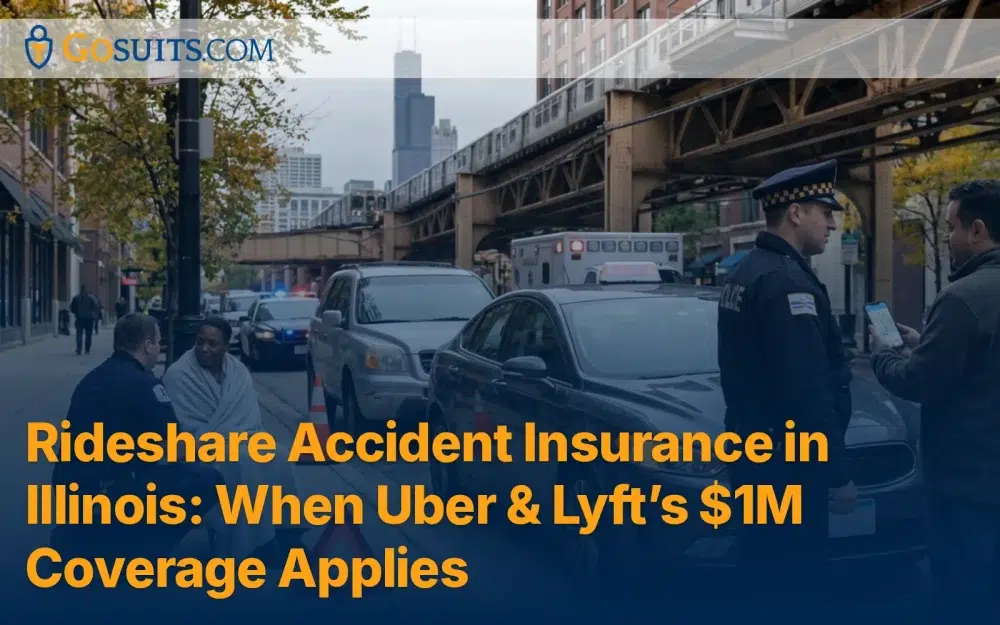
From the moment a driver accepts a request until the ride is complete, the required liability coverage is $1,000,000 for death, personal injury and property damage, and it is primary. It can come from the driver’s policy, the company’s policy or both. During that stage the Act also calls for uninsured and underinsured motorist coverage of $50,000 from the time the passenger gets in until the passenger gets out.
If a driver’s coverage has lapsed, the company must cover the claim from the first dollar. The Act also carries a scheduled repeal date of September 1, 2028, so we confirm the version in force on the date of your crash rather than assuming.
How do you prove which stage of the app applies?
The insurer will name the lowest tier it can. A driver may say the app was closed or that the trip had ended. The rideshare company’s logs are the best proof, showing when the driver went online, accepted a request, picked someone up and ended the ride. We ask for them quickly and in writing.
Illinois law also requires the company to show a passenger the driver’s photo and the car’s plate before the ride and to send an electronic receipt afterward. Those items can help confirm who was driving and when, which is another reason to keep your own screenshots.
Who may be responsible in an Illinois rideshare crash?
The driver is the first defendant. The company can also be part of the case through its mandatory coverage and, where the facts allow, through its own conduct. The Act requires background checks and a review of a driver’s record before the driver is permitted on the platform, and it disqualifies certain drivers, so a driver who should have been screened out raises a separate question about the company.
Other possible parties include another motorist, the owner of a car lent to the driver, a manufacturer if a defect contributed, and a public body if a dangerous road or a bus was involved. If a driverless vehicle caused the harm, the operating company is generally the party answerable for how it drove, and the evidence will be sensor data and software logs that must be requested early.
Why do pickups and drop-offs cause so many collisions?
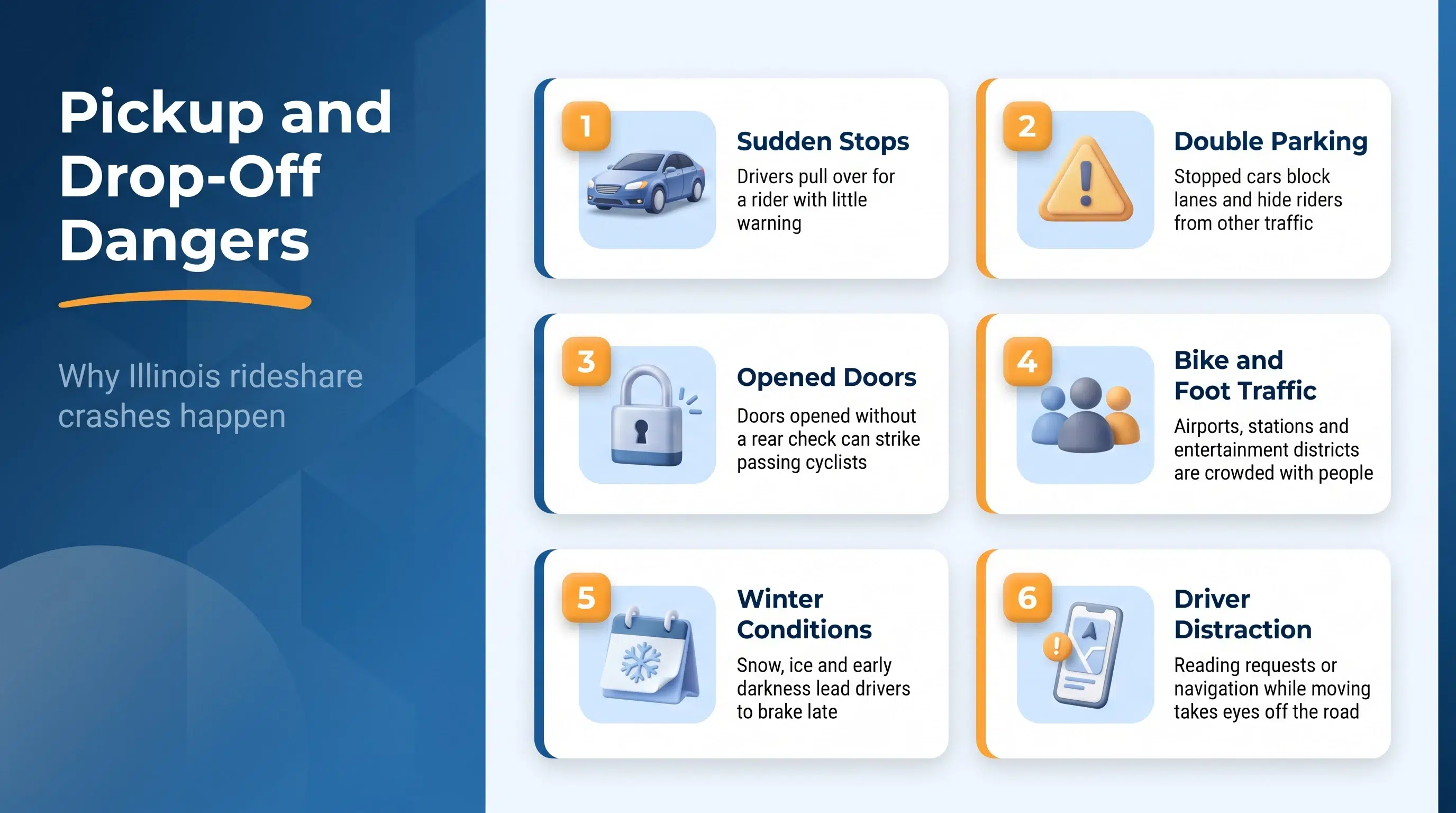
A driver pulling over for a rider will often stop suddenly, double park, or open a door without checking behind. Illinois streets carry heavy bike and foot traffic, especially near airports, train stations and entertainment districts. Winter adds snow, ice and early darkness, and drivers may brake late on slick pavement.
Distraction is also common. A driver reading a request or following navigation while moving is not watching the road. App usage records can show it.
How does fault work in Illinois?
Illinois uses modified comparative fault. Your compensation is cut by your share of responsibility, and you recover nothing if you are found more than 50% at fault. Insurers will look for any reason to place blame on a passenger, a cyclist or a pedestrian.
Illinois drivers must carry at least $25,000 in liability coverage per person, which may not cover a serious injury. Every Illinois auto policy must also include uninsured motorist coverage, and that can matter when the at-fault driver has no insurance. We review every available layer before putting a figure on the claim.
What goes into the value of a rideshare claim?
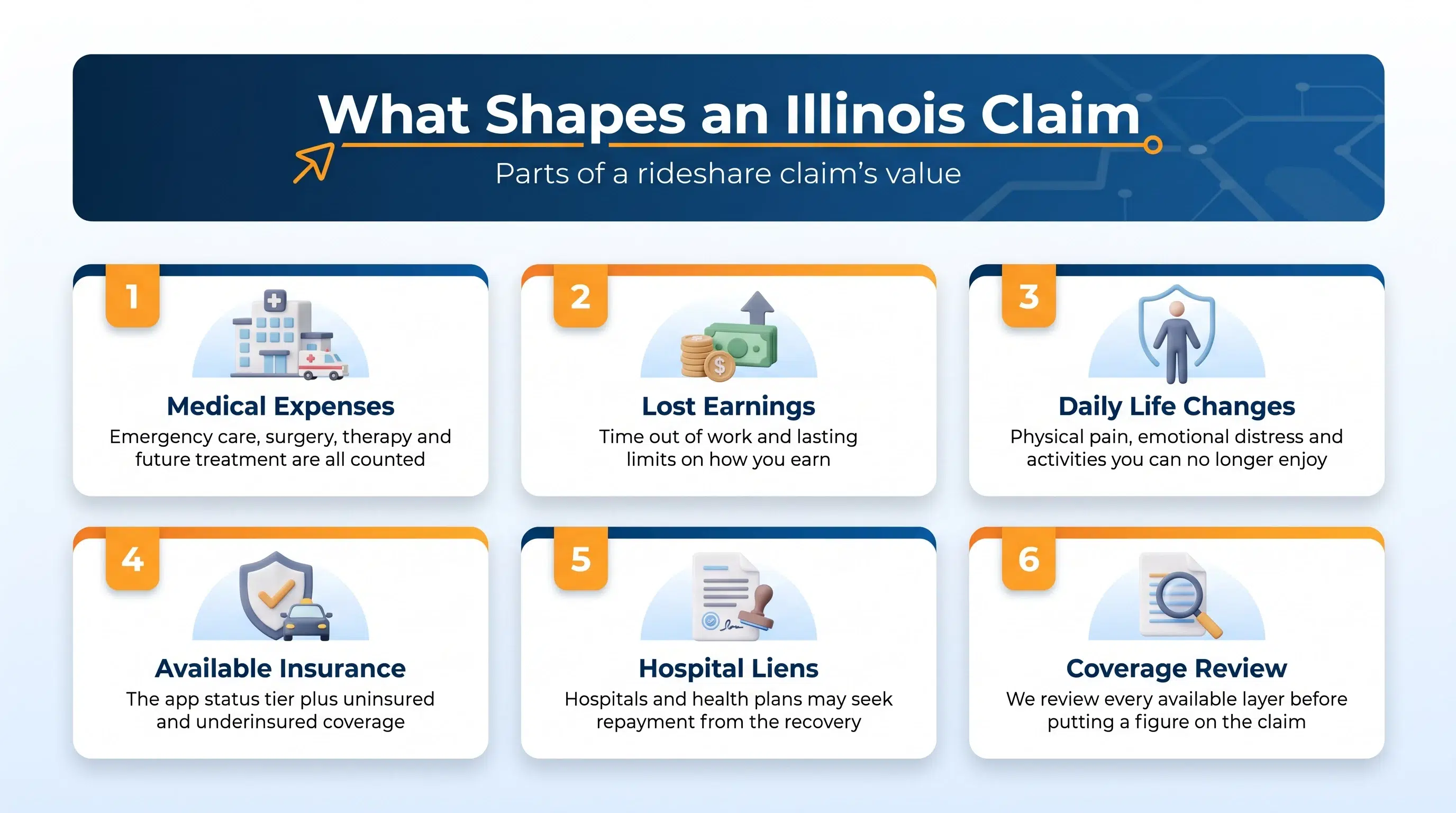
- Medical expenses: Emergency care, surgery, therapy and future treatment.
- Lost earnings: Time out of work and any lasting limits on what you can do for a living.
- Pain and changes to daily life: Physical pain, emotional distress and lost activities.
- Insurance available: The tier set by the app status, plus uninsured and underinsured coverage.
- Liens: Hospitals and health plans may seek repayment. We negotiate these balances so more of the recovery reaches you.
What are the filing deadlines?
An Illinois personal injury lawsuit generally has to be filed within two years of the injury. A wrongful death claim after a fatal crash is generally two years as well, and it is brought by the personal representative of the estate for the family. When a local government is involved, a suit against it generally has to be filed within one year, and a claim against the Chicago Transit Authority requires notice within six months.
These government deadlines are easy to miss. If a bus, a city vehicle or a road defect may be part of your case, call us promptly.
What should you do after a rideshare crash in Illinois?
Get medical care. Symptoms from head and spine injuries can be delayed.
Call the police and report the crash in the app. Keep the police report number and keep your app description brief and accurate.
Capture the trip details. Screenshot the receipt, driver name, vehicle, plate and route.
Document the scene. Photograph vehicles, signs and your injuries, and note any cameras and witnesses.
Speak with a lawyer before an insurer. You are not required to give a recorded statement. We can take over the calls.
Related pages: Chicago rideshare accident lawyers, Illinois personal injury lawyers, Chicago personal injury lawyers, Uber, Lyft and Waymo accident lawyers, car accident lawyers, truck accident lawyers, pedestrian accident lawyers and wrongful death lawyers. To talk about your own case, contact our team.