





































Understanding Illinois Car Accident Laws
Illinois operates under an “at-fault” system, which means the person responsible for causing the accident is also responsible for covering the damages. Determining fault is essential because it directly affects how compensation is distributed. However, Illinois follows a rule known as modified comparative negligence. This means you can still pursue compensation even if you were partially at fault for the accident, as long as your share of fault does not exceed 50 percent. For example, if you were found to be 30 percent at fault, the compensation you receive would be reduced by that same percentage.
It’s also important to be aware of the statute of limitations in Illinois. This is the legal timeframe within which you must file a lawsuit. For personal injury claims resulting from a car accident, the statute of limitations is two years from the date of the accident. For property damage claims, it is five years. Missing these deadlines means you could lose the right to pursue compensation, which is why it’s important to act promptly and seek legal guidance.
Common Causes of Car Accidents in Illinois
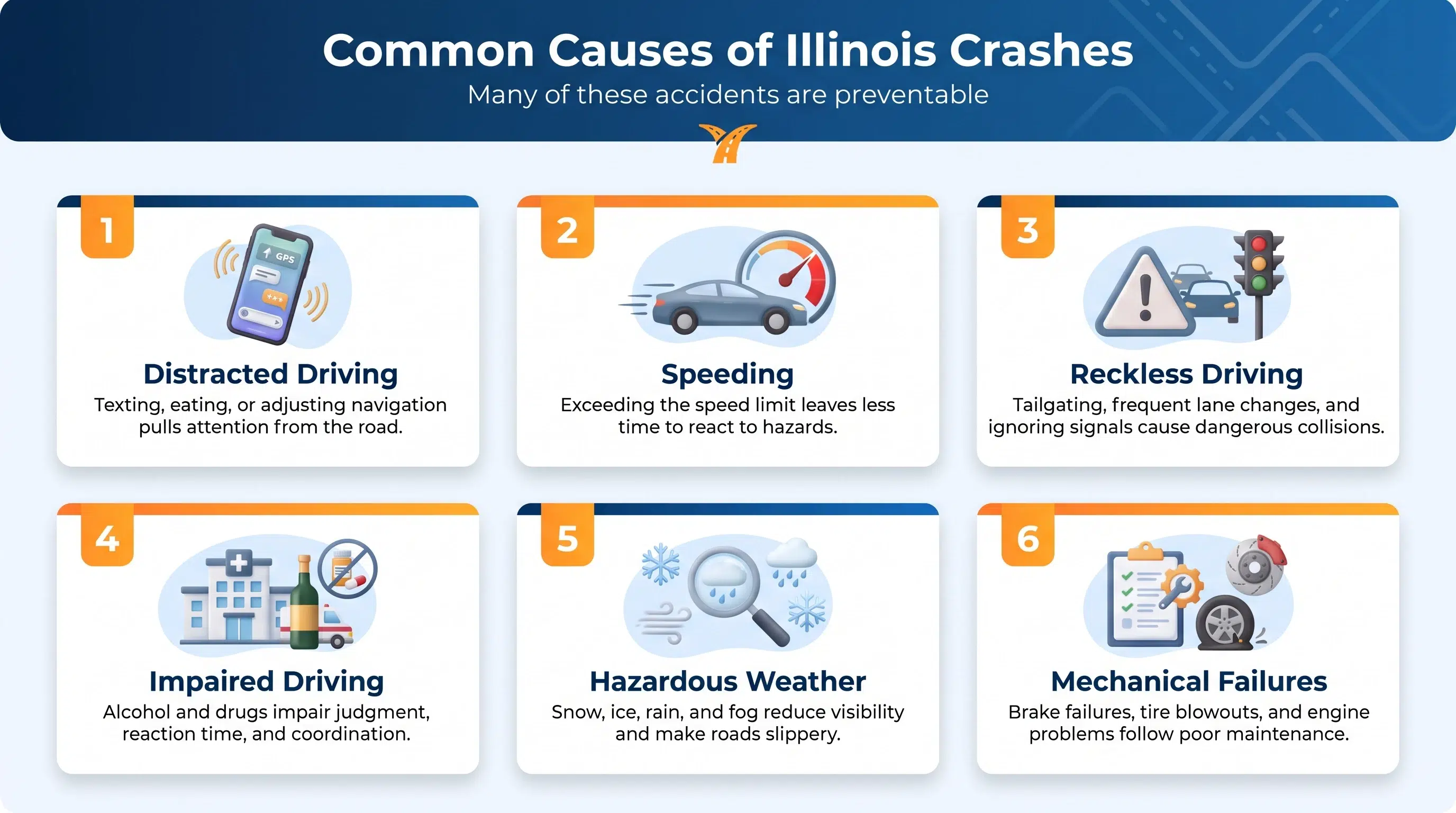
Car accidents in Illinois can happen for a variety of reasons, many of which are preventable. Understanding these common causes can help drivers stay more vigilant on the road:
- Distracted Driving: Activities such as texting, eating, adjusting the radio, or using navigation systems can divert attention from the road, increasing the risk of accidents. Even a brief moment of distraction can have serious consequences.
- Speeding and Reckless Driving: Exceeding the speed limit or engaging in aggressive driving behaviors—like tailgating, frequent lane changes, or ignoring traffic signals—can lead to dangerous collisions.
- Driving Under the Influence: Alcohol and drug use impair judgment, reaction time, and coordination, making it one of the leading causes of severe and fatal car accidents in Illinois.
- Hazardous Weather Conditions: Illinois weather is unpredictable, with snow, ice, heavy rain, and fog contributing to poor visibility and slippery roads. Drivers who fail to adjust their speed or driving habits during bad weather increase the risk of accidents.
- Mechanical Failures: Poor vehicle maintenance can lead to critical failures, such as brake malfunctions, tire blowouts, or engine problems. Regular inspections and maintenance are essential to prevent accidents related to mechanical issues.
Types of Compensation You Can Claim
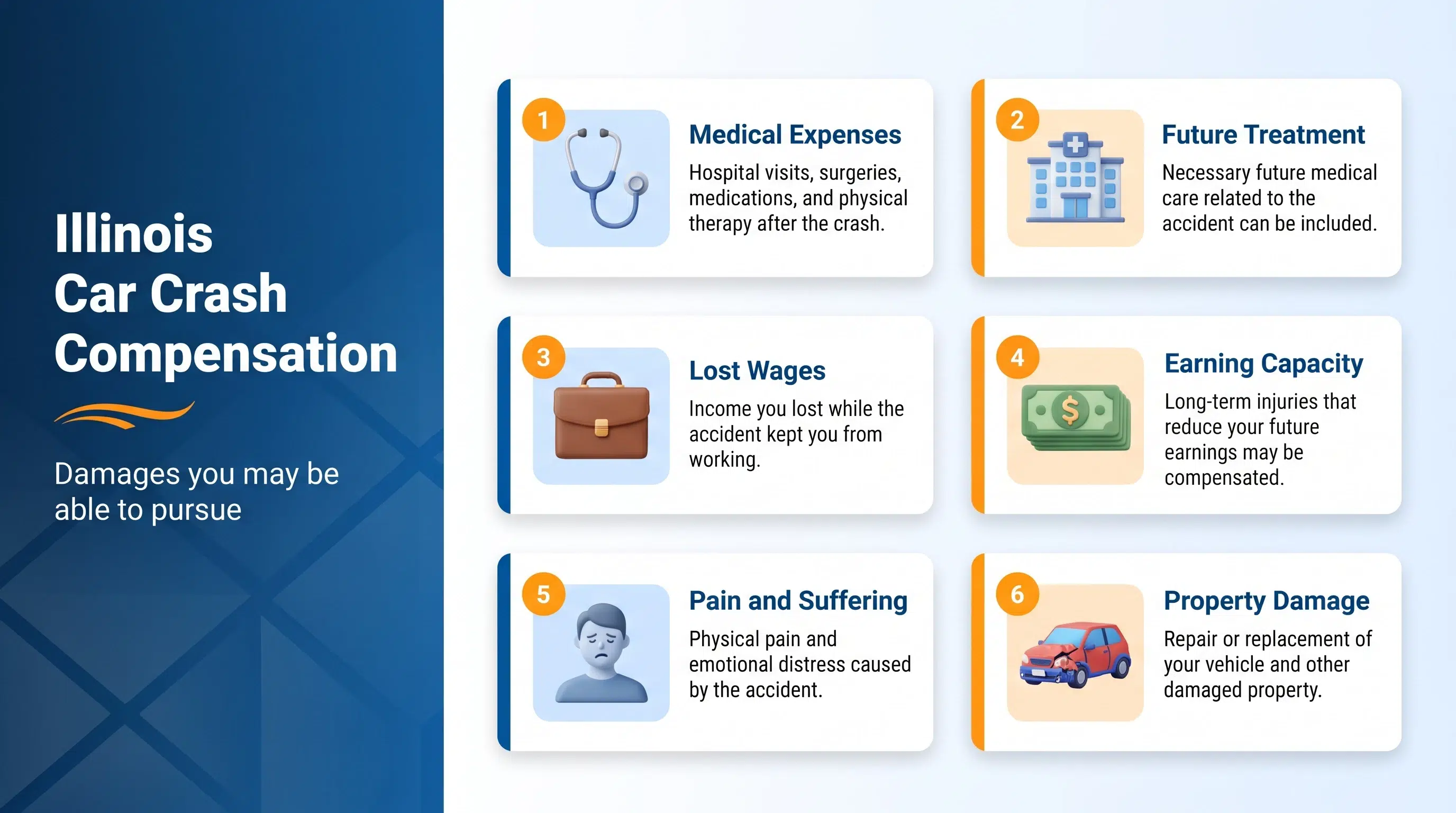
The following are common categories of compensation that may be pursued in an Illinois car accident claim:
- Medical Expenses: This includes the cost of hospital visits, surgeries, medications, physical therapy, rehabilitation, and any necessary future medical treatments related to the accident.
- Lost Wages: If the accident prevents you from working, you may be entitled to compensation for the income you lost during your recovery period.
- Diminished Earning Capacity: In cases where injuries result in long-term limitations or disabilities that reduce your ability to earn income in the future, compensation may be available for this financial loss.
- Pain and Suffering: This refers to the physical pain and emotional distress experienced as a result of the accident. Though subjective, it is an important element of compensation that acknowledges the impact the accident has had on your life.
- Property Damage: Compensation can cover the costs to repair or replace your vehicle and any other personal property damaged in the accident.
Handling Insurance Matters
Illinois requires drivers to carry minimum liability insurance, including $25,000 for injury or death of one person, $50,000 for injury or death of more than one person, and $20,000 for property damage. Despite these requirements, it’s not uncommon to encounter drivers who are underinsured or uninsured. In these cases, uninsured/underinsured motorist coverage may be helpful in covering certain damages.
One of the most challenging aspects of dealing with insurance companies is that their primary goal is to minimize payouts. Insurance representatives may offer quick settlements that fall short of covering the full extent of damages. However, we must approach these offers with caution. Accepting a quick settlement might seem appealing, specifically when faced with mounting bills, but doing so can leave you financially vulnerable in the long term. Legal assistance can support you in reviewing and responding to these offers appropriately.