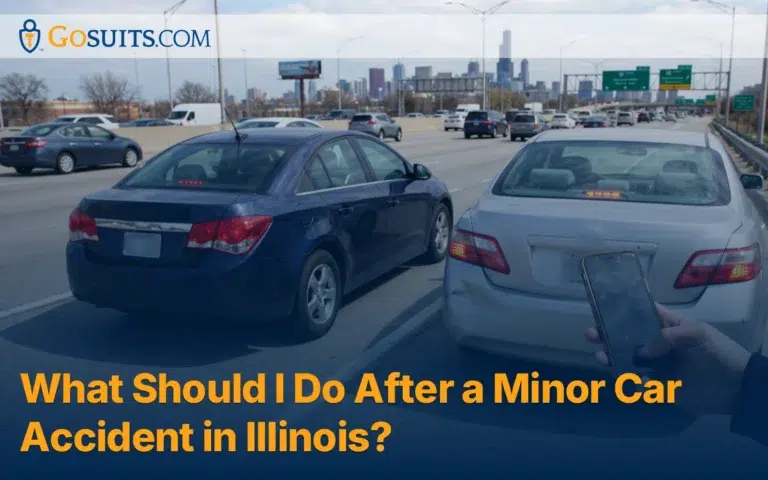
After a minor car accident in Illinois, stop at or near the scene, check for injuries, call 911 if anyone may be hurt, exchange the information the law requires, document the scene, and get medical attention for any symptoms. Illinois law requires a driver in a crash to give a name, address, vehicle registration and owner information, to show a driver’s license on request, and to render reasonable aid to anyone injured [3][4]. A crash report is required when there is injury, death, or property damage above $1,500 (or above $500 if any driver is uninsured) [1][2]. A crash that looks minor can still produce an injury claim, and most Illinois injury lawsuits must be filed within two years [6].
Legal Snapshot
-
Legal Topic: Duties and first steps after a minor motor vehicle crash in Illinois
-
Case Stage: Immediate aftermath, before any claim or lawsuit
-
Primary Legal Issue: Statutory duties at the scene, crash reporting, and preserving a possible civil claim
-
Primary Authority: Illinois Vehicle Code, 625 ILCS 5/11-401 through 11-403; Code of Civil Procedure, 735 ILCS 5/13-202 and 5/2-1116
-
Governing Law: Illinois state law (no federal rule controls the steps below)
-
Date Legal Authority Last Reviewed: October 13, 2026 (research review; attorney verification pending)
What Does a “Minor” Accident Mean Under Illinois Law?
Illinois law has no legal category called a “minor” accident. What matters is whether anyone was injured, how much property damage occurred, and whether any driver was uninsured. Those facts decide whether a report is required and whether a civil claim may exist. A low-speed crash on the Dan Ryan Expressway in stop-and-go traffic may leave a small dent, yet the people inside can still develop neck, back or head symptoms hours or days later.
What Does Illinois Law Say?
Illinois imposes duties on every driver in a crash, whether or not that driver caused it. These duties come from the Illinois Vehicle Code.
-
Stop and stay. When a crash causes personal injury or death, the driver must stop at the scene, or as close as possible, and remain until the information and aid duties are met, without obstructing traffic more than necessary [3]. A crash involving only vehicle damage carries a similar stop-and-remain duty under the section that follows [5].
-
Give information and render aid. Drivers must provide a name, address, registration number and vehicle owner, show a license on request if available, and provide reasonable assistance to injured people, including arranging transport to a hospital when apparent or requested [4].
-
Consequences of leaving. Failing to comply with the information duty is a Class A misdemeanor [4]. Leaving a crash involving injury can be charged as a felony [3]. Because these are criminal matters, a driver who is worried about them should speak with a lawyer.
What Legal Rules Apply?
|
Issue |
Illinois rule |
Authority |
|---|---|---|
|
Crash report threshold |
Injury, death, or property damage over $1,500 when all drivers are insured; $500 if any driver is uninsured |
625 ILCS 5/11-407(a); Illinois State Police |
|
Report timing if police do not come |
File as soon as possible, within 10 days |
Illinois State Police |
|
Injury lawsuit deadline |
Generally 2 years from when the claim accrued |
735 ILCS 5/13-202 |
|
Vehicle damage lawsuit deadline |
Generally 5 years for injury to property |
735 ILCS 5/13-205 |
|
Shared fault |
Recovery reduced by your share; barred if more than 50% |
735 ILCS 5/2-1116 |
The Illinois State Police state that each driver must file a report when a crash causes death, bodily injury, or more than $1,500 in property damage with all drivers insured, that the threshold is $500 if any driver is uninsured, and that a driver should file within 10 days if no officer appears at the scene [1]. IDOT’s instruction manual for officers describes the same two thresholds and treats unknown insurance as uninsured [2]. If you are unsure whether damage crosses the line, treating the crash as reportable is the more cautious course.
How Does This Apply to a Real Case?
Example (hypothetical, not a GoSuits case): A driver brakes in heavy traffic on the Kennedy Expressway and is rear-ended at low speed. Both cars drive away with cosmetic damage. The driver feels fine, so no one calls police. Two days later the driver has stiffness and headaches. Because no report was made and no photographs were taken, proving the crash, its timing and the other driver’s identity now depends on whatever information was exchanged.
Example (hypothetical, not a GoSuits case): Two drivers merge at the same time on Lake Shore Drive and each says the other drifted. Each insurer may assign a percentage of fault. Under Illinois comparative fault, those percentages can decide whether a claim is reduced or barred entirely.
What Evidence Can Matter?
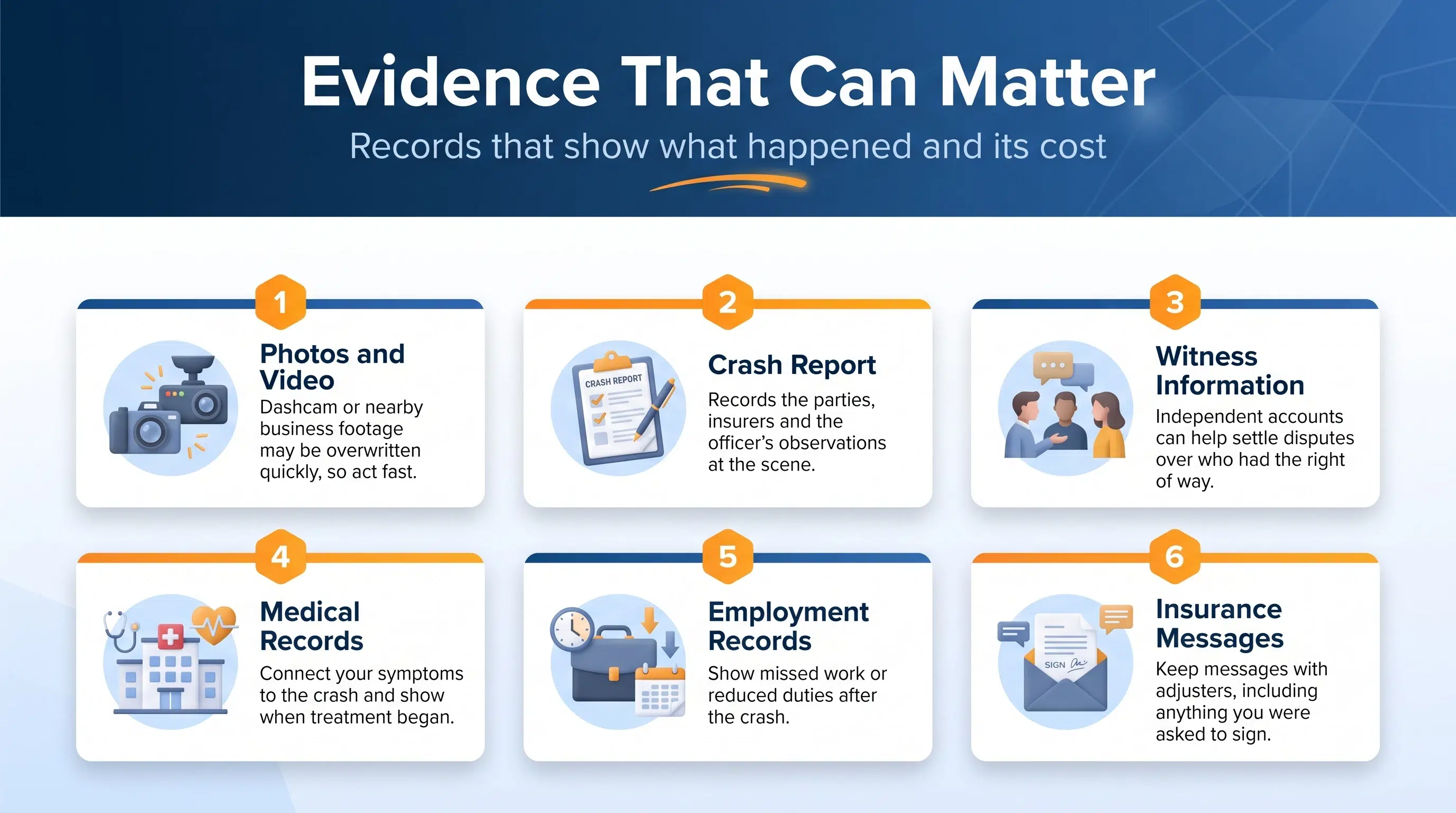
Evidence does not prove liability on its own, but it can show what happened and what the crash cost. Categories that often matter include:
-
Photographs and video of vehicle positions, damage, road conditions, and visible injuries, plus dashcam or nearby business footage that may be overwritten quickly.
-
The crash report and the officer’s identification, which record the parties, insurers and the officer’s observations.
-
Witness names and phone numbers, because independent accounts can help resolve disputes about who had the right of way.
-
Medical records and bills, which connect symptoms to the crash and document treatment timing.
-
Employment records showing missed work or reduced duties.
-
Insurance documents and messages with adjusters, including anything you were asked to sign or state.
-
Vehicle data and repair estimates, which can help show the force of impact.
What Damages or Remedies May Be Available?
If another driver’s negligence caused your injuries, Illinois law may allow recovery of categories such as medical expenses, lost income, pain and suffering, and vehicle or property damage. Recoverability depends on the facts, the available insurance, and applicable law, and no outcome is guaranteed. A spouse’s claim for loss of consortium deriving from an injury generally runs on the same time period as the injured person’s claim [7].

What If the Other Party Disputes Liability?
Disputes are common in minor crashes because there are often no independent witnesses. Illinois uses modified comparative fault. A plaintiff whose share of fault is 50% or less may recover damages reduced by that share, while a plaintiff found more than 50% at fault is barred [10]. That cutoff is why early statements matter. Avoid apologizing, guessing about speed, or speculating about fault at the scene. If you are the driver being blamed, the same rule works the other way, and a lawyer can evaluate whether the other driver’s conduct contributed.
What If Insurance Is Involved?
Notify your own insurer promptly, and read your policy for notice requirements. Illinois requires vehicle owners to carry minimum liability insurance under 625 ILCS 5/7-601, and the Illinois Department of Insurance states that required uninsured motorist bodily injury limits are currently $25,000 per person and $50,000 per accident [8]. Illinois law sets minimum liability limits at $25,000 per person and $50,000 per crash for bodily injury, and $20,000 for property damage, under 625 ILCS 5/7-203. Uninsured motorist coverage can apply if the at-fault driver has no insurance or leaves the scene in a hit-and-run [8]. The other driver’s insurer is not obligated to protect your interests, and an early recorded statement or quick settlement offer can affect your rights. A Chicago personal injury team can explain how those communications may affect a claim.
When a vehicle is damaged in a crash that may involve injury, many people want a Chicago-area lawyer to review the situation. Illinois car accident lawyers can look at fault, coverage and medical documentation together, which is hard to do while recovering. If you want a general overview of our Illinois practice, see our Illinois car crash legal resources.
How Long Do I Have to Act?
Illinois law generally requires an action for injury to the person to be commenced within two years after the cause of action accrued [6]. Injury to property, including vehicle damage, generally has a five-year period [7]. Shorter notice or filing periods can apply when a government entity is involved. One secondary source cites a one-year period for claims against local governments under 745 ILCS 10/8-101 [12]. In Cook County, civil injury cases are filed in the Circuit Court of Cook County, including at the Richard J. Daley Center in downtown Chicago. If a case is filed after the deadline, the court can dismiss it without ever reviewing the facts.
What Should I Do Next?
-
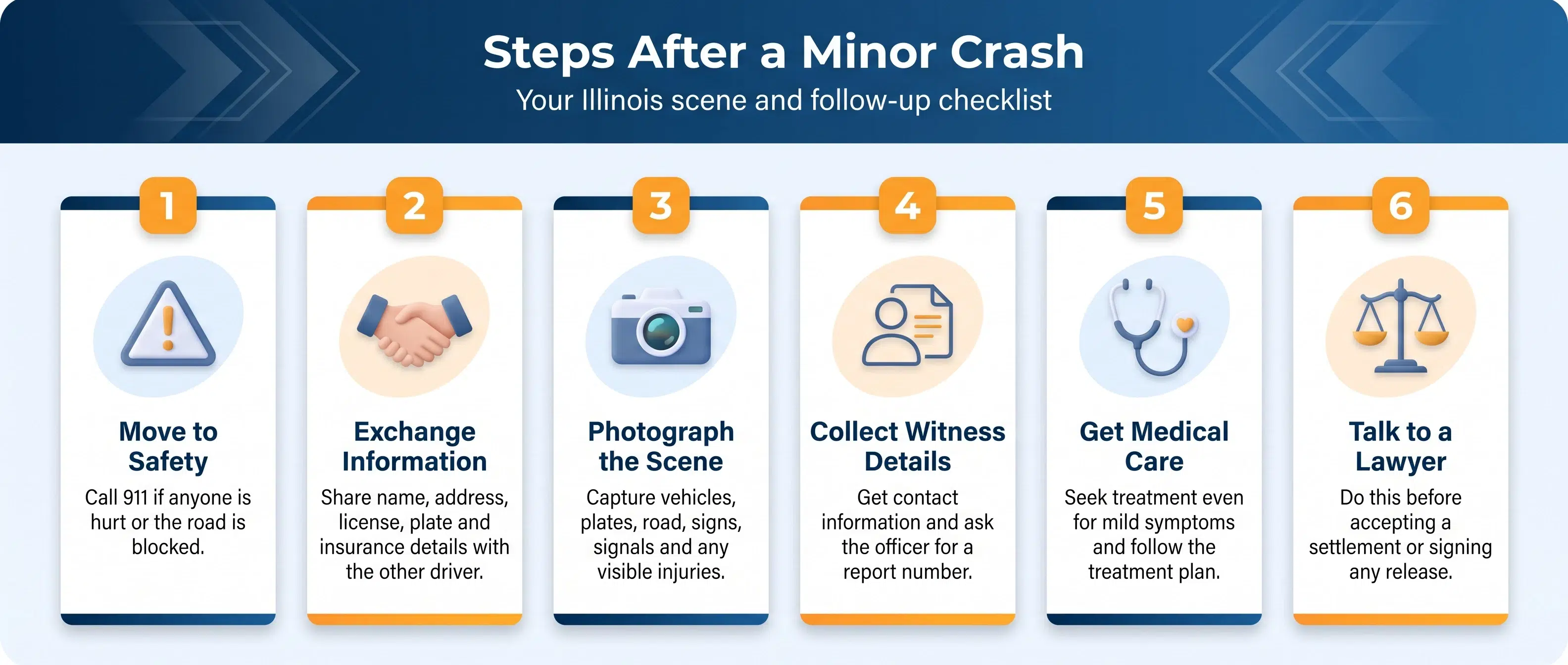
Move to safety if you can, and call 911 if anyone is hurt or the road is blocked.
-
Stay at the scene and exchange name, address, license, plate and insurance information.
-
Photograph vehicles, plates, the road, signs, signals and any injuries.
-
Collect witness contact details and ask the officer for a report number.
-
Get medical care promptly, even for mild symptoms, and follow the treatment plan.
-
File a crash report within 10 days if police did not and the thresholds were met [1].
-
Report the crash to your insurer, and be careful with statements to any adjuster.
-
Keep a folder for bills, repair estimates, missed work and communications.
-
Speak with a lawyer before accepting a settlement or signing a release. This article is general information, not legal advice for your situation.
Related Illinois Personal Injury Resources
Crashes in Naperville, Aurora, Cicero and across Cook County and the collar counties follow the same Illinois statutes described above, though local police agencies and courts differ. Reviewing the Illinois car accident lawyers page is a reasonable starting point for state-level information.
Talk With a GoSuits Attorney
An injury claim can involve medical evidence, insurance issues, liability disputes and legal deadlines. If you were hurt in an Illinois crash, you can schedule a free consultation so a GoSuits personal injury attorney can review the circumstances and explain your options. Past results do not guarantee a similar outcome.
References
-
625 ILCS 5/ Illinois Vehicle Code (Sections 11-402 and 11-403) – Illinois General Assembly
-
735 ILCS 5/ Code of Civil Procedure, Article XIII – Illinois General Assembly
-
Auto Insurance Shopping Guide – Illinois Department of Insurance
-
Illinois Appellate Court opinion discussing 625 ILCS 5/11-401 and 11-403 – Illinois Courts
-
How Illinois Comparative Negligence Affects Your Settlement – Collins Law (secondary source)
-
Statute of Limitations for Personal Injury Claims in Illinois – Parker and Parker (secondary source)
This article provides general legal information about Illinois law and is not legal advice. Reading it does not create an attorney-client relationship.