







































Causes of SUV Rollover Accidents
SUV rollover accidents often result from multiple contributing factors. Understanding these common causes can provide clarity about how and why such accidents occur, and why thorough investigation is essential to determine liability.
Some of the primary factors contributing to SUV rollovers include:
- Vehicle Design:
SUVs typically have a higher center of gravity compared to other passenger vehicles. This makes them more prone to instability, especially during sharp turns, sudden lane changes, or evasive maneuvers. - Vehicle Defects:
Manufacturing defects or mechanical failures can significantly increase the risk of rollover accidents. Common defects include faulty tires, inadequate braking systems, defective airbags, and ineffective stability control systems. - Poor Road Conditions:
Unsafe road conditions such as poorly maintained surfaces, potholes, inadequate signage, unclear lane markings, and hazardous road designs can trigger or worsen rollover accidents. This issue is particularly relevant given the weather extremes and road conditions commonly experienced throughout Illinois. - Driver Negligence:
The actions of other drivers frequently contribute to rollover incidents. Speeding, distracted driving (including texting), impaired driving, aggressive driving maneuvers, and sudden lane shifts can directly lead to an SUV rollover accident.
Common Injuries Sustained in SUV Rollovers
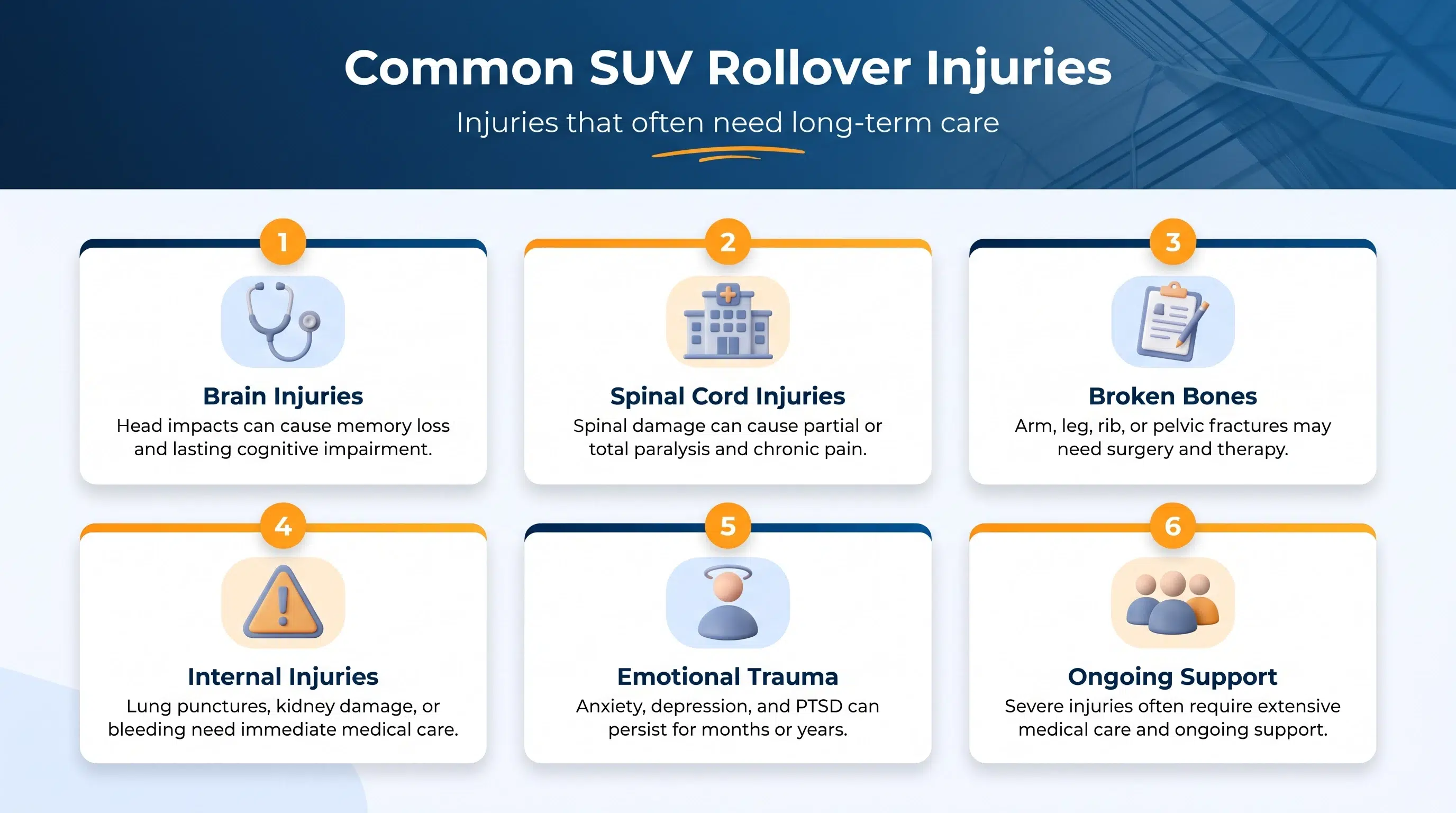
Injuries resulting from SUV rollover accidents can be severe and life-altering, often requiring extensive medical care and ongoing support. Common injuries include:
- Traumatic Brain Injuries (TBIs):
These injuries frequently occur due to the head striking vehicle interiors, windows, or external debris. TBIs can cause lasting cognitive impairment, memory loss, emotional instability, difficulty concentrating, and significant disruptions in daily living. - Spinal Cord Injuries:
Rollovers commonly result in injuries to the spinal cord, potentially causing partial or total paralysis. Victims may face long-term mobility challenges, chronic pain, loss of independence, and the need for extensive medical treatments and rehabilitation. - Broken Bones and Fractures:
The violent nature of rollovers often leads to multiple broken bones, including fractures in arms, legs, ribs, or pelvic bones. These injuries may require surgeries, prolonged recovery periods, and physical therapy. - Internal Injuries:
Internal organ damage—such as lung punctures, kidney damage, or internal bleeding—is common due to the force of impact during rollovers. These injuries are often life-threatening and require immediate medical intervention. - Psychological and Emotional Trauma:
Many victims experience significant emotional effects, including anxiety, depression, and post-traumatic stress disorder (PTSD). Psychological symptoms may persist for months or even years following the accident, requiring mental health support and care.
Illinois Laws and Regulations Regarding SUV Rollover Cases
Illinois has specific laws that apply to personal injury and wrongful death claims stemming from SUV rollovers. These laws include strict timelines, called statutes of limitations, that limit how long you have to file a claim. Missing this timeframe could result in losing your right to seek compensation entirely.
Illinois uses modified comparative fault (735 ILCS 5/2-1116): your compensation is reduced by your share of fault, and you cannot recover if you are more than 50 percent at fault. Accurately determining fault through detailed investigation is critical.
State vehicle safety standards also apply to SUV rollover cases. Manufacturers who fail to adhere to these safety standards can potentially be held liable for resulting injuries. Thorough legal evaluation can identify potential violations of these safety standards.
Liability in SUV Rollover Accidents
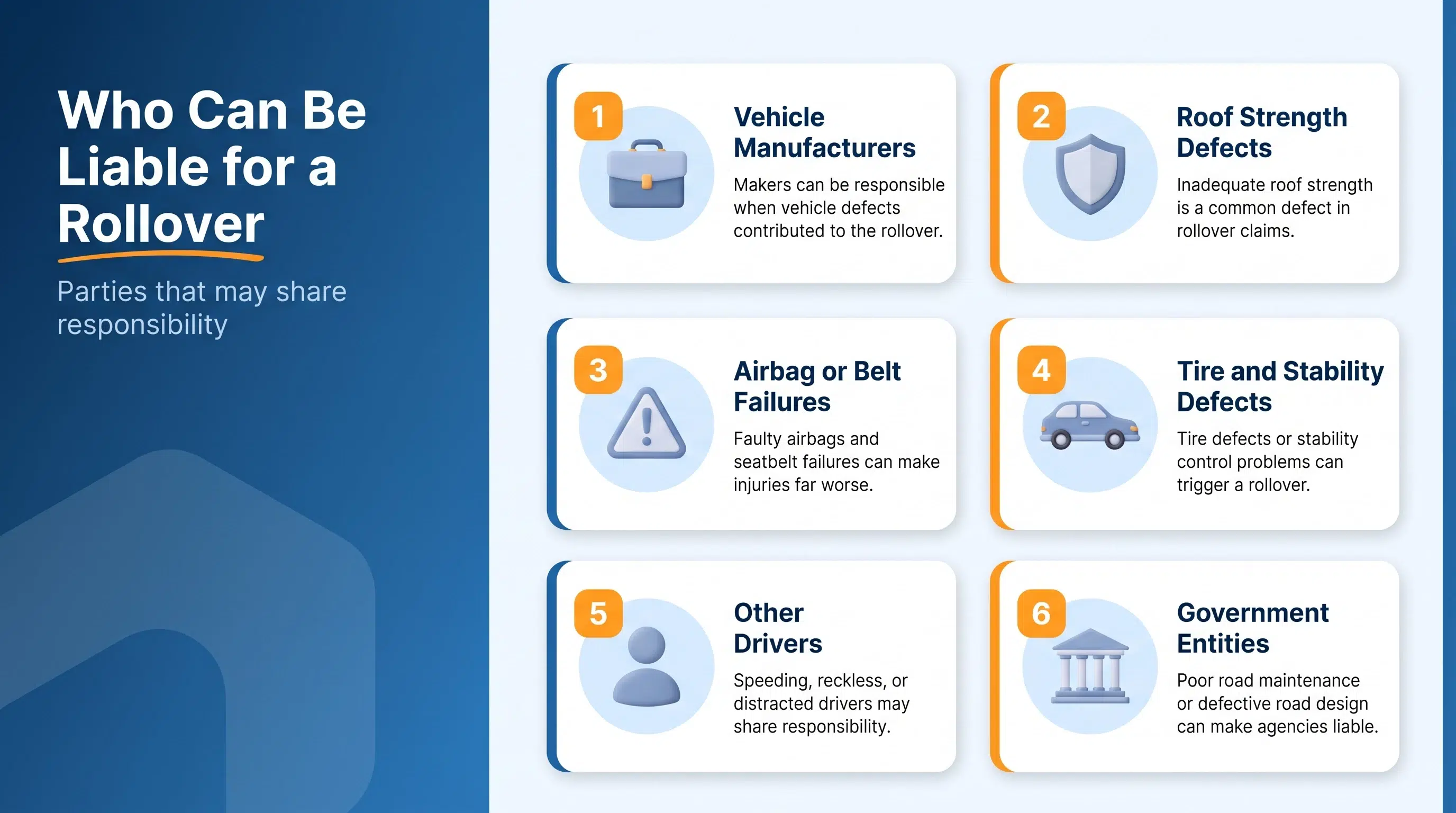
Determining who is responsible for your SUV rollover accident is critical for securing fair compensation. Liability in these cases often involves multiple parties and requires an in-depth analysis by experienced legal professionals.
Potential parties liable for SUV rollover accidents include:
- Vehicle Manufacturers:
Manufacturers can be responsible if vehicle defects contributed to the rollover. Common defects include inadequate roof strength, faulty airbags, seatbelt failures, tire defects, or issues with the vehicle’s stability control system. - Other Drivers:
If another driver’s negligence, such as speeding, reckless driving, or distracted driving, directly contributed to your rollover accident, they may share responsibility for the damages and injuries you sustained. - Government Entities:
City, county, or state agencies may bear liability if poor road maintenance or hazardous roadway conditions contributed to the rollover. Examples include insufficient signage, potholes, uneven pavement, poorly marked construction zones, or defective road design.
Handling Insurance Companies After an SUV Rollover Accident
Handling insurance-related matters following an SUV rollover accident can be complicated, time-consuming, and stressful. Insurance companies often have processes in place that may be difficult for accident victims to manage alone. They frequently take steps intended to protect their interests, which sometimes may conflict with your own, potentially leading to confusion or uncertainty about your rights or available compensation.
Understanding how insurance companies operate and knowing how to properly document and present claims can significantly impact your experience. Many individuals find that managing these processes independently may become overwhelming, specifically when recovering from serious injuries or emotional trauma. Legal representation can help you clearly understand your available options without implying or promising specific outcomes. Attorneys familiar with personal injury law can help navigate the insurance claim process more efficiently by facilitating clear communication and advocating effectively on your behalf. By having legal support, you can approach interactions with insurance companies more confidently, feeling informed and prepared as you make decisions regarding your claim.