
Yes, you can still file a personal injury claim in Illinois even if you did not see a doctor immediately after an accident. A delay in medical care does not automatically prevent recovery, but it may create questions about whether the accident caused your injuries and how the treatment timeline supports your claim. Insurance companies often examine gaps in medical care when evaluating injury claims.
Many people delay treatment because symptoms seem minor at first or do not appear immediately. Seeking medical attention once symptoms develop and documenting the connection between the accident and injuries can help address those concerns.
Here is the Quick Answer:
- You can still file a personal injury claim in Illinois even if you did not see a doctor immediately after an accident.
- A delay in medical care does not automatically prevent recovery, but it may create questions about whether the accident caused the injury.
- Medical records, symptom timelines, and other evidence can help explain a gap in treatment.
- Seeking medical evaluation as soon as possible can help document injuries and recommended care.
- Many Illinois personal injury claims must be filed within two years after the cause of action accrues under 735 ILCS 5/13-202. In many accident cases, that means two years from the accident date, although limited exceptions may apply.
- A Chicago personal injury attorney can help evaluate medical documentation, treatment gaps, and insurance questions related to the claim.

Is there a legal deadline for seeing a doctor after an accident in Illinois?
Illinois law does not require an injured person to see a doctor within a specific number of hours or days after an accident to preserve the right to pursue a personal injury claim. The timing of medical care is not a legal requirement for filing a claim, but it can affect how easily an injured person can show that the accident caused the claimed injuries.
A delayed medical visit is primarily an evidence issue rather than a legal barrier. Insurance companies, courts, and other parties evaluating a claim may consider the timeline between the accident, the onset of symptoms, and the first medical evaluation when reviewing causation and damages.
Why Insurance Companies Pay Attention to Treatment Gaps
Insurance companies often examine the timing of medical treatment when evaluating injury claims. A gap between an accident and the first medical visit may lead to questions about whether the accident caused the injury, whether another event contributed to the symptoms, or whether a pre-existing condition played a role.
A treatment gap does not automatically mean an injury claim is invalid. However, the reason for the delay and the available medical documentation may become important when determining how the injury is connected to the accident.
Why Symptoms May Appear After an Accident
Some injuries are not fully noticeable immediately after an accident. The body’s initial stress response may affect how pain is perceived immediately after an accident.
For example, some injuries, including certain soft tissue injuries and concussion symptoms, may not be immediately noticeable. Medical evaluation is important for determining the cause of symptoms.
The fact that symptoms develop after the accident does not by itself determine the outcome of a claim, but medical records documenting the timing and progression of symptoms can help explain the connection between the accident and the injury.
What should you do if you haven’t seen a doctor yet?
If your injuries resulted from a Chicago car accident, the most important step is to seek medical evaluation and create an accurate record of your symptoms, even if time has passed since the accident.
A delay in treatment does not automatically prevent you from filing a personal injury claim in Illinois, but documenting when symptoms began, how they developed, and what treatment is recommended can help address questions about the connection between the accident and the injury.
Medical records provide important evidence by documenting symptoms, diagnoses, treatment plans, and the progression of the condition after the accident. Seeking care as soon as possible can help create a clearer medical record, even when treatment did not begin immediately.
Get Evaluated as Soon as Possible
A medical evaluation documents your current condition and begins creating a medical record of your injuries. This documentation may include physical symptoms, diagnostic findings, treatment recommendations, and follow-up care instructions.
Depending on the circumstances, an injured person may seek care through an emergency department, urgent care facility, primary care provider, or an appropriate medical specialist.
Chicago-area accident victims may have different options for medical evaluation depending on the severity of their symptoms, availability of care, and whether they already have an established healthcare provider.
When seeking medical care after a delay, it is important to explain the accident clearly and provide details about when symptoms began. A healthcare provider can only document the information available, so an accurate description of the accident and symptom progression can help create a more complete medical record.
Be Accurate About When Symptoms Started
When speaking with a healthcare provider, describe the timeline as accurately as possible. This includes explaining:
- When the accident occurred
- When symptoms were first noticed
- Whether symptoms became worse over time
- How the symptoms have affected daily activities
There is no benefit to minimizing symptoms or adjusting the timeline to make the delay appear shorter. Medical records that accurately reflect what happened are generally more useful than records that contain inconsistencies.
For example, a person may initially believe that soreness after a crash will resolve on its own, only to seek treatment later when the pain continues or becomes worse. Explaining that progression honestly allows the medical record to reflect the actual circumstances surrounding the injury.
Follow Recommended Treatment Plans
Following the recommended treatment plan creates a clearer record of your injury and recovery. Attending follow-up appointments, completing recommended care, and keeping medical records organized can help document ongoing symptoms and treatment needs.
Gaps in treatment may raise questions about the connection between the accident and the injury, so it is important to document any reasons for missed care or interruptions in treatment.

How Treatment Timing May Affect an Illinois Injury Claim
The timing of medical care can affect how an insurance company evaluates the available evidence. The examples below show how different treatment timelines may be viewed during an Illinois injury claim and what steps may help address potential concerns.
How Medical Treatment Timing Can Affect an Illinois Injury Claim |
||
|---|---|---|
| Scenario | Potential Claim Considerations | Steps That May Help |
| Medical Care Shortly After Accident | Provides Early Documentation of Symptoms, Injuries, and Initial Treatment Recommendations | Continue Recommended Treatment and Keep Medical Records Organized |
| Medical Care After a Delay | May Lead to Questions About the Timing of Symptoms and Whether the Accident Caused the Injury | Explain the Reason for the Delay and Provide a Consistent Symptom History |
| Extended Gap in Treatment | May Require Additional Evidence to Connect the Injury to the Accident | Gather Prior Medical Records, Follow Treatment Recommendations, and Document Ongoing Symptoms |
| No Medical Treatment Yet | Injury-Related Damages May Be More Difficult to Establish Without Medical Documentation | Seek Medical Evaluation And Begin Creating a Record of Symptoms and Treatment |
➤ Note: Treatment timing can affect how an injury claim is evaluated, but every case depends on its specific facts, medical documentation, and available evidence.
How do lawyers explain a treatment gap in an injury claim?
A Chicago personal injury attorneys may address a treatment gap by organizing medical records, explaining the timeline of symptoms, and presenting evidence that connects the injury to the accident. A delay in seeking care does not automatically prevent an injury claim, but it may require a clearer explanation of how the condition developed and why medical treatment did not begin immediately.
The focus is generally on creating a complete picture of the accident, the symptoms that followed, and the medical findings that support the claimed injuries.
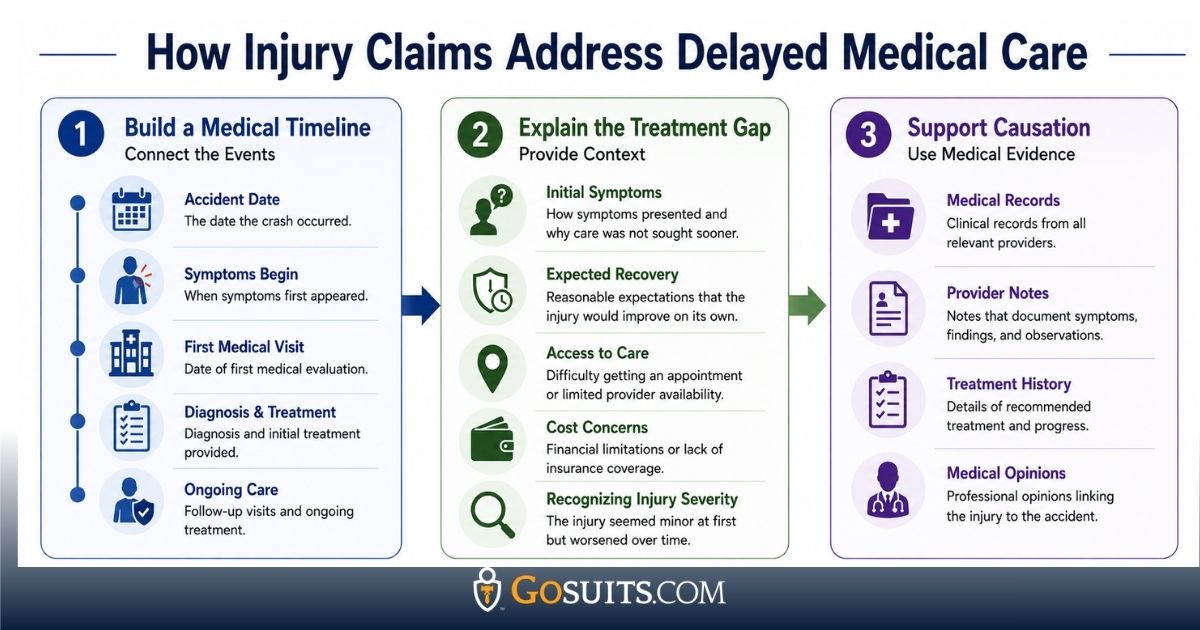
Building a Medical Timeline
One of the first steps in addressing a treatment gap is creating a detailed medical timeline. This timeline may include:
- The date of the accident
- When symptoms were first noticed
- The first medical evaluation
- The diagnosis and treatment recommendations
- The progression of symptoms and ongoing care
A complete timeline can help show how symptoms developed after the accident and provide context for why treatment began when it did. Medical records, appointment notes, and healthcare provider documentation can all help establish the sequence of events.
Explaining the Reason for Delayed Treatment
The reason for a delay in medical care often becomes part of the claim evaluation. Some people do not seek immediate treatment because their symptoms initially seem minor, they expect the discomfort to improve, they have transportation challenges, they are concerned about medical costs, or they do not immediately recognize the seriousness of the injury.
Explaining these circumstances does not automatically resolve questions about causation, but providing an accurate explanation can help address why there was a gap between the accident and the first medical visit. Consistency between the accident details, medical records, and the explanation for the delay is important.
Using Medical Opinions When Causation Is Disputed
In some cases, the main issue is not whether an injury exists, but whether the accident caused or contributed to that injury. When causation is disputed, medical opinions may help explain the relationship between the accident, the reported symptoms, and the diagnosed condition.
Treating physicians often provide information about the injury and treatment history based on their evaluation of the patient. In more complex cases involving disputed injuries, pre-existing conditions, or future medical needs, additional expert opinions may be considered.
Expert testimony does not automatically determine the outcome of a claim. Instead, medical opinions become one part of the overall evidence used to evaluate whether the claimed injuries are connected to the accident.
Does Illinois’ comparative negligence rule apply to delayed medical treatment?

Delayed medical treatment and comparative negligence address different issues in an Illinois personal injury claim. Illinois’ modified comparative negligence rule under 735 ILCS 5/2-1116 focuses on each party’s responsibility for causing an accident. It does not determine fault based on how quickly an injured person seeks medical care afterward.
Comparative negligence applies when the actions of multiple parties may have contributed to the accident. For example, if another driver caused a collision but the injured person is found partially responsible for the crash, the person’s recovery may be reduced based on their percentage of fault. A person found more than 50% responsible generally cannot recover damages under Illinois law.
A delay in seeking treatment is usually a separate issue related to proving causation and damages. Insurance companies may question whether the accident caused the reported injuries or whether other factors contributed to the condition, but that does not mean the injured person caused the crash.
For example, a driver’s negligence may cause a collision, and the injured person may wait before seeing a doctor because symptoms initially seem minor. The dispute may focus on whether the treatment records and other evidence sufficiently connect the injury to the accident, rather than whether the injured person was responsible for causing the crash.

Does the statute of limitations give you more time if symptoms appear later?
Generally, no. Under 735 ILCS 5/13-202, many Illinois personal injury claims must be filed within two years after the cause of action accrues. In many accident cases, that means the limitations period begins on the date of the accident, although limited exceptions, including the discovery rule, may apply.
Illinois does recognize a discovery rule in limited situations where an injured person could not reasonably have discovered both the injury and that it was wrongfully caused earlier. However, this exception is applied narrowly and depends on the specific circumstances of the case.
Because waiting to seek treatment does not automatically provide additional time to file a claim, injured individuals should address potential deadlines as soon as possible after an accident.
Prompt action also helps preserve medical records and other evidence that may be important when evaluating the claim.
FAQs
Will my claim automatically be denied because I waited to see a doctor?
No. A delayed medical visit does not automatically prevent you from filing an injury claim. However, the timing of treatment may affect how the connection between the accident and the injury is evaluated.
What if I felt fine after the accident but developed pain later?
You may still have a claim. Some injuries may not become noticeable immediately, but medical records documenting symptoms, diagnosis, and treatment can help explain how the condition developed after the accident.
Can I still recover compensation if I could not afford medical treatment right away?
Potentially. Financial concerns may help explain why treatment was delayed, but the claim still requires evidence showing that the injuries are connected to the accident.
Does it matter what doctor I see after an accident?
The most important step is obtaining appropriate medical evaluation. A healthcare provider can document symptoms, medical findings, and recommended treatment, which may become important records when evaluating the claim.
Should I tell my attorney that I waited to seek medical care?
Yes. Explaining when and why treatment was delayed allows an attorney to evaluate potential challenges and address questions about the medical timeline with the available evidence.