- What happened on the Edens near Golf and Dempster
- Known injuries and emergency response
- Investigation status and traffic reopening
- Local context along the Edens corridor
- What families can do in the first 48 hours
- How to get official records
- Illinois State Police crash report
- 911 and dispatch audio or logs
- Traffic camera video and FOIA
- Cook County Medical Examiner records
- Multi-vehicle crash liability basics in Illinois
- Pedestrian struck at a highway scene
- Comparative fault and insurance coordination
- Insurance considerations after a six-vehicle crash
- Evidence to preserve now
- Timelines and key deadlines in Illinois injury cases
- Community safety reflections for the Edens
- Call-to-Action: Concrete steps people can take now
- Commentary from Gosuits Chicago, Illinois Personal Injury Attorney
- References
What happened on the Edens near Golf and Dempster
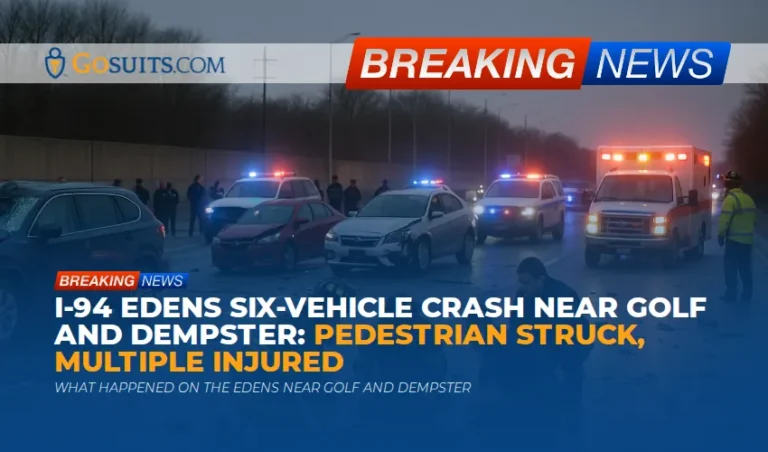
Illinois State Police reported a six-vehicle crash in the northbound lanes of the Edens Expressway near Golf Road and Dempster Street just before 5 a.m. on Sunday. Multiple lanes were closed for an on-scene investigation, and several people were transported to area hospitals. Police also confirmed a pedestrian at the scene was struck and hospitalized. As of the most recent update, the roadway has reopened and the incident remains under investigation.
This stretch of the Edens sits at the doorstep of several north suburban communities, including Morton Grove, Skokie, and Niles. Early morning collisions on the Edens can quickly disrupt the inbound and outbound flow for workers heading toward downtown and for service workers commuting between the North Shore and the city. The time of day matters here. Before sunrise, drivers encounter lower visibility, colder pavement in winter months, and faster average speeds, all of which can influence chain-reaction crash dynamics.
Known injuries and emergency response
Authorities indicated multiple passengers from involved vehicles were taken to area hospitals, and a pedestrian at the scene was also hospitalized. No condition updates were released publicly. When a crash involves multiple vehicles and a person on foot, first responders must secure the scene to prevent secondary crashes, triage injuries, and coordinate transport to appropriate hospitals or trauma centers based on injury severity. In Illinois, trauma center designation is regulated at the state level, and emergency medical providers route patients according to established regional protocols [1].
For those worried about loved ones, it is common that names and hospital destinations are not immediately released. Hospitals and law enforcement prioritize medical care and scene safety, then confirm identities before updates are shared.
Investigation status and traffic reopening
Illinois State Police confirmed that multiple lanes were closed to investigate the six-vehicle crash and that the roadway later reopened. These investigations typically document the final rest positions of vehicles, visible damage, skid or yaw marks, debris fields, and other roadway evidence. Where available, investigators may also review traffic camera feeds, 911 records, and witness statements to reconstruct sequence and causation. Complex multi-car events can take time to analyze, particularly when visibility is low and the crash involved more than one impact sequence.
Local context along the Edens corridor
Golf Road and Dempster Street bracket a busy portion of I-94 that serves the Old Orchard and Westfield shopping area to the east, residential neighborhoods in Morton Grove to the west, and nearby connections to Skokie Boulevard and the Skokie community. On weekends and early mornings, speeds on the Edens can be higher than mid-day averages. Interchanges in this corridor can have tight merge distances, and during unexpected slowdowns, secondary impacts or spinouts sometimes occur as drivers approach braking traffic. The presence of a pedestrian in a freeway environment suggests either a person involved in the crash, a responder, or a bystander on foot, all of which increase risk around a high-speed scene.
What families can do in the first 48 hours
In the first day or two after a multi-vehicle collision, it helps to keep actions simple and purposeful. The priorities are medical care, basic documentation, and protecting rights while information is still fresh.
- Prioritize medical care and follow-up. Even if injuries seem minor, go to the emergency department or an urgent care clinic as directed. Some injuries, including concussions and internal trauma, can initially present with subtle symptoms. Keep all discharge paperwork and follow instructions.
- Collect basic information. If safe and possible, note the involved vehicles, plate numbers, and insurance carriers. Ask for the police report number and the Illinois State Police district or trooper name if provided at the scene.
- Preserve photos and video. Save any phone pictures, dashcam video, and witness contact information. Do not alter or discard damaged property or clothing.
- Be cautious with insurance calls. Statements given to insurance adjusters can be recorded and later used to challenge or minimize claims. It is wise to consult a lawyer before giving recorded statements to any insurer, including your own.
- Note employer and school absences. Keep a simple log of missed work, school days, or activities due to injuries. This log helps when documenting impact.
How to get official records
Public records help families understand what happened and support insurance claims. Below are the primary sources connected to a crash like this one.
Illinois State Police crash report
Illinois State Police handle crashes on the Edens. Crash reports are typically available online through the Illinois State Police crash reports system. You will need the agency report number, crash date, and names of involved parties. Reports may take time to post if the investigation is ongoing [2].
911 and dispatch audio or logs
911 call audio and dispatch logs can sometimes be requested from the relevant public safety answering point. Depending on which agency handled the calls, that could involve a Freedom of Information Act request. Availability can vary, and redactions may apply to protect private information.
Traffic camera video and FOIA
Illinois Department of Transportation operates roadway cameras throughout the region. Live streams are generally public, but archived footage is not always retained. If you believe a state camera captured the crash or aftermath, consider a timely FOIA request to IDOT asking whether any relevant footage exists and can be preserved [3].
Cook County Medical Examiner records
While no fatalities have been reported in this crash, in situations where a death occurs, the Cook County Medical Examiner manages autopsy reports, death certificates, and related findings. Families can learn how to request records through the Medical Examiner’s office [4].

Legal and safety implications we can discuss today
Without speculating about fault in this specific event, we can outline several common civil issues that arise in similar multi-car and pedestrian-involved collisions on Illinois interstates.
Multi-vehicle crash liability basics in Illinois
Chain-reaction and multi-impact events often involve several theories of negligence. Drivers must maintain a safe speed, keep a proper lookout, and follow at a distance that allows safe stopping for conditions. Where traffic suddenly slows or stops, rear-end collisions can cascade, and responsibility may be shared among multiple drivers. Investigators analyze vehicle positions, physical evidence, and timing, especially when a second collision occurs after an initial impact.
Pedestrian struck at a highway scene
Illinois law imposes a general duty on drivers to exercise due care to avoid colliding with any pedestrian and to sound the horn when necessary for safety. Drivers must also exercise proper precaution upon observing any child or any obviously confused or incapacitated person [5]. On a freeway shoulder or travel lane, visibility, lighting, and unexpected obstructions complicate driver reactions. Even so, drivers remain obligated to operate with caution appropriate to the environment.
Comparative fault and insurance coordination
Illinois uses a modified comparative fault system with a 51 percent bar. If an injured person is more than 50 percent at fault, that person is barred from recovery; if 50 percent or less at fault, recovery may be reduced by their percentage of fault [6]. In multi-vehicle collisions, insurers may dispute percentages and argue over sequencing, which can prolong claims.
This is when many people consider speaking with car accident lawyers about how to protect their rights before insurers lock in statements or push quick, low offers.
Insurance considerations after a six-vehicle crash
Coordinating coverage in a six-vehicle collision can be confusing. Multiple liability policies, med pay, and underinsured motorist coverage may be in play. The order in which policies contribute can depend on liability findings and the degree to which each vehicle’s coverage is implicated. For a practical walkthrough on priority of coverage after a multi-car crash, see Which Insurance Pays First After a Multi-Car Crash.
Health insurance may initially pay medical bills, but the health plan often asserts a lien to be reimbursed from any liability recovery. If medical payments coverage is included on an auto policy, it can sometimes help with early medical costs regardless of fault. The Illinois Department of Insurance provides consumer guidance on auto coverage basics and claim handling timelines [7].
Be careful with early recorded statements to any insurer. What is said on a call can be cited later to deny or limit payment. When in doubt, consult Chicago car accident lawyers before providing a recorded statement or signing medical authorizations that allow broad data mining of your health history.
Multiple-insurer disputes sometimes include finger pointing over who pays first and attempts to settle quickly for minimal amounts. Talking with car accident lawyers can help you understand coverage sources and how to document injuries and losses thoroughly.
Evidence to preserve now
Evidence in a multi-vehicle interstate crash disperses quickly. Some items are in your control, and others require timely requests from agencies or private entities.
- Scene photos and video. Save any photos or videos taken at the scene. Make backup copies and keep the originals intact.
- Dashcam data. Download and preserve files. Note the device brand and settings, which can matter for timestamp accuracy.
- Vehicle data. Modern vehicles store event data in airbag control modules that can record speed, brake use, and seatbelt status during crash pulses. If a vehicle is drivable, avoid disconnecting the battery until data preservation is discussed. If the vehicle is totaled, find out where it was towed and request a hold to prevent early salvage.
- Witness contacts. Write down names, phone numbers, and email addresses of bystanders, good Samaritans, or other drivers who saw the crash or its immediate aftermath.
- Medical records and bills. Keep discharge summaries, imaging reports, prescriptions, and receipts. Start a folder for everything tied to the incident.
- Public records. Track the Illinois State Police crash report and consider timely FOIA requests to IDOT if you believe cameras or highway sensors captured relevant information [2][3].
Nationwide fatality databases show that multi-vehicle crashes raise the risk of secondary collisions and injuries to people on foot near disabled vehicles, underscoring the importance of swift scene control and hazard awareness [8].
Timelines and key deadlines in Illinois injury cases
Illinois generally provides two years to file a lawsuit for personal injury claims arising from a motor vehicle crash, measured from the date of the incident. Missing this deadline can bar recovery in court [9]. There can be shorter timeframes for certain claims involving government entities and for preserving particular kinds of evidence. Some insurers also impose prompt notice requirements. Given these timelines, it is prudent to get informed early and avoid delays that could affect the ability to pursue a claim.
Community safety reflections for the Edens
Anyone who drives the Edens knows how quickly conditions change near the Golf and Dempster interchanges. The roadway transitions from relatively open stretches to tighter lanes and merges, and during early morning hours, drivers may encounter sudden slowdowns. If you are approaching a scene with hazard lights or emergency vehicles, reduce speed, increase following distance, and avoid distractions. Illinois law also requires motorists to use due care around pedestrians, and to use caution appropriate to the circumstances [5].
Although this crash is still under investigation, the broader takeaway for our community is straightforward. Treat the Edens like the high-speed corridor it is. Look far ahead, keep right except to pass, and give emergency scenes a wide berth.

Call-to-Action: Concrete steps people can take now
Here is what should be done next, with a focus on clarity and timing.
- Document medical care now. Schedule follow-up with your primary care provider or a referred specialist within a few days. Early documentation ties the injuries to the crash and guides proper treatment.
- Track the official crash report. Check the Illinois State Police crash report system regularly using the incident date and report number. The narrative, diagram, and listed parties are key pieces for claims [2].
- Organize your records. Create a simple binder or digital folder for photos, receipts, wage loss notes, and correspondence. This saves time and reduces stress when insurers ask for proof.
- Preserve vehicle and electronic data. If your car is in a tow yard or body shop, ask for a hold to prevent repairs or salvage until you decide on next steps. Keep dashcam files and phone photos untouched.
- Be intentional with insurance communications. Do not rush to give recorded statements. Get a free consultation with an attorney first so you understand what information to provide and what can wait. Statements made to insurers can be used against you later.
- Consider FOIA requests promptly. If you think state cameras or dispatch records captured useful evidence, submit requests to IDOT or the appropriate agency while retention windows are open [3].
Commentary from Gosuits Chicago, Illinois Personal Injury Attorney
First, our thoughts are with everyone hurt in this morning’s multi-vehicle crash on the Edens and with the pedestrian who was struck at the scene. We share this overview for educational purposes and general information, and we hope it helps people navigate the coming days with a little more clarity.
Second, based on what is known, this is the kind of incident where multiple impacts and a chaotic scene can make fault analysis complicated. Early morning darkness, high speeds, and tight merges around Golf and Dempster often leave very little margin for error. When a pedestrian is present on or near the travel lanes, risk increases dramatically. In these cases, the quality of the on-scene investigation, access to camera footage, and rapid preservation of vehicle data often determine how the story is ultimately told.
Third, insurance companies and corporate claim handlers frequently move fast after multi-vehicle crashes to secure recorded statements and shape the narrative. They may suggest quick payments that do not account for delayed symptoms or the full cost of care. They also understand how to pit overlapping policies against each other to limit what is paid. When people do not know the coverage layers, they can unknowingly give up important rights or accept inadequate resolutions.
Finally, a free consultation matters because it helps people understand the law, the likely sources of coverage, and the sequence of steps to protect their interests. Even a short conversation can clarify whether additional investigation is needed, what to do before giving a recorded statement, and how to track medical and financial impacts over time.
References
- Illinois Trauma Centers Directory – Illinois Department of Public Health
- Crash Reports – Illinois State Police
- File a FOIA Request – Illinois Department of Transportation
- Medical Examiner – Cook County Government
- 625 ILCS 5/11-1003.1 Duty of Drivers to Exercise Due Care – Illinois General Assembly
- 735 ILCS 5/2-1116 Comparative Negligence – Illinois General Assembly
- Auto Insurance Consumer Information – Illinois Department of Insurance
- Fatality Analysis Reporting System (FARS) – National Highway Traffic Safety Administration
- 735 ILCS 5/13-202 Limitations for Personal Injury – Illinois General Assembly