












Why do drivers keep saying they never saw the rider?
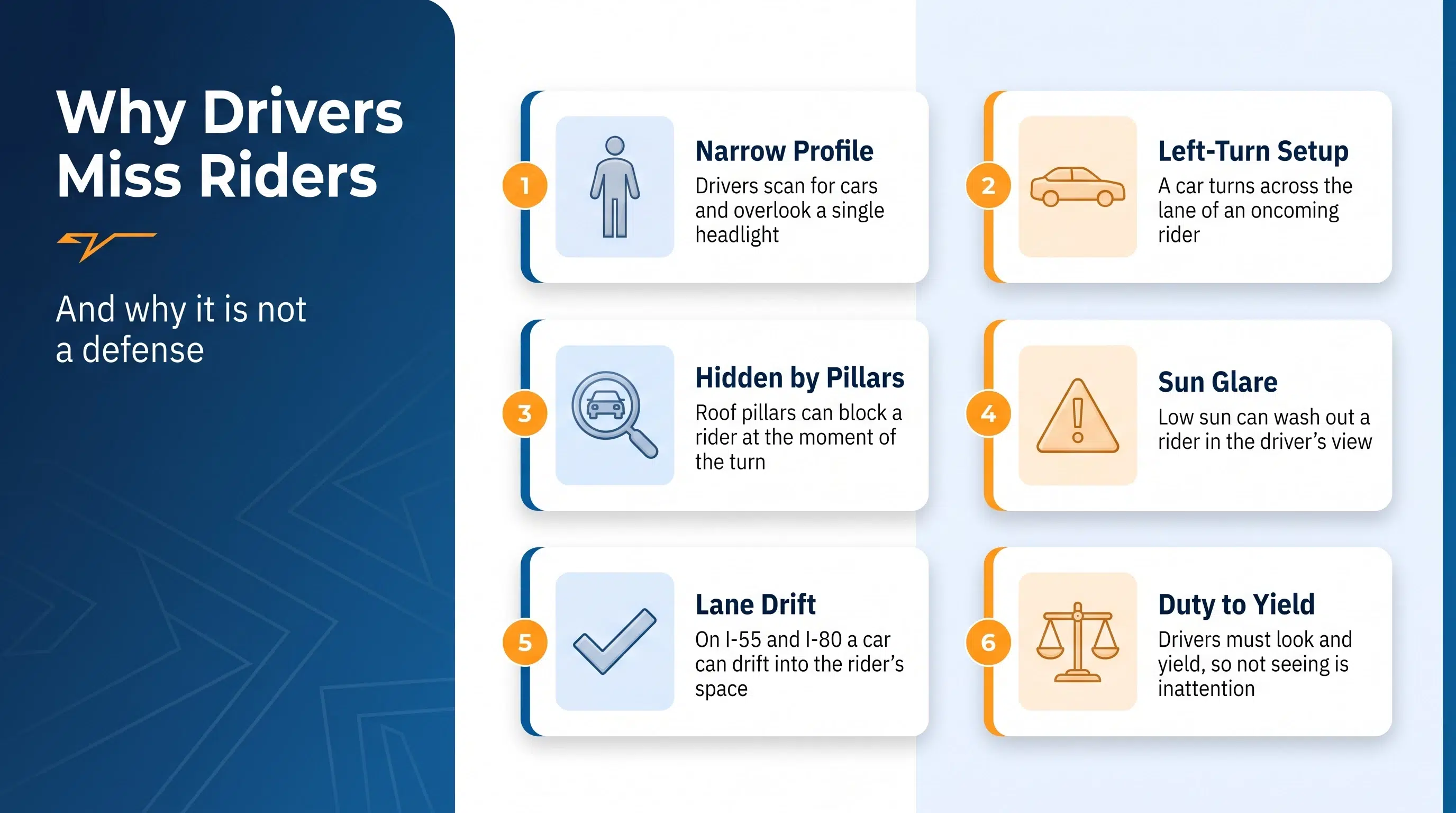
Because a motorcycle presents a narrow profile, and drivers look for cars. Left turns are the classic setup: an oncoming rider is hidden by a pillar, a glare or the driver’s own expectation, and the car turns across the lane. In Joliet, a crossing like Jefferson Street and Larkin Avenue, where traffic is steady and drivers watch for gaps, invites exactly this kind of mistake. Lane changes on I-55 and I-80 produce the same problem at higher speed, when a car drifts into the space a rider is using.
“I did not see him” is an admission of inattention, not a defense. Drivers must look, and they must yield. We build that argument from sight lines, timing and what the driver was doing in the seconds before the impact. If you want to read more about the aftermath, our evidence checklist for motorcycle crashes covers what riders in northern Illinois should save.
Where Joliet riders share the road, and with whom
A map of the area explains a lot. I-80 and I-55 carry the trucks that serve the CenterPoint intermodal center near their interchange, and a rider beside a loaded trailer deals with wind buffeting and a driver who may not see a bike in the mirror. Downtown, the old Route 66 corridor and the Des Plaines River crossings put riders in city traffic with parked cars, pedestrians and cross streets. US 30 past the Louis Joliet Mall has vehicles constantly turning in and out of lots, and out at Route 6 and I-355 in New Lenox, highway speeds meet turning traffic.
Conditions matter in a claim. If a pothole, a broken edge or loose gravel contributed to a wreck, the question becomes who was responsible for that stretch of road. It could be the city, the county or the state, and each has its own notice rules and shorter deadlines than a claim against a private driver. We look into it early, before the notice window closes.
The first days after a crash on a bike
Adrenaline hides pain, and riders are known for shrugging off injuries and riding home. Do not. Have a doctor look at you the same day, because a rider’s head, neck and back take forces that can cause damage with no visible mark. Keep copies of everything you are given at the hospital. Photograph the road surface, the position of the vehicles if they have not moved, and your injuries as they change over the first week.
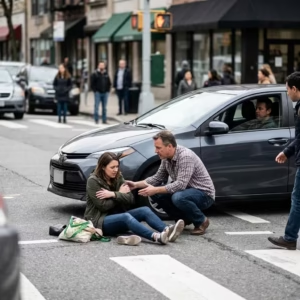
Write down the names and numbers of anyone who stopped. People who pull over for a downed rider often saw the other driver’s move, and they are the witnesses who are easiest to lose.
Is the helmet going to be used against me?
Insurers like to raise it, so it deserves a straight answer. Illinois does not have a law requiring motorcyclists to wear helmets, and it is one of only a few states in that position. The Illinois Vehicle Code does require riders to be protected by glasses, goggles or a transparent shield (625 ILCS 5/11-1404).
That said, an insurer may argue that a rider without a helmet made a head injury worse. How far that argument goes is a fact question, and it does not erase the fact that someone else caused the collision. A driver who turns in front of you is not excused because your head was bare. We prepare for the argument by getting medical opinions on what actually caused the injury.
What injuries do riders bring to the hospital?
Road rash, broken collarbones, wrists, legs and ribs, spinal injuries, and head injuries even when a helmet was worn. People from Joliet are often taken to Saint Joseph Medical Center on Madison Street or to Silver Cross Hospital in New Lenox, a state-designated Level II trauma center. Recovery can run a long time. Skin grafts, surgeries to set bones with hardware, months of physical therapy and sometimes a return trip for revision are normal, and a rider who works with their hands may not return to the same job.
Valuing that takes work. We collect the treatment records, talk with the treating doctors about what the future holds, and document how the injury changed your work and your daily life. Settling before you reach a stable point in recovery usually shortchanges you.
What if the driver ran or has no insurance?
A driver who flees leaves a rider with no one to claim against, and a driver who stays may carry only minimal coverage. Your own motorcycle policy might include uninsured and underinsured motorist coverage, and that is frequently where the money comes from. These policies have notice conditions, so check yours soon and tell us before you give any statement. When the other driver is found, we go after their policy first and treat your coverage as the layer behind it.
We also look past the driver. If the driver was working, an employer may be responsible. If a tire or part failed, a manufacturer may be.
What the bike and the gear can still tell us
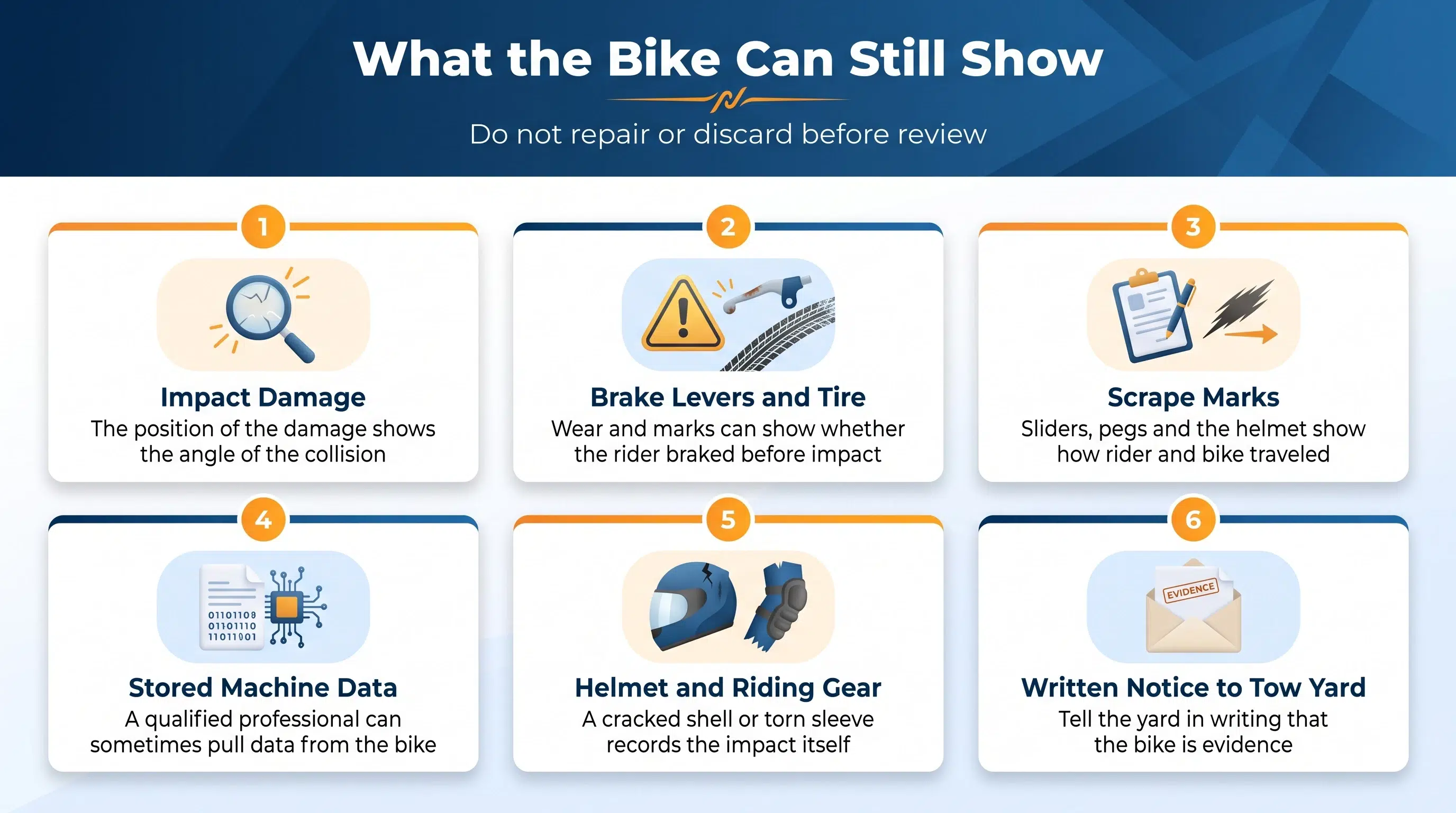
A motorcycle that looks like scrap often holds important evidence in the case. The position of the damage shows the angle of impact. Brake levers and the front tire can show whether the rider braked before the collision. Scrapes on the frame sliders, the pegs and the helmet show how the bike and the rider traveled once they went down. If the machine stores data, a qualified professional can sometimes pull it.
Do not let the bike be fixed, sold for salvage or stripped for parts before it has been examined and photographed. The same goes for the helmet, jacket, gloves and boots. Put them in a dry box and leave them as they are. A cracked shell or a torn sleeve is a record of the impact that no witness can match. Tell the tow yard in writing that the bike is evidence.
Insurance for riders: your own policy matters too
Many riders carry minimum liability and little else. Check your declarations page for uninsured and underinsured motorist coverage and for medical payments coverage. Those parts of a motorcycle policy can pay when the other driver cannot, or when that driver’s limits fall short of your injuries. Policies usually require prompt notice and cooperation, so report the crash even if you expect to pursue someone else. Do not give your own insurer a recorded statement about fault without talking to us first.
If a passenger was on the bike, that person has a claim of their own, possibly under the rider’s policy as well as the other driver’s. We look at both.
If a rider does not survive the crash
When a crash is fatal, the family’s claim takes a different shape. Under the Illinois Wrongful Death Act, the personal representative of the rider’s estate brings the lawsuit for the benefit of the surviving spouse and next of kin, generally within two years of the death (740 ILCS 180/2). The same fault arguments follow, and so does the need to hold on to the bike and the gear. Our wrongful death attorneys can take the lead if your family is facing this.
What can a rider recover?
The categories are medical bills, past and future, lost income and reduced earning ability, repair or replacement of the motorcycle and gear, and the human costs: pain, scarring and the loss of riding itself. In some cases involving especially reckless conduct, punitive damages may be available.
The number you take home is a different figure from the settlement. Beyond pursuing the at-fault insurer for the gross recovery, we negotiate with hospitals, ER groups and medical lien holders at settlement to reduce what you owe out of the award. Illinois also allows prejudgment interest of 6 percent a year on certain personal injury judgments, starting when the suit is filed, with limits tied to settlement offers (735 ILCS 5/2-1303).
Shared fault and the 50 percent line
Illinois uses a modified comparative fault rule. If you are found more than 50 percent responsible for the crash, you cannot recover. At 50 percent or less, your damages are reduced by your share (735 ILCS 5/2-1116). Insurers lean on speed, lane position and following distance because a small shift in percentage can change an entire claim. We answer with data from the bike, witness accounts and the physical scene.
Deadlines and where a Joliet rider files
The general limit for a personal injury lawsuit in Illinois is two years from the injury (735 ILCS 5/13-202). If a government body is a possible defendant, shorter notice rules can apply, so do not wait. Cases from Joliet are normally filed in the Circuit Court of the Twelfth Judicial Circuit in Will County, though a small part of Joliet is in Kendall County, and the proper venue depends on where the crash occurred and where the defendants are found.
If you were hurt on a bike in Will County, contact our team and we will review it with you. Our Chicago area personal injury attorneys also serve Joliet clients.
Which Joliet motorcycle accident cases do we take?
We take Joliet motorcycle cases of every common kind: left-turn crashes at intersections like Jefferson Street and Larkin Avenue, lane-change collisions on I-55 and I-80, crashes with freight trucks near the intermodal yards, and wrecks caused by potholes or failed parts. Our Chicago-area motorcycle accident lawyers handle these claims for riders and passengers from the first call through settlement or trial.
Motorcycle cases are handled through our Chicago personal injury office. When a crash takes a rider’s life, our Chicago-area wrongful death lawyers work with the personal representative of the estate on the family’s claim.