























Why does I-30 matter so much in a Greenville truck case?
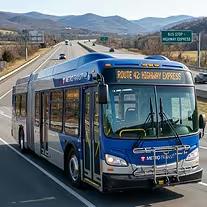
I-30 is the main freight line through Hunt County. It runs west toward Rockwall and Dallas and east through Sulphur Springs toward Texarkana and Arkansas, and the freeway section through Greenville is also the Martin Luther King Jr. Freeway, signed with US-67. Commercial traffic on it includes long-haul carriers that have been driving for hours when they reach town, local delivery fleets, and trucks heading to or from distribution points around the Dallas area.
Joe Ramsey Boulevard carries US-69 and US-380. SH-34 on Wesley Street is a commercial corridor with frequent turns, and SH-224 and the farm roads around Greenville add rural two-lane stretches where a tractor-trailer shares the road with pickups and farm equipment.
Different roads cause different crashes. On I-30, the common ones are rear-end impacts when traffic slows near an interchange and lane-change collisions when a truck’s blind spot is missed. In town, wide right turns and left-turn crashes are common. On the two-lane roads, speed and fatigue show up.
Who is actually liable when a freight truck causes a wreck?
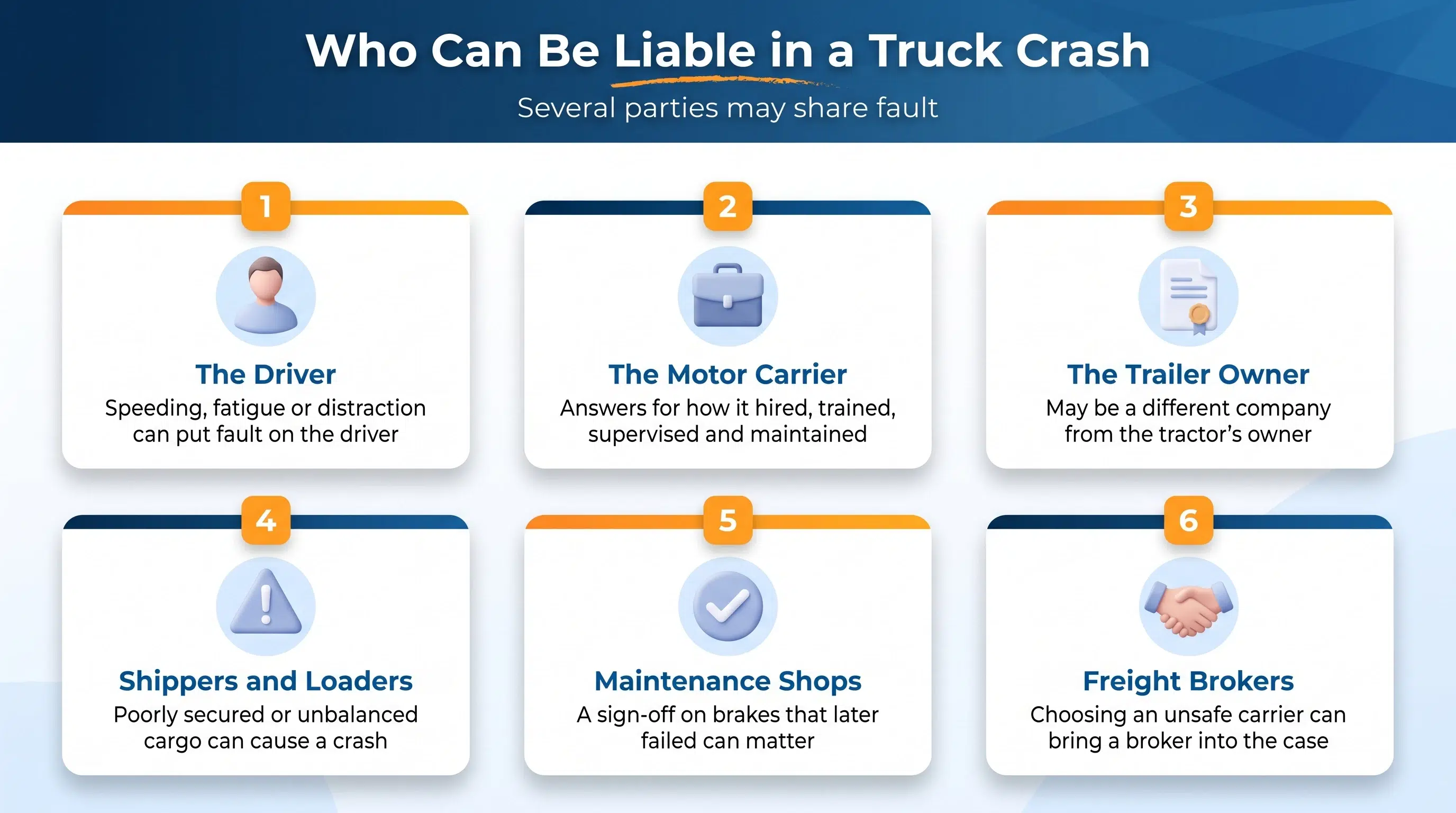
Often more than one party. The driver is the obvious name, but the motor carrier usually answers for the driver’s conduct, and it can also be directly responsible for how it hired, trained and supervised him or her. The trailer may belong to a different company than the tractor. A shipper may have loaded the cargo, a loading contractor may have secured it, and a maintenance shop may have signed off on brakes that failed a week later. A freight broker who picked an unsafe carrier can be part of the case too, and we have explained when a trucking broker can be sued separately.
Each party comes with its own insurer and policy limits. A carrier’s coverage is usually larger than a passenger car’s, but it can also be layered, with a primary policy and excess policies above it. Finding every layer is part of the work.
What do federal trucking rules have to do with your claim?
Commercial drivers are regulated by the Federal Motor Carrier Safety Administration, and the rules supply a ready-made yardstick for what the driver and the carrier were supposed to do. Under the federal hours-of-service rules, a property-carrying driver generally may drive up to 11 hours after ten consecutive hours off duty, within a 14-hour window, and must take a 30-minute break after eight hours of driving. Electronic logging devices record much of that automatically.
A violation does not decide a case on its own, but it can show a pattern. When a driver’s log says he was resting and his phone, fuel receipts or dispatch messages say he was not, that is evidence of falsified records, and it can support a stronger claim against the carrier. Brake adjustment, tire condition, cargo securement and driver qualification files are checked the same way.
What evidence gets lost, and how quickly?
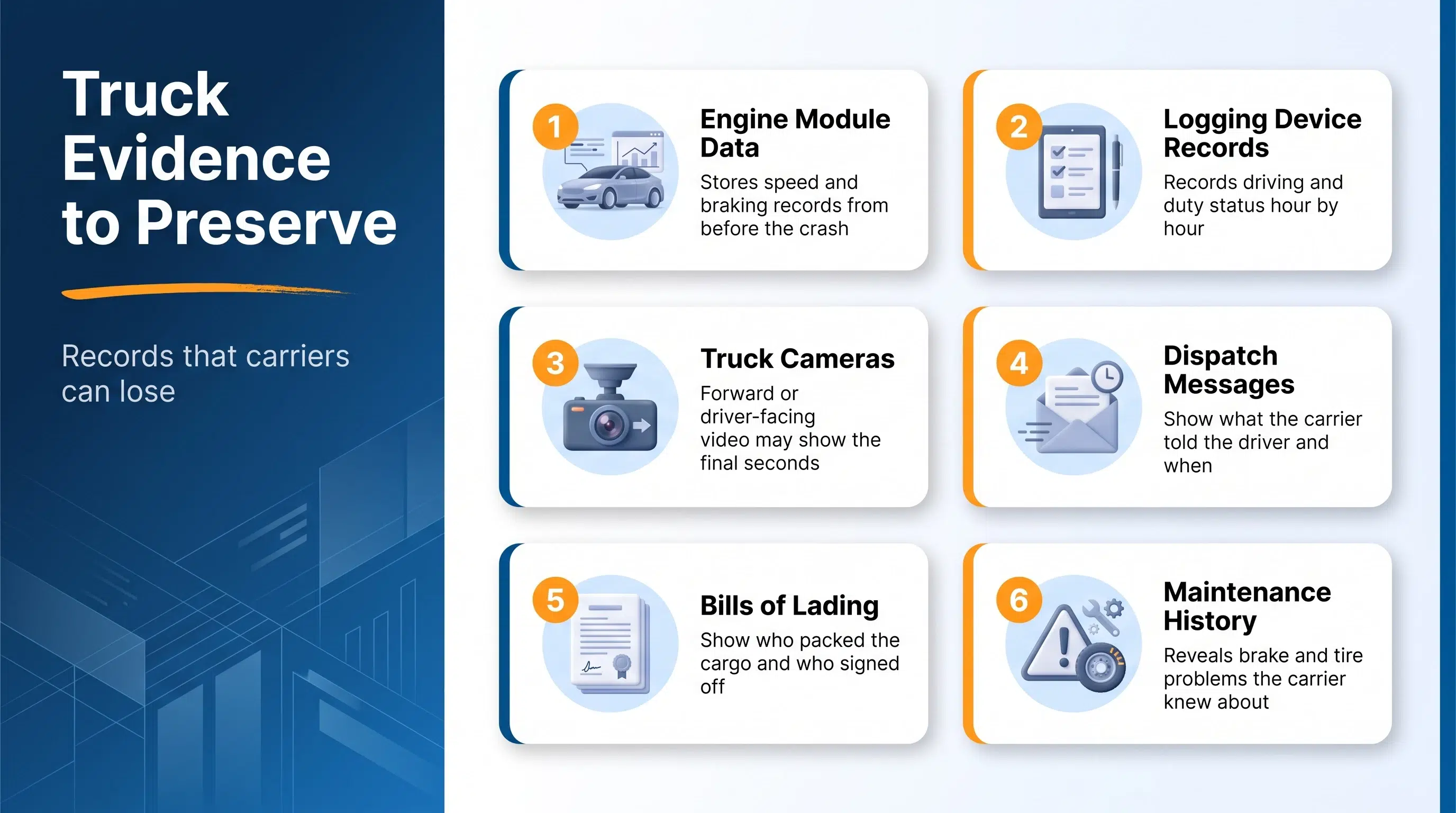
More than people expect. The tractor’s engine control module stores speed and braking data, the ELD stores duty-status records, and many trucks carry forward-facing or driver-facing cameras. Dispatch messages, bills of lading, fuel and toll receipts and the carrier’s maintenance history sit in the carrier’s own systems. The truck may be repaired or sent back into service within days.
A preservation letter goes to the carrier, its insurer and, where relevant, the shipper and the repair shop. Nearby businesses on Wesley Street or Joe Ramsey Boulevard may have footage, and those recordings often cycle over within weeks.
What injuries do truck crashes cause?
The weight difference between a loaded tractor-trailer and a passenger vehicle explains most of it. Traumatic brain injuries, spinal cord injuries, fractures that need surgery and internal bleeding are far more common than in an ordinary fender-bender, and so is permanent impairment. Underride crashes, where a car slides beneath a trailer, can be catastrophic.
Because the injuries are long-term, valuation depends on medical testimony about future care. Life-care planning, vocational assessments and economic analysis can all be used to put a number on a lifetime of needs, which is why a settlement offered in the first few weeks usually falls short.
How is a truck claim valued, and what can it recover?
Past and future medical expenses, lost wages and reduced earning capacity, and non-economic damages for pain, impairment and mental anguish are the main categories. Property damage to your vehicle is part of the claim as well. When a carrier’s conduct was grossly negligent, Texas law allows exemplary damages in some cases, though those carry their own rules.
What you recover and what you keep are different numbers. Treatment for a serious truck injury runs up large hospital and insurer reimbursement claims, and part of our work at settlement is bargaining those down so a larger share of the money reaches you.
How does shared fault affect a truck case?
A carrier’s lawyers will look for anything to move blame onto you: a lane change, a sudden stop, a missing seatbelt. Texas uses proportionate responsibility under Chapter 33 of the Civil Practice and Remedies Code. Your recovery is reduced by your percentage, and if you are found more than 50 percent responsible you recover nothing. Black box data, camera footage and a reconstruction usually answer those arguments.
How long do you have to file?
Two years from the date of the crash for most Texas personal injury claims, under section 16.003 of the Civil Practice and Remedies Code. Truck cases need more time to investigate than other claims, so the practical deadline for starting the work is much sooner. If a truck crash killed a family member, the same two-year period generally applies to a wrongful death claim.
If you are ready to talk, reach our Dallas personal injury team or schedule a free consultation.
What does a carrier’s safety record show?
A carrier’s history is part of the case. Federal safety data for motor carriers is published by the FMCSA, including inspection results and crash records tied to a company’s DOT number. A pattern of out-of-service violations, brake problems or driver fatigue citations before the crash helps show that this was not a one-time failure. It can also show that the company knew about a hazard and did not fix it.
We pair the public record with what we obtain in discovery: driver qualification files, drug and alcohol test results, training records, the company’s own accident review and its discipline of drivers. Hiring a driver with a poor record, or leaving a worn truck on the road, is the carrier’s decision, and that is where direct claims against the company come from.
What happens when cargo is part of the problem?
A load that is poorly secured or unevenly balanced can shift in a curve and tip a trailer. Spilled cargo can strike another car or block a lane, producing a second crash behind the first. Federal rules set standards for securing cargo, and the people who loaded the trailer, not only the driver, may be responsible for following them.
The bill of lading and the loading records say who packed what and who signed off. Those documents live with the shipper, the loader and the carrier, so each needs its own preservation letter.
What should you do at the scene of a truck crash?
Call 911 and get medical help first. If you can, photograph the truck from several angles, the trailer, the company name, the DOT number and any license plates, and the road, including skid marks and debris. Get the driver’s name and the carrier’s insurance information, and ask witnesses for their contact details.
Do not discuss fault with the driver or with anyone who arrives from the carrier. Representatives from trucking companies often reach a scene quickly, and they are collecting information for their side. Tell the officer what happened and nothing more, then get checked by a doctor even if you walk away feeling fine.
Do smaller commercial vehicles count?
They do, and they are more common on Greenville streets than a big rig. Box trucks, delivery vans, dump trucks, flatbeds and pickups pulling equipment trailers can all injure people badly, and a business that owns them is responsible for how they are driven and maintained. Federal safety rules reach many of these vehicles once they cross certain weight thresholds or carry certain loads, and others fall under Texas rules and the company’s own policies.
The same questions apply: who employed the driver, who owned and maintained the vehicle, what insurance covers the business, and what records exist. The answers often lead to a commercial policy that is considerably larger than a driver’s personal auto coverage.
How is a Greenville truck case different from one in Dallas?
The law and the regulations are the same. The setting is not. A case filed in Hunt County is heard by Hunt County jurors, and the carrier’s lawyers, who may be from Dallas or out of state, have to work in that courthouse. The roads are different too. A crash on a two-lane farm road, with no shoulder and a long response time for emergency crews, raises questions that a crash in a heavily lit part of the metroplex does not.
We handle cases in both places, which means a Greenville family gets a lawyer who knows how to build the record against a large carrier and how to present it to a local jury.
Which Greenville truck accident cases do we take?
We take crashes involving 18-wheelers, box trucks, delivery vans, dump trucks and other commercial vehicles, including rear-end, lane-change, wide-turn and cargo-related crashes on I-30, US-69, US-380 and SH-34. These cases are handled by our Dallas-area truck accident lawyers, who send preservation demands for the truck data, driver logs and maintenance records early.
When a truck crash takes a life, the family claim is handled by our Dallas-area wrongful death lawyers, and for any other injury, our Dallas personal injury office can review the claim with you.