- What should you do in the first hour after an accident in Los Angeles?
- How do you get medical care in Los Angeles and document your injuries?
- How do you report an accident to LAPD or CHP, and when is it required?
- What is the California DMV SR-1 form and when must you file it?
- What evidence should you collect in the first week?
- What is the California insurance claim timeline and how should you talk to insurers?
- How does comparative negligence in California affect your claim value?
- What are the key California deadlines and statutes of limitations for personal injury?
- How do you keep a pain journal and prove lost wages in Los Angeles?
- What if your accident involved a car, motorcycle, truck, or a slip and fall?
- When should you involve a lawyer in Los Angeles and what can they do in your first week?
- Why choose GoSuits for a technology driven Los Angeles injury case?
- References and resources
What should you do in the first hour after an accident in Los Angeles?
Your first hour sets the tone for your entire claim. Safety and health come first. Call 911 for medical emergencies and move to a safe location if you can do so without risking further harm. Turn on hazard lights and use cones or flares if available.
- Call for medical help if anyone is hurt. Even if you feel okay, adrenaline can mask injuries like concussion and internal trauma. Early evaluation ties injuries to the incident, which matters for insurance and liability.
- Call the police to document crashes with injury, death, or significant damage. California law requires a written report to police or CHP after collisions with injury or death [6].
- Exchange information with the other driver or property owner. Get names, contact details, license plates, driver’s license numbers, and insurance policy information. Photograph both sides of insurance cards if permitted.
- Identify witnesses. Ask for names and phone numbers. Independent witnesses can be crucial when fault is disputed.
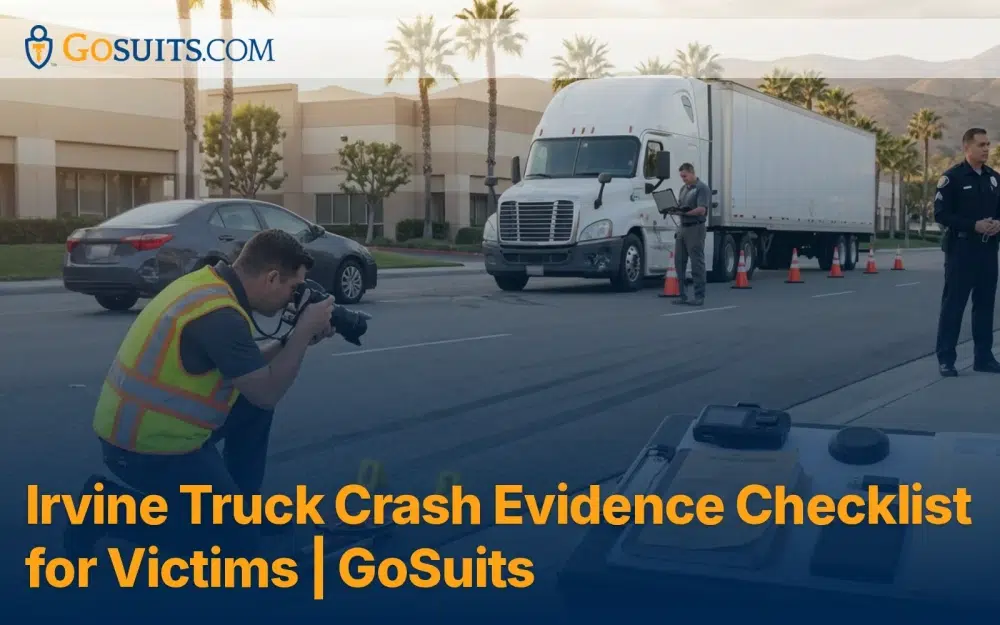
- Document the scene with photos and short videos. Capture vehicle positions, street signs, lane markings, traffic signals, skid marks, debris, weather, lighting, and visible injuries.
In the moments after a crash, do not admit fault. California uses comparative negligence, which reduces compensation based on each person’s share of responsibility. Statements made in the moment can be misinterpreted when insurers later evaluate liability [1].
How do you get medical care in Los Angeles and document your injuries?
Los Angeles has multiple trauma centers and urgent care facilities. If you have symptoms like headache, confusion, dizziness, neck pain, numbness, or chest pain, seek care immediately. Some injuries appear hours or days later. The Centers for Disease Control and Prevention lists common concussion symptoms like headache, nausea, and confusion [11].
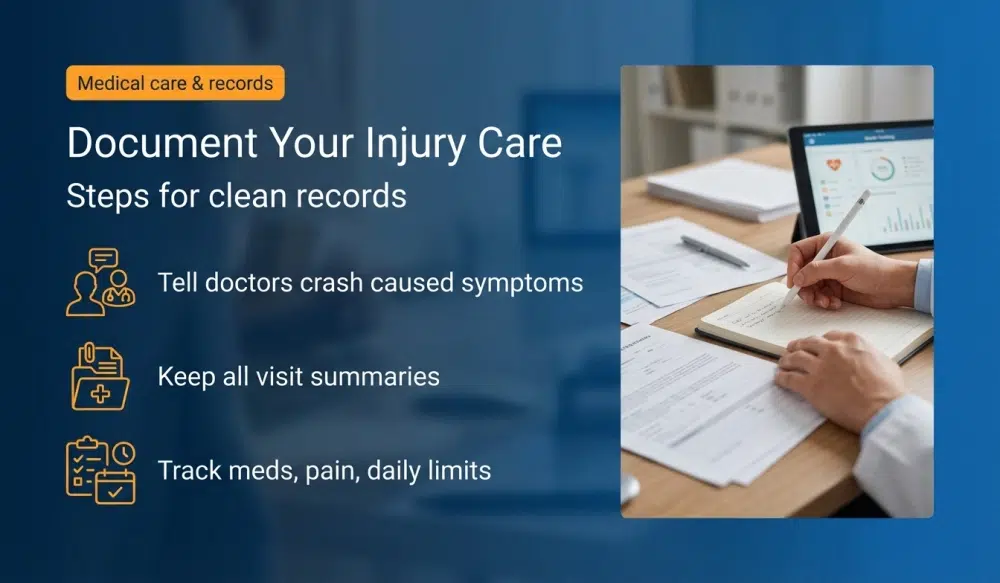
- Emergency room or urgent care. Get triaged and examined. Keep all discharge papers and after-visit summaries.
- Primary care or specialist follow up. Schedule follow up within 24 to 72 hours to reassess symptoms and plan imaging, therapy, or referrals.
- Diagnostic imaging and therapy. If prescribed, complete imaging and begin physical therapy to support recovery and show ongoing treatment.
- Medication list. Maintain a written list of all medications, dosages, and side effects.
- Link symptoms to the incident. Clearly tell providers your symptoms started after the accident. Accurate histories connect causation and damages.
Start a pain and symptom journal right away. Note daily pain levels, sleep changes, mobility limits, missed work hours, and activities you can no longer do. This living record helps quantify non economic harms and supports consistent reports to insurers and treating providers.
How do you report an accident to LAPD or CHP, and when is it required?
California Vehicle Code 20008 requires a written report to local police or CHP within 24 hours if anyone is injured or killed [6]. If officers respond and take a collision report, that typically satisfies the driver’s reporting obligation. If officers do not respond, you may file a report at a local station or CHP office.
- Where to report. For collisions on surface streets in Los Angeles, LAPD may handle reports. For state highways, the CHP will usually take the report. If no officer responds, you can request guidance from the nearest CHP office on filing a counter report.
- Why it matters. Official reports preserve key facts like the date, time, location, parties, vehicles, and initial statements. They can include diagrams, citations, and sometimes preliminary fault assessments.
Keep a copy of your report number. You can typically order a certified copy after processing, which may take several days.
What is the California DMV SR-1 form and when must you file it?
California requires drivers to file a DMV SR 1 Report of Traffic Accident within 10 days when there is injury, death, or property damage of one thousand dollars or more [7]. This requirement applies regardless of who is at fault and is separate from any police report. The duty to report is also reflected in Vehicle Code section 16000 [8].
- How to file. You can file online or by mail as directed by the DMV. You will need insurance information and basic crash details.
- Why file. Failure to submit the SR 1 can lead to license consequences. Filing also establishes your compliance with California’s financial responsibility laws.
- Insurance proof. Make sure you have at least the minimum required liability coverage under Vehicle Code section 16056, which from 2025 onward sets higher minimums than in prior years [9].

What evidence should you collect in the first week?
Evidence can disappear quickly. Take time during your first week to gather and preserve the following.
- Photos and video. Return to the scene if safe to do so. Photograph road markings, signage, lighting, visibility, and any surveillance cameras that may have captured the incident.
- Medical records. Request visit summaries, imaging reports, and referrals. Keep receipts for out of pocket costs like prescriptions, braces, or rides to appointments.
- Employment records. Save pay stubs, W 2s, and employer letters confirming dates and hours missed due to injury.
- Vehicle and property records. Obtain repair estimates, total loss valuations, and receipts for temporary transportation.
- Witness statements. If you collected contact info, follow up promptly. Ask witnesses to write down what they saw while memories are fresh.
- Preservation letters. In cases involving businesses or government entities, a preservation letter can ask them to retain relevant video and logs. Timeliness is critical because many systems overwrite recordings within days.
If the other party’s insurer contacts you, be polite but cautious. Provide basic facts needed to open a claim but avoid detailed recorded statements before you fully understand your injuries and the legal issues at play. California’s liability framework allows partial fault to reduce compensation rather than bar it entirely [1], so careful factual development matters.
What is the California insurance claim timeline and how should you talk to insurers?
California regulations require insurers to handle claims promptly and fairly. Among other deadlines, insurers must acknowledge communications, investigate diligently, and accept or deny claims within specified periods after receiving proofs of claim [13].
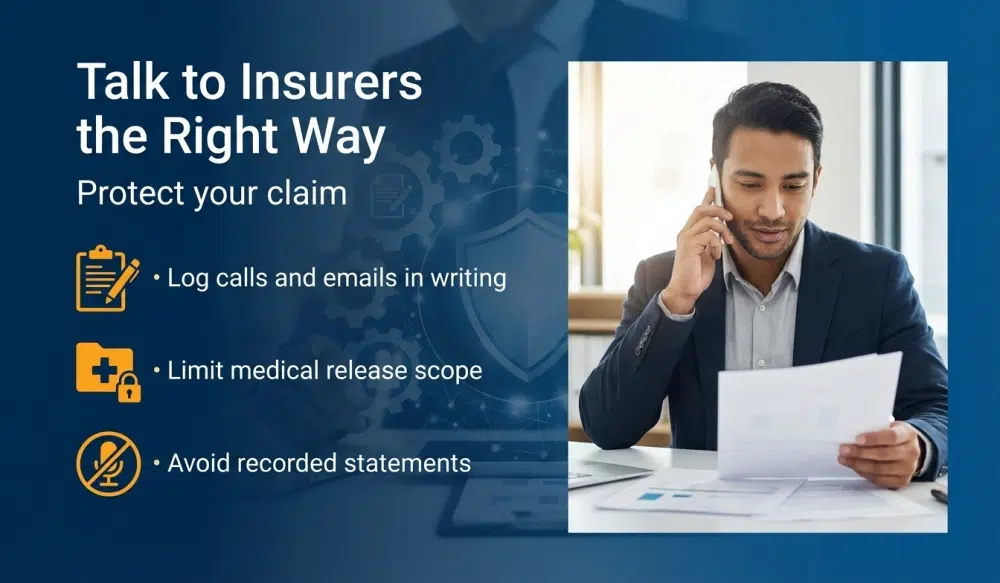
- Opening the claim. Provide claim numbers, adjuster contact info, and your preferred communication method in writing. Keep a log of all calls and emails.
- Medical authorizations. Insurers often ask for broad medical releases. Narrowly tailor authorizations to treatment related to the incident and limited time frames to protect your privacy.
- Property damage. You can coordinate repairs through your insurer or the other driver’s insurer. Keep estimates, photos, and receipts for rental cars and towing.
- Recorded statements. You are not required to give a recorded statement to the other party’s insurer during the first week. Consider waiting until you have documented injuries and consulted counsel.
- Liability and comparative fault. Adjusters may bring up partial fault early. Because California apportions recovery by fault percentages [1], do not speculate or agree to percentages during initial calls.
Many claims resolve through negotiation. If settlement is appropriate, a California insurer’s acceptance must be timely and payments should follow within the periods set by regulation [13].
How does comparative negligence in California affect your claim value?
California follows pure comparative negligence, adopted by the California Supreme Court in 1975. If you are partly at fault, your damages are reduced by your percentage of responsibility instead of being completely barred [1]. For example, if you are awarded 100,000 dollars but found 20 percent at fault, the net recovery would be 80,000 dollars.
This framework applies broadly to negligence claims. It interacts with doctrines like primary assumption of risk, which can limit duty in certain recreational or sport contexts as explained by the court in later decisions [2]. For everyday collisions, pedestrian incidents, and premises liability, comparative fault typically governs how liability is shared.
Comparative negligence rules align with the general concept described in widely used legal references: each party bears their portion of responsibility and recovery is adjusted accordingly [12].
Can being partially at fault still allow recovery for injuries in Los Angeles?
Yes. Under pure comparative negligence, even a plaintiff who is mostly at fault may still recover the percentage of damages attributable to the other party’s fault [1]. The practical effect is that investigation, evidence, and careful documentation all influence fault allocation and the final outcome.
What are the key California deadlines and statutes of limitations for personal injury?
- General personal injury. Two years from the date of injury to file suit under Code of Civil Procedure section 335.1 [3].
- Property damage. Three years for property damage claims under Code of Civil Procedure section 338 subdivision b [5].
- Claims against public entities. If a government entity is involved, you typically must file a government claim within six months under Government Code section 911.2 before you may sue [4].
- Police reporting. Within 24 hours for collisions with injury or death under Vehicle Code section 20008, separate from the DMV SR 1 [6].
- DMV reporting. Within 10 days for collisions with injury, death, or qualifying property damage via the SR 1 form [7].
Do not miss these deadlines. Timely action preserves evidence and legal rights. Special rules may extend or shorten time limits for minors, discovery of latent injuries, or when a defendant is out of state.
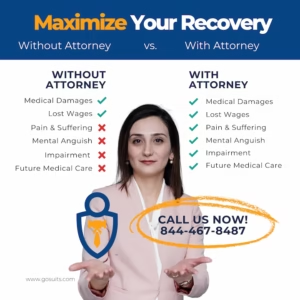
How do you keep a pain journal and prove lost wages in Los Angeles?
Thoughtful documentation helps translate your lived experience into legally recognized damages.
- Pain and symptom journal. Each day, briefly record pain levels, specific movements that hurt, sleep disruptions, and activities missed such as family events or exercise. Note work impacts like shortened shifts or task modifications.
- Functional limits. Describe how injuries affect daily living and self care. These details help explain changes to quality of life for noneconomic damages.
- Lost wages. Save pay stubs, attendance records, and timesheets. Ask your employer for a letter that lists your title, hourly rate or salary, average hours, dates missed, and reasons tied to your injury.
- Self employed income. Gather invoices, bank statements, and prior year tax returns to show income trends and specific lost contracts or gigs.
- Medical work restrictions. Request doctor’s notes detailing light duty limitations, lifting restrictions, or time off. These medical opinions connect wage loss to your injuries.
What if your accident involved a car, motorcycle, truck, or a slip and fall?
What should you do after a car crash in Los Angeles?
Start by getting medical care and reporting the collision as required. File the DMV SR 1 within 10 days if thresholds are met [7], and make the written report to LAPD or CHP within 24 hours if anyone is injured [6]. California recorded thousands of traffic fatalities statewide in recent years, underscoring the severity of roadway risks [10]. Early documentation, photographs, and careful communication with insurers are essential.
If you need guidance, car accident lawyers can coordinate investigation, preserve vehicle data, and develop liability analyses. In complex collisions, forensic mapping and event data recorder downloads may be appropriate.
When you are ready to explore legal options, Los Angeles car accident lawyers can explain which deadlines and local practices matter for your neighborhood and venue, including where to file and how to obtain traffic camera footage.
What steps help motorcyclists in the first week?
- Gear and damage photos. Document helmet abrasions, torn jackets, and boot damage. They are powerful indicators of impact forces.
- Roadway hazards. Photograph potholes, gravel, lane irregularities, or construction zones. If a public entity may be involved, note the accelerated claim deadline [4].
- Medical follow up. Motorcycle injuries can evolve. Document numbness, tingling, or vision changes and return if symptoms progress [11].
What should you do after a truck collision in Los Angeles?
- Identify carriers. Photograph USDOT numbers and trailer markings to locate the motor carrier and potential insurance.
- Preserve evidence. Early letters can seek preservation of electronic logging device data, maintenance records, and driver hours.
- Comparative negligence. Multi vehicle crashes often involve shared fault. California’s pure comparative negligence will apportion responsibility [1].
What if you were hurt in a slip and fall on unsafe property?
- Incident report. Ask the business to complete an incident report and request a copy or confirmation number.
- Condition photos. Capture the hazard immediately, including wet floors, poor lighting, broken handrails, or uneven surfaces.
- Preservation. Request that any surveillance footage be preserved. Many systems automatically overwrite video quickly.
When should you involve a lawyer in Los Angeles and what can they do in your first week?
In the first week, a lawyer can protect your claim while you focus on medical care. They can organize photographs, witness interviews, scene inspections, and public records requests. They can communicate with insurers under California’s Fair Claims Settlement Practices rules, manage medical authorizations, and track deadlines including DMV filings and government claims as applicable [13]. They can explain how comparative negligence, liability limits, and potential defenses may apply to your facts [1] [2].
Plaintiffs and defendants both benefit from early clarity. Plaintiffs benefit from preserved evidence and timely care. Defendants and insurers benefit from complete documentation and fair evaluation timelines set by California regulations [13]. Most importantly, your health and recovery remain the priority during this first week.
For many clients, personal injury lawyers help coordinate benefits, bills, and subrogation while assembling the liability and damages picture. In serious cases, structured care plans and expert opinions may be needed to quantify long term impacts.
Los Angeles personal injury lawyers can also advise you about special rules like California Civil Code section 3333.4, which limits noneconomic damages for certain uninsured drivers after motor vehicle accidents, while clarifying exceptions and options under your circumstances [15].
What do statistics say about road safety and why does it matter to your claim?
California traffic safety data shows persistently high numbers of fatalities and serious injuries, including pedestrian and cyclist harms. The Office of Traffic Safety publishes annual statewide figures and trends that can contextualize risk and roadway design issues during liability analyses [10]. These data points sometimes support arguments about visibility, speed management, and the foreseeability of harms at specific corridors in Los Angeles.
Why choose GoSuits for a technology driven Los Angeles injury case?
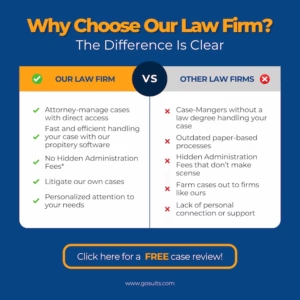
We handle personal injury matters across California with a focus on Los Angeles, CA. A free consultation helps you understand timelines, medical documentation, SR 1 reporting, comparative negligence, and how evidence fits together. Our team uses an exclusive proprietary software platform built to accelerate evidence collection, medical record retrieval, and claim analytics so your case moves faster without sacrificing precision. Although our technology expedites the process, every client has a designated attorney from start to finish. We do not use case managers, and clients have direct, unfettered access to their lawyer.
We bring 30 years of combined experience in trials, negotiations, and complex litigation. Trial experience drives better preparation and more credible negotiation posture. Our recent matters reflect substantial results in motor vehicle collisions, premises liability incidents, trucking cases, and catastrophic injury claims. See highlights from prior cases, meet our attorneys, learn more about us, and review our practice areas.
If you prefer a streamlined, transparent process powered by secure digital tools and led by an attorney who is accountable to you, we are ready to help during your first week and beyond.
References and resources
- Li v. Yellow Cab Co., 13 Cal. 3d 804 California Supreme Court – CourtListener
- Knight v. Jewett, 3 Cal. 4th 296 California Supreme Court – CourtListener
- Code of Civil Procedure section 335.1 two year limitation – California Legislative Information
- Government Code section 911.2 six month claim requirement – California Legislative Information
- Code of Civil Procedure section 338 property damage three year limitation – California Legislative Information
- Vehicle Code section 20008 collision reporting to police or CHP – California Legislative Information
- Vehicle insurance and accidents including SR 1 reporting – California DMV
- Vehicle Code section 16000 report to DMV after qualifying collisions – California Legislative Information
- Vehicle Code section 16056 financial responsibility minimums – California Legislative Information
- Traffic Safety Facts statewide data – California Office of Traffic Safety
- Concussion signs and symptoms – Centers for Disease Control and Prevention
- Comparative negligence overview – Legal Information Institute Cornell Law
- Fair Claims Settlement Practices Regulations Title 10 CCR – California Department of Insurance
- Traffic accident reporting information – California Highway Patrol
- Civil Code section 3333.4 limitations for certain uninsured motor vehicle plaintiffs – California Legislative Information