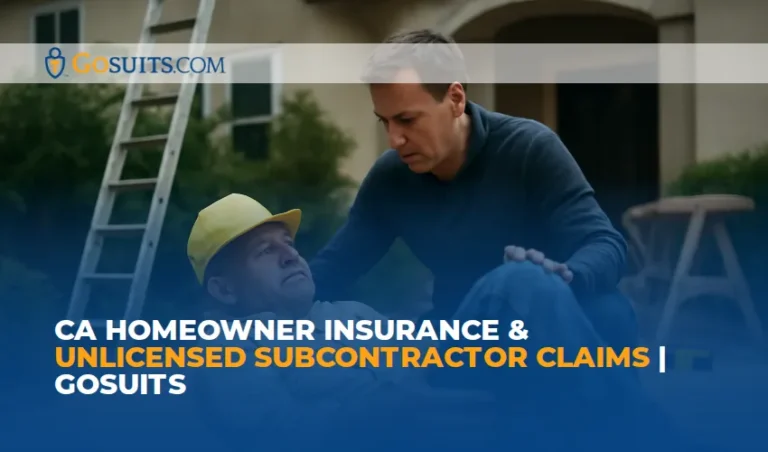
- What is the issue in California when a homeowner hires an unlicensed subcontractor and someone is injured?
- What does California homeowner insurance typically cover for subcontractor injuries?
- What is a worker’s compensation rider for homeowners in California and how does it affect claims?
- Can a homeowner be liable when an unlicensed subcontractor is injured on their property?
- How do you file a claim after injury by an unlicensed subcontractor in California?
- What should a plaintiff consider when injured by an unlicensed subcontractor?
- What defenses are commonly raised by homeowners and subcontractors?
- How do federal law, California, Texas, and Illinois compare on homeowner liability for hired subcontractors?
- What are the key statutes and cases that shape this area of law?
- How can GoSuits help you if you were injured by an unlicensed subcontractor?
- References and resources
What is the issue in California when a homeowner hires an unlicensed subcontractor and someone is injured?
You or a loved one can be hurt when someone working for a homeowner falls or is otherwise injured while doing home repairs or improvements. The legal issues center on whether the injured worker is deemed an employee of the homeowner under California law, whether homeowner liability coverage applies, and whether workers compensation law or civil tort law controls recovery. California law has a specific statutory mechanism that often treats persons performing work that requires a contractor license as employees for certain legal purposes. The California Supreme Court explained the statutory presumption as follows: ‘There is a rebuttable presumption affecting the burden of proof that a worker performing services for which a license is required … is an employee rather than an independent contractor.’ Miguel Fernandez v. Lawson, Supreme Court of California, 2003, p. 423; [1].
What does California homeowner insurance typically cover for subcontractor injuries?
Does homeowner insurance cover injuries to subcontractors on a remodel or repair project?
Homeowner liability insurance is designed to protect owners for many third party injury claims that occur on the insured premises. Standard policies vary, and many exclude coverage for business or commercial activities carried out by the homeowner. Whether a claim for a subcontractor injury is covered depends on policy language, the nature of the work, and whether the injured person is an employee or an independent contractor for policy purposes. State rules and insurer interpretations determine what is included under a homeowner policy. See California Department of Insurance resources for typical homeowner policy coverage elements [7].
How does the contractor license status affect coverage?
When the person performing the work is an unlicensed contractor doing work that requires a contractor license under California Business and Professions Code, the legal status for liability purposes can change. California courts and statutes treat license requirements and the statutory presumption in Labor Code section 2750.5 as central to deciding whether the worker is an employee for claims and therefore whether the homeowner may face direct tort liability. See Labor Code section 2750.5 for the statutory presumption [2] and Business and Professions Code section 7026.1 for licensing thresholds [3].
What is a worker’s compensation rider for homeowners in California and how does it affect claims?
What is a worker’s compensation rider for homeowner policies?
Some homeowner insurance carriers offer an optional worker’s compensation endorsement or rider that can extend limited workers compensation style coverage to persons working for the homeowner on a noncommercial job. The rider varies by insurer and by policy year. It can provide medical and wage replacement benefits to qualifying workers and can affect whether a civil lawsuit is viable. Check your policy and the insurer endorsements to see whether such a rider was in effect at the time of injury. For general regulatory context see California Department of Insurance materials and policy guides [7].
How does a rider affect recovery options for the injured worker?
If a rider applies and provides workers compensation benefits, it may limit or preclude a civil tort action against the homeowner for the same injury. In contrast, when no workers compensation coverage is available, the injured person may pursue a negligence cause of action against the homeowner. Whether the injured person qualifies for workers compensation benefits can turn on hours worked, wage thresholds, and the statutory classification rules in Labor Code sections and WCAB precedents. See the Workers’ Compensation Appeals Board materials for administrative rules and coverage questions [10].

Can a homeowner be liable when an unlicensed subcontractor is injured on their property?

When is a homeowner treated as an employer under California law?
California law contains a statutory presumption that affects classification: when a person performs work that requires a contractor license, that person is presumed to be an employee rather than an independent contractor unless the presumption is rebutted. That statutory rule is located in Labor Code section 2750.5 and has been applied in multiple contexts. The California Supreme Court discussed the presumption and its effects in Fernandez v. Lawson and related cases, and courts have examined whether homeowners fall within regulatory schemes such as Cal OSHA depending on the activity at issue [1] [2].
Does being unlicensed automatically make the homeowner liable?
Not automatically. The presumption under Labor Code section 2750.5 changes the burden of proof, but courts still consider factual circumstances. The presence of a valid contractor license is one factor among others, and courts evaluate the relationship, the nature of the work, and any special policy exclusions or riders. If the presumption applies and is not rebutted, a homeowner may be treated as the statutory employer for certain liability frameworks, which can expose the homeowner to civil liability if workers compensation is not available to the injured person [2].
How do you file a claim after injury by an unlicensed subcontractor in California?
What steps should an injured worker take immediately?
- Get prompt medical care and make sure medical visits are documented.
- Preserve evidence such as photos of the scene, witness names and contact information, and any written estimates or agreements for the work.
- Report the incident to the homeowner and to any insurer or employer if applicable, and note the date and method of reporting.
- Do not sign documents that release claims until you understand legal consequences. You should talk to a lawyer before signing a release.
Documentation is critical. Statutes of limitations and delay can hurt a claim. You should seek legal help early because classification issues and insurance coverage questions require careful factual and legal analysis.

What claims might be available to the injured worker?
Potential civil claims include negligence against the homeowner, negligence against a contractor or subcontractor, and statutory or regulatory claims where violations of safety standards are relevant. If workers compensation coverage applies through the homeowner policy rider or a different employer, administration of those benefits follows workers compensation procedures instead of a civil lawsuit. The path forward depends on whether workers compensation coverage is available, whether the homeowner is covered by a homeowner liability policy, and whether the injured worker is treated as an employee or an independent contractor under the applicable statutes and case law [2] [10].
What should a plaintiff consider when injured by an unlicensed subcontractor?
What evidence helps prove liability for a plaintiff?
From a plaintiff viewpoint you want to build proof of the homeowner role, the circumstances of hiring, and the work conditions. Useful evidence includes contracts or invoices, messages or texts showing arrangements, witness statements, photos of the job site and safety conditions, the subcontractor license status or lack of it, and medical records establishing injury. The statutory presumption in Labor Code section 2750.5 may help classification, but each case needs fact specific documentation [2].
Why is legal representation important for plaintiffs?
Classification issues, insurance coverage disputes, and insurance company defenses are often complex. A lawyer experienced in personal injury and construction related claims can help you gather the right documents, interpret policy language, and preserve your claim while avoiding procedural pitfalls. Do not try to handle complicated coverage fights without counsel. Prompt legal involvement increases the chance that your claim is handled properly and without avoidable delays.
What defenses are commonly raised by homeowners and subcontractors?
What defenses might a homeowner raise?
Homeowners may assert that the injured person was an independent contractor, not an employee; that the homeowner hired a licensed contractor and reasonably relied on license representations; that the homeowner did not direct or control the work; or that an insurance policy exclusion applies. Homeowner insurers may also argue that the incident falls under a business activity exclusion or argue policy defenses such as late notice or misrepresentation. These factual and contractual defenses are frequently litigated in civil and coverage cases [4] [7].
What defenses might a subcontractor or their insurer raise?
Subcontractors may contest coverage, argue contributory negligence or comparative fault, or claim that any injuries are work related and should be handled by workers compensation. Where a subcontractor is unlicensed, the subcontractor or its insurer may try to limit liability by pointing to the specific statutory and policy frameworks that may narrow a homeowner responsibility. Each defense requires careful factual and legal review.
How do federal law, California, Texas, and Illinois compare on homeowner liability for hired subcontractors?
What federal law controls?
Federal law comes into play primarily through federal occupational safety rules and federal state plan oversight. The U.S. Department of Labor and OSHA provide a federal backdrop and approve state plans. Federal OSHA generally does not apply to workplace safety in states that operate approved state OSHA plans, but federal standards inform state regulatory design. See the U.S. Department of Labor state plan materials for the interplay between federal and state rules [8].
How does California approach these cases?
California has a detailed statutory and regulatory framework relevant to construction, contractor licensing, and safety. Labor Code section 2750.5 creates a rebuttable presumption about classification when a license is required [2]. The California Contractors State Licensing Board administers licensing rules for contractors and enforcement of licensing violations [4]. Cal OSHA regulations, and California Code of Regulations title 8 sections that govern tree work and other hazardous activities, shape duty and safety obligations on projects at homes [6]. The California Supreme Court and appellate courts have repeatedly interpreted how these rules apply to homeowners and hired workers, see Fernandez v. Lawson [1] and the State Compensation jurisprudence discussed in published opinions [9].
How do Texas and Illinois compare in general terms?
Texas and Illinois follow their own state statutes and case law for contractor licensing, workers compensation, and premises liability. Each state addresses independent contractor classification and occupational safety differently. In many jurisdictions a homeowner who hires help faces fewer automatic employer obligations than a commercial employer, but licensing and safety rules can still create liability exposure. Because rules vary, consult state specific statutes and regulatory authorities. For cross jurisdictional context use state labor and licensing department resources and state court decisions when applicable.
What are the key statutes and cases that shape this area of law?
What statutory authorities should I read first?
- Labor Code section 2750.5 for the presumption on classification
- Business and Professions Code licensing sections that specify when a contractor license is required
- California Code of Regulations title 8 safety provisions for regulated tree work and other hazardous tasks
These materials form the starting point for evaluating whether a homeowner may be deemed an employer under California law and how safety regulations apply [2] [3] [6].
What case law is most directly on point?
A leading California Supreme Court decision that addresses classification and homeowner related issues is Fernandez v. Lawson, Supreme Court of California, 2003, which discusses how the presumption operates and how safety regulation coverage can apply in homeowner contexts [1]. The older State Compensation line of cases explains how the contractor licensing rule interacts with workers compensation and employment classification; see the State Compensation decision cited in court books and online repositories [9].
How can GoSuits help you if you were injured by an unlicensed subcontractor?
If you have been injured by someone working on a homeowner project in California, GoSuits can provide a free initial consultation to review the facts and help you understand potential recovery paths. A consultation can clarify whether workers compensation benefits apply, whether a homeowner may be liable in tort, and whether homeowner insurance or a worker’s compensation rider is relevant in your case.
What availability and communication do we offer?
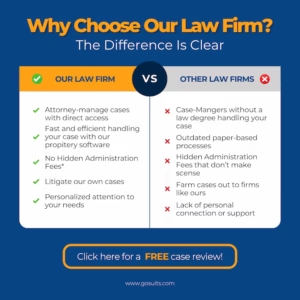
- Available 24 hours a day 7 days a week with immediate free consultation at any time.
- Multilingual customer service including 24 hour Spanish and Farsi speakers to assist clients across California, Texas, and Illinois.
- Direct attorney access so you can discuss your case with staff and attorneys at our nearest office right away.
What are our fee policies and cost transparency?
- No win, No Attorney Fees policy described at No win, No Attorney Fees – GoSuits. We also do not charge hidden administrative fees and we disclose costs up front.
How do our tools and case workflow help your claim?
GoSuits developed a proprietary personal injury software system that organizes investigation, document collection, demand preparation, negotiation, lawsuit filing, and discovery. This workflow tool speeds up fact gathering and helps the team prepare demands and litigation materials more quickly than traditional methods. We are a law firm that uses modern tools to streamline case processing to the client benefit.
What is our experience and track record?
GoSuits has a combined 30 years of experience and has litigated more than 1,000 cases with published settlements and verdicts. We handle severe injury and complex litigation in Texas, California, and Illinois. We retain qualified professionals in a case as needed to support liability and damages analysis. For examples and more firm information see our published materials on prior matters and the team profiles at the following pages:
Awards and recognitions include a variety of distinctions for results and attorney recognition across recent years. We also participate actively in community programs and professional organizations.
Where are our offices and how do we help immediately?
GoSuits maintains attorneys and staff at multiple offices with around the clock availability. When you or a family member needs immediate help we can open a file, preserve evidence, arrange for medical records collection, and contact insurers to protect your rights. We emphasize careful communication and timely updates so you know how your claim is progressing.
How do our services add value in these cases?
Practical case value includes fast fact gathering, coordinated medical and economic documentation, and early engagement with insurers to avoid harmful releases or missed deadlines. Strategic value includes identifying the best legal window for workers compensation claims versus civil suits and analyzing policy language to maximize recovery. We are not a volume firm. We focus on quality work, hands on supervision, and personal client care.
References and resources
- Miguel Fernandez v. Lawson, Supreme Court of California, July 7, 2003 – CourtListener
- Labor Code section 2750.5 text – California Legislative Information
- Business and Professions Code section 7026.1 contractor licensing rules – California Legislative Information
- Contractors State Licensing Board information and license lookup – CSLB
- California Division of Occupational Safety and Health (Cal OSHA) – Department of Industrial Relations
- California Code of Regulations title 8 sections 3420 to 3428 tree work safety regulations – DIR Title 8
- Homeowners insurance consumer information – California Department of Insurance
- U.S. Department of Labor OSHA state plans overview – OSHA
- State Compensation Insurance Fund v. Workers Compensation Appeals Board, 40 Cal.3d 5 – CourtListener
- California Workers’ Compensation Appeals Board – DIR WCAB
- California Department of Industrial Relations Division of Labor Standards Enforcement independent contractor guidance – DIR DLSE
- Independent contractor overview – Legal Information Institute, Cornell Law School