- What we know about the Camarillo area Metrolink collision
- Where and when this occurred, and local context residents recognize
- Who investigates a Ventura County train collision and what evidence matters
- First steps families often take after a Ventura County train accident
- Getting essential records: police report, autopsy, coroner, 911 audio, and train data
- How California law frames responsibility in railroad crossing crashes
- Important claim timelines in California
- Insurance and damages considerations after a vehicle train collision
- Safety at crossings in the Oxnard Plains and community concerns
- Weather, visibility, and seasonal conditions
- For witnesses and passengers: how to safely share what you saw
- Local resources and practical support
- Commentary from Gosuits Camarillo, California Personal Injury Attorney
- Why timely action matters after a Ventura County train collision
What we know about the Camarillo area Metrolink collision
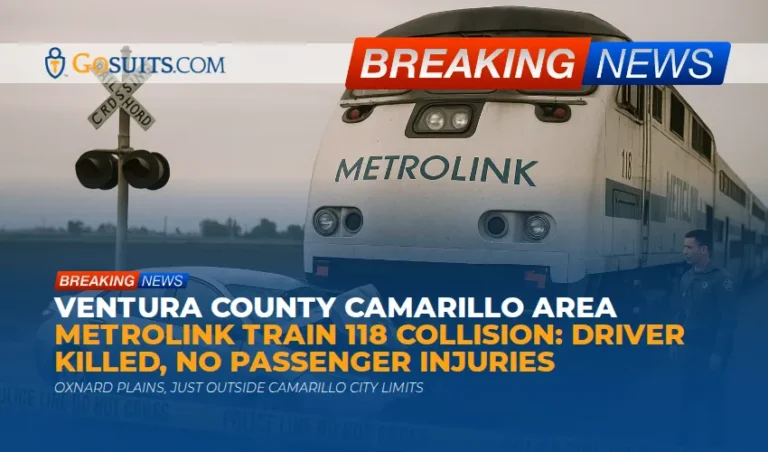
Authorities reported that a southbound Metrolink commuter train, identified as train 118, collided with a vehicle at a roadway rail intersection in the Oxnard Plains area outside of Camarillo. The driver of the vehicle later died from injuries sustained in the crash. As of the latest public updates, the driver’s identity had not been released. No injuries were reported among the 14 passengers or the two crew members aboard the train. Passengers were transported by bus to the Moorpark Station so service could continue and officials could secure the scene for investigators.
At this stage, public reports did not specify the exact crossing, the events leading up to the impact, or the condition of crossing signals and gates. Investigators typically collect those details in the days that follow.
Where and when this occurred, and local context residents recognize
The incident occurred on a Thursday in December, in the Oxnard Plains just outside the Camarillo city limits. Locals know this area for its long, straight farm roads, active agricultural fields, and rail corridors that connect Ventura County communities. The rail line in this zone feeds commuter traffic between Ventura County and Los Angeles County, with stations at Camarillo, Oxnard, and Moorpark. When a train incident occurs in this stretch, service disruptions ripple to places like Camarillo Premium Outlets, the Camarillo Airport corridor, and daily commuters who rely on the Moorpark Station transfers.
Because the Oxnard Plains include both public and private crossings, visibility and traffic patterns can vary widely. Some crossings have full gates and flashing signals, while others are more limited in protection. That variability is why investigators pay close attention to the exact location, warning devices, traffic volume, train speeds, and whether motorists had a clear sightline before the tracks.
Who investigates a Ventura County train collision and what evidence matters
In California, several agencies may investigate a highway rail grade crossing collision. The California Highway Patrol or the local sheriff’s office typically handles the on scene traffic collision report. For Ventura County, that is often the California Highway Patrol and the Ventura County Sheriff’s Office, depending on the location and jurisdiction. The railroad and its safety personnel also conduct their own internal investigation. The California Public Utilities Commission’s Rail Safety Division oversees rail crossing safety statewide and maintains standards for signals and warning devices, along with coordination on safety improvements with railroads and local governments. You can read about the CPUC’s rail safety mission here: California Public Utilities Commission Rail Safety.
For major rail incidents with broader safety implications, the National Transportation Safety Board may review or investigate. The Federal Railroad Administration also tracks grade crossing incidents and publishes safety and crossing data. General FRA resources are available here: FRA Office of Safety Analysis.
Evidence that often matters in a railroad crossing case includes the following:
- Crossing warning devices such as gates, lights, bells, and signage. Investigators will note whether they were present, functioning, and properly maintained. Standards governing crossing warning devices in California are overseen by the CPUC under its rail safety authority.
- Train data and video including event recorder downloads, horn usage logs, speed, braking, and forward facing camera footage. Railroads maintain these records and they are typically preserved during an investigation.
- Vehicle evidence including impact points, lighting, mechanical condition, and whether there were any issues like stuck on tracks scenarios.
- Scene measurements mapping out sight distances, approach angles, roadway conditions, skid marks, and debris fields.
- Witness statements from passengers, bystanders, nearby drivers, and first responders.
- Emergency notification sign information The blue and white Emergency Notification System sign posted at most public crossings lists a unique DOT crossing number and a railroad contact. FRA guidance explains the purpose of this system: FRA Emergency Notification System.
First steps families often take after a Ventura County train accident
In the aftermath of a tragedy, practical steps can feel overwhelming. Here are common actions families consider as they seek answers in a Ventura County train accident involving a loved one. These are general educational points, not instructions for a specific case.
- Preserve evidence early Photos of the vehicle, the crossing approach, and any personal items can be important later. Preserve the phone and its data if your loved one had a smartphone.
- Request the official collision report If the California Highway Patrol handled the report, the request process is described by CHP here: CHP Collision Reports. Families typically need a case number and proof of relationship.
- Obtain death certificate copies The California Department of Public Health explains how to order certified copies for legal and personal matters: CDPH Vital Records.
- Autopsy and coroner records The Ventura County Medical Examiner Coroner maintains these records. Contact the county office directly to learn what is available and timing requirements. Procedures vary by county.
- Avoid recorded statements Before speaking with any insurance representative or claims adjuster, consider first consulting with a qualified attorney. What is said to an insurer can be used later and may affect fault determinations and coverage decisions.
- Document expenses and impacts Keep funeral invoices, travel receipts, and any documentation of financial or personal impacts on the family.
Getting essential records: police report, autopsy, coroner, 911 audio, and train data
Building a clear picture of what happened requires records from multiple sources. Each has its own process and timeline.
Police and traffic collision reports
When a crash occurs outside city limits on a state or county roadway, the California Highway Patrol often handles the collision report. Requests are made using the CHP process described here: CHP Collision Reports. Families should have the date, approximate time, location, and names of involved parties if known.
Coroner and autopsy records
In Ventura County, the Medical Examiner Coroner maintains autopsy findings and related records. These records have specific rules on release. Next of kin can typically request the autopsy report once it is finalized, which can take weeks depending on testing and workload. If toxicology is performed, results may extend the timeline. Contact the county Medical Examiner directly for instructions, permissible requestors, and any fees.
Death certificates
Certified death certificates are requested through the county recorder or the California Department of Public Health. Statewide procedures, eligibility, and applications are outlined by CDPH: CDPH Vital Records.
911 audio, dispatch logs, and CAD printouts
Families or their representatives can request public records such as 911 audio and dispatch logs. Availability depends on privacy and investigative concerns. Response times and disclosure rules vary by agency. The request should include the date, time window, and location.
Railroad data and recordings
Railroads maintain event recorder data and onboard cameras. These are not typically released to the public on request but can be preserved for investigations and litigation. Early preservation requests are key so critical data is not overwritten by routine system cycles.

How California law frames responsibility in railroad crossing crashes
California applies comparative negligence in civil cases. That means responsibility for a collision can be shared among multiple parties, including a driver, a railroad or rail operator, a maintenance contractor, and potentially a public entity that designed or maintained the crossing. The exact allocation turns on the facts. Below are legal touchpoints that often come up in grade crossing cases.
- Stopping at crossings when signals or gates are active California Vehicle Code section 22451 makes it unlawful to proceed through a crossing when a gate is lowered, a signal is active, or a train is approaching so closely as to constitute an immediate hazard. The statute is here: CVC 22451.
- Crossing protection and maintenance Warning devices must meet regulatory standards, and maintenance responsibilities are shared between railroads and public authorities depending on the device and location. In California, the CPUC regulates many aspects of rail crossing safety: CPUC Rail Safety.
- Sight distance and design issues If vegetation, curvature, or roadway configuration reduces sightlines, design and maintenance questions may arise. Liability can involve both operational conduct and the design or condition of the crossing.
- Train operation Investigations consider train speed, horn and bell usage, lighting, braking, and adherence to signal indications. Event recorder data can help determine timing and response.
- Comparative fault considerations Even where a motorist error is identified, other factors like device malfunctions, inadequate warnings, or unusual hazards can be relevant to a fault analysis.
Every case is fact specific. A Ventura County train accident in the Oxnard Plains, for example, may involve different crossing protections than a downtown crossing near the Camarillo depot, and that difference matters when evaluating what was reasonable and what was required.
Important claim timelines in California
Deadlines can be short, especially when public entities are involved. Missing one may affect the ability to pursue claims.
- General wrongful death and personal injury limitations period California Code of Civil Procedure section 335.1 sets a two year statute for actions based on wrongful death or injury caused by the wrongful act or neglect of another. The statute text is here: CCP 335.1.
- Claims involving public entities If a public entity is potentially responsible, California’s Government Claims Act requires a written claim to be presented within six months for claims relating to personal injury or death in most circumstances. See Government Code section 911.2: Gov. Code 911.2. Filing rules differ depending on whether the entity is the state, a county, a municipality, or a joint powers authority.
Because train operations often involve public agencies, railroads, and contractors, determining who must receive a claim and when can be complicated. Before initiating any insurance claim or submitting written statements, it is prudent to consult with an attorney so that rights are protected and timelines are not missed.
Insurance and damages considerations after a vehicle train collision
When a vehicle and a train collide, multiple insurers can be involved. That can include the motor vehicle insurer, railroad or rail operator coverage, and potentially insurers for maintenance contractors or public entities responsible for the crossing environment. Adjusters will often request recorded statements and medical or financial documentation early.
- Recorded statements carry risk Statements given without context can be used against claimants later. Consider seeking a free consultation with a qualified attorney before speaking with any insurer about fault, speed, visibility, or signal activity.
- Damages categories In a wrongful death case, categories may include economic support the decedent would have provided, funeral expenses, and non economic damages to certain family members as permitted by California law. Documentation of financial and personal impacts is key.
- Public entity claim procedures If a public entity is implicated, claims must meet specific content and timing rules before a lawsuit can be filed. The six month claim presentation period under Gov. Code 911.2 often applies.
If a Ventura County wrongful death claim arises from a train collision, expect careful scrutiny of the crossing’s design and maintenance history, event recorder and video evidence, and whether railroad and roadway warnings were functioning properly.
Safety at crossings in the Oxnard Plains and community concerns
Residents who drive the farm roads between Camarillo and Oxnard know that trains can arrive quickly and quietly, especially where wind carries away horn sound and traffic noise masks bells. Long, straight approaches can create a false sense of security. Agricultural trucks and trailers may require more time to clear the tracks, and low clearance vehicles can bottom out at some approaches. These local realities are familiar to those who live and work in the Oxnard Plains.
Public agencies and railroads perform periodic safety assessments. The CPUC’s Rail Safety Division monitors crossing safety standards and collaborates on upgrades where warranted. Community members who are concerned about a specific crossing can report malfunctioning signals or gate issues using the blue and white Emergency Notification System sign at the crossing. The sign lists a unique DOT crossing number and a phone number to reach railroad dispatch so crews can respond. FRA explains the program here: FRA ENS. For non emergency safety concerns, residents can also engage with local public works departments about sightlines, vegetation, and signage.
Weather, visibility, and seasonal conditions
December in Ventura County can bring patchy fog, light rain, and shorter daylight hours. Even if weather did not directly contribute to a specific incident, investigators typically note recent conditions because water on roadways, glare at dawn or dusk, and fog can affect stopping distances and sightlines. During winter storms, it is common to see CHP alerts on U.S. 101 and reports of localized flooding on farm roads near Camarillo and Oxnard.
For motorists, best practices include reducing speed on approach to a known crossing in low visibility, turning off music to listen for bells or horns, and ensuring windshields are clear. California law already requires drivers to stop and not proceed when gates are down or warning lights are active, as noted in CVC 22451.
For witnesses and passengers: how to safely share what you saw
Passengers and bystanders often hold critical information about timing, warnings, and vehicle movements. If you witnessed a Camarillo train accident or were on board a Metrolink train involved in a collision, consider the following:
- Report to investigators Provide your contact information and a concise statement to the agency handling the crash. If you were a passenger, the train crew can direct you to the appropriate contact.
- Preserve photos and videos Save original files. Do not edit, filter, or alter timestamps.
- Write down details promptly Memory fades quickly. Note the sequence of events, sounds you heard, and any signal activity you observed.
- Be cautious with social media Public posts may not capture nuance and can complicate investigations.
Local resources and practical support
In the hours after a fatal incident, immediate needs often include travel logistics for family members, help with vehicles and property, and information on memorial planning. Ventura County has strong community networks, from faith communities in Camarillo to neighborhood groups in Mission Oaks and Las Posas. While this article focuses on legal and procedural context, here are practical points that can help families organize:
- Tow yard information The CHP or the investigating agency can provide the tow company name and location. Ask about holds for investigation, which may limit access to the vehicle for a period of time.
- Work and school notifications Employers and schools often have bereavement policies and support resources. Camarillo and Oxnard area schools maintain counseling contacts for students after traumatic events.
- Funeral planning Keep invoices and receipts. These costs can be part of damages in a Ventura County wrongful death claim.
- Victim support services County victim services can help families understand available resources and how to request records.
Commentary from Gosuits Camarillo, California Personal Injury Attorney
Our hearts go out to the family and loved ones affected by this collision outside Camarillo. Losing someone so suddenly is devastating, and the mix of grief and unanswered questions can feel overwhelming. This article is meant to share general information to help the community understand what typically happens after a Ventura County train accident and what records and timelines often matter.
Based on publicly available information, Metrolink train 118 struck a vehicle at a roadway rail intersection in the Oxnard Plains, with no injuries reported among the 14 passengers and two crew members. In collisions like this, our review would focus on the exact crossing involved, whether warning devices were present and functioning, the train’s speed and horn activity, sightlines for approaching drivers, and whether the roadway or crossing design created unusual hazards. That evidence informs how liability is evaluated under California’s comparative negligence system.
Insurance carriers and large entities move quickly after a collision. Railroads and public agencies often have sophisticated teams that start their investigations right away. Adjusters may ask for recorded statements, medical releases, or broad authorizations. People often do not realize that what they say early can be taken out of context later. Even small details about speed, weather, or what a person thought they saw can influence fault assessments. Getting a free consultation before engaging with any insurer or claims representative helps ensure that rights are preserved and that deadlines, like the six month public entity claim requirement in many situations, are not missed.
Early, careful steps make a difference. Preserving photos and video, requesting the CHP report, and identifying the correct agencies involved are all part of building a clear factual record. When families understand the process and their options, they are less vulnerable to pressure and more empowered to make informed decisions.

Why timely action matters after a Ventura County train collision
When a vehicle train collision happens, momentum builds quickly behind the scenes. Railroads secure data, public agencies close lanes, and crossing equipment gets inspected and sometimes repaired. Acting promptly can improve access to information and reduce the risk of key evidence being lost.
- Preserve crucial evidence Train event recorder data, crossing diagnostics, and private surveillance footage can cycle or be overwritten. Timely preservation requests help ensure that objective records of speed, horn usage, and signal activity survive.
- Identify all responsible parties Crossings may involve multiple entities. Early work helps determine whether a public entity, a railroad, a contractor, or others were involved in design, maintenance, or operations.
- Protect against claim deadlines California’s two year wrongful death statute and the six month public entity claim requirement can both apply depending on the facts. Awareness and planning around these windows reduces the chance of forfeiting rights. See CCP 335.1 and Gov. Code 911.2.
- Manage insurer interactions wisely Recorded statements and broad authorizations can create challenges later. It is generally prudent to consult with an attorney before contacting any insurance company. What is said to the insurer can be used against a claimant at a later stage.
- Support family decisions Early clarity on the process eases logistical burdens, from funeral arrangements to coordinating with employers and schools. Documentation gathered now can prevent future delays.
The path forward after a Camarillo train accident is rarely simple, but it is navigable. Steady steps, thoughtful recordkeeping, and timely attention to legal timelines lay a stronger foundation for whatever comes next.
Additional legal and safety references
Readers who want to review public materials that commonly arise in train crossing matters can use the following official resources.
- California Vehicle Code 22451 Requirements for stopping at railroad grade crossings: leginfo.legislature.ca.gov
- California Code of Civil Procedure 335.1 Two year statute for injury or wrongful death actions: leginfo.legislature.ca.gov
- California Government Code 911.2 Six month claim presentation requirement for many claims against public entities: leginfo.legislature.ca.gov
- California Public Utilities Commission Rail Safety State oversight of crossing safety and rail operations: cpuc.ca.gov
- FRA Office of Safety Analysis Federal safety data and crossing information: safetydata.fra.dot.gov
- FRA Emergency Notification System How to use the blue and white ENS signs at crossings: railroads.dot.gov