- What happened in Westwood and why it matters
- Where and when the incident occurred
- Injuries, emergency response, and public safety impacts
- A civil law perspective on potential liability
- Evidence to preserve right away
- How to get official documents and help in Los Angeles
- Insurance issues after a vehicle drives into a crowd
- Safety considerations for demonstrations on Wilshire and nearby streets
- Quick timeline recap
- Your rights and key deadlines
- Practical next steps and why timing matters
- Commentary from Gosuits Los Angeles, California Personal Injury Attorney
- References
What happened in Westwood and why it matters
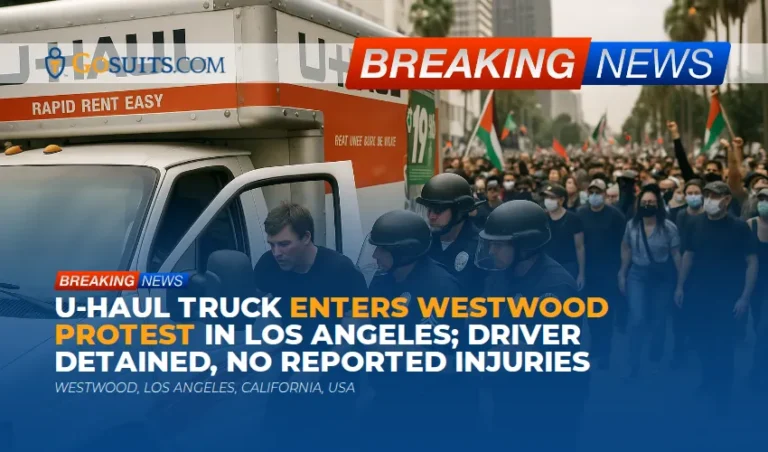
On Sunday afternoon, Jan. 11, 2026, during a large demonstration in Westwood near the Wilshire Federal Building, a U-Haul truck entered the protest area and caused panic and chaos. Law enforcement detained the driver at the scene. According to officials, two people were evaluated by first responders and declined treatment, and no one reported being struck by the truck. The driver was reportedly injured in the aftermath as onlookers pulled him from the vehicle.
Los Angeles city officials described the gathering as sizable, with transportation agencies temporarily closing nearby freeway offramps to Wilshire Boulevard to limit spillover onto the freeway. LAPD indicated the event remains under investigation and said the situation did not initially appear to be politically motivated. The City also emphasized the importance of exercising free speech rights peacefully and safely.
Even when injuries seem minor or are initially unreported, incidents like this raise real questions about public safety, civil liability, and how to protect one’s rights. Crowded conditions, commercial vehicles, and fast-changing circumstances can lead to injuries that surface later. It is common for people to feel fine in the moment, only to experience pain and stiffness hours or days afterward. That is part of why documenting what happened matters.
Where and when the incident occurred
The incident took place in Westwood, centered near the Wilshire Federal Building on Wilshire Boulevard. If you know the area, you know how often civic events occur at that plaza and along the wide sidewalks. Westwood Village sits just to the north, and Ronald Reagan UCLA Medical Center is a short drive up Westwood Plaza. The combination of weekend traffic, pedestrians, and a large demonstration can quickly complicate how emergency personnel get to the scene.
Agency statements noted the protest crowds grew into the thousands by mid-afternoon, contributing to the temporary closure of nearby freeway offramps to Wilshire Boulevard. Once the scene stabilized, those closures were lifted later in the afternoon.
Injuries, emergency response, and public safety impacts
Initial statements indicated that two people were assessed by first responders and declined treatment at the scene. No one reported being hit by the truck. The driver, however, was injured as he was pulled from the vehicle, according to police. Large, fast-moving crowds make it more difficult to stage ambulances, position fire apparatus, and secure a perimeter. In Los Angeles, mass gatherings often prompt preemptive traffic control and staging adjustments so paramedics can reach patients and law enforcement can protect both demonstrators and the public.
Many residents in Westwood are familiar with the traffic patterns along Wilshire, Veteran Avenue, and Sepulveda Boulevard. Temporary ramp closures, rerouted buses, and detours near the Federal Building can ripple outward, sometimes causing secondary hazards. That is why on-the-ground coordination among LAPD, City traffic engineers, and transportation agencies is so important during demonstrations.
A civil law perspective on potential liability
From a civil injury standpoint, there are core questions attorneys examine after a vehicle enters a crowd: what the driver did, whether the conduct was negligent or intentional, and who may share responsibility. California law recognizes both negligence-based claims and intentional torts like assault and battery. If a plaintiff proves that a driver intentionally used a vehicle to threaten or harm, punitive damages may be available under California Civil Code section 3294, which allows such damages in cases involving malice or oppression when proven to the required standard [1].
When a rental vehicle is involved, many people ask if the rental company can be held responsible. A federal statute known as the Graves Amendment generally prevents imposing vicarious liability on rental and leasing companies for harm caused solely by a driver’s use of their vehicle. However, this does not shield a company if it was negligent in other ways, such as vehicle maintenance or negligent entrustment, if those can be proven [2]. In other words, claims against a rental company depend on specific evidence of their own negligence, not just ownership of the truck.
Separately, reckless driving is a criminal offense under California Vehicle Code section 23103. While criminal proceedings are separate from civil cases, facts developed in a police report or criminal case can inform a later civil claim seeking damages for injuries [3].
Practically, seasoned truck accident lawyers consider many pieces of evidence: videos, witness accounts, vehicle telematics, and any available rental documentation. Vehicle dynamics matter too, because heavier rental box trucks can cause severe injuries at low speeds due to mass and limited sightlines. Even without initial on-scene treatment, soft-tissue injuries, concussions, and stress-related conditions can surface later, which is why follow up medical evaluation is important.

Evidence to preserve right away
Evidence is time sensitive, especially in a busy corridor like Wilshire. Protest footage can be scattered across smartphones, news feeds, and security cameras. If you witnessed the incident or were in the crowd, consider the following evidence points:
- Save your footage immediately. Preserve original videos and photos from your phone. Do not edit or overwrite files. Back them up to secure cloud storage.
- Capture context. Take note of your location, approximate time, the direction the truck came from, and anything you heard people say. Screenshots of relevant posts can help, but keep originals where possible.
- Seek public records. In California, the Public Records Act allows requests for certain agency records, including many incident-related materials, subject to exemptions. The law is codified beginning at Government Code section 7920.000 [4].
- Traffic and security cameras. Portions of Wilshire Boulevard, the Federal Building perimeter, and nearby intersections may be covered by city or state cameras. Caltrans freeway ramp cameras and traffic systems data are governed by agency retention policies. Records requests can be made to the appropriate agency. For federal property, a Freedom of Information Act request may be required [5].
- Medical documentation. If you later experience symptoms, obtain timely care and keep discharge instructions, imaging, and bills. Under federal law, patients have a right to access their medical records within set timelines and at reasonable cost [6].
Because camera footage may be erased in days or weeks, moving quickly is key. For a practical breakdown of how to secure video after a roadway incident, see Request CCTV Footage After a California Car Accident.
How to get official documents and help in Los Angeles
Police reports and incident numbers
For events within the City of Los Angeles, incident reports are typically generated by LAPD. While the process and availability depend on the type of report and whether a criminal investigation is ongoing, California’s Public Records Act provides the framework for requesting agency records, with exemptions for active investigations and privacy [4]. Requestors generally should be ready to provide the date, time window, location, and any known incident numbers.
Traffic management and roadway information
If you need to confirm traffic control steps taken that day, Caltrans maintains information related to freeway ramps, closures, and live travel conditions. Historical records can sometimes be requested through the department’s public records process [7].
Medical examiner or coroner
In incidents involving fatalities, the Los Angeles County Medical Examiner handles death investigations, autopsy reports, and next-of-kin notifications. Public guidance on how to request records or obtain status updates is available from the Medical Examiner’s official site [8]. There were no reported fatalities in this Westwood incident, but families dealing with separate events in Los Angeles County often start with that office for official cause-of-death records.

Trauma hospitals close to Westwood
Ronald Reagan UCLA Medical Center is a designated Level I trauma center serving the Westside and surrounding communities. The Los Angeles County EMS Agency publishes trauma center designations and locations, which can help families understand where patients may be transported in emergencies [9].
Mental health support
Witnessing a chaotic or frightening event can take a toll. The Los Angeles County Department of Mental Health provides resources and access points for crisis support and counseling [10]. It is common to process stress after the fact, once the immediate adrenaline subsides.
Insurance issues after a vehicle drives into a crowd
Insurance coverage questions can be complex where a rental truck and a protest are involved. Most personal auto policies include liability coverage for negligent acts but exclude intentional acts. Rental contracts add another layer. Some policies incorporate medical payments or uninsured motorist coverages that can apply in specific circumstances. It is essential to evaluate policy language rather than assume a benefit applies.
- Liability and intentional acts. If a driver acted intentionally, their liability carrier may rely on intentional acts exclusions. Coverage analysis turns on facts, policy wording, and how a claim is framed and supported by evidence.
- Uninsured and underinsured motorist coverage. California requires UM coverage to be offered, and many policies contain provisions under Insurance Code section 11580.2, which outlines key UM terms and time limits [11]. These benefits can sometimes help when the at-fault driver lacks sufficient insurance, subject to the policy and facts.
- Claim handling protections. The California Department of Insurance publishes consumer guidance on how claims should be handled and how to escalate a complaint if necessary [12].
If considering an insurance claim, it is prudent to speak with an attorney first, because what is said to an insurance adjuster may later be used to dispute or limit recovery. An early strategy session can help identify coverages, avoid pitfalls in recorded statements, and plan how to preserve evidence.
Safety considerations for demonstrations on Wilshire and nearby streets
Public demonstrations near the Wilshire Federal Building are common. The wide sidewalks, long blocks, and freeway access points create both opportunities for assembly and hazards for pedestrians. A few general safety points residents often discuss when planning to attend a rally in Westwood:
- Know your exits. Identify your route to and from the area, especially around Wilshire and Veteran Avenue. Be mindful of temporary closures that may change traffic and pedestrian flows [7].
- Stay visible. At dusk or in overcast conditions, high-visibility clothing helps drivers see you. Large rental trucks have blind spots along the sides and behind the vehicle.
- Keep a buffer. Maintain space between the crowd and any vehicle route. If a truck or van encroaches on the crowd, move laterally to an open area rather than backpedaling in a tight line.
- Designate a lookout. In larger groups, assigning volunteers to watch cross-streets can provide early warning if vehicles approach unexpectedly.
- Have a check-in plan. If phones lose signal or batteries die, preset a nearby meetup point in Westwood Village or along a known side street.
- General event safety. National preparedness resources offer simple guidance for situational awareness and family communication planning at public events [13].
Public safety is a shared responsibility. Agencies plan for these events, but crowd dynamics can shift in seconds. A little preparation goes a long way.
Quick timeline recap
- Midday to afternoon: A large demonstration forms near the Wilshire Federal Building in Westwood.
- Afternoon: A U-Haul truck enters the protest area, sparking chaos. Protesters pull the driver from the truck. Law enforcement detains the driver.
- Emergency assessment: Two people are evaluated and decline treatment. No one reports being struck by the vehicle. The driver sustains injuries during the confrontation that followed.
- Traffic management: Transportation authorities temporarily close freeway offramps to Wilshire Boulevard in the vicinity of the event. Closures are lifted as the crowd disperses.
- Ongoing investigation: The case remains under investigation by authorities, with public officials emphasizing peaceful exercise of free speech.
Your rights and key deadlines
California civil law sets deadlines for filing injury claims, and certain claims against public entities require earlier notice. The general statute of limitations for personal injury is two years from the date of injury under Code of Civil Procedure section 335.1 [14]. If a claim must be made against a public entity, California’s Government Claims Act often requires a written claim within a significantly shorter time window, commonly six months for personal injury claims, under Government Code section 911.2 [15].
These timelines can be unforgiving. Separate deadlines can also apply for uninsured motorist claims, medical payments coverage, or preservation of certain kinds of electronic evidence. Early legal guidance can help prevent missed milestones.
Practical next steps and why timing matters
- Document the event now. Save videos, photos, and notes while memories are fresh. Identify witnesses and ask them to preserve their recordings.
- Get a medical checkup. Even if you felt fine, see a doctor if symptoms develop in the hours or days after the event. Medical records create an objective timeline.
- Secure official records. Consider a targeted public records request for relevant portions of traffic management logs, dispatch audio, or camera footage before routine deletion [4][7].
- Evaluate insurance touchpoints. Before speaking with any insurer, consult an attorney to understand how coverage may apply and how recorded statements could affect your options. Statements made early can be misinterpreted or taken out of context later on.
- Calendar deadlines. Map out the two-year personal injury statute and any Government Claims Act requirements that may apply, then work backward to schedule evidence requests, medical follow ups, and legal consultations [14][15].
Acting now helps preserve evidence that is easy to lose, such as third-party video, dispatch data, and short-retention traffic camera clips. Timely steps make later fact finding more reliable and reduce the risk of gaps that insurers could use to question what happened.

Commentary from Gosuits Los Angeles, California Personal Injury Attorney
Our hearts are with everyone who was present near the Wilshire Federal Building as the crowd scattered and panic spread. Scenes like that are frightening, and even when initial reports suggest no one was physically struck, the experience itself can leave people shaken. This commentary is intended for general information and community awareness.
From what is publicly known, law enforcement moved quickly to control the scene and detain the driver. Our focus in a situation like this is on people’s health and safety first, and then on careful preservation of facts. Because this involved a rental box truck, we pay special attention to rental documentation, any telematics data, and available video. Crowd settings are dynamic, and the most reliable way to separate confusion from causation is to gather objective evidence quickly.
Insurance companies and large corporations are adept at using gaps in knowledge to their advantage. Adjusters may move fast to secure recorded statements that can later be used to narrow coverage or frame injuries as minor. Rental companies may rely on federal protections that shield them from vicarious liability unless there is proof of their own negligence. Without experienced guidance, it is easy to miss critical evidence, misstate how symptoms developed, or overlook coverages that could help with medical bills.
A no-cost consultation can be an important first step. It allows people to understand potential claims, coverage issues, and deadlines before talking to any insurer. It also helps set a plan to secure time-sensitive video, witness statements, and medical documentation so the facts are preserved and not left to memory alone.
References
- California Civil Code section 3294, punitive damages – California Legislature
- 49 U.S.C. section 30106, Graves Amendment – Legal Information Institute
- California Vehicle Code section 23103, reckless driving – California Legislature
- California Public Records Act overview – Office of the Attorney General
- Freedom of Information Act portal – FOIA.gov
- Individuals’ right under HIPAA to access health information – HHS
- Caltrans information and contacts – California Department of Transportation
- Los Angeles County Medical Examiner – Official site
- Los Angeles County Trauma Centers – LA County EMS Agency
- Los Angeles County Department of Mental Health – Official site
- California Insurance Code section 11580.2, UM coverage – California Legislature
- Consumer help – California Department of Insurance
- Preparedness guidance for public events – Ready.gov
- Code of Civil Procedure section 335.1, two-year statute of limitations – California Legislature
- Government Code section 911.2, public entity claim deadline – California Legislature