- What we know about the Las Posas Road head-on crash
- Location context: Las Posas Road and Laguna Road corridor
- Response and investigation status
- Losses reported
- Safety and legal implications of a head-on collision in California
- Where to obtain official records and information
- Practical next steps for those affected
- Insurance considerations after a fatal two-vehicle collision
- Community notes and roadway safety reminders
- Time-sensitive actions that matter right now
- Commentary from Gosuits Ventura County, California Personal Injury Attorney
What we know about the Las Posas Road head-on crash
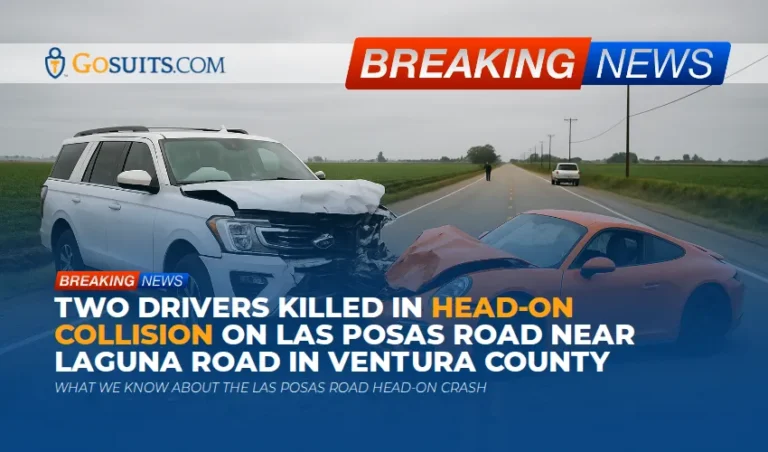
Two drivers lost their lives following a head-on collision on Las Posas Road in Ventura County on Wednesday, March 25, 2026. According to a California Highway Patrol Ventura Area statement, calls came in around 1:24 p.m. for a two-vehicle crash south of the intersection with Laguna Road. Initial findings indicate a white Ford Expedition traveling southbound crossed into the northbound lanes and struck an orange Porsche coupe head-on. The driver of the Porsche was pronounced deceased at the scene. The Ford’s driver was transported to Los Robles Regional Medical Center with major injuries and was later pronounced deceased by medical personnel. Investigators have not yet determined whether alcohol or drugs played a role. Witness accounts and scene evidence are being evaluated. Anyone with additional information is encouraged to contact the CHP Ventura Area Office at 805-662-2640.
News of this kind hits especially hard in Ventura County. Many residents know the Las Posas corridor well, whether commuting between Camarillo and the coast, heading to farm stands along the Oxnard Plain, or connecting with Laguna Road toward the Santa Rosa Valley. The loss of life on a familiar stretch of roadway is deeply felt.
Location context: Las Posas Road and Laguna Road corridor
Las Posas Road serves as a vital east-west and north-south connector on the Oxnard Plain, carrying a mix of local, agricultural, and coastal-bound traffic. The segment south of Laguna Road transitions from rural agricultural fields to more suburban stretches as it nears Camarillo and the U.S. 101 corridor. During spring, low coastal clouds and changing light conditions can move inland; drivers also share space with farm vehicles and trucks accessing fields. While investigators have not indicated weather or visibility as factors here, the corridor’s mixed traffic and speeds make lane discipline and attention crucial.
Local residents will recognize landmarks like the long, straight segments framed by strawberry, lemon, and avocado fields, and the occasional cross-traffic turning from field access points. Even at non-peak hours, speeds can be high and margin for error low on two-lane segments. Transportation safety research has long emphasized that head-on collisions on undivided roads often follow an unintentional lane departure or a deliberate passing maneuver that goes wrong, underscoring the stakes of momentary inattention or impairment [1].
Response and investigation status
CHP officers responded to the scene, interviewed witnesses, documented roadway evidence, and coordinated emergency medical transport. In fatal crashes, CHP typically conducts a thorough collision investigation that may include scene measurements, vehicle inspections, damage pattern analysis, and retrieval of any available electronic data from the vehicles’ event data recorders, when accessible and applicable. Toxicology testing is routine in fatal crashes but results may take time; officials have stated it remains unknown whether alcohol or drugs were factors at this stage.
As is standard, the Ventura County Medical Examiner will review the deaths, determine the causes and manners of death, and handle required next steps under California law. California Government Code section 27491 outlines the coroner’s authority to investigate deaths that are sudden, violent, or unusual [4]. Families typically receive guidance from the Medical Examiner’s office about identification, next of kin notifications, and how to request postmortem reports once available.
Losses reported
CHP reports indicate the Porsche driver died at the scene from injuries sustained in the impact. The Ford driver, despite emergency response and hospital care at Los Robles Regional Medical Center, later died from crash-related injuries. No other occupants were reported. The local community often rallies when tragedies like this occur, and it is common for friends, coworkers, or extended family to seek answers about what happened and what steps come next. In addition to grief and shock, families may face immediate logistical questions about vital records, funeral arrangements, and insurance communications. Those burdens can feel overwhelming in the first days after a sudden loss.

Safety and legal implications of a head-on collision in California
Head-on crashes are among the most severe roadway events, especially on undivided roads. While overall rare compared to other crash types, they produce a disproportionate share of serious injuries and fatalities because the closing speeds are high. National highway safety resources identify roadway departure and centerline crossover as common precursors to head-on crashes on two-lane roads [1]. Speed also increases both crash risk and injury severity, which is why even modest speed increases can have outsized effects on outcomes [6].
From a civil-injury perspective, collision investigations aim to determine how and why a vehicle left its lane and whether any negligence contributed to that departure. Potential contributing factors can include distraction, fatigue, visibility limitations, unsafe passing, medical emergencies, mechanical failures, roadway conditions, or impairment. At this point in the public record, investigators have not attributed a cause or contributing factor beyond the reported lane incursion. Families and insurers typically rely on the official CHP collision report to understand how fault may be assessed as the investigation concludes.
California law allows certain surviving family members to bring a wrongful death claim when a death is caused by another party’s neglect or wrongful act. The California Courts provide a public overview of who may file and the kinds of losses that may be considered in a wrongful death case [2]. California’s statute of limitations for wrongful death is generally two years from the date of death [3]. These general timeframes matter because evidence preservation and timely filings become more challenging as weeks and months pass. Discussions of rights and options in this article are for general information only.
Where to obtain official records and information
CHP collision report
The California Highway Patrol prepares a Traffic Collision Report for injury and fatal crashes. Involved parties or their legal representatives can request a copy once it is available. The local office handling this investigation is CHP Ventura Area. The agency has a statewide office directory for public contact, and the Ventura Area Office number reported for tips in this case is 805-662-2640 [9]. Collision reports typically include party statements, witness information, diagrams, vehicle and roadway factors, and preliminary findings. Reports can take days to weeks to finalize, particularly for complex or fatal collisions.
Ventura County Medical Examiner
The Medical Examiner investigates sudden or violent deaths, determines manner and cause of death, and oversees release of remains to next of kin. Families generally receive instructions on requesting an autopsy report and death certificate once available. California Government Code section 27491 confirms the coroner’s investigative responsibilities for these kinds of deaths [4]. While some counties post online request forms, families can also request guidance by phone if online systems are not immediately clear.
Death certificates
California death certificates are issued by the county where the death occurred. Certified copies are often needed for estate, insurance, and employer benefits. Local clerk-recorder offices provide instructions on eligibility, required identification, and processing times. Hospitals and funeral homes sometimes assist with initiating requests.
DMV accident reporting
California requires any driver involved in a crash to submit a DMV SR-1 Report of Traffic Accident within 10 days if there was injury, death, or damage over a statutory threshold. Although deceased drivers cannot submit forms, associated parties or representatives may still need to ensure required reporting is handled for administrative purposes. The SR-1 is a statewide form available from the California DMV [5]. This administrative filing is separate from police reporting and insurance claims.
Practical next steps for those affected
In the first days after a fatal crash, there is a natural mix of shock, grief, and urgent tasks. It helps to take a breath and organize needs in manageable steps. Consider the following:
- Coordinate with officials. If you are next of kin, keep lines open with the CHP Ventura Area Office regarding release of the collision report and any items that might be released from the scene. Maintain respectful contact with the Medical Examiner regarding identification, release of remains, and eventual autopsy or toxicology findings.
- Preserve evidence. Secure the vehicles and any property involved if possible. Save photos, dashcam clips, phone records, and names of witnesses. Local businesses along Las Posas Road and Laguna Road may have exterior cameras. Time is critical for saving over-written recordings. California agencies and courts recognize the importance of timely evidence preservation when civil claims are considered.
- Insurance notifications. Most policies require prompt notice of a crash. Before speaking with any insurance adjuster, it is generally wise to consult an attorney so you understand your rights and obligations. Statements made early can be used later to challenge fault or damages. Many families, facing layered grief and administrative pressure, turn to car accident lawyers to help structure communications and preserve key information.
- Benefits and workplace matters. Notify employers and review available benefits. Some workplaces offer survivor benefits or life insurance policies that require timely claims.
- Family logistics. Identify who will handle vital records, funeral arrangements, and estate tasks. If minor children or dependents are involved, note any immediate support needs and community resources.
- Emotional support. Grief is not linear. Local faith communities, counseling centers, and 2-1-1 can point toward support groups and crisis care. National public health guidance also offers frameworks for coping with traumatic loss [7].
For a broader overview of what the first days and weeks often look like after a fatal crash, see What Happens If Someone Is Killed in a Car Accident? It outlines common questions families ask and typical documents that come into play, from death certificates to insurance declarations.
Insurance considerations after a fatal two-vehicle collision
In a two-vehicle head-on, liability insurance coverage, uninsured or underinsured motorist coverage, and certain optional coverages can come into play. California’s civil system is fault-based, which means determinations about who caused or contributed to the crash influence how claims are resolved. When investigations are ongoing, insurers may reserve rights while they evaluate fault and damages. It is common for multiple insurers to seek recorded statements or signed releases; consider consulting counsel before engaging in substantive conversations or signing documents so you understand implications.
Because California’s rules and timelines are state-specific, many families rely on California car accident lawyers to help identify available coverages, coordinate benefits, and handle time-sensitive preservation steps that are easy to miss when grieving. State resources also provide general overviews of wrongful death and statute timelines to help orient families to their options [2] [3].
Common policy components that may be relevant
- Bodily injury liability. This is the at-fault driver’s coverage intended to address injuries or death claims by others, subject to policy limits.
- Uninsured or underinsured motorist (UM/UIM). If the at-fault driver’s coverage is inadequate or absent, UM/UIM on the decedent’s policy may respond, depending on policy language.
- Medical payments coverage. Some policies include limited coverage for medical or funeral costs regardless of fault. In fatal crashes this can be a modest but immediate resource.
- Life and employer benefits. Separate from auto policies, employer-sponsored life insurance or accidental death benefits may be available and have distinct proof requirements.
Insurers often move quickly to protect their interests. Adjusters may request recorded statements, medical authorizations, or settlement releases early in the process. What you say can be used later to question fault or damages. If you plan to pursue claims, consulting counsel before substantive insurer communications can help avoid missteps.
Community notes and roadway safety reminders
Neighbors along Las Posas Road know the rhythm of local traffic, from school and work commutes to coastal weekend trips and seasonal farm operations. Driver workload on straight, familiar roads can drop, which is why vigilance is still essential. Two-lane undivided segments amplify the risk when a vehicle drifts across the centerline or a driver attempts a pass without a fully clear view. National and federal agencies repeatedly highlight that head-on crashes on undivided roads often begin with a lane departure, whether due to distraction, fatigue, impairment, or a momentary lapse in scanning for hazards [1]. Speed compounds risk, increasing stopping distance and impact forces [6].
If you regularly use this corridor, consider small habits that help: keep longer following distances, check beyond the immediate lead vehicle for up-road cues, and give wide berth to driveways serving farm fields and side roads like Laguna. Local conditions can change quickly with spring coastal clouds and afternoon winds. And when something does not feel right up ahead, it is fine to lift off the accelerator and leave more space.
For a broader look at county-level traffic safety patterns, the California Office of Traffic Safety publishes annual collision ranking summaries by city and county, which can help communities and policymakers track trends and focus countermeasures [8].
Time-sensitive actions that matter right now
Sudden-loss situations leave little time to plan. Acting promptly on a few fronts can preserve rights and reduce later stress:
- Identify the point person. Designate a family member to coordinate with CHP, the Medical Examiner, and the funeral home so information flows consistently and deadlines do not slip.
- Request and save evidence. Ask nearby businesses along Las Posas Road and Laguna Road to preserve video for the hours surrounding 1:24 p.m. on March 25. Many systems overwrite within days.
- Secure the vehicles. If accessible, note where the vehicles were towed and place the tow yard on notice to preserve them for inspection. Event data recorders and damage patterns can be important.
- Document the paper trail. Start a simple log of phone calls, names, and dates. Save hospital discharge summaries, funeral invoices, and any correspondence from insurers.
- Be careful with insurer contact. Before giving a statement or signing forms, consider speaking with an attorney first to understand how your words may be used and what documents are appropriate to share at this stage.
- Calendar key windows. Note expected timelines for the CHP collision report release, Medical Examiner reporting, and California’s civil deadlines for wrongful death claims [3].
The benefit of acting now is simple: evidence is strongest early, administrative tasks are less likely to snowball, and you reduce the risk that uncertainty later becomes a barrier to finding answers.
Commentary from Gosuits Ventura County, California Personal Injury Attorney
Our hearts are with the families and friends mourning after the head-on collision on Las Posas Road. No one expects to lose a loved one on an ordinary weekday drive. We share this information to help the community understand what typically happens after a fatal crash and what steps can preserve options going forward.
Based on the information made public so far, investigators report that a southbound vehicle crossed into the northbound lanes and struck another vehicle head-on. If further investigation confirms a centerline incursion without a legal justification, that usually points to civil fault for the lane departure. That said, it is essential to allow CHP and the Medical Examiner to complete their work. Vehicle inspections, witness accounts, and any available data can clarify what happened in those crucial moments.
In our experience, insurers and corporations act quickly to position their interests after a serious crash. Adjusters may seek recorded statements or push for early resolutions before all facts are known. They also rely on technical policy language and strict timelines that can overwhelm families who are grieving. Without context, people sometimes share more than they intend or sign broad medical authorizations that open the door to fishing through unrelated medical history.
That is why early, knowledgeable guidance matters. Even a free consultation can help someone understand which documents to request, how to preserve key evidence, and what to avoid saying in an insurer interview. It can also clarify how California timelines work for wrongful death and related civil actions so families can make informed choices without feeling rushed. Nothing here is legal advice for any particular person, but we hope it helps our Ventura County neighbors navigate an unimaginably difficult moment with more clarity and care.
Resources and References
- Reducing Crash Severity: Head-On Crashes and Lane Departures – FHWA
- Wrongful Death Overview – California Courts
- Code of Civil Procedure § 335.1 Statute of Limitations – California Legislature
- Government Code § 27491 Coroner’s Duties – California Legislature
- SR-1 Report of Traffic Accident Occurring in California – California DMV
- Speeding: Risks and Safety Facts – NHTSA
- Coping With Grief and Loss – CDC
- Collision Ranking Results – California Office of Traffic Safety
- Find a CHP Area Office – California Highway Patrol