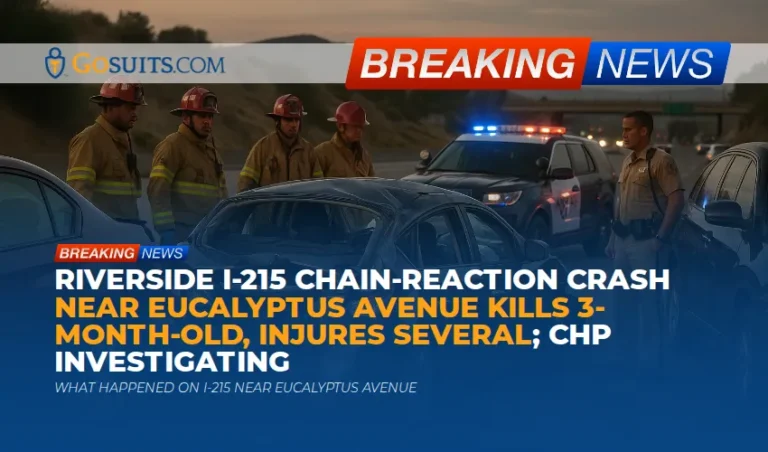
- What happened on I-215 near Eucalyptus Avenue
- Where the investigation stands and why chain-reaction crashes occur
- Safety and legal context relevant to this crash
- Understanding potential civil liability in multi-vehicle rear-end crashes
- Who to contact for official records and practical help in Riverside County
- Evidence families can preserve right now
- Insurance considerations after a multi-car highway collision
- Local community notes, hospitals, and support in the Riverside area
- What regional data tells us about serious crashes in Riverside County
- Actions to take now and why timing matters
- Commentary from Gosuits Riverside, California Personal Injury Attorney
- References
What happened on I-215 near Eucalyptus Avenue
Sunday evening traffic on Interstate 215 in Riverside was heavy when a chain-reaction crash unfolded in the northbound lanes just south of the Eucalyptus Avenue exit at around 7:30 p.m. According to information confirmed to local media by the California Highway Patrol, a 2013 Honda Civic slowed and stopped for congestion. A 2015 Nissan Versa then struck the rear of the Honda, and a 2015 Toyota RAV4 subsequently impacted the rear of the Nissan. The Nissan’s back end suffered the most severe damage.
Inside the Nissan were two adults and two children seated in the back in child safety seats, including a toddler and a 3-month-old. First responders with Riverside Fire Department extricated the children. The Riverside County Coroner’s Office declared the 3-month-old deceased at the scene. The toddler and several adults were transported for treatment. Preliminary statements indicated alcohol or drugs were not suspected at this time. The investigation is ongoing, and CHP investigators asked any witnesses to contact the CHP’s Accident Investigation Unit at 951-324-7210.
For many neighbors who drive this corridor between Moreno Valley and downtown Riverside, the Eucalyptus Avenue area sits between Box Springs Mountain and Hunter Park, where northbound I-215 commonly bottlenecks on Sunday evenings. When traffic stacks up quickly, even a brief lapse in following distance can cascade into a multi-car impact.
Where the investigation stands and why chain-reaction crashes occur
As with every fatal highway collision, CHP will analyze the scene, vehicle damage patterns, event data recorders if available, skid marks, and statements to reconstruct the sequence. In a three-vehicle rear-end series like this one, the central question often becomes which impacts occurred in what order and whether any driver failed to maintain a safe following distance for the speed and conditions.
Rear-end chain reactions frequently happen when one vehicle stops suddenly for slowing traffic and a trailing driver does not have the time or distance to react. If a second trailing driver then strikes the middle vehicle, the middle vehicle can be forced forward, sometimes causing severe crush at the rear and secondary injuries to occupants. Nighttime glare, speed variance, and driver distraction can all make matters worse, though officials have stated impairment is not suspected here. It may take weeks to months before CHP finalizes the collision report and the coroner completes records, particularly where a fatality is involved.
Safety and legal context relevant to this crash
Following distance and California’s safe driving principles
The California Driver Handbook emphasizes maintaining adequate following distance that increases with speed, darkness, and traffic conditions. On freeways, drivers should leave enough space to stop or safely slow when congestion builds unexpectedly. These core safety concepts, while basic, become critical on I-215’s rolling grades and frequent merges near the Eucalyptus Avenue and University Avenue exits [2].
Child passenger protection
Child seats are designed to reduce the risk of fatal injury when used and installed properly. Federal safety guidance underscores keeping infants in rear-facing restraints and ensuring correct angle, harness fit, and secure installation. Even with appropriate use, extreme rear crush can overcome protections. National guidance from NHTSA and CDC provides clear instructions on selection, installation, and when to transition between rear-facing, forward-facing, and booster seats [3] [4].

Trauma care access in the Inland Empire
Riverside and San Bernardino counties maintain designated trauma centers to receive seriously injured patients from freeway crashes. California’s EMS Authority maintains the statewide trauma system with local listings and designations, which helps first responders route patients to appropriate facilities based on injury severity and proximity [6].
Understanding potential civil liability in multi-vehicle rear-end crashes
From a personal injury perspective, multi-car rear-end collisions demand careful analysis. In many cases, more than one driver shares responsibility, and liability may be apportioned among the trailing vehicles depending on sequence, speed, and reaction times. Event data recorders, high-resolution scene photos, witness accounts, and roadway video can be decisive in sorting out which impacts caused which injuries.
Families often ask whether the rear-most driver is always at fault. There is no one-size answer. California civil cases apply fact-specific negligence principles and can allocate percentages of fault among multiple drivers. Investigations look closely at following distance, whether brake lights were working, whether any unsafe lane change or sudden stop was involved, and whether a driver’s collision pushed a middle vehicle forward. For a deeper overview of how fault is assessed statewide, see Rear end collision fault in California.
In complex chains, skilled car accident lawyers can coordinate accident reconstruction and obtain key records early. That includes preserving vehicle modules, sending prompt evidence preservation letters, and identifying every available insurance policy. Injured occupants in the middle vehicle can face a difficult path because they may have claims against multiple drivers, and they may also need to use their own policy benefits while liability is disputed.
Who to contact for official records and practical help in Riverside County
California Highway Patrol collision report
The official collision report is the backbone record for civil claims. In CHP-investigated crashes, families typically request the report through CHP using the CHP 190 process. You will need a valid interest in the report, incident details, and identification. There is a waiting period while the report is completed and approved. CHP provides statewide guidance on how to request a report and any fees that may apply [1].
Riverside County Sheriff Coroner’s Office
For fatal collisions, the Riverside County Sheriff Coroner handles the decedent’s record, including the cause and manner of death and, if applicable, autopsy documentation. The Coroner’s Bureau provides information about record requests, next-of-kin notifications, and release timelines. Because these files can be technical and deeply personal, many families find it helpful to have a trusted representative assist in reviewing them [7].
Hospitals and medical records
For injured family members, request complete medical records from the treating hospitals and EMS agencies. In this corridor, patients are often treated at Riverside Community Hospital, Riverside University Health System Medical Center, or at designated trauma centers in the regional network. Hospital medical records departments can provide instructions for authorizations and release of records. Accurate, early collection of records helps document injury mechanisms and treatment timelines that are important in civil claims.
Witness coordination
CHP has already asked potential witnesses to come forward. It is helpful to write down everything known about any witness you spoke with at the scene, including phone numbers, email addresses, plate numbers, and any dashcam ownership. If you did not capture that information at the time, you can still share what you saw by calling the CHP Accident Investigation Unit as requested in the initial announcement.
Vehicle access and tow yards
If a vehicle was towed from I-215, find out which rotation tow company retrieved it and where the vehicle is stored. Preserving the vehicle without alteration is often crucial in serious-injury and wrongful-death cases. Avoid authorizing repairs, disposal, or salvage sale until counsel can arrange inspection and documentation. CHP can advise on the responding tow rotation company for the incident number you provide.
Evidence families can preserve right now
Time-sensitive proof can fade quickly. While medical care always comes first, consider the following after immediate health needs are addressed:
- Photos and video: Save any images of the scene, vehicle damage, child seats, roadway debris, skid marks, and your injuries. Back them up to at least two places.
- Child seats: Keep car seats exactly as they were after the crash. Do not throw them away or clean them. In severe rear crush, child restraint performance is a key issue for engineers to evaluate.
- Clothing and personal items: Bag and retain damaged clothing, shoes, and broken items from the crash. These can illustrate forces and injury mechanisms.
- Medical timeline: Keep a simple journal of symptoms, appointments, and how injuries affect mobility, sleep, and daily care needs.
- Insurance and benefits letters: Save every letter or email from any insurer. Note dates and who called you.
- Work impact: If injuries limit work, gather wage records, supervisor notes, and any HR paperwork that documents missed time or modified duties.
Because insurance companies often move quickly to collect statements, be cautious. Many people do not realize that recorded statements can be used to limit or challenge their claims later.
Insurance considerations after a multi-car highway collision
Multi-vehicle crashes on freeways often involve several liability insurers and complex questions about primary and excess coverage. There may be bodily injury and property damage coverages on the at-fault driver’s policy, plus underinsured motorist coverage on the occupants’ own policies, and sometimes medical payments coverage. Coordinating these properly can make a real difference in recovering the costs of hospital care, long-term therapy, and funeral expenses in a fatal case.
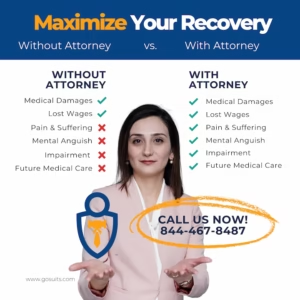
Before calling any insurer, it is wise to speak with an attorney who can advise on order of claims, policy limits, and how to preserve evidence. What someone says to an insurance adjuster can be used against them later, especially in disputes about fault or injury severity. Seasoned Riverside car accident lawyers help families understand how liability coverage, underinsured motorist coverage, and health insurance subrogation interact under California law and policy rules.
It is common for at least one insurer to request recorded statements early. That can be risky when facts are still developing. Consider declining recorded statements until you have legal guidance and access to the official CHP report. The California Department of Insurance also publishes consumer-focused information that can clarify general rights and complaints processes for insurance claims in this state [9].
For general statewide perspective on proof issues in rear-end claims, many families find it helpful to review guidance like Rear end collision fault in California alongside counsel.
Families sometimes ask where to even begin when multiple adjusters are calling. Experienced car accident lawyers can organize claim notices, protect against premature releases, and push for timely disclosure of applicable policy limits without compromising your rights.
Local community notes, hospitals, and support in the Riverside area
Neighbors who commute I-215 know how quickly traffic can lock up near the Eucalyptus Avenue and Blaine Street exits. On Sunday nights, that corridor carries Inland Empire return traffic from the 60 and 91 connectors. The mix of passenger vehicles and SUVs, the short merges, and variability in speeds all combine to elevate rear-end risk in sudden slowdowns.
In serious cases, paramedics may transport to facilities within minutes of the scene. Riverside Community Hospital and Riverside University Health System Medical Center are two major destinations for trauma-capable care in the region. Regional trauma system listings, maintained by the state EMS Authority, help first responders route patients efficiently during golden-hour windows [6].
For support services, some families also consider the California Victim Compensation Board, which can provide limited financial assistance for eligible victims of violent crime. While most traffic collisions are not categorized as crimes, this resource can be relevant in certain circumstances. Always confirm eligibility and scope directly with the agency.
What regional data tells us about serious crashes in Riverside County
California’s Office of Traffic Safety tracks crash trends by county. While each collision is unique, county-level rankings and summaries offer context for roadway risk over time, including factors like speed, nighttime driving, and alcohol-involved collisions. Reviewing these data sets can inform broader safety initiatives on corridors like I-215 and help local agencies prioritize enforcement and engineering solutions where risk is highest [5].
On fast-moving freeways, the basics remain critical. The DMV’s public materials reinforce that safe following distance and heightened awareness in heavy traffic are essential. Even a two or three second gap can make the difference between a close call and a catastrophic chain reaction when traffic suddenly compresses [2].
Actions to take now and why timing matters
When a crash causes catastrophic injuries or a wrongful death, the first few days matter for both health and documentation. Here are focused actions community members often take, along with why timing can be urgent:
- Prioritize medical follow-up: Return to the ER or your physician if symptoms worsen, new pain develops, or the injured child’s behavior changes. Concussion and internal injuries can declare themselves over hours or days. Prompt care both protects health and creates a clear medical record.
- Request the CHP report: Start the CHP 190 process once the report is available. Collision diagrams, measurements, and narrative are foundational for any civil claims and for understanding the event sequence [1].
- Preserve vehicles and child seats: Ask the tow yard to hold the vehicle for inspection. Do not authorize repairs or disposal. Keep car seats intact. Evidence can be lost quickly, and later questions about causation or seat performance cannot be answered without it.
- Gather insurance information but delay recorded statements: Identify policy numbers and claim contacts for all involved parties. Before providing any recorded statement, speak to an attorney so you understand rights and risks. Statements made early in grief or pain can be misinterpreted.
- Document the family’s immediate losses: Keep receipts and records for funeral arrangements, travel, childcare, missed work, and vehicle-related costs. These out-of-pocket expenses add up and can be reimbursable elements in appropriate claims.
- Consult legal counsel early: Early guidance helps set the right order of claims, ensures critical evidence is preserved, and prevents missteps that can delay or diminish recovery. Many firms offer a free consultation, which can be invaluable in understanding the process without obligation.
Acting promptly helps align medical care, documentation, and legal steps while memories are still fresh and evidence remains available. Waiting can make it much harder to reconstruct the crash and prove who is responsible.
Commentary from Gosuits Riverside, California Personal Injury Attorney
Our hearts break for the family who lost their 3-month-old child and for everyone injured in this crash. Sharing these details is meant for educational purposes and general information for our Riverside community. Nothing here replaces personalized guidance for any individual situation.
In our view, chain-reaction rear-end collisions on I-215 tend to reveal how unforgiving freeway dynamics can be when traffic compresses suddenly. The crush damage to the Nissan’s rear described publicly aligns with what we often see in multi-impact sequences. Sorting out which impact caused which injuries will require careful reconstruction, vehicle data, and the finalized CHP report.
Insurance carriers and corporate defendants are trained to move quickly after a crash. They know families are overwhelmed and may not be aware of all rights or coverages. Early recorded statements, quick-release paperwork, or partial payments can seem helpful but sometimes narrow the path to a full and fair resolution. We have seen adjusters use inconsistencies or incomplete facts from those first stressful days to contest fault and minimize injuries.
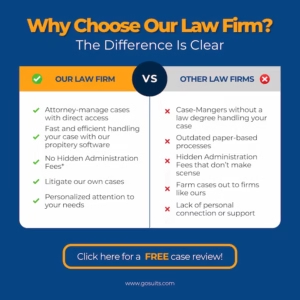
A free consultation can help families understand the road ahead before speaking with any insurer. It clarifies who might share responsibility, which policies apply, and how to protect key evidence like event data recorders and child seats. Most importantly, it gives space to ask questions in a calm setting so decisions are informed, not rushed.
References
- Request a Collision Report CHP 190 – California Highway Patrol
- Safe Driving Practices, Following Distance – California DMV
- Car Seats and Booster Seats – NHTSA
- Child Passenger Safety – CDC
- Collision Rankings and County Profiles – California Office of Traffic Safety
- California Trauma Centers and System Information – California EMS Authority
- Coroner’s Bureau – Riverside County Sheriff
- QuickMap Road Conditions and Incidents – Caltrans
- Auto Insurance Consumer Guides – California Department of Insurance