- What we know about the Porter Ranch single-vehicle crash
- Where it happened and local context for Porter Ranch neighbors
- First steps families and survivors often take after a fatal or serious crash
- Who investigates and what records to request in Los Angeles
- Potential civil liability in a single-car collision
- Insurance layers that may apply to passengers and families
- How to protect your rights before speaking with insurers
- Medical and trauma system notes for the San Fernando Valley
- Key California timelines and deadlines to know
- Data and safety context for fixed-object crashes
- Documentation checklist to gather early
- City infrastructure and maintenance records that may matter
- Why acting promptly matters and what to do now
- Commentary from Gosuits Los Angeles, California Personal Injury Attorney
- References
What we know about the Porter Ranch single-vehicle crash
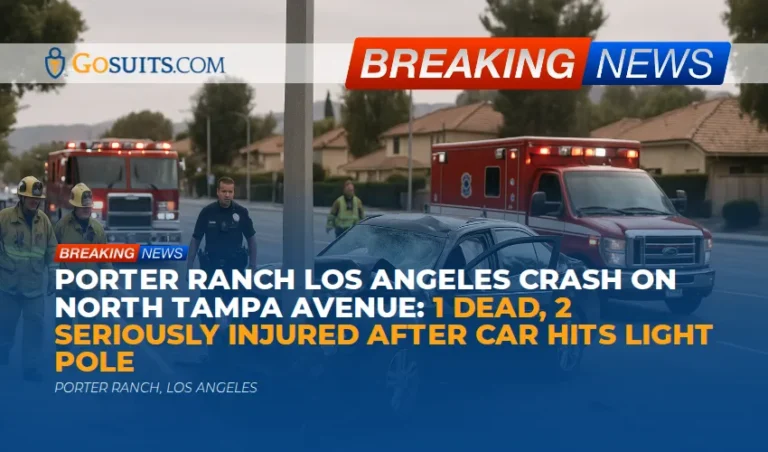
On Sunday morning, authorities responded to a fatal single-vehicle collision in Porter Ranch in the San Fernando Valley. According to public statements, first responders were dispatched around 10:11 a.m. to the vicinity of 10502 North Tampa Avenue after a driver reportedly struck a light pole. One individual was pronounced deceased at the scene. Two others were transported to a nearby hospital in serious condition. The person who died had not yet been publicly identified at the time of reporting. Additional status updates for the hospitalized patients were not immediately available.
When fatal and serious-injury collisions occur on city streets in the northwest Valley, multiple agencies often coordinate: the Los Angeles Fire Department provides emergency medical response, the Los Angeles Police Department’s Valley Traffic detectives typically conduct the collision investigation, and the Los Angeles County Medical Examiner-Coroner manages decedent identification and next-of-kin notifications. In certain circumstances, if a collision touches a state facility like an on-ramp or freeway, the California Highway Patrol may be involved. These overlapping roles are common in Los Angeles and can affect how and where families request official records later on.
Where it happened and local context for Porter Ranch neighbors
North Tampa Avenue runs through residential communities near the Porter Ranch Town Center and sits not far from the 118 Ronald Reagan Freeway. The corridor sees a mix of daily school, shopping, and commuter traffic. Neighbors know the wide cross-streets, gentle grades, and occasional gusts that come with Valley microclimates. Limekiln Canyon Park and Aliso Canyon trails offer weekend relief just a few minutes away, but Tampa can feel busy on late mornings when breakfast rushes blend into errand hours.
Even a single-car impact into a fixed object like a light pole can generate tremendous forces. Poles, signal cabinets, and utility structures are designed for city operations, not to absorb high-speed impacts. That reality is why investigators often take detailed measurements at the scene and why nearby cameras or business surveillance footage can be so valuable for understanding vehicle movement, speed, and any potential avoidance maneuvers preceding the crash. Families in the Valley who are suddenly navigating these technical details often discover there are many different records to request and preserve.
First steps families and survivors often take after a fatal or serious crash
When grief and uncertainty collide with logistics, it helps to move one step at a time. Below are practical actions that families and injured passengers commonly consider in Los Angeles after a severe collision. These are general tips for information only.
Obtain essential reports and confirm case information
- Collision report – If the scene was on a city street, request the Traffic Collision Report from LAPD. If a state facility was involved, CHP may have jurisdiction. CHP explains how to request a report and what proof you need to provide [1].
- DMV SR-1 report – California requires an SR-1 report to the DMV within 10 days if a crash involves injury, death, or property damage above the state threshold. The DMV provides the SR-1 form and filing details [2].
- Medical Examiner-Coroner records – For fatalities in Los Angeles County, the Medical Examiner-Coroner maintains case records and autopsy reports. Their public records page explains requests, timeframes, and who can receive what documents [3].
Preserve time-sensitive evidence
- Scene photos and pole tags – If safe, document the light pole’s asset sticker or number. Take wide and close-up photos of skid marks, debris, roadway surface, and any nearby cameras.
- Vehicle data – Many modern vehicles store crash data in an Event Data Recorder. NHTSA explains what EDRs are and what information may be recoverable [13]. Preserve the vehicle before repairs or salvage if possible.
- Video sources – Nearby storefronts or homes may overwrite footage within days. A prompt, polite request or a preservation letter may help secure key video.

Understand the local trauma system and hospital records
- Trauma centers – Los Angeles County operates a tiered trauma system. The County EMS Agency publishes trauma system information and facility listings [4]. Request hospital records, paramedic run sheets, and imaging as soon as feasible.
Families managing funeral arrangements, benefits, and insurance paperwork may also find structured guides helpful. One resource written specifically for Angelenos is the los angeles wrongful death checklist, which outlines practical documents to gather and typical next steps.
Who investigates and what records to request in Los Angeles
Single-vehicle crashes are still complex. Here are the typical players and records that may exist, depending on the exact location and facts.
Law enforcement and emergency response
- Police collision report and scene file – Narrative, diagram, measurements, and sometimes photographs. For CHP-handled investigations, start with their request process [1].
- Medical Examiner-Coroner – Case intake, autopsy report, toxicology where applicable, and identification or next-of-kin notifications. See LA County MEC guidance [3].
- DMV reporting – If legal thresholds are met, the SR-1 is a state requirement [2].
City infrastructure and data sources
- Street lighting asset information – Poles carry ID tags. Photographs of the exact pole, base condition, and surrounding clear zone can assist later analysis. Federal roadway safety guidance explains why “clear zones” exist and how fixed objects factor into crash outcomes [8].
- Signal timing or maintenance logs – If the location includes signals or recent work, related logs may exist.
- Public records requests – When you need maintenance histories, prior complaints, or camera retention policies from public entities, California’s Public Records Act provides a path to request those documents [5].
Potential civil liability in a single-car collision
At first glance, a driver striking a light pole may appear straightforward. Yet civil liability can extend beyond the driver depending on facts developed by investigators and reconstruction professionals. Consider, for example:
- Vehicle-related issues – Brake failure, tire tread separation, steering component defects, or improper repairs can contribute to loss of control. Preserving the vehicle quickly is critical if defect or maintenance questions arise.
- Roadway environment – Sightline obstructions, pavement edge drop-offs, or the placement and condition of roadside hardware can influence crash severity. National guidance on clear zones and roadside design underscores how fixed-object crashes can become deadly [8].
- Public entity claims – If a dangerous condition of public property is credibly alleged, California’s Government Claims Act generally requires a written claim to the responsible entity within six months of the incident date in most personal injury and wrongful death matters [11].
- Employer or owner liability – If the driver was in the course of employment or driving a company vehicle, different insurance coverages and responsibilities can apply.
California’s Basic Speed Law requires drivers to operate at a speed that is reasonable and prudent given traffic, weather, visibility, and roadway conditions, regardless of the posted limit [9]. Determining whether roadway conditions, driver behavior, or a combination of factors led to a pole strike involves careful review of the total evidence, not assumptions.
Insurance layers that may apply to passengers and families
After a fatal or severe crash, multiple coverages may interact:
- Liability coverage – The at-fault party’s insurer typically handles bodily injury and wrongful death claims up to policy limits, if liability is established.
- Uninsured/Underinsured Motorist (UM/UIM) – Injured passengers may access UM/UIM under the host vehicle’s policy or sometimes their own household policy if the at-fault coverage is limited.
- Medical Payments (MedPay) – Optional coverage that can help pay medical bills regardless of fault, subject to policy terms.
- Funeral and survivor benefits – Certain policies include death benefits or related coverages. California’s Department of Insurance publishes consumer guidance for auto claims that can help you understand coverage terms and processes [12].
Families often have questions about how insurance prioritizes payments when multiple policies may apply. Early, organized documentation of medical bills, funeral invoices, and wage information helps whichever insurer ultimately processes the claim evaluate it more efficiently.
How to protect your rights before speaking with insurers
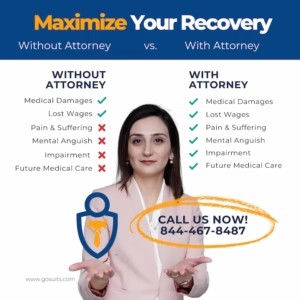
Insurance adjusters often request quick recorded statements. That may feel routine, but remember that anything said can be used to shape or limit a future claim. Before making any formal statement or signing medical authorizations for an insurer, it is wise to speak with a qualified legal professional about your rights and obligations. This article is not legal advice, but it emphasizes a basic truth learned from many Valley collisions: be cautious, be accurate, and do not guess about facts or medical conditions you have not yet confirmed.
People involved in serious collisions frequently look to car accident lawyers for help coordinating medical records, preserving vehicle data, and handling insurer communications so they do not inadvertently harm their claims.
In collisions on Los Angeles city streets, many residents specifically seek guidance from Los Angeles car accident lawyers who understand how local agencies maintain records and how to obtain city asset and maintenance information when needed.
Medical and trauma system notes for the San Fernando Valley
Los Angeles County’s trauma system routes the most critically injured to designated trauma centers. The County EMS Agency publishes trauma system details that can help residents understand how destinations are chosen and why inter-facility transfers sometimes occur [4]. For families, the practical takeaway is this: request the full set of records. That usually includes paramedic or fire department run sheets, emergency department triage notes, imaging results, operative reports if surgery occurred, discharge summaries, and any transfer documentation.
After discharge, follow-up care in the Valley can involve a network of specialists. Keeping a pain and function journal, retaining appointment calendars, and saving receipts for transportation or home modifications can all support a thorough documentation file for future claims review.
Key California timelines and deadlines to know
- DMV SR-1 deadline – File within 10 days if required by injury, death, or property damage thresholds [2].
- Wrongful death and personal injury statute of limitations – In general, California provides two years from the date of the incident for these civil actions, subject to exceptions [10].
- Claims involving public entities – Most claims must be presented within six months under the Government Claims Act before a lawsuit can be filed [11].
Deadlines can change based on specific facts, the identity of potential defendants, or whether minors are involved. Carefully track dates and keep a simple timeline chart with incident date, medical milestones, and any claim submissions.
Data and safety context for fixed-object crashes
Nationwide traffic safety snapshots consistently show that single-vehicle collisions and fixed-object impacts contribute disproportionately to severe outcomes. Federal data compilations outline the share of fatalities attributed to single-vehicle crashes and how roadway departure and fixed-object strikes factor into the toll each year [6]. California’s Office of Traffic Safety publishes statewide statistics and city rankings that help communities benchmark trends and risk factors [14].
Seat belts, speed management, and sober driving remain the core life-savers. CDC research highlights that wearing a seat belt is one of the most effective protections for drivers and passengers in a crash [7]. The state’s Basic Speed Law requires speeds to be safe for conditions, which can change within minutes on Valley arterials when winds pick up or when sun glare shifts near midmorning [9].
Documentation checklist to gather early
Collecting the right materials in the first days and weeks reduces later stress and can significantly improve the clarity of any insurance or civil claim review. Consider assembling the following:
- From law enforcement and the coroner – Police collision report and any supplemental diagrams or photos, Medical Examiner-Coroner case number, autopsy report, and death certificate copies. LA County MEC explains how to request case records [3]. Death certificates are issued by the County Registrar-Recorder.
- From medical providers – Emergency department records, radiology images on CD, operative reports, prescriptions, discharge instructions, physical therapy referrals, and billing ledgers.
- From the scene – Pole asset ID, roadway photos, debris field, skid or yaw marks, weather screenshots for the time window, and photos of any visible vehicle failures.
- From the vehicle – Towing invoice and location, photos before repair or salvage, and steps to preserve or download Event Data Recorder information where applicable [13].
- From insurers – Written confirmation of claim numbers, a log of all calls, and copies of any medical release forms before you consider signing them.
- From employers – For injured survivors or decedents who worked, gather recent pay stubs, W-2s, and employer statements about missed time or duties.
City infrastructure and maintenance records that may matter
If the crash involved a light pole or other roadway structure, maintenance and placement records may exist with the relevant city department or utility. While not every case turns on infrastructure details, some do, especially where clear-zone distance, prior impact repairs, or base deterioration are in question. The Federal Highway Administration’s clear zone guidance provides the safety rationale for how fixed objects are sited and protected [8].
When requesting city records, clearly identify the location, pole number if available, and the timeframe you want searched. If you do not receive what you expect, politely follow up and refer to the California Public Records Act, which outlines disclosure duties and timelines for public bodies [5].
Why acting promptly matters and what to do now
Why timing matters
- Evidence disappears quickly – Skid marks fade, debris is swept, damaged poles are replaced, and video systems overwrite in days.
- Health records change – Early imaging, labs, and physician notes capture the most accurate clinical picture. Later records often summarize or rely on those first entries.
- Deadlines are strict – DMV reporting windows, public entity claims, and civil statutes all run on calendars, not emotions [2] [10] [11].
What to do next
- Organize and preserve – Create a simple folder system for police, medical, insurance, and expense documents. Save digital copies.
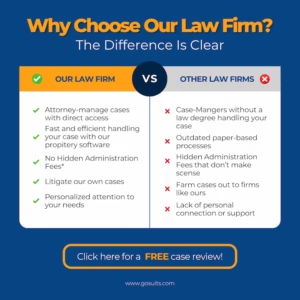
- Get informed before you call insurers – Consult a qualified attorney first to understand your rights. What someone says to an insurance company can be used against them later in the process.
- Request the core records – Start with the collision report, coroner case information, and initial hospital records. Then expand to scene photos, vehicle data, and any available video.
- Track costs and impacts – Keep receipts and a running log of missed work, transportation, home care, and counseling. These entries provide real-world context to any claim file.
Commentary from Gosuits Los Angeles, California Personal Injury Attorney
Our hearts are with everyone affected by the Porter Ranch crash reported on North Tampa Avenue. Losing a neighbor on a Sunday morning hits hard in a tight-knit Valley community. Please remember that what follows is educational and general. Every case turns on its own facts.
Single-vehicle collisions into fixed objects like light poles often raise focused questions about speed for conditions, avoidability, and roadside design. In our view, a careful investigation should secure vehicle data if available, evaluate whether any roadway or environmental factor contributed to loss of control, and examine all surveillance sources. Even when only one vehicle is involved, there may be more to learn about what set the crash in motion and what turned it deadly.
Insurance carriers and large entities have playbooks. Adjusters may move quickly to obtain recorded statements, broad medical authorizations, and early damage assessments before families have gathered full information. The imbalance is real. Without context, people can unintentionally minimize symptoms, accept assumptions about fault, or forgo evidence that would have clarified what happened. Understanding your options first can help rebalance those conversations.
Finally, a free consultation can be an important step to understand timelines, evidence preservation, and how multiple insurance layers may interact in a case involving passengers and a fatality. Learning these points early can prevent missteps and help families make informed decisions in the weeks ahead.
References
- Obtaining a Copy of a Traffic Collision Report – California Highway Patrol
- Accident Reporting Requirements SR-1 – California DMV
- Medical Examiner-Coroner Public Services – Los Angeles County
- Trauma System Information – Los Angeles County EMS Agency
- California Public Records Act Guide – Office of the Attorney General
- Traffic Safety Facts 2021 Data: Overview – NHTSA
- Seat Belts: Get the Facts – CDC
- Clear Zone and Roadside Safety – Federal Highway Administration
- California Vehicle Code 22350 Basic Speed Law – California Legislature
- Code of Civil Procedure 335.1 Statute of Limitations – California Legislature
- Government Code 911.2 Claims Presentation Deadline – California Legislature
- Automobile Insurance Consumer Guide – California Department of Insurance
- Event Data Recorder Information – NHTSA
- General Statistics Fact Sheet – California Office of Traffic Safety