- Orange County is seeing more crash claims in 2026: What this story says
- Why car accident claims are rising around Newport Beach and Orange County
- First steps after a crash in Orange County
- Where to get official records in Orange County
- Insurance pitfalls and safer ways to handle the claim
- Liability and your rights under California law
- Common injuries and why consistent medical care matters
- Timelines that matter in California claims
- Evidence to preserve and how to protect it
- Local crash patterns and seasonal context in Orange County
- Support for families after a fatal crash
- Time-sensitive next steps
- References
- Commentary from Gosuits Newport Beach, California Personal Injury Attorney
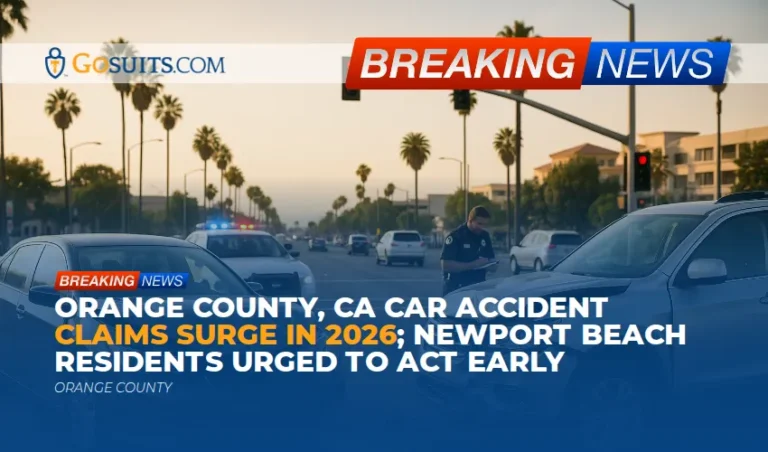
Orange County is seeing more crash claims in 2026: What this story says
According to a recent community update shared from Newport Beach, car accident claims are continuing to rise across Orange County in 2026. As described, more drivers and passengers are dealing with injuries, mounting bills, and tougher insurance negotiations. The piece highlights common causes that locals will recognize on our busiest routes: distracted driving, higher rideshare traffic, speeding and aggressive driving, plus heavy congestion that comes with growth in Southern California. It also reiterates the basic guidance many people hear after a wreck: get medical care quickly, document everything, and do not accept an insurance settlement before you understand your rights.
While the update focuses on the trend and not a single crash, it reflects what many in Newport Beach, Costa Mesa, Irvine, Santa Ana, and Anaheim have noticed themselves during peak commute hours along SR-55, I-405, SR-73, and PCH. If you work near Fashion Island, commute past John Wayne Airport, or navigate the Balboa Peninsula on a sunny weekend, you have likely felt the squeeze.
Why car accident claims are rising around Newport Beach and Orange County
Traffic volumes, rideshare pickups near entertainment districts, and year-round tourism all press on the same limited road space. More vehicles plus more distraction can mean more collisions. State and national safety agencies have reported elevated roadway deaths in recent years compared to pre-pandemic levels, even as some categories have begun to show modest improvement. These broader trends provide context for what Orange County residents are experiencing on the ground [1][2].
Local dynamics matter, too. The mix of freeways, toll roads, coastal arterials, and neighborhood streets creates frequent merge and lane-change conflicts. Rideshare drivers following app prompts can slow mid-block for pickups around Newport Pier or along Balboa Boulevard. Visitors navigating unfamiliar streets near Pacific Coast Highway may hesitate or brake unexpectedly. All of this raises the chances of rear-end, side-swipe, and intersection crashes.
First steps after a crash in Orange County
After a collision on the 55, outside a coffee shop on Newport Center Drive, or anywhere in the County, there are a few actions that can protect health and strengthen any future claim. If safe to do so, move vehicles out of traffic and turn on hazard lights. Call 911 for any potential injury. Then consider the following steps.
- Call law enforcement and ensure a report is created. A police or CHP report anchors key facts: location, involved parties, witness names, and officer observations. This can be critical later on [3].
- Get medical care the same day. Even if you feel “okay,” whiplash, concussions, and soft-tissue injuries can surface hours or days later. Early evaluation creates a clear medical timeline.
- Document the scene. Take photos or video of vehicle positions, damage, skid marks, traffic signals, rideshare decals, and nearby businesses with cameras. Note weather and lighting.
- Exchange information. Get driver’s license, insurance, and vehicle details from all involved parties, including any commercial or rideshare drivers.
- Limit conversations and do not admit fault. Briefly provide facts to officers and medical providers. What you say can be quoted in reports and insurance files.
- Consider local camera sources. Businesses near Balboa Island ferry landings, storefronts along MacArthur Boulevard, and parking structures at Fashion Island may have CCTV systems. Footage can be time sensitive.
- Report the crash to the DMV when required. If anyone was injured or property damage likely exceeds the statutory threshold, California requires filing an SR-1 within 10 days, regardless of fault [4].
For a deeper, step-by-step walkthrough tailored to California collisions, you may find this guide helpful: what to do after a California car accident.
Where to get official records in Orange County
Getting the right documents early can make a meaningful difference. Here are core records and where they typically come from in our region.

Traffic collision reports
- California Highway Patrol (CHP). If your crash involved CHP jurisdiction such as a freeway segment of I-405, SR-55, SR-73, or PCH outside a city’s primary jurisdiction, the CHP collision report can be requested through official channels [3].
- Newport Beach Police Department. For city-street collisions within Newport Beach, reports are maintained by the Police Department’s Records Unit. The City’s official website provides department and records information for public requests [5].
Coroner and autopsy records in fatal collisions
- Orange County Sheriff-Coroner. In a fatal crash, the Coroner Division manages decedent identification and postmortem examinations, and maintains associated records. Families can find how to request reports, timelines, and release procedures through the County’s official site [6].
Medical records and billing
- Hospitals and clinics. Emergency visits at facilities serving Orange County can be documented by requesting medical records directly from the provider’s Health Information Management department. Keep both treatment records and itemized bills.
- Trauma system information. The California EMS Authority maintains information about the statewide trauma system, which can help you understand trauma center designations and patient routing after serious collisions [7].
DMV filings and verification
- DMV SR-1 accident report. If the statutory criteria are met, file your SR-1 within 10 days. Late filings can cause avoidable complications with licensing and insurance [4].
Insurance pitfalls and safer ways to handle the claim
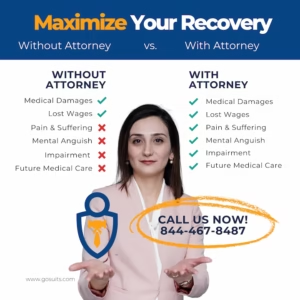
Insurance companies routinely look for reasons to reduce what they pay out. Adjusters may sound friendly, but their recordings, forms, and casual questions are designed to capture statements they can use later. Giving a recorded statement or signing a medical release too early can weaken a legitimate claim. Speaking with car accident lawyers before calling any insurer can help you avoid unforced errors while you focus on treatment.
- Do not provide a recorded statement without counsel. Seemingly harmless details can be taken out of context. Adjusters are trained to ask questions that narrow or shift fault.
- Be careful with blanket medical authorizations. Overbroad releases can give insurers access to years of unrelated history that they may cite to deny or discount injuries.
- Understand California auto insurance layers. Questions about policy limits, med-pay, UM/UIM, and umbrella coverage often determine what funds are available and in what order they apply. The California Department of Insurance offers consumer resources and a formal complaint process if you suspect unfair practices [8].
- Rideshare insurance is different. Uber and Lyft coverage depends on whether the app was off, on but without a passenger, or during an active trip. The California Public Utilities Commission regulates TNC requirements statewide [9].
If you intend to report a claim, consider consulting an attorney first, because what you share with an insurance representative can later be used to challenge liability or damages.
Liability and your rights under California law
California follows a fault-based system, and more than one person or entity can share responsibility for a crash. That can include a driver who was texting, a rideshare driver who braked suddenly while searching for a passenger, a trucking company that pressured a tight schedule, or even a public entity in limited circumstances tied to unsafe roadway conditions. Two statewide legal principles often come into play.
- Pure comparative negligence. If multiple parties share fault, each person’s recovery is reduced by their own percentage of fault. Even if you are found partly responsible, you can still pursue the remainder. The Judicial Council’s jury instruction on comparative fault explains how this is applied at trial [10].
- Two-year general deadline for personal injury. In most injury cases, California law sets a two-year window to file a civil action, measured from the date of injury. There are shorter deadlines when public entities are involved, and special rules for minors and certain claims, so early review is especially important [11].
In practice, establishing liability means gathering evidence early, interviewing witnesses, preserving video, and analyzing crash mechanics with clarity.
Common injuries and why consistent medical care matters
Orange County collisions frequently lead to soft-tissue neck and back injuries, concussions and other traumatic brain injuries, fractures, and joint damage. Symptoms can start subtle and get worse over days. Here is why steady care matters.
- Accurate diagnosis. Timely imaging and specialist referrals can capture injuries before inflammation subsides and helps rule out red flags. The Centers for Disease Control and Prevention shares guidance on recognizing and managing concussions and TBIs [12].
- Medical timeline. Insurance reviewers often look for gaps in treatment to argue that injuries were not serious or not related. Following provider recommendations closes these gaps.
- Functional impact. Keep notes about missed work, sleep disruption, mobility limits, and household help. These details inform pain and suffering analyses and any claim for lost wages.
Timelines that matter in California claims
Deadlines and practical timelines can decide whether a strong case stays strong.
- DMV SR-1 filing. Ten days when the injury or damage threshold is met [4].
- Medical care window. Same-day or next-day care is ideal. Document all follow-ups and therapies.
- Evidence retention. Many businesses and public agencies retain video for a short period. Request footage quickly or have a representative do it for you. UC Berkeley’s TIMS platform shows how collision data are compiled and analyzed for safety planning, underscoring how early data capture matters [13].
- Insurance notifications. Policies often require prompt notice, but consider speaking with counsel first to control what is shared and when.
- Statute of limitations. Most personal injury cases have a two-year filing deadline, with shorter claim windows for public entities [11].
Evidence to preserve and how to protect it
Strong cases are built on clear facts. In a Newport Beach fender-bender near the Balboa Fun Zone or a serious freeway crash on the 405, the same core evidence helps.
- Scene photos and video. Capture all angles, including roadway markings, signage, and sightlines.
- Vehicle data. Modern cars store useful crash metrics. If a severe crash totaled your vehicle, flag this quickly so data can be preserved.
- Witness contacts. Get names and reliable phone numbers or emails from bystanders and nearby business staff.
- Surveillance footage. Identify likely cameras and request that footage be preserved. Formal letters can help. California guidance exists on requesting CCTV in public contexts, which can inform your approach to private and public footage requests [14].
- Medical records and bills. Save every visit summary, referral, and bill. Keep them together with a running log of symptoms.
Local crash patterns and seasonal context in Orange County
Local knowledge helps explain how and why incidents happen.
- Coastal glare and coastal fog. Mid-morning glare on PCH and coastal marine layers on early spring mornings can quickly reduce visibility. Give extra following distance and use low-beam headlights in fog.
- Tourist surges and event traffic. Holiday weekends, the Newport Beach Christmas Boat Parade, and summer beach days bring slowdowns and unpredictable stops near Newport Pier and Balboa Island.
- Merge zones and short on-ramps. SR-55 transitions and the 73 Toll Road connectors can see frequent lane changes as drivers decide between toll roads and free alternatives.
- Rideshare activity. Hot spots around Fashion Island, along Newport Boulevard, and by nightlife clusters can create sudden curbside stops and mid-lane braking. The CPUC’s oversight of TNC operations provides a statewide framework for insurance and safety requirements [9].
When these conditions mix with distraction, tailgating, or speeding, even a short drive across town can turn risky. That is one reason many residents choose to consult with car accident lawyers in Irvine early, to understand evidence needs and how local road dynamics affect liability arguments.
Support for families after a fatal crash
When the worst happens, families are suddenly asked to make decisions while navigating grief. A few immediate steps can help keep options open.
- Identify the investigating agency. Determine whether Newport Beach Police, CHP, or another department handled the scene. Ask for the report number and how to order the final report. CHP’s statewide guidance explains what is typically included and how to request a copy [3].
- Contact the Orange County Sheriff-Coroner. The Coroner Division can explain procedures for autopsy findings, toxicology timelines, and how families can request records. The County’s website outlines next steps and contact information [6].
- Gather key documents. Death certificates, funeral invoices, and proof of the decedent’s income and contributions to the household may be needed later.
- Be careful with insurance outreach. If an insurance representative calls quickly with condolences and questions, remember that recorded statements can affect any future civil case. It is reasonable to decline to speak until after consulting counsel.
If roadway design or maintenance appears to be a factor, different deadlines and procedures can apply. Early review helps ensure the correct notices are sent to the right public entities on time.
Time-sensitive next steps
Acting promptly can reduce stress, prevent evidence loss, and protect financial stability. Here is a clear, time-aware roadmap of what should happen next.
- Secure medical care and follow-ups. Prompt diagnosis supports recovery plans and creates the documentation future claims require.
- Request official reports. Start the process for CHP or local police collision reports, and for coroner records if a fatality occurred. These reports often take time to finalize in serious collisions.
- Preserve video evidence. Ask nearby businesses or property managers to save any footage before it is overwritten. Written preservation requests are often more effective than verbal ones.
- Organize your file. Keep a folder with medical visit summaries, bills, prescription receipts, time off work, and a pain journal. Consistency now pays dividends later.
- Consult an attorney before speaking to insurers. Understanding your rights first can prevent recorded statements or broad medical releases from undermining a legitimate claim.
- Mark legal deadlines. Note the 10-day DMV SR-1 requirement when applicable and the civil filing deadline that generally applies in California. When a public agency may be involved, plan for shorter claim windows.
References
- Traffic Safety Facts Publications – NHTSA
- Traffic Safety Facts and Rankings – California Office of Traffic Safety
- Collision Reports and How to Request Them – California Highway Patrol
- SR-1 Traffic Accident Report Requirements – California DMV
- Police Department Information – City of Newport Beach
- Coroner Division Services and Records – Orange County Sheriff-Coroner
- California Trauma Center System – EMSA
- Consumer Help and Complaint Center – California Department of Insurance
- Transportation Network Companies Requirements – California Public Utilities Commission
- CACI No. 405 Comparative Fault – Judicial Council of California
- Code of Civil Procedure Section 335.1 – California Legislature
- Traumatic Brain Injury Information – CDC
- Transportation Injury Mapping System (TIMS) – UC Berkeley SafeTREC
- Public Video Surveillance Guidance – California DGS
Commentary from Gosuits Newport Beach, California Personal Injury Attorney
For everyone in our Newport Beach and Orange County community who has been affected by a recent collision, we are truly sorry you are going through this. The information above is shared for educational purposes to help you understand general steps and options in the aftermath of a crash. Every situation is unique, and nothing here is a substitute for tailored guidance about your specific circumstances.
From our vantage point, the trend described in this story tracks with what many residents are experiencing on SR-55, I-405, and along PCH. Heavier traffic, more rideshare activity, and distraction are a tough combination. The most consistent issues we see are delayed medical care and missing documentation in the early days, which insurers later point to when challenging otherwise legitimate claims. Preserving evidence and building a clean timeline of medical treatment can make a real difference.
Insurance companies and large corporations have playbooks built to minimize payouts. That can look like friendly recorded calls early on, broad medical authorizations that sweep in old records, or quick settlement offers before the full scope of injuries and wage loss is known. These tactics leverage unfamiliarity with the process and strict deadlines. Being thoughtful about what you say, and when, helps level the playing field.
It is important to learn your options and your timelines before speaking with any insurer. A free consultation can clarify coverage layers, potential sources of recovery, and the best order of operations for gathering evidence, requesting official reports, and protecting your claim. Knowing the ground rules early is a simple way to prevent avoidable missteps later.