- What we know about the Sherman Oaks 405 Freeway motorcycle crash
- Location, timing, and traffic context near Burbank Boulevard
- Why 405 Freeway motorcycle crashes can be so dangerous
- Civil liability and injured rider rights after a motorcycle and vehicle collision
- Practical next steps: medical care, evidence, and documentation
- How to obtain official reports and public records
- Insurance issues that commonly arise after Los Angeles motorcycle collisions
- Safety and prevention notes for Sherman Oaks and Valley commuters
- Where to call for help and information in Los Angeles County
- Next steps and why timely action matters
- Commentary from Gosuits Los Angeles, California Personal Injury Attorney
- References
What we know about the Sherman Oaks 405 Freeway motorcycle crash
On Saturday, March 7, at approximately 7:30 p.m., a motorcyclist was seriously injured in a collision on the northbound 405 Freeway in Sherman Oaks, close to the Burbank Boulevard off ramp. California Highway Patrol reported that a motorcycle and a vehicle collided while traveling northbound. Los Angeles Fire Department paramedics responded, provided first aid at the scene, and transported the rider to a local hospital in serious condition. No other injuries were reported, and no arrests were made at the scene. Both the HOV lane and one additional lane were temporarily closed while crews worked the scene; they were later reopened. The names of those involved have not been released, and there is no further official information at this time.
Location, timing, and traffic context near Burbank Boulevard
Local drivers know this stretch of the 405 near Burbank Boulevard as a high-volume corridor where traffic can be fast one minute and stop-and-go the next, especially on weekend evenings. The crash location sits in the heart of Sherman Oaks, with the Burbank Boulevard off ramp connecting quickly to neighborhood streets, the Van Nuys corridor to the north, and the Ventura Boulevard spine to the south. Evening light conditions, heavy commuter flow, and weaving near exits can present compounded risks for motorcyclists and drivers alike. HOV lane activity is prominent here as carpoolers, motorcycles, and clean-air vehicles share high-speed flow adjacent to general-purpose lanes. Caltrans and CHP often coordinate temporary closures in this area when first responders need safe space to work incidents, which is consistent with the lane closures reported in this collision [4].
Why 405 Freeway motorcycle crashes can be so dangerous
Valley riders who use the 405 daily understand how vulnerable a motorcyclist can be in mixed freeway traffic. Nationally, motorcycles account for a small share of vehicle miles traveled yet a disproportionate share of severe injuries and fatalities. NHTSA’s latest national overview shows motorcyclists are significantly overrepresented in traffic deaths relative to their population on the road [7]. Helmets reduce the risk of head injury and death according to the CDC, making proper fit and use a crucial safety step for every ride [8].
Local roadway dynamics matter too. The Burbank Boulevard off ramp is a frequent decision point where drivers make last-second lane changes to exit or avoid congestion. Adjacent HOV operations can add to the complexity, as speed differentials between the carpool lane and general lanes can be pronounced. Caltrans guidance explains who can lawfully use HOV lanes in California and why consistent, predictable merging behavior is essential for safety around these facilities [4].
California is also one of the few states where lane splitting is legal when done safely and prudently. CHP’s published lane splitting safety guidance emphasizes rider speed management, spacing, and high situational awareness to mitigate risk when passing between lines of vehicles [3]. Even when lane splitting is not at issue, those same principles of visibility and risk assessment help riders navigate complex freeway segments like this one.
Civil liability and injured rider rights after a motorcycle and vehicle collision
From a civil-injury perspective, collisions like this typically turn on negligence questions. Key issues often include whether a driver made an unsafe lane change, failed to signal or check blind spots, followed too closely, or drove at a speed not reasonable for conditions. In California, responsibility for damages can be shared. The state’s comparative fault framework means each party’s percentage of fault can reduce or increase how much they must pay or may recover. Official court resources discuss how fault can be apportioned across those involved in an injury case [9]. The specific facts here remain under review, but evidence such as skid marks, dashcam footage, witness accounts, scene measurements, and vehicle damage patterns are central to evaluating civil liability.
Insurance coverage questions often arise in mixed vehicle and motorcycle crashes. Injured riders may need to explore multiple layers of coverage, including the at-fault driver’s bodily injury liability, the rider’s own uninsured or underinsured motorist (UM/UIM) coverage, and potential medical payments coverage. Early choices can affect claim outcomes, which is why many people choose to consult with seasoned representation before engaging with any insurer. It is common and appropriate to consult motorcycle accident lawyers to understand options and obligations under California law, especially before any recorded statement is given to an insurance adjuster.

Practical next steps: medical care, evidence, and documentation
Right after a serious freeway crash, most people focus on safety and medical care. Once urgent care is underway, careful documentation helps protect legal rights. In Los Angeles County, trauma-capable hospitals may be involved depending on injury severity and transport protocols. The county maintains a list of designated trauma centers that first responders rely on when routing seriously injured patients [12].
As soon as it is safe to do so, consider the following:
- Prioritize medical evaluation and follow-up. Even if you feel stable, delayed-onset symptoms are common after high-energy impacts. Keep all discharge instructions and schedule follow-up visits as recommended. Document pain levels and functional limitations daily for your own records.
- Preserve physical and digital evidence. Keep your helmet, riding gear, and any parts damaged in the crash. Save photos, ride-tracking data, and any dashcam or helmet-cam files. Back up phone photos to secure storage.
- Identify witnesses and camera sources. If anyone stopped to help, note their names and contact information. Nearby businesses, freeway traffic cameras, or private dashcams may have captured the incident. Prompt steps to request or preserve this material can be critical [10].
- Request official reports when available. The California Highway Patrol provides collision reports to eligible parties upon request, generally after the investigation is opened and processed [1]. LAFD incident records may also be available through their public records process [5].
- Report to DMV if required. California requires an SR-1 report to DMV within 10 days if injuries occurred or if property damage meets state thresholds, regardless of fault or insurance status [2].
- Consult before you speak to insurers. Insurance adjusters may contact you quickly for a statement or medical authorization. Consider getting guidance first so you understand how statements can be used and what documentation to share at each step [11].
For a practical, rider-focused documentation aid tailored to the region, see our Los Angeles motorcycle crash checklist.
How to obtain official reports and public records
California Highway Patrol collision reports
CHP collision reports can be requested by involved parties, authorized representatives, or certain family members. The agency’s “Request a Collision Report” page explains eligibility, the CHP 190 application, and where to submit your request, including the appropriate Area Office if using mail or in-person channels [1]. To avoid delays, have the date, approximate time, location, and any known incident or report number ready when you apply.
Los Angeles Fire Department records
If LAFD responded, you may be able to request an incident record or related documentation through LAFD’s public records process. The department provides guidance and points requesters to the city’s Public Records Act request portal for applicable incident information [5]. When submitting, include the incident date, freeway segment, closest off ramp, and approximate time to help locate the record efficiently.
Medical Examiner-Coroner information in fatal events
In collisions involving a fatality, the Los Angeles County Medical Examiner-Coroner is the official source for death investigations, autopsy reports, and next-of-kin services. Families can review record request procedures on the county’s website and obtain status updates there as well [6]. While this incident involved serious injury rather than a fatality, it is helpful for families to know where to turn should circumstances change.
Caltrans traffic and lane closure resources
For those stuck in traffic or needing post-incident confirmation of lane status, Caltrans QuickMap provides official updates on closures, traffic speeds, and incidents across the 405 and other state routes [10]. In this case, the HOV and an adjacent lane were temporarily closed and then reopened after crews cleared the scene, which aligns with typical incident management on the corridor.
Insurance issues that commonly arise after Los Angeles motorcycle collisions
Freeway motorcycle crashes often lead to unique insurance dynamics. Adjusters may question visibility, lane positioning, or whether either party made sudden, unsafe maneuvers. Riders also report bias, including quick assumptions about speeding or risky behavior even when evidence suggests otherwise. Here are a few issues to be prepared for:
- Recorded statements. Adjusters frequently seek early recorded statements. Statements made under stress can be incomplete or imprecise and may be used later to challenge claims. It is prudent to get guidance first [11].
- Medical authorizations. Broad releases can give insurers access to unrelated medical history. Limited, targeted authorizations and a careful medical chronology protect privacy and claim integrity.
- Comparative fault arguments. Because California apportions damages based on fault, insurers may argue that a rider shares responsibility. Scene evidence, vehicle telematics, and credible witness accounts can be decisive.
- UM/UIM coverage. If the at-fault driver is uninsured or underinsured, a rider’s own policy may apply. Understanding notice requirements and the proof needed to trigger UM/UIM is critical in serious-injury cases.
- Property damage vs. bodily injury. Motorcycle damage can appear minor even when the rider’s injuries are significant. Insurers sometimes try to link low repair estimates with low-injury claims. Medical documentation and biomechanical context help address this mismatch.
California’s Department of Insurance publishes consumer-facing guidance on auto insurance claims, timelines, and how to address disputes or delays that can arise during the process [11]. If you are weighing how to approach communications, many people choose to consult with motorcycle accident lawyers in Los Angeles before authorizing statements or releases so they understand rights and obligations under state law.
Safety and prevention notes for Sherman Oaks and Valley commuters
Even though this collision is still under review, it is worth reiterating a few safety habits that fit the exact conditions many of us face around the Burbank Boulevard off ramp and similar segments:
- Expect last-second merges. The approach to off ramps on the northbound 405 often features weaving traffic. Riders can reduce risk by avoiding blind-spot zones near exit-only lanes and giving extra space to vehicles signaling late exits.
- Mind the HOV lane differentials. The carpool lane can flow much faster than general lanes. When legal transitions occur across the buffer, keep closing speeds conservative and avoid lingering in someone’s blind spot [4].
- Use lane splitting prudently. When conditions permit and it is safe, CHP encourages riders to split at reasonable speeds and only when you have a clear escape path back into traffic if a driver drifts [3].
- Maximize conspicuity. Brighter gear, auxiliary lighting, and strategic lane positioning help drivers see you sooner. NHTSA and CDC materials consistently emphasize visibility and helmets as cornerstones of rider safety [7] [8].
- Scan for roadway debris. Around Sherman Oaks, late-evening traffic sometimes scatters small debris near the shoulders and lane edges. Keep eyes up and leave margins so small evasive moves do not put you in a vehicle’s path.
Where to call for help and information in Los Angeles County
Families and community members often need official information after a serious freeway crash. These sources are authoritative for the Los Angeles area:
- California Highway Patrol. The CHP “Request a Collision Report” page explains eligibility, the CHP 190 form, and where to submit. You can contact the relevant Area Office once you have the date, time, and location details for the crash [1].
- Los Angeles Fire Department. LAFD’s public records process and the city’s records portal handle incident report requests. Be ready with the incident location and approximate time window, plus any incident numbers if provided by responders [5].
- California DMV. For SR-1 reporting, the DMV page outlines when and how to file, who must report, and what information you need, including insurance details [2].
- Los Angeles County Medical Examiner-Coroner (fatal incidents). The county site provides instructions for requesting records, timelines, and office contact information [6].
- Caltrans QuickMap. To verify road closures or confirm when lanes have reopened on the 405, QuickMap is the state’s official, real-time traffic and closure tool [10].
Next steps and why timely action matters
When a collision causes serious injuries, the first days can set the tone for the entire recovery and claims process. Acting promptly helps preserve proof, clarifies medical needs, and avoids procedural pitfalls.
- Start a written and photo record immediately. Small details fade quickly. Document pain, sleep disruption, missed work, and daily limitations. Photograph injuries as they evolve and keep receipts for all out-of-pocket costs.
- Secure time-sensitive evidence. Video footage, eyewitness contact information, and even vehicle telematics can be lost if not requested early. Sending preservation notices to potential evidence holders can make a significant difference.
- Follow medical advice closely. Gaps in care or missed appointments are often raised to challenge the seriousness of injuries. Consistent treatment and documented progress create a clear clinical timeline.
- Understand reporting requirements. The DMV’s SR-1 deadline and insurer notification requirements are strict. Missing deadlines can affect coverage or increase disputes [2] [11].
- Get informed guidance before insurer contact. What someone says to an insurance company can be used later and out of context. A no-cost consultation can clarify which documents to share, how to handle recorded statements, and what to avoid until the facts are organized.
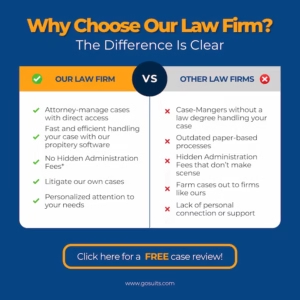
Commentary from Gosuits Los Angeles, California Personal Injury Attorney
Our hearts are with the rider, family, and everyone who stopped to help on the shoulder of the 405. Incidents like this are frightening and disruptive for the entire Sherman Oaks community. The discussion here is for education and general information so neighbors know where to turn for official records, what steps protect their rights, and how the process usually unfolds after a serious crash.
Based on what officials have shared publicly, this was a northbound motorcycle and vehicle collision near the Burbank Boulevard off ramp with a rider transported in serious condition and no arrests at the scene. That leaves important questions open while CHP completes its investigation. In situations like this, liability often depends on lane changes, lookout, speed for conditions, and whether anyone made a sudden movement near the exit. Solid evidence matters. Camera footage, independent witnesses, and physical clues on the roadway can help answer those questions professionally and fairly.
Insurance companies and large corporations know most people have never worked through a serious-injury claim. They act fast and often push for early statements or broad medical authorizations. Those are strategic choices. Early statements can be used to downplay symptoms or imply shared fault before the full picture is known. Broad authorizations can expose years of unrelated medical history. Knowing your rights and the common insurer tactics helps level the playing field.
It is wise to get a free consultation before engaging with any insurer. A short conversation can clarify next steps, how California’s comparative fault rules might apply, and which documents are helpful now versus later. Most importantly, it helps people understand that what they say to the insurance company can be used against them, and there are better ways to share accurate facts once the record is complete. If you have questions about medical care coordination, report requests, or preserving video, speaking with a skilled legal team can be a calm and steady first step.
References
- Request a Collision Report – California Highway Patrol
- Accident Reporting Requirements (SR-1) – California DMV
- California Motorcyclist Safety Program and Lane Splitting Safety – California Highway Patrol
- High-Occupancy Vehicle Lanes in California – Caltrans
- Incident Reports and Public Records – Los Angeles Fire Department
- Records Requests – LA County Medical Examiner-Coroner
- Traffic Safety Facts 2022: Motorcycles – NHTSA
- Motorcycle Safety and Helmets – CDC
- Comparative Fault and Personal Injury Basics – California Courts
- QuickMap Traffic and Closures – Caltrans
- Automobile Insurance Claim Guide – California Department of Insurance
- LA County Trauma System and Centers – Department of Health Services