- What we know about the Graham Hill Road and Cress Road crash
- Why left-turn collisions endanger motorcyclists in Santa Cruz County
- The investigation: evidence that often matters at this intersection
- Where to get official records and information
- Insurance and financial considerations after a serious motorcycle injury
- Rights and timelines under California civil law
- Safety reflections for the Graham Hill corridor
- Steps many families take in the first 72 hours
- Community and public resources that can help
- Why taking action early matters this week
- Commentary from Gosuits Santa Cruz County, California Personal Injury Attorney
- References
What we know about the Graham Hill Road and Cress Road crash
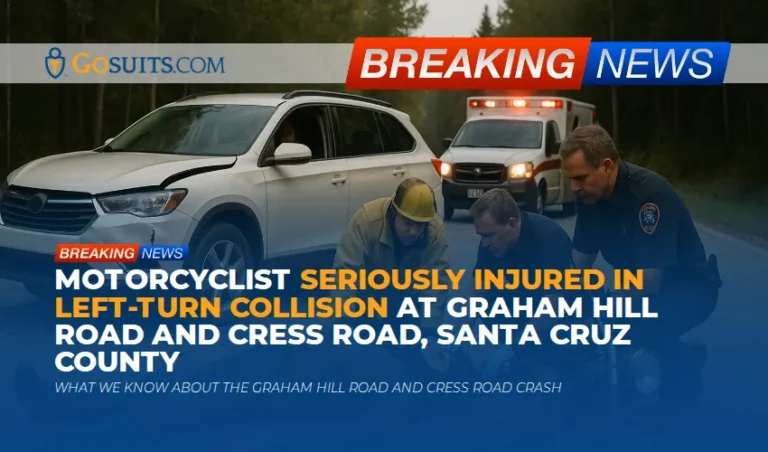
On Tuesday morning, California Highway Patrol responded to a collision at Graham Hill Road and Cress Road in Santa Cruz County. According to CHP’s preliminary information, a Toyota SUV driven by a 32-year-old San Jose woman was traveling south on Graham Hill Road and attempted a left turn onto Cress Road. During that maneuver, the SUV collided with a northbound Honda motorcycle operated by a 25-year-old rider from Soquel. The motorcyclist sustained major injuries and was transported by air ambulance to Santa Clara Valley Medical Center. The SUV driver was uninjured. Investigators noted that alcohol and drugs are not believed to be factors at this time; the cause remains under investigation.
Key local context
Graham Hill Road is a familiar connector between Felton and Santa Cruz, running near Henry Cowell Redwoods State Park and serving riders and commuters from San Lorenzo Valley, Scotts Valley, and Soquel. Morning traffic on this corridor can involve shifting light through the redwoods, busy turning movements at residential side roads like Cress Road, and speed differentials between vehicles. Those general conditions can complicate visibility, especially when vehicles are turning across oncoming lanes. While these roadway characteristics do not determine fault in any one crash, they are part of the practical backdrop investigators review.
Why left-turn collisions endanger motorcyclists in Santa Cruz County
California law requires drivers making a left turn to yield the right of way to oncoming traffic that is close enough to pose a hazard. After yielding and reasonably ensuring it is safe, a driver may proceed, and oncoming traffic must then yield to the left-turning vehicle. This duty is codified in California Vehicle Code section 21801[1]. For motorcyclists on Graham Hill Road, that means an oncoming left turn across their lane is one of the most dangerous scenarios.
Why is this so risky? Federal traffic safety data show motorcyclists face higher injury severity than occupants in enclosed vehicles due to exposure and the challenges other motorists have in detecting smaller profiles. NHTSA’s motorcycle fact sheets consistently describe overrepresentation of motorcycles in fatal crash statistics compared to their share of vehicles and vehicle miles traveled[3]. At intersections, visual detection failures and misjudging a motorcyclist’s speed or distance are recurring crash contributors.
California is also unique in permitting lane splitting, which can affect where riders position themselves near intersections. The DMV’s California Motorcyclist Handbook discusses lane splitting safety considerations and emphasizes that lane choices and speed differentials should be managed to reduce risk in traffic[2]. Note that the information released so far in this crash does not indicate lane splitting occurred. The point here is general: drivers must check mirrors and blind spots carefully, signal and pause before turning across oncoming lanes, and riders can increase their conspicuity with lane position, lighting, and speed management.
The investigation: evidence that often matters at this intersection
CHP investigators will piece together what happened using vehicle resting positions, roadway evidence, witness statements, and any available recordings. On a two-lane rural arterial like Graham Hill Road, the following often becomes relevant in left-turn collisions:
- Turn path and point of impact Evidence of where the left-turn began and where the vehicles contacted each other helps establish whether the oncoming motorcycle had the right of way and the time-distance available to each party.
- Skid, yaw, and scrape marks Tire marks and debris fields can indicate evasive actions, pre-impact speed changes, and lanes of travel.
- Sight lines and lighting Morning sun angle, redwood canopy shadows, and roadside vegetation can affect contrast and detection. Investigators may note whether a driver had an unobstructed view before initiating a left turn.
- Signals and brake lamps If either vehicle’s signal or brake lamps were functioning and in use, that can affect alleged perception-reaction time. Post-crash filament analysis sometimes assists when warranted.
- Witness accounts Independent witnesses, including neighbors on Cress Road and other commuters, can help confirm speed, signaling, or last-second maneuvers.
- Digital evidence Nearby home security cameras, dashcams on commuters heading toward Santa Cruz or Felton, or fleet telematics may capture pre-impact travel paths or the moment of collision.
For families, it can help to note any businesses or residences near the intersection that might have outward-facing cameras. Time is critical because many systems overwrite video within days. When in doubt, ask an attorney to send a preservation request quickly to avoid spoliation of potential evidence.

Where to get official records and information
Several public agencies can provide documents that often matter after a serious crash. Here’s where people typically look, and what to expect in Santa Cruz County and the broader region.
CHP collision report
Because the California Highway Patrol handled this incident, the traffic collision report can be requested through CHP using Form CHP 190. CHP explains the process, eligibility, and fee on its public guidance page, and requesters submit the completed form to the Area office that took the report. Proper identification, a clear connection to the involved person, and the report number (if available) make the process smoother[4][5].
Medical records from the trauma center
The rider was transported by air ambulance to Santa Clara Valley Medical Center in San Jose, which serves as a designated trauma center within the Santa Clara County EMS system. Patients or their authorized representatives have a federal right of access to medical records under HIPAA, typically via the hospital’s Health Information Management department[7][8]. When requesting records, include dates of service, specific document types needed (emergency physician note, operative report, imaging, discharge summary), and signed authorization.
Air ambulance flight records
Air medical providers keep dispatch logs and transport records that can help confirm timelines. Billing for air ambulance services can be significant. The federal No Surprises Act includes specific protections for out-of-network air ambulance services in many situations, limiting certain balance billing practices for emergency transports. Consumers can review these protections and dispute process information through federal resources[9].
Coroner’s records if outcomes change
While this crash has been reported as non-fatal, families sometimes ask where to turn if a loved one later passes due to injuries. In Santa Cruz County, the Sheriff-Coroner handles death investigations and associated records like autopsy and coroner’s findings where applicable. Their office provides guidance on requesting records when legally authorized[6].
Insurance and financial considerations after a serious motorcycle injury
Serious crashes upend finances quickly. Hospital bills, air ambulance invoices, time away from work, and motorcycle repairs arrive before the investigating agency even closes a case. While every situation is different, Californians commonly encounter the following coverage layers and claims issues:
- Bodily injury liability If a turning driver is found negligent under California Vehicle Code section 21801, their auto liability coverage may be a primary source for the injured rider’s claim.
- Uninsured and underinsured motorist coverage Motorcyclists with UM/UIM can turn to their own policy if the at-fault driver is uninsured or lacks adequate limits. UM/UIM claims often require careful proof of damages and compliance with policy notice requirements.
- Medical payments coverage Med-Pay can provide limited no-fault reimbursement for medical bills, useful while liability determinations are pending.
- Health insurance and liens Health plans frequently pay initial medical costs and later assert subrogation or reimbursement rights. The details vary by plan type and applicable law.
- Owner or operator uninsured status California Civil Code section 3333.4 restricts recovery of certain non-economic damages for owners or operators of uninsured vehicles in some circumstances. It is highly fact specific and worth reviewing carefully[10].
Before contacting any insurer, including your own, it is wise to speak with an attorney. Adjusters often request recorded statements quickly; what someone says early on can be used to challenge liability or minimize injuries later. People in serious motorcycle crashes benefit from understanding their rights, claim valuation, and the long arc of recovery costs before engaging in insurer interviews or signing medical releases. Seasoned counsel can also handle time-sensitive preservation letters for nearby video, data from connected vehicles, and phone records where appropriate.
If you are researching options, many people search for motorcycle accident lawyers after left-turn collisions because these cases often hinge on right-of-way analysis, sight lines, and motorcycle-specific injury patterns.
In California, local knowledge of Santa Cruz County roadways, CHP reporting practices, and Santa Clara Valley Medical Center’s trauma discharge processes can make a practical difference. People also often look for motorcycle accident lawyers in California who regularly handle intersection crashes with serious injuries.
Rights and timelines under California civil law
Timelines matter. In most California personal injury cases arising from motor vehicle crashes, the general statute of limitations is two years from the date of injury[11]. Shorter deadlines can apply if a public entity is potentially involved, such as a hazardous roadway claim against a governmental unit. California’s Government Claims Act requires a written claim generally within six months for injury cases before a lawsuit can be filed against a public entity[12].
California applies comparative negligence. That means if more than one party is at fault, any claimant’s recovery can be reduced by their percentage of responsibility. The California courts publish civil jury instructions that include guidance on comparative fault principles for juries considering evidence at trial[13]. Even where liability seems straightforward after a left-turn impact, insurers may still argue that a rider’s speed, lighting, conspicuity, or lane position contributed to the outcome, so documenting conditions thoroughly is essential.
Safety reflections for the Graham Hill corridor
Local riders and drivers know Graham Hill Road can feel unforgiving at times. The downhill run toward Santa Cruz, shaded stretches near Henry Cowell Redwoods, and quick transitions into neighborhood turn pockets create moments where a split-second check makes the difference. Here are general reminders grounded in state guidance and federal safety research:
- Left-turn patience Drivers turning onto Cress Road or other side streets must yield to oncoming traffic that is close enough to pose a hazard. If in doubt, wait for a bigger gap[1].
- Look twice for motorcycles Smaller profiles are easier to miss, and closing speeds can be misjudged. A deliberate second glance before turning can prevent tragedies. DMV training materials emphasize scanning and lane awareness to reduce conflicts[2].
- Conspicuity for riders High-contrast gear, auxiliary lighting where legal, and assertive but lawful lane positioning help others see you. NHTSA research underscores the vulnerability of riders in multi-vehicle crashes[3].
- Time of day considerations Morning glare and shadow bands under the redwoods can reduce contrast. Slowing a bit and pausing before turn-in gives everyone an extra beat to confirm it is clear.
Traffic enforcement and safety grants often follow statewide trends. The California Office of Traffic Safety shares statistics and safety initiatives that inform local enforcement priorities and outreach campaigns for riders and drivers alike[14].
Steps many families take in the first 72 hours
When a loved one is seriously hurt, the first priorities are medical stabilization and communication. Beyond that, certain practical steps can preserve rights and reduce downstream headaches:
- Centralize medical updates Identify one point person to communicate with the hospital and extended family. Keep a running log of providers, procedures, and medications.
- Preserve the motorcycle and gear Store the motorcycle, helmet, jacket, and boots in their post-crash condition. Do not repair or clean them. Physical evidence can help accident reconstruction and demonstrate impact forces.
- Collect scene information Save photos and videos taken at the intersection, even if they seem minor. Note weather, lighting, and any debris patterns observed.
- Identify potential video Ask nearby homes along Cress Road and businesses on Graham Hill if exterior cameras captured the moments before or after impact. Many systems overwrite within days.
- Request the CHP report As soon as it is available, submit CHP 190 to the Santa Cruz Area office to obtain the traffic collision report and diagrams[4][5].
- Track expenses Keep receipts for fuel, parking, meals near the hospital, and lost income notes from employers. These soft costs add up.
- Limit social media Public posts or photos can be taken out of context by insurers. Keep updates private and minimal.
- Talk to an attorney before insurers Even innocent statements in early calls can be used to dispute liability or minimize injuries later. It is common to consult counsel first to understand rights and obligations.
For background on how left-turn scenarios are analyzed in motorcycle cases, this explainer on left turn motorcycle crashes irvine outlines typical fault questions, common evidence, and rider-focused considerations.
Community and public resources that can help
Santa Cruz County communities rally when serious crashes occur. While every family’s needs are different, people often turn to these public institutions and information sources:
- California Highway Patrol Santa Cruz Area For collision reports, supplemental statements, or to verify report status and number. The CHP statewide office locator provides Area office contact information and hours[5].
- Santa Clara Valley Medical Center Health Information Management can process medical record requests once authorized, in accordance with federal right-of-access rules[7][8].
- Santa Cruz County Sheriff-Coroner If a medical outcome later triggers a coroner’s investigation, the Sheriff-Coroner provides guidance on eligibility and records requests[6].
- State traffic safety data The California Office of Traffic Safety publishes statewide indicators and safety priorities, and UC Berkeley’s TIMS platform provides access to crash mapping and summaries that can help residents understand risks on corridors like Graham Hill Road[14][15].
Why taking action early matters this week
When a collision produces major injuries, early organization pays dividends. Here is the practical “why” behind acting sooner rather than later:
- Evidence disappears fast Exterior camera systems can overwrite within days, and roadway scuff marks fade quickly on well-traveled corridors like Graham Hill Road. Prompt preservation requests and site photos improve clarity later.
- Insurers set narratives early Initial recorded statements often shape an adjuster’s view of liability and injuries. Understanding rights ahead of insurer outreach reduces the risk of unintended admissions or incomplete descriptions.
- Medical decisions affect recovery documentation Consistent follow-up, imaging, and specialist consults not only help healing, they create contemporaneous records that accurately reflect the severity of harm.
- Deadlines run in the background Statutes of limitation and, where applicable, government claim deadlines keep moving regardless of recovery. Calendar control allows thoughtful case development instead of last-minute filings[11][12].
- Billing issues benefit from early attention Air ambulance, trauma center, and specialist bills often arrive at different times. Early coordination across auto, UM/UIM, Med-Pay, and health insurance carriers reduces duplicate payments and later disputes[9].
As a matter of sequence, people commonly collect the report number, secure the motorcycle and riding gear, request medical charts, and consult with a qualified attorney before engaging with any insurer. Free consultations are a standard first step that help answer questions about next actions and realistic timelines.

Commentary from Gosuits Santa Cruz County, California Personal Injury Attorney
Our thoughts are with the injured rider, their family, and everyone who stopped to help along Graham Hill Road. Crashes like this shake our community. Please keep in mind that the discussion here is for general information and education; every case turns on its specific facts and evidence.
From what has been publicly reported, this appears to be a classic left-turn impact where an SUV turned across the path of an oncoming motorcycle at Cress Road. California law places a clear duty on left-turning drivers to yield to approaching traffic that is close enough to be a hazard. Intersection cases like this often center on whether the gap to turn was truly sufficient, what the sight lines looked like at that moment, and how long the rider had to react. Thorough scene documentation and timely witness outreach will matter.
In our experience, insurers move fast to shape the narrative. They may seek recorded statements while families are focused on the hospital, or suggest quick settlements before the full scope of orthopedic, neurologic, or rehabilitative needs is understood. Large carriers and corporations build advantages from delay and confusion, and they rely on the fact that most people do not regularly navigate injury claims. The result can be incomplete evidence preservation, missing medical documentation, and undervalued losses.
This is why early, no-cost consultations are so important. They help families understand what to preserve, who should speak to whom, which bills should be routed where, and what reasonable next steps look like while the CHP investigation proceeds. Even a short conversation can prevent avoidable mistakes and give people the breathing room to focus on recovery while the facts are gathered.
References
- California Vehicle Code 21801: Left Turns and Turning Across Lanes – California Legislative Information
- Lane Splitting Guidance – California Motorcyclist Handbook – California DMV
- Traffic Safety Facts 2021 Data: Motorcycles – NHTSA
- How to Obtain a Traffic Collision Report – California Highway Patrol
- Find a CHP Office – California Highway Patrol
- Sheriff-Coroner – County of Santa Cruz
- Emergency Medical Services – County of Santa Clara
- Individuals’ Right under HIPAA to Access Health Information – U.S. HHS
- No Surprises Act Consumer Protections, including Air Ambulance – CMS
- California Civil Code 3333.4 – California Legislative Information
- California Code of Civil Procedure 335.1 – California Legislative Information
- California Government Code 911.2 – California Legislative Information
- California Civil Jury Instructions (CACI) – Judicial Council of California
- Traffic Safety Statistics – California Office of Traffic Safety
- Transportation Injury Mapping System (TIMS) – UC Berkeley SafeTREC