- What we know about the Thanksgiving Day collision in McFarland
- Location context: Elmo Highway and Kendrea Street
- Holiday traffic risks and why Thanksgiving afternoons can be dangerous
- How fatal crash investigations typically proceed in California
- Documents and information families can request
- Civil law insights: wrongful death and serious injury claims after intersection crashes
- Practical steps to protect rights and evidence
- Community notes: McFarland traffic patterns, seasonal conditions, and staying safe
- Commentary from Gosuits McFarland, California Personal Injury Attorney
- Why timely action matters now
What we know about the Thanksgiving Day collision in McFarland
Shortly before 1 p.m. on Thanksgiving Day, a driver was killed in a collision at the intersection of Elmo Highway and Kendrea Street in McFarland. According to the McFarland Police Department, the driver died at the scene. The cause of the collision remains under investigation. Police also indicated no arrests were made at that time. The name of the deceased has not yet been released, which is common until next of kin are notified.
Details such as the number of vehicles involved, whether there were other injuries, and the exact crash dynamics haven’t been made public. In the early days of an investigation, agencies typically focus on documenting the scene, interviewing witnesses, and preserving evidence from involved vehicles and the roadway.
For families and neighbors in McFarland, an incident like this hits especially hard. Elmo Highway carries everyday local traffic and connects neighborhoods to shopping and services, and it’s not unusual for folks to be out around midday on Thanksgiving. Losing someone on a day meant for gathering is a heavy blow to our community.
Location context: Elmo Highway and Kendrea Street
Elmo Highway runs through McFarland and intersects with residential streets like Kendrea Street. Midday traffic often includes residents running last-minute holiday errands, agricultural workers heading home, and travelers moving between local destinations. Intersections like this can be deceptively routine. If you drive them daily, you know how familiar they feel. But even familiar intersections can present risk when visibility, speed, and right-of-way judgments converge in a split second.
Common factors that safety agencies study at intersections include sight lines near corners, traffic control devices (stop signs or signals), turning movements, and approach speeds. Nationwide, federal transportation data consistently show intersections are a focal point for serious crashes, particularly when drivers misjudge another vehicle’s speed or path, or when someone fails to yield. The Federal Highway Administration emphasizes that intersections account for a significant share of severe collisions and has extensive programs devoted to intersection safety improvements such as better signage, signal timing, and roadway design changes. See FHWA Intersection Safety.
Holiday traffic risks and why Thanksgiving afternoons can be dangerous
Thanksgiving week brings a unique mix of traffic conditions: local shoppers, family visits across town, and out-of-town travelers passing through the Central Valley. While many think of late-night or early-morning travel as riskiest, afternoons can be busy and hurried as people juggle preparations and gatherings.
State and federal safety agencies frequently warn about holiday-period driving risks:
- Increased traffic volume strains intersections and corridors as more vehicles converge in short windows of time.
- Speed and inattention often rise when drivers are distracted by schedules, texts, or navigation.
- Impairment concerns accompany holiday gatherings. Nationally, alcohol-impaired driving remains a persistent factor in roadway fatalities. See NHTSA: Drunk Driving.
- Seat belt use is a critical safeguard; NHTSA’s data show seat belts dramatically reduce the risk of death and serious injury. See NHTSA: Seat Belts.
Every Thanksgiving, the California Highway Patrol conducts a Maximum Enforcement Period with public reminders about speed, impairment, and seat belt compliance. The CHP’s holiday enforcement campaigns are aimed at preventing exactly these types of tragedies by increasing visible patrols and encouraging safer choices. See the CHP’s news alerts and holiday enforcement messaging here: CHP News Releases.
None of these general patterns tell us why this specific crash occurred. But they provide helpful context about the environment on a busy holiday afternoon in Kern County.
How fatal crash investigations typically proceed in California
After a fatal collision in a city like McFarland, local law enforcement leads the on-scene investigation. If needed, regional traffic investigators or collision reconstruction specialists may assist. The process generally includes:
- Scene documentation with measurements, photographs, skid mark analysis, debris fields, and vehicle resting positions.
- Witness statements from drivers, passengers, pedestrians, and nearby residents or businesses.
- Vehicle examinations for mechanical issues, airbag modules, event data recorders, and visible damage patterns.
- Toxicology if any impairment is suspected for drivers involved (results usually take time).
- Agency coordination with fire/EMS responders and, when appropriate, the county coroner’s office.
It’s common for the cause of a crash to be listed as “under investigation” for days or weeks while agencies gather and analyze information. Families often learn more as official reports and coroner findings become available. Some of these records can be requested by authorized parties. Under California law, certain traffic collision reports are available to involved persons and next of kin, subject to specific eligibility rules. See California Vehicle Code section 20012 at leginfo.legislature.ca.gov.
Documents and information families can request
In the aftermath of a fatal collision, having the right documents helps families understand what happened and make informed decisions. Here’s a practical overview tailored to a crash within McFarland and Kern County.
Police collision report
Where to request: If McFarland Police Department investigated, requests typically go through the department’s Records Unit. Authorized requesters generally include involved drivers, registered vehicle owners, and legal representatives. If the California Highway Patrol investigated instead, use CHP’s collision report process (Form CHP 190). See general guidance here: CHP Public Records Act Requests.
What it includes: Diagrams, narrative, involved parties, witness info, and preliminary factors. Some sensitive details may be redacted.
Timing: Reports may take several days or weeks, especially when a fatality requires additional review. It can help to note the date, time, and exact location (Elmo Highway and Kendrea Street) when you request.
Legal framework: Availability and redactions are governed by the California Public Records Act and specific provisions of the Vehicle Code. See CPRA exemptions explained generally at California Government Code, CPRA.
Coroner information and autopsy
Where to ask: In Kern County, the Sheriff-Coroner’s Office handles death investigations. Families can inquire about cause and manner of death and request information once available. Autopsy reports often take weeks, depending on toxicology and case complexity.
What to know: Some coroner documents are public; others are released to next of kin. Certain records may be exempt from disclosure depending on investigative status and privacy laws. If you have questions about eligibility or timelines, ask the Coroner’s Office staff about the specific process for next of kin.
Death certificates
Where to obtain: Certified copies are typically requested through the county recorder or through the California Department of Public Health. Statewide information on ordering a death certificate is provided here: CDPH Vital Records.
Why it matters: Death certificates are necessary for estate matters, insurance, and certain claims related to the collision.
911 audio, CAD logs, and dispatch records
Families can request available 911 recordings, Computer-Aided Dispatch (CAD) logs, and radio traffic through the investigating agency’s records unit. Availability and redaction rules vary and are governed by the CPRA and public safety exemptions. Be prepared to provide the incident date, approximate time (shortly before 1 p.m.), and location (Elmo Highway and Kendrea Street).
Traffic camera or business video
If any cameras captured the intersection, footage can be crucial. Many intersections don’t have public cameras, but nearby businesses or homes sometimes do. Video retention windows can be short, sometimes measured in days. Promptly identifying potential cameras and sending preservation requests can make the difference in whether critical footage is saved.
Vehicle inspection and data
Modern vehicles often contain event data recorders that store pre-crash speed, braking, and other parameters. If a loved one’s vehicle is at a tow yard, asking that it remain preserved until an inspection can occur is often important. In complex cases, a professional download of the vehicle’s module data can add clarity to the reconstruction.
Civil law insights: wrongful death and serious injury claims after intersection crashes
California law allows certain family members to bring wrongful death and survival claims after a fatal crash. While every case is different, several core issues typically shape liability and insurance outcomes in an intersection collision:
Right-of-way and yielding
Intersection cases often center on who had the right-of-way and whether a driver failed to yield, ran a stop, misjudged a gap, or made an unsafe turn. Physical evidence, witness statements, and any available video or vehicle data help clarify these questions. The Federal Highway Administration highlights that design and operations at intersections are frequent contributors to serious crashes, underscoring how visibility, signage, and turning movements interact. See FHWA Intersection Safety.
Comparative fault
California follows comparative fault principles. That means responsibility can be shared between multiple parties based on their respective contributions to the crash. Jurors are instructed on how to evaluate negligence and comparative fault using the California Civil Jury Instructions. See the California Courts’ resources on civil jury instructions here: California Courts: CACI.
Insurance layers and available coverage
Insurance analysis often includes several policies:
- At-fault driver’s liability insurance for bodily injury and wrongful death damages, subject to policy limits.
- Uninsured/Underinsured Motorist (UM/UIM) coverage on the decedent’s policy, which can apply if the at-fault driver has no coverage or insufficient limits. The California DMV explains minimum liability requirements and insurance obligations here: DMV: Financial Responsibility.
- Other policies that may be implicated depending on vehicle ownership, employers (if a driver was in the course of work), or permissive users.
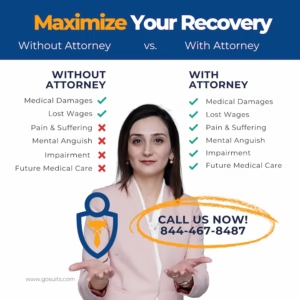
Adjusters typically act quickly to manage exposure. Before giving recorded statements or signing medical or property damage authorizations, it’s wise to seek guidance. What someone says to an insurer can be used against them later. When in doubt, consult a seasoned attorney first and understand the scope of your rights and obligations.
Damages in wrongful death and survival actions
California law recognizes both economic and non-economic damages in wrongful death claims, including funeral and burial expenses and loss of financial support. A separate survival action may address certain claims the decedent could have pursued if they had lived. The applicable parties, damages, and procedures depend on the case’s specific facts and the relationship to the decedent. Because this is a sensitive and technical area, families often benefit from an experienced guide to explain what’s available under California law and what deadlines apply.
Practical steps to protect rights and evidence
When a crash is “under investigation,” time still matters. Important information can disappear unexpectedly. Here are measured steps community members commonly take after a serious or fatal collision:
- Preserve the vehicles. Ensure involved vehicles aren’t destroyed or sold before inspections can occur. Tow yards often start storage charges quickly, so clarifying the plan early is crucial.
- Identify and preserve video. Look for homes or businesses with cameras near Elmo Highway and Kendrea Street. If any may have recorded the crash, send a written preservation request promptly.
- Gather roadway context. Photos of the intersection (signage, traffic controls, line-of-sight, sun angle at the time of day) can help experts later. Don’t trespass or interfere with ongoing investigations.
- Request the police report. When it’s available, obtain it through the investigative agency’s records unit. Be prepared with the date and approximate time (shortly before 1 p.m.). See general eligibility rules in California Vehicle Code section 20012: leginfo.legislature.ca.gov.
- Obtain death certificates. Certified copies are needed for insurance and estate matters. See CDPH Vital Records.
- Be cautious with insurers. Before contacting any insurance company, consider speaking with an attorney first for a free consultation to understand your rights. Statements to insurers can be used later.
- Document life impacts. Keep records of funeral costs, counseling, missed work, and day-to-day changes. These details can matter in civil claims.
Community notes: McFarland traffic patterns, seasonal conditions, and staying safe
McFarland sits along a busy Central Valley corridor, with local streets feeding into larger routes used by residents and visitors traveling between Bakersfield, Delano, and beyond. Intersections near neighborhoods see everything from pedestrians heading to nearby parks to delivery trucks and agricultural traffic. On holidays, the mix intensifies, and people may be less familiar with the area if they’re visiting family.
Late fall in Kern County also brings changing daytime sun angles and, on some mornings, dense tule fog that can linger in low-lying areas. While this crash happened around midday, seasonal conditions still affect driver perception and preparedness during the broader holiday period. The National Weather Service provides safety guidance about Central Valley fog hazards here: NWS Hanford: Fog Safety.
Several evidence-based safety practices apply across our streets:
- Reduce approach speed at intersections. Slowing earlier increases time to react if another driver turns or enters unexpectedly. FHWA emphasizes intersection approaches as critical conflict points; see FHWA Intersection Safety.
- Pause and scan twice before moving from a stop or making a turn, especially at residential cross streets like Kendrea Street where sight lines may be partially obstructed.
- Daytime running lights or low beams can help your vehicle be seen on hazy days, even at noon, and are particularly helpful in the Central Valley’s winter months.
- Plan for holiday timing. If you can, avoid tight arrival windows on Thanksgiving Day. Giving yourself buffer time reduces stress and rushing.
- Never assume right-of-way is noticed. Even if you’re legally correct, defensive driving saves lives when another motorist makes a mistake.
These steps don’t change what happened, and they don’t assign blame. They’re shared in the spirit of community care and prevention, as neighbors who travel the same roads every day.
Commentary from Gosuits McFarland, California Personal Injury Attorney
Our hearts are with everyone affected by the fatal collision at Elmo Highway and Kendrea Street. Holidays bring families together in McFarland, and learning that a neighbor died on Thanksgiving is profoundly painful. This commentary is offered for educational purposes and general information, not as guidance for any particular situation.
Based on what’s publicly known, law enforcement has reported a fatality, no arrests at the time, and an ongoing investigation. When a crash occurs at a neighborhood intersection, the key questions usually include right-of-way at the moment of impact, approach speeds, driver attentiveness, and whether any environmental factors affected visibility. The truth comes from a combination of the police report, coroner findings, vehicle data, and any available video or witness accounts. It’s important not to jump to conclusions early, especially when facts are still coming in.
In our experience, insurers and, at times, corporate stakeholders move quickly after serious collisions. Adjusters may reach out seeking recorded statements, broad medical authorizations, or quick settlements before the full picture is clear. These tactics can take advantage of a family’s lack of information and the understandable desire to put matters behind them. Once a statement is given or a release is signed, it can limit options later. That’s why we encourage people to speak with a seasoned professional for a free consultation before talking to insurance companies. Understanding rights, timelines, and the scope of available coverage helps level the playing field during an incredibly vulnerable moment.
If you’re navigating the aftermath of a fatal crash, it can help to prioritize evidence preservation and to obtain key documents as they become available. Waiting doesn’t usually help, because video is overwritten, vehicles get moved or repaired, and memories fade. Knowledge and timely action make a real difference in how a civil claim is evaluated and in the answers families ultimately receive.
Why timely action matters now
What to do
- Secure official records. Request the police collision report when available, and obtain certified death certificates for necessary administrative and insurance steps.
- Preserve critical evidence. Ask that involved vehicles be held for inspection. Identify potential cameras near the intersection and send preservation requests quickly.
- Document losses. Keep organized records of funeral and burial costs, counseling needs, and other impacts felt in the weeks following the crash.
- Speak with a qualified attorney before insurers. A free consultation can help clarify rights and prevent missteps. What is said to an insurance company can be used later.
Why act now
- Evidence is perishable. Video is often overwritten within days. Vehicles can be moved, repaired, or scrapped. Roadway conditions change. Prompt steps keep critical proof from disappearing.
- Insurance positioning starts early. Carriers evaluate fault and exposure right away. Early, informed decisions help prevent statements or documents from being used against a claim.
- Timelines exist. Reporting windows and statutes of limitation govern civil claims. Understanding applicable timelines ensures options remain open.
- Clear information reduces stress. Having a plan for obtaining records, preserving evidence, and understanding coverage can relieve uncertainty during an already difficult period.
Where it matters
- At the intersection and nearby properties: identifying cameras and witnesses near Elmo Highway and Kendrea Street.
- With investigative agencies: coordinating requests for the collision report, dispatch logs, and, when ready, coroner information.
- At tow yards and storage facilities: ensuring vehicles remain available for inspection before any alterations occur.
- Within your records: centralizing documents so nothing is lost as the investigation progresses.
Context to keep in mind
- Holiday-period dynamics can complicate traffic patterns and investigations, but the fundamental steps to preserve rights don’t change.
- Community safety is a shared priority. Even as the investigation continues, neighbors can support one another by staying attentive on McFarland’s streets and giving extra room and patience at intersections.
Supporting resources
- FHWA Intersection Safety: best practices and national data on intersection risks.
- NHTSA Holiday and Risky Driving: information on impaired driving and seat belt effectiveness.
- CHP News and Enforcement Messaging: statewide holiday enforcement updates.
- California Vehicle Code 20012: who can obtain a traffic collision report.
- CDPH Vital Records: statewide guidance on obtaining death certificates.
- California Courts: CACI: overview of civil jury instructions, including negligence and comparative fault concepts.
- NWS Hanford Fog Safety: Central Valley fog information and safe driving tips.