- What we know about the Dana Point crash on Crown Valley Parkway
- Local context along Crown Valley and Pacific Coast Highway
- Investigation and evidence in a solo-vehicle fatal crash
- Records to request and where to call in Orange County
- California rules and timelines after a fatal traffic crash
- Insurance and financial issues families often confront
- Community notes from Laguna Beach and Dana Point
- Safety takeaways for neighbors driving Crown Valley and PCH
- Call-to-Action: Time sensitive steps the public can take after a fatal crash
- Commentary from Gosuits Dana Point, California Personal Injury Attorney
What we know about the Dana Point crash on Crown Valley Parkway
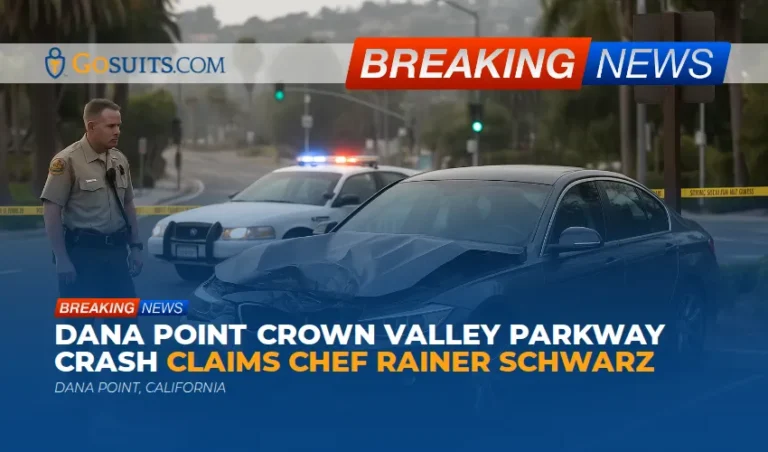
On Monday afternoon around 4:50 p.m., investigators say a vehicle traveling on Crown Valley Parkway near Pacific Coast Highway in Dana Point left the roadway, went through landscaping, and came to rest in a nearby parking lot. The Orange County Sheriff’s Department reported that the driver, Chef Rainer Schwarz, 59, was pronounced dead at the scene. Officials have not yet stated the precise cause of the incident or the cause of death. The preliminary information provided indicates this was a solo-vehicle collision, and the investigation remains ongoing.
Chef Schwarz was well known locally as a co-owner and executive chef behind neighboring oceanfront spots in Laguna Beach, including Driftwood Kitchen and the Deck. His passing has drawn an outpouring of grief in Laguna Beach and across South Orange County. When any crash like this occurs on a busy commuter stretch that feeds into Pacific Coast Highway, the community understandably wants clear answers about what happened and how investigators make those determinations.
Local context along Crown Valley and Pacific Coast Highway
If you live or work in the Monarch Beach and Dana Point area, you know Crown Valley Parkway’s character changes quickly as it flows from the inland hills of Laguna Niguel down toward the coast. The corridor approaches PCH near Salt Creek Beach, just south of the steep bluffs and the walking trail that winds down to the sand. Depending on the time of day, the roadway can see a blend of commuters, beach traffic, and visitors traveling to and from resorts near the headlands.
Late afternoon brings shifting sun angles and frequent lane changes as drivers merge toward PCH or turn into nearby shopping centers and beach parking lots. Landscaping, medians, and grade changes can affect sightlines. Those realities make it important for investigators to reconstruct every movement precisely, especially where a vehicle leaves the roadway and crosses landscaped areas. Whether you pass through the Lantern District, head to Dana Point Harbor, or commute past Three Arch Bay up toward Laguna Beach, you have probably seen how quickly conditions can change along this coastal network.
Investigation and evidence in a solo-vehicle fatal crash
When a crash involves one vehicle and ends in tragedy, investigators do not assume a single explanation. They work through several evidence lanes to figure out the chain of events. That often includes:
- Scene documentation such as tire marks, gouge marks, impact points, damage to landscaping or curbing, paths through vegetation, and final rest position of the vehicle. Measurements, diagrams, and photographs help reconstruct pre-impact trajectory.
- Vehicle inspection that notes wheel and suspension condition, steering components, braking system, and any signs of sudden mechanical failure. If available, post-crash diagnostics can surface fault codes or malfunctions.
- Event Data Recorder download where feasible. Many modern vehicles store short windows of pre-crash data, such as speed, throttle position, braking, and seatbelt status. The federal government describes how event data recorders work and the type of information they can capture [5].
- Witness statements and video, including drivers who saw the vehicle’s movements and nearby security camera footage. Traffic cameras or business cameras along Crown Valley Parkway can help fill gaps in time and distance.
- Medical information, which may include the coroner’s findings, to understand whether a sudden health event occurred before loss of control. Those findings are often essential to determine cause of death and the sequence of events.
It can take weeks, sometimes months, for a final report to be compiled, particularly if a detailed reconstruction or specialized testing is required. Patience is difficult, especially for families and coworkers mourning a loved one. Yet this careful, evidence-based approach is how agencies arrive at supported conclusions rather than speculation.
Records to request and where to call in Orange County
Families often need official documents for practical and legal reasons. Here are common records, where they typically originate, and how they are requested in California. Always verify the correct agency and eligibility rules before applying.
Traffic collision report
Depending on the investigating agency, the collision report may be requested from the Orange County Sheriff’s Department Records unit for an incident within Dana Point’s jurisdiction. In California, the California Highway Patrol also provides a standard process for obtaining collision reports via Form CHP 190, with eligibility limits and ID requirements [1]. For Dana Point, law enforcement services are provided by the Orange County Sheriff’s Department, which can direct requesters to the proper channel for a traffic collision report from this incident [2].
Coroner’s findings and cause of death
In Orange County, the Sheriff-Coroner’s Coroner Division handles medicolegal death investigations. Next of kin may request autopsy reports and related records when available, subject to statutory rules and release timelines. The Orange County Sheriff-Coroner provides public guidance on requesting records and explains what may be releasable [2].
Death certificate
Certified copies of death certificates in California are available through the California Department of Public Health Vital Records, or through local county processes aligned with state rules. CDPH lists eligibility, the difference between informational and authorized copies, and how to request certificates by mail or in person [3].
Public records that may exist beyond the core reports
- 911 audio and CAD logs: In some cases, families or their authorized representatives can seek call audio or dispatch logs, subject to exemptions and privacy rules under the California Public Records Act [9].
- Nearby CCTV or business camera footage: Time is critical. Security footage along Crown Valley Parkway near PCH, including shopping centers or parking lots, is often overwritten quickly. Authorized representatives can send preservation requests to businesses to prevent automatic deletion. California law does not require private businesses to retain, but quick, polite, and specific requests can help.
For a practical walk-through about the aftermath of a fatal roadway event, see this related guide: what happens if someone is killed in a car accident.
California rules and timelines after a fatal traffic crash
California’s legal framework sets deadlines that can impact civil claims connected to a fatal collision. Without applying these rules to any specific case, here are general timelines to be aware of:
- General wrongful death statute of limitations: In California, most wrongful death actions must be filed within two years of the date of death under Code of Civil Procedure section 335.1 [8].
- Special notice deadline for claims involving public entities: If a potential civil claim might involve a public entity, California’s Government Claims Act generally requires a written claim to be presented within six months for personal injury or wrongful death matters before any lawsuit can be filed. The state’s Government Claims Program provides official guidance on this process and deadlines [7].
- Records retention and evidence timelines: Some critical records, like video, surround data, or vehicle electronic modules can be time sensitive. Event Data Recorder access may require prompt steps to preserve the vehicle and its data. NHTSA explains how EDRs function and the sorts of pre-crash metrics they can capture [5].
These rules matter even in solo-vehicle scenarios. Sometimes, investigations identify contributing factors such as roadway conditions, an unexpected obstruction, a defective part, a phantom vehicle that left the scene, or a sudden medical emergency. The facts decide whether civil responsibility exists. Because the specifics vary, it is generally wise to consult a qualified attorney about the precise deadlines that may apply to a particular set of facts before contacting any insurance company. What someone says to an insurer can be recorded and used later.
Many people search for fatal accident lawyers at this stage, but taking time to understand the timeline, the scope of evidence, and eligibility for records can make those first conversations more productive and less overwhelming.
Insurance and financial issues families often confront
Following any fatal collision, paperwork and phone calls arrive quickly, often before the shock has worn off. While every situation is different, the following issues commonly arise:
- Vehicle policy questions: Liability, uninsured or underinsured motorist coverage, and medical payments coverage may be in play, depending on policy terms. If the crash involved only one vehicle, the path to coverage may focus on potential third-party responsibility or first-party benefits.
- Life insurance: Policy notice and claims processes have their own deadlines and evidence requirements. Death certificates and coroner documentation are frequently requested.
- Work-related coverage: If the person was traveling for work, there can be different coverage avenues. Determining whether a trip was personal or work-related typically requires documentation and employer input.
- Medical bills and balances: If any medical care occurred, providers or insurers may assert liens or reimbursement claims that need to be verified and resolved later.
- Estate administration: Families often need certified copies of the death certificate for financial institutions, title changes, and benefits. CDPH’s Vital Records guidance gives a statewide overview of how to request those copies [3].
Before speaking at length with any insurance adjuster, it is generally better to consult with counsel. Insurers may seek recorded statements early, and statements can be used later in ways that are hard to unwind. With sensitive matters like these, many people look for Irvine fatal accident lawyers who can explain options, coordinate evidence preservation, and handle insurer communications so families can focus on immediate needs.
Community notes from Laguna Beach and Dana Point
Chef Schwarz’s influence in South Orange County dining is part of why this loss resonates so deeply. Locals picture a short coastal hop between Laguna Beach and Dana Point, a corridor that ties together family dinners, ocean-view gatherings, and hospitality industry shifts that run late into the night. Restaurants like Driftwood Kitchen and the Deck sit at the heart of that daily rhythm in Laguna Beach. So when a tragedy occurs just a few miles down the coast in Dana Point, it is not just a data point in crash statistics. It is a profound shock to a tight-knit community.
Neighbors here know the landmarks: Salt Creek Beach, the blufftop trails, the Lantern District, and the steady line of cars moving down Crown Valley as daylight starts to fade. These places give us shared reference points, but they also remind us that a single moment on the road can ripple across families, coworkers, and longtime guests who feel like family.
Safety takeaways for neighbors driving Crown Valley and PCH
It is too early to draw conclusions about the specific cause of this incident. Even so, it can help to revisit fundamentals on corridors like Crown Valley Parkway and Pacific Coast Highway:
- Manage speed on the downhill approach to PCH: Grades can be deceiving and traffic backs up quickly near coastal intersections.
- Expect frequent turning movements: Parking lot entrances, shopping centers, and beach access points mean drivers may slow or turn unexpectedly, sometimes from through lanes.
- Watch sightlines: Landscaping, medians, and the sun’s angle in late afternoon can limit visibility just when traffic becomes more variable.
- Leave buffer space: Allow extra following distance for sudden stops or swerves as vehicles stack at red lights near PCH.
- Plan lane position early: If you need to turn into a lot or merge toward PCH, change lanes with enough distance so you are not rushed near the intersection.
Regional data consistently shows that speed, lane changes, and distraction are major contributors to serious crashes. California’s statewide fatality data is tracked by NHTSA’s FARS program and analyzed each year to identify patterns [4]. The California Office of Traffic Safety publicizes county and city-level collision rankings to focus local safety planning and enforcement [6]. That type of data helps cities and residents understand risk corridors and target improvements over time.
Call-to-Action: Time sensitive steps the public can take after a fatal crash
There are a few focused steps members of the public can take in the days after a fatal collision that make a real difference later. The goal is to preserve information while you still can, reduce the chance of misunderstandings with insurance, and avoid missed deadlines.
- Secure documents and photos: Gather any photographs, dashcam clips, route histories, or texts about the person’s planned route and timing. Back them up in multiple locations. If you learn of nearby security cameras, request preservation immediately.
- Request official records methodically: Start a list of agencies and requests. Track dates submitted, confirmation numbers, and any response deadlines. If a CHP collision report process applies, review the CHP 190 guidance to see who can request a copy and what ID is needed [1].
- Organize financial and benefits paperwork: Identify life insurance, vehicle insurance, and any workplace benefits that could require notice. Keep a copy of each policy’s declarations page and note any reporting deadlines.
- Consult an attorney before speaking to insurers: If a civil claim is possible, contact a qualified attorney first. Adjusters sometimes ask for recorded statements very early. What is said can be used later and may not reflect the full picture when the investigation is still unfolding.
- Make a timeline: Write down the day’s events as you understand them, including who last saw or spoke with the person, known destinations, and approximate times. Even a simple timeline can help when requesting records and speaking with investigators.
- Note public entity issues: If anyone suspects a roadway defect, signal problem, or other public-entity component, learn about California’s Government Claims Act timelines and seek legal guidance quickly [7].
Preserving evidence and keeping an organized file makes every subsequent decision more grounded. A single, reliable source of truth reduces the chance of inconsistencies that insurers or opposing parties might later highlight. When questions arise about what to keep and how to keep it, resources like what happens if someone is killed in a car accident can help frame next steps while official reports are still pending.
Commentary from Gosuits Dana Point, California Personal Injury Attorney
Our hearts go out to Chef Rainer Schwarz’s family, his colleagues at Driftwood Kitchen and the Deck, and the Laguna Beach and Dana Point communities who knew and admired him. This commentary is offered for educational purposes and general information. It is not tailored to any one person’s situation.
From a civil injury and wrongful death perspective, solo-vehicle crashes demand thorough, methodical investigation. Investigators typically look far beyond the moment of roadway departure. Mechanical issues, roadway conditions, a sudden medical event, or interactions with another vehicle that left the scene can all be evaluated. It is appropriate that officials have not drawn conclusions yet. Final determinations should follow the evidence, not early assumptions.
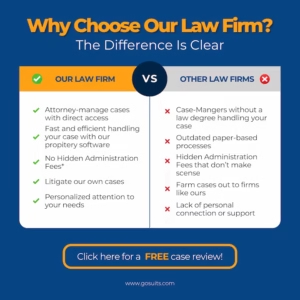
In our experience, insurance companies and large corporations sometimes lean on the uncertainty that exists right after a crash. Early phone calls may feel compassionate but are often information gathering in nature. Adjusters may seek recorded statements that later get parsed word by word. Families can be nudged toward quick decisions, especially before full coroner findings, EDR data, or third-party video are available. That is why we consistently encourage people to consult with counsel first. It levels the playing field, ensures preservation letters go out on time, and helps prevent missteps that can affect a claim down the road.
A free consultation matters for two reasons. First, it gives space to hear what information exists today, what might be obtainable tomorrow, and what the practical timelines are. Second, it can prevent irreversible choices, like signing a broad medical authorization or giving a recorded statement before the facts are ready. A conversation with seasoned and skilled counsel can help families decide what to do next, at their pace, with clarity about options and tradeoffs.
References and Resources
- Request a Collision Report: CHP 190 – California Highway Patrol
- Orange County Sheriff-Coroner Department – OC Sheriff
- Vital Records: Death Certificates – California Department of Public Health
- Fatality Analysis Reporting System (FARS) – NHTSA
- Event Data Recorder Overview – NHTSA
- Collision Rankings and Data – California Office of Traffic Safety
- Government Claims Program – California Department of General Services
- Code of Civil Procedure 335.1 – California Legislative Information
- California Public Records Act Overview – Office of the Attorney General