- When serious injuries or a fatal crash happens in Dallas Fort Worth
- Common North Texas injury scenarios people ask about
- First steps after a crash or unsafe incident in DFW
- How to get official records in Dallas and Tarrant Counties
- Understanding potential liability and insurance issues in Texas
- If a loved one tragically dies
- Special considerations for commercial vehicles and public entities
- Community safety notes for Dallas Fort Worth around the New Year
- How a seasoned injury law team builds a strong claim
- A practical Dallas Fort Worth injury checklist
- What to do next and why timing matters
- Commentary from Gosuits Dallas, Texas Personal Injury Attorney
This article offers the most helpful local guide to the steps people in Dallas and Tarrant Counties often need right after a serious crash or unsafe incident. This includes how to locate official records, timelines that apply in Texas, and practical next moves that protect a potential claim.
What follows is grounded in Texas law and public safety resources, with links to government sources where helpful. It is written for neighbors across Dallas, Fort Worth, Arlington, Plano, Garland, Irving, Grand Prairie, Denton, and the communities between the Trinity River and Lake Ray Hubbard.
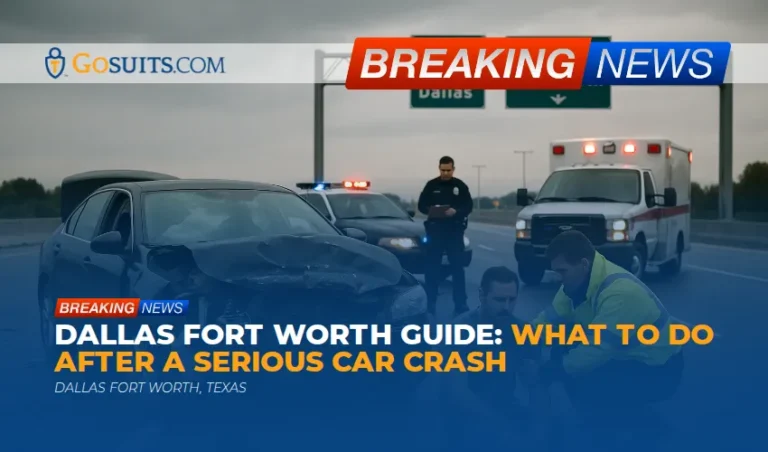
When serious injuries or a fatal crash happens in Dallas Fort Worth
North Texas roadways stay busy year round. Traffic through the Mixmaster near downtown Dallas, the I 35E and I 30 split, the construction zones on I 635 and I 35W, and the arteries into Deep Ellum, the Design District, and the Fort Worth Stockyards can all become high risk at peak hours. Around holidays and big events at Klyde Warren Park, American Airlines Center, AT&T Stadium, Dickies Arena, or Sundance Square, congestion and late night driving increase collision risks. Severe weather adds another layer, whether it is winter drizzle on the High Five or spring hail sweeping across the Chisholm Trail Parkway.
Texas continues to emphasize roadway safety because serious injuries remain a daily reality. The state maintains crash records and safety initiatives, and it has documented that there has not been a deathless day on Texas roads since November 7, 2000. You can review the state’s safety campaign and crash reporting framework on the Texas Department of Transportation website at TxDOT End the Streak Texas and the crash reports page at TxDOT Crash Reports.
Common North Texas injury scenarios people ask about
Across Dallas County and Tarrant County, people most often ask us about a handful of recurring scenarios. A few examples are below, along with phrases you might see while searching for help.
- Crashes on interstates and urban arterials. People injured after a Dallas car accident on I 35E or a Fort Worth fender bender along Loop 820 often begin by looking for car accident lawyers or auto accident attorneys who understand urban traffic patterns and insurance issues in North Texas.
- Heavy truck collisions. Jackknife events and underride crashes on I 20 or I 30 sometimes prompt families to seek truck accident lawyers, commercial truck accident attorneys, 18-wheeler accident lawyers, or semi-truck accident attorneys who can help address carrier and maintenance questions.
- Motorcycle injuries. Rides across White Rock Lake loops or the roads skirting Benbrook Lake occasionally involve visibility issues at intersections. Injured riders often search for motorcycle accident lawyers and motorcycle collision lawyers.
- Falls in stores or public places. From shopping at NorthPark Center and Galleria Dallas to a weekly trip to the grocery, falls on slick or uneven walking surfaces can raise questions for slip and fall lawyers and premises liability lawyers.
- Construction incidents. With active job sites in Uptown, the Medical District, Las Colinas, Alliance, and near Texas Live, people sometimes consult construction accident lawyers and construction injury claims lawyers after a scaffold, equipment, or electrical hazard injury.
- Head and brain trauma. After a severe collision, families may need information from brain injury lawyers who can coordinate with medical documentation and long term care planning.
- Product hazards. If a consumer device or vehicle component fails in a dangerous way, some turn to product liability lawyers.
- Tragic loss of life. Families coping with a fatal crash or catastrophic event often look for wrongful death lawyers to understand rights under Texas law.
Each of these scenarios can involve different insurance policies, different records, and different timelines. The next sections outline what to gather and where to find the documents that usually matter most in the Dallas Fort Worth area.
First steps after a crash or unsafe incident in DFW
In those first hours and days, small choices can make a big difference. Here is a practical path that respects your health and preserves important information.
- Call 911 and make a report. Request police and EMS. A formal report becomes the backbone of timelines, insurance communications, and potential claims.
- Get medical evaluation early. Even if you feel shaken but okay, seek care. Concussion, internal injuries, and soft tissue damage can surface later. Follow up at a local clinic or hospital like Parkland, Baylor University Medical Center, Medical City Dallas, JPS Health Network, or Texas Health Harris Methodist.
- Document the scene if safe. Photos of vehicles, skid marks, road conditions, spilled liquids, or a hazard on a floor can be key. Save camera roll metadata and keep any damaged clothing or items.
- Gather contacts. Collect names, phone numbers, license plates, insurance details, and the badge numbers of responding officers.
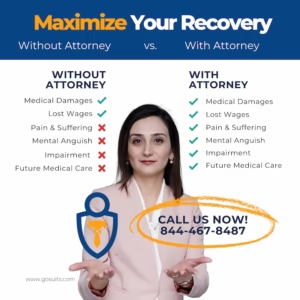
- Avoid recorded statements to insurers. It is common for adjusters to call quickly. Consider contacting an attorney first before speaking to any insurance company. What you say can be used against you later.
- Track costs and impacts. Keep all receipts, missed work records, and notes on pain or limitations. If you journal daily, write briefly about how the injury affects sleep, mood, or mobility.
- Preserve vehicles or products. Do not authorize disposal of a totaled car or a broken device without first speaking with a lawyer who can help protect key evidence.
How to get official records in Dallas and Tarrant Counties

Police crash reports and traffic records
Most Texas crash reports are available through the state portal. You can purchase an official Texas Peace Officer’s Crash Report using the Texas Department of Transportation system here: TxDOT Crash Reports and Records. The TxDOT site explains eligibility, privacy protections, and how to search for a report by name, date, and location.
In many cases, you may also request records from the local police department that responded. Procedures and online portals vary by city. If in doubt, ask the records division for guidance on how to request the full incident report, body camera footage if available, and 911 audio under the Texas Public Information Act. The Office of the Attorney General provides an overview of your rights under that law at Texas Public Information Act Overview.
Medical examiner, autopsy, and death records
Dallas County and Tarrant County operate medical examiner offices that conduct forensic examinations. Families typically can request certain records after the investigation is complete. The process follows state law and may include redactions for protected information. Public records rights are governed by the Texas Public Information Act, which you can review through the Attorney General’s site at Texas Public Information Act.
For official death certificates, the Texas Department of State Health Services handles statewide vital records. Information on requesting certified copies, eligibility, and fees is available from the state at Texas Vital Records.
EMS run sheets and hospital records
Ambulance run reports and hospital records can usually be obtained with a signed authorization. Health privacy rules apply, so the facility will provide specific forms and timelines for production. If the patient cannot sign, a legal representative may be required under Texas and federal privacy rules.
Understanding potential liability and insurance issues in Texas
Texas uses an at fault system for motor vehicle collisions. That means the person or company who negligently caused the crash can be held financially responsible for the harm. Texas also applies proportionate responsibility. If someone is 51 percent or more at fault, that party cannot recover from others. The proportionate responsibility rule is codified in the Texas Civil Practice and Remedies Code, Chapter 33, which you can read at Texas CPRC Chapter 33.
Generally, personal injury and wrongful death claims in Texas must be filed within two years of the incident date. You can review the statute at Texas CPRC Section 16.003. Some claims against government entities require formal notice much sooner, which is discussed below.
Insurance companies often reach out soon after a Dallas car accident, a slip and fall, or a workplace incident. Common issues include:
- Recorded statements and early admissions. Anything said can be used to minimize a claim. Consider speaking with personal injury lawyers before engaging with any insurer.
- Low or quick settlement offers. Early offers may not include future care or long term impacts. Once signed, it is hard or impossible to reopen.
- Liability disputes. Adjusters may argue fault is shared or deny liability entirely, especially in complex multi vehicle collisions on I 30 or I 635.
- Medical billing disputes. Coordination among private health insurance, Medicare or Medicaid, and the at fault carrier can be confusing without guidance.
If a loved one tragically dies
Texas law allows certain family members to bring a wrongful death claim when a death is caused by negligence. The surviving spouse, children, and parents may bring the claim. If those family members do not file within three months, the executor or administrator of the estate may file, as long as the family does not object. See Texas CPRC Section 71.004. Separate from that, a survival claim allows the estate to pursue the decedent’s own injury claim that existed before death. See Texas CPRC Section 71.021.
Families often need several kinds of records to understand what happened, including the police crash report, medical examiner findings, and medical records. In Dallas County and Tarrant County, those documents are requested from the responding agency, the county medical examiner, and the medical facilities involved. Death certificates are requested through the Texas Department of State Health Services at Texas Vital Records Death Records.
Many families begin by searching for wrongful death lawyers or fatal accident lawyers who can help coordinate record requests and speak with insurers on their behalf.
Special considerations for commercial vehicles and public entities
Commercial trucks and buses
Crashes with tractor trailers, delivery trucks, or commercial buses on the I 20 corridor, State Highway 114, or I 35 often require prompt action to preserve evidence. That may include obtaining electronic control module data, driver qualification and hours of service records, and maintenance and inspection histories. People researching these cases sometimes look for commercial truck accident attorneys, big rig accident lawyers, truck crash injury claims, or interstate truck accident lawyers because the carriers and their insurers typically mobilize quickly.
For an overview of federal rules that apply to motor carriers, you can review the Federal Motor Carrier Safety Regulations at the Federal Motor Carrier Safety Administration site here: FMCSA Regulations.
Claims involving cities, counties, or transit authorities
If a vehicle owned by a local government or a public bus is involved, special notice rules apply. Under the Texas Tort Claims Act, written notice of a claim often must be given within six months, and some local charters require earlier notice. You can read the general state notice provision at Texas CPRC Section 101.101. Because these deadlines can be shorter than the two year statute for filing a lawsuit, timely action is important.
Community safety notes for Dallas Fort Worth around the New Year
New Year period travel and gatherings bring unique risks. Nighttime celebrations at the Reunion Tower Over the Top fireworks, the Fort Worth New Year’s Eve festivities, and events around Bishop Arts can result in crowded streets and rideshare surges. The National Highway Traffic Safety Administration has long warned about impaired driving and seasonal risks. You can review federal safety messaging and data at NHTSA Drunk Driving.
Practical local tips:
- Plan safe rides in advance. If you will be near Deep Ellum, Lower Greenville, or West 7th, schedule a rideshare pickup window before service is overwhelmed. Many injury events happen while searching curbside for a ride without paying attention to traffic flow.
- Watch construction chokepoints. Temporary lane shifts near the High Five and the I 820 to I 35W interchange create confusion. Slow down, give trucks room to merge, and avoid sudden lane changes.
- Weather check. Bridges around the Trinity River and the elevated ramps near downtown Dallas can frost quickly on cold nights. Use headlights, increase following distance, and avoid cruise control on slick pavement.
- Walk defensively. In nightlife districts, pedestrians often step off curbs between parked cars. Use crosswalks, make eye contact with drivers, and avoid looking at your phone while crossing.
How a seasoned injury law team builds a strong claim
People often ask what happens behind the scenes. While every situation is different, a careful approach in Dallas Fort Worth usually looks like this:
- Listening and mapping the facts. Timeline, witnesses, scene features, and early medical findings are organized to understand liability and causation.
- Evidence preservation. Preservation letters go to at fault drivers, carriers, businesses, and property owners to safeguard video, maintenance records, and electronic data.
- Independent crash and site analysis. When needed, teams work with independent professionals to diagram scenes, analyze vehicle damage, and evaluate human factors like sightlines or lighting.
- Medical documentation. Records and provider opinions are compiled to paint a full picture of injury severity, future care needs, and how long recovery may take.
- Insurance coverage review. Policies are identified and analyzed, including liability limits, uninsured or underinsured motorist coverage, commercial umbrella coverage, and medical payments provisions.
- Damages calculation. Economic losses like medical bills and lost income are calculated along with non economic harms, supported by records and testimony.
- Negotiation and, if necessary, litigation. Documentation is used to seek a fair resolution with insurers. If that fails, a lawsuit may be filed within the statutory period to continue pursuing accountability.
People who have been hurt commonly search for car accident law firm, truck collision lawyers, motorcycle accident law firm, premises liability lawyers, or construction accident legal help to find teams that can take on insurance carriers and large companies. Those searches can be a good starting point when paired with recommendations from trusted community members.
A practical Dallas Fort Worth injury checklist
- Get to safety and call 911. Ask for police and EMS. Ensure a report is made.
- Seek medical care. Tell the doctor all symptoms, even if minor. Follow medical advice.
- Collect information. Drivers, witnesses, businesses, camera locations, and responding officers.
- Photograph evidence. Vehicles, scene, lighting, weather, footwear, and any posted warnings.
- Secure official records. TxDOT crash report, incident reports, EMS run sheets, hospital records. Use TxDOT Crash Reports.
- Protect your statements. Consider contacting an attorney first before speaking to an insurance company. Decline recorded statements until you understand your rights.
- Preserve damaged items. Vehicles, helmets, child seats, footwear, or ladders may be key evidence.
- Track costs and impacts. Medical bills, mileage to appointments, repair estimates, missed work, and daily limitations.
- Calendar deadlines. Two year statute for most claims in Texas, with shorter notice for claims involving government entities. See CPRC 16.003 and CPRC 101.101.
What to do next and why timing matters
Here is a straightforward way to move forward with purpose and avoid common pitfalls.
- Request the crash report. Use the state portal to obtain the official report as soon as it is available. The sooner it is in hand, the sooner errors can be addressed and insurance can be navigated with clarity.
- Centralize your documents. Create a single folder for medical records, bills, repair estimates, payroll records, and notes. Organization now reduces delays later and helps prevent missed items that support a claim.
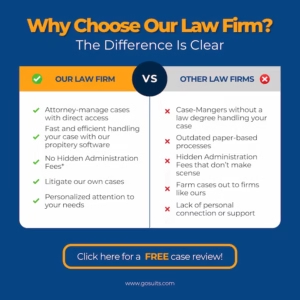
- Have a confidential case review. A no cost, no obligation consultation with seasoned personal injury lawyers helps clarify rights and risks. Early guidance can prevent harmful statements to insurers and ensure preservation letters go out immediately.
- Avoid social media posts. Casual photos or comments can be misinterpreted. It is easier to avoid posting than to explain a post later.
- Act within deadlines. Texas law imposes strict timelines. Acting promptly protects your ability to seek accountability and reduces the risk that key evidence is lost or overwritten.
The benefit of acting now is simple. Evidence is freshest, memories are clearest, and legal timelines are still open. Waiting often helps insurance carriers, not injured people, especially when cameras overwrite video within days and vehicles are sent to salvage yards before they are inspected.
Commentary from Gosuits Dallas, Texas Personal Injury Attorney
Our hearts are with every family facing a sudden injury or loss in North Texas. This article is for educational purposes and general information. We hope it answers immediate questions and points you to reliable places to get the records you need.
In our view, the Dallas Fort Worth area presents a unique blend of urban congestion, interstate freight traffic, and constant construction. That mix can heighten risks for motorists, motorcyclists, pedestrians, and workers. When something goes wrong, the most important early steps are medical care, a complete police report, and preservation of evidence. Those items drive everything that follows.
Insurance companies and large corporations know the rules, and they move fast. Adjusters are trained to get recorded statements, shape fault narratives, and settle claims before the full scope of harm is understood. Carriers for commercial trucks often deploy response teams immediately to protect their position. Without guidance, people can unknowingly provide statements that are later used to reduce or deny valid claims.
A free consultation can be a safe space to understand your rights, ask questions, and plan next steps before talking to an insurance company. It costs nothing to learn how the Texas rules on proportionate responsibility, notice requirements for government entities, and the two year statute might apply in your situation. Even a short conversation can help you avoid missteps and make informed decisions about protecting your family’s future.
Whether the harm involves a highway collision near the High Five, a fall in a North Dallas store, a construction incident in Fort Worth, or an unsafe product at home, thoughtful action in the first days can make a lasting difference.