- What we know about the Beecher crash on Dixie Highway
- Why semi-truck crashes in Will County demand a special look
- How crash investigations work in Illinois
- What families can do in the first 72 hours
- How to get official records in Illinois
- Evidence to preserve after a truck crash
- Potential civil liability and insurance layers in a multi-vehicle semi collision
- Wrongful death basics in Illinois for grieving families
- Safety context around Dixie Highway and rural crossroads
- A practical claims roadmap in Illinois
- Community resources and respectful next steps
- Call to action: Act promptly to protect rights and information
- Commentary from Gosuits Beecher, Illinois Personal Injury Attorney
- References and resources
What we know about the Beecher crash on Dixie Highway
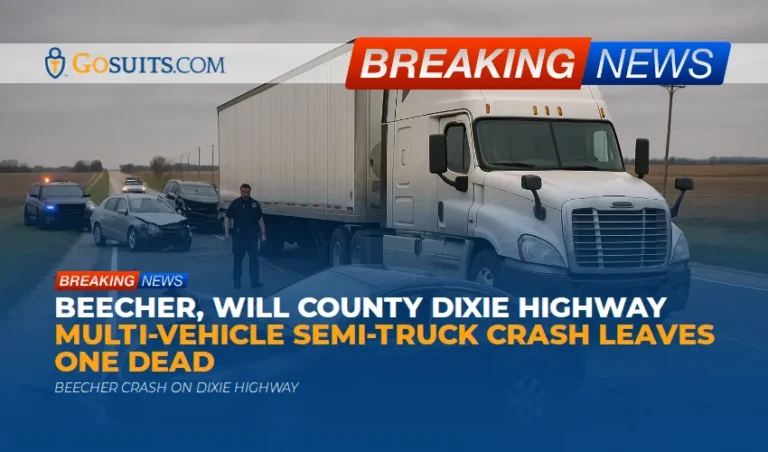
Late Friday afternoon, around 3:13 p.m., a multi-vehicle crash involving a semi-truck and two passenger vehicles occurred on Dixie Highway near County Line Road in Beecher, in southeast Will County. According to Illinois State Police, at least one person was killed. The person’s age, gender, and identity had not yet been released at the time of reporting. Investigators had not announced whether additional injuries occurred, and the cause of the crash remains under investigation. This stretch of Dixie Highway connects small-town traffic with regional routes toward Chicago Heights and the Indiana state line, a corridor where residents often share the road with agricultural equipment and commercial trucks during peak seasons.
When something this serious happens on a familiar roadway, people want straight answers. Below, we outline how serious truck collisions are investigated in Illinois, what records families can request, and how civil claims typically move forward after a fatal crash. We also include practical, local steps that can help preserve essential information while the official investigation proceeds.
Why semi-truck crashes in Will County demand a special look
Crashes that involve a semi-truck or other commercial motor vehicle often require a broader and more technical investigation than a typical passenger-vehicle collision. In addition to the on-scene work by troopers and crash reconstruction teams, investigators may examine a truck driver’s hours-of-service logs, vehicle maintenance records, electronic control module data, and dispatch communications. Federal Motor Carrier Safety Administration rules limit how long truck drivers can be on the road before they must rest, because fatigue, maintenance lapses, and loading practices can raise risk in heavy vehicles [6]. National safety agencies further emphasize the elevated consequences when large trucks are involved, given their size, stopping distance, and operating characteristics [5].
In Will County, Illinois State Police District 5 typically leads highway enforcement and often assists or coordinates on serious collisions in the area. District 5’s public page explains its patrol role and provides contact pathways the public can use to connect with the district when appropriate [1].
How crash investigations work in Illinois
At the scene and shortly after
On serious or fatal crashes, law enforcement secures the area, documents the scene, interviews witnesses, and coordinates with medical responders. When warranted, a specialized crash reconstructionist may be called. In fatal events, the local coroner’s office is notified to manage next-of-kin notifications and postmortem procedures under Illinois law.
Traffic crash reports
In Illinois, police crash reports are generated by the investigating agency and can be requested by involved parties, or in some instances by next of kin. The Illinois State Police provides a centralized online entry point for obtaining ISP crash reports [2]. Separately, if a crash is not investigated by police, Illinois requires motorists to file a Motorist Crash Report with the Illinois Department of Transportation via the state’s secure online portal [3].
Follow-up and reconstruction
Complex collisions may involve reconstructing vehicle movements, analyzing skid and yaw marks, mapping debris fields, and reviewing electronic data from passenger vehicles and commercial trucks. That can take weeks. During this time, families often feel they are in limbo while awaiting clarity. Preserving independent evidence can help, and we discuss those steps below.

What families can do in the first 72 hours
Immediate priorities after a fatal highway collision are painful and practical. In the Beecher area, neighbors, church communities, and school circles often mobilize to support families quickly. Parallel to those human steps, there are time-sensitive tasks that can protect rights and information.
- Identify the investigating agency and crash number. If Illinois State Police District 5 handled the scene, note the district and obtain the report number once available. District 5’s public page provides contact routes for inquiries [1].
- Preserve phone photos, dashcam files, and witness contacts. Save these in more than one place. Write down what each person remembers while it is fresh.
- Do not authorize vehicle disposal yet. Tell the tow yard or insurer in writing to preserve the vehicles until an inspection can be arranged.
- Limit insurance communications until you have guidance. What people say in recorded statements can be used against them later. Speaking with a qualified attorney first is a prudent step in serious or fatal collisions. Even a short, no-cost consultation can prevent avoidable missteps.
- Coordinate with the coroner and vital records for documentation. Families will typically need death certificates for estate, employment, and insurance matters. The Illinois Department of Public Health explains how death records are handled and requested statewide [13].
Families often turn to truck accident lawyers to help shoulder these tasks, coordinate preservation letters, and communicate with insurers so that day-to-day logistics do not overwhelm them during a period of grief.
How to get official records in Illinois
Police crash report
If the Illinois State Police investigated, the agency provides an online pathway to obtain ISP crash reports. That portal explains eligibility and how to request the document [2]. If another agency took the lead, such as a municipal or county department, their records division can explain their process. In some cases, a Freedom of Information Act request may be appropriate. Illinois FOIA sets statewide rules for requesting public records from government agencies [11].
Illinois Motorist Crash Report
For crashes that were not investigated by police, motorists are required to file a report with IDOT using the state’s Motorist Report system. The secure portal provides instructions, eligibility, and filing steps [3].
Coroner’s documents and death certificates
In fatal crashes, the local coroner’s office handles postmortem responsibilities, including determining cause and manner of death and managing autopsy records when conducted. Death certificates in Illinois are issued through the Illinois Department of Public Health and the relevant county office. IDPH outlines who can request a death record and how to obtain certified copies [13].
District contact for follow-up
Because this crash occurred in Will County, Illinois State Police District 5 is the regional patrol district. The district’s public page identifies service area information and contact routes for non-emergency inquiries related to traffic enforcement and patrol functions [1].

Evidence to preserve after a truck crash
Independent documentation can be the difference between unanswered questions and a clear picture of what happened. If it is safe to do so and you are permitted, consider the following.
- Scene and vehicle photos. Capture angles that show lane layout, traffic control signs, sight lines, resting positions, and crush damage.
- Dashcam and nearby cameras. Preserve any in-vehicle footage. Identify businesses, residences, or municipal cameras that might have a view and ask that they retain video.
- Event data recorders. Passenger vehicles and commercial trucks may store pre-crash speed, braking, and throttle data. Quick preservation is crucial before repair or disposal.
- Driver and company records. In truck crashes, driver qualification files, hours-of-service logs, electronic logging device data, dispatch notes, and maintenance records can be highly probative [6].
- Weather and road conditions. Save weather snapshots and note lighting, moisture, and any temporary hazards observed at the time.
For a practical walk-through that Chicago-area families have found useful after serious truck collisions, see our chicago truck crash evidence checklist.
Potential civil liability and insurance layers in a multi-vehicle semi collision
Even before the official cause is announced, it is helpful to understand how liability is evaluated in multi-vehicle collisions that involve a semi-truck. Illinois uses a modified comparative fault system. A party that is more than 50 percent at fault is barred from recovery, while parties 50 percent or less at fault can recover, reduced by their percentage of fault [9]. When a commercial truck is involved, multiple entities may bear responsibility depending on the facts.
- Truck driver and motor carrier. Direct negligence (speeding, distraction, impairment, following distance), and company negligence (hiring, training, supervision, hours-of-service compliance, maintenance) may be examined [6].
- Cargo loader or shipper. Improper loading or securement can alter handling and stopping distance.
- Vehicle or component manufacturers. Rarely, a product defect may emerge. That requires technical analysis.
- Other motorists. Sudden lane changes, failure to yield, or unsafe passing by passenger vehicles can also contribute.
Insurance coverage often includes multiple layers in trucking cases. Primary commercial auto liability is common, and there may be excess or umbrella policies. Separate coverages like medical payments, uninsured or underinsured motorist coverage, and employer policies may interact depending on fault allocations and household coverages. The Illinois Department of Insurance publishes guidance to help consumers understand auto coverage basics and claim handling expectations in Illinois [10].
Given the stakes, insurance carriers often move quickly to protect their financial exposure. People sometimes find that adjusters request recorded statements before all facts are known. This is a moment to slow down and get counsel. Statements can be used against claimants later, and trucking insurers have seasoned teams. Speaking with skilled counsel first is a wise move. Many families also look to truck accident lawyers for help coordinating communications with multiple insurers so nothing important is missed or misstated.
Wrongful death basics in Illinois for grieving families
Illinois law allows certain family members to bring a civil action when a death is caused by the wrongful act or negligence of another. The Illinois Wrongful Death Act defines who can bring the claim, the types of damages that may be available, and the general filing deadline. Broadly speaking, wrongful death cases in Illinois are typically brought for the benefit of the surviving spouse and next of kin, and may include damages for loss of society and grief, subject to the statute [7].
There is also a separate claim called a survival action. This allows the decedent’s estate to recover damages the decedent could have pursued had they lived, such as conscious pain and suffering and certain economic losses, within statutory boundaries [8].
Deadlines matter. Illinois statutes set time limits to file civil claims. Those time frames can be affected by the nature of the defendant and other factors. Families often consult counsel promptly to identify applicable deadlines so evidence can be preserved and claims are not jeopardized [7].
Safety context around Dixie Highway and rural crossroads
Dixie Highway in Beecher serves local residents heading toward downtown Beecher shops, schools, and churches, and it also carries regional traffic toward Crete, Chicago Heights, and the Indiana line. Rural crossroads like County Line Road can pose visibility challenges at certain angles and times of day. In winter, open fields can allow winds to drift snow across pavement, creating patchy traction just as speeds increase leaving town. While the cause of this specific crash remains under investigation, these location features explain why robust scene documentation and timely data preservation can make a real difference.
Illinois agencies provide statewide crash data and safety information that can help communities understand trends and risks. The Illinois Department of Transportation hosts a roadway crash data hub that aggregates statewide statistics and publications to inform residents and local planners [4]. Nationally, safety officials highlight that large trucks require longer stopping distances and have unique visibility challenges, underscoring why following-distance, speed, and alertness are so important wherever freight and local traffic mix [5].
A practical claims roadmap in Illinois
Before any insurance calls
If a collision involves a serious injury or fatality, contact an attorney first. Insurers often ask for recorded statements quickly, but what people say can be used against them and taken out of context later. An initial consultation is an opportunity to learn what to say and what not to say, how to preserve evidence, and how to structure communications so the facts are protected.
Then, organize the essentials
- Crash report information. Save the investigating agency, district, crash number, and officer name if available.
- Medical and coroner documents. Keep EMS run sheets, hospital discharge summaries, and later, certified death certificates. IDPH explains access to death records statewide [13].
- Insurance policies. Gather auto, umbrella, and any household policies for all involved.
- Employment and financial records. For wage loss or support claims, collect pay stubs, tax returns, and benefits statements.
Filing and follow-through
- Notice to insurers. After consulting counsel, provide timely notice to all potentially involved insurers. Follow policy conditions.
- Property preservation. Put tow yards and insurers on written notice not to dispose of vehicles.
- Evidence requests. Request preservation of dashcam videos, nearby surveillance, 911 audio, and traffic signal data if applicable.
- Comparative fault analysis. Illinois applies modified comparative fault rules, which affect outcomes when multiple drivers share responsibility [9].
People in northern Will County may be accustomed to handling simple fender benders without help. A three-vehicle collision with a semi-truck is different. The layers of regulation and insurance mean it is easy to miss something time-sensitive. In this context, Beecher truck accident lawyers can coordinate a structured approach that protects the record and eases communication burdens during an extraordinarily difficult time.
Community resources and respectful next steps
Neighbors in Beecher and nearby towns like Crete and Peotone often come together after roadway tragedies. Alongside that human support, a few public institutions can help with information and documentation:
- Illinois State Police District 5, Patrol. Regional patrol information and contact pathways for Will County traffic enforcement and patrol functions [1].
- Illinois State Police Crash Reports. Centralized ISP process for requesting police crash reports [2].
- Illinois Motorist Crash Report portal. Required online filing when a crash was not investigated by police [3].
- Illinois Department of Public Health Vital Records. How to request certified death certificates and what to expect [13].
- Illinois Department of Insurance consumer pages. Guidance on auto insurance and claims in Illinois [10].
When contacting any public office, have full names, dates, locations, and any assigned report or case numbers ready. If you are not the next of kin or legal representative, some records may be restricted. Illinois FOIA outlines the general framework for public records but also identifies common exemptions that may apply in ongoing investigations or privacy-sensitive materials [11].

Call to action: Act promptly to protect rights and information
- Secure time-sensitive evidence now. Video systems overwrite quickly, tow yards cycle vehicles, and electronic data can be lost during repairs. Acting within days preserves proof that might otherwise disappear.
- Coordinate communications before giving statements. Recorded insurance statements can shape the entire case. Taking time to understand rights and obligations first helps avoid gaps and misstatements.
- Clarify which claims apply. Multi-vehicle truck crashes can involve wrongful death, survival actions, and multiple insurance layers. A clear plan prevents missed notices and deadline problems.
- Document the human impact. Begin gathering records that show financial support, household contributions, and community involvement. These often matter later when describing loss to a jury or insurer.
The exact step to take is straightforward: start a documented preservation and information plan, led by someone who can interface with insurers and agencies while the family focuses on arrangements and healing. The benefit is practical and immediate. Critical evidence is saved, communications are orderly, and deadlines are tracked so nothing slips through the cracks. The urgency stems from how fast modern digital and physical evidence can be altered or lost, and from the statutory timelines that govern civil claims in Illinois [7].
In serious cases like a fatal crash on Dixie Highway, a structured plan within the first week is often the difference between unanswered questions and a clear path forward. It also relieves well-meaning relatives from fielding difficult calls and making snap decisions while emotions are raw.
Commentary from Gosuits Beecher, Illinois Personal Injury Attorney
We are deeply sorry to hear about the life lost in the multi-vehicle crash near County Line Road. Families in Beecher and the surrounding Will County communities deserve clarity and compassion while official investigations proceed. This commentary is shared for educational purposes and general information.
When a semi-truck is involved, experience tells us that cause analysis can be complex. Investigators may ultimately consider driver attentiveness, speed relative to conditions, following distance, and hours-of-service compliance, along with how the passenger vehicles were maneuvering in the moments before impact. Rural crossroads and mixed traffic on Dixie Highway create unique risks, particularly when heavy vehicles and local traffic share limited visibility or variable traction. While we await official conclusions, it is important to preserve independent evidence and avoid premature statements to insurers.
Insurance companies and large motor carriers move quickly after events like this. They often deploy adjusters and investigators early, and they are well-versed in using recorded statements and early document requests to shape the narrative. Families in shock do not always realize how a single phrase can be used against them later or how evidence can quietly disappear when vehicles are released for disposal. That imbalance is real. Knowing your rights, insisting on evidence preservation, and having someone handle insurer communications can prevent long-term harm to a rightful claim.
Obtaining a free consultation before engaging with insurers is important because it gives people a safe space to ask questions, understand Illinois rules on comparative fault and wrongful death, and get a roadmap tailored to the situation. It does not commit anyone to a path. It simply ensures that early choices protect the record and the family’s long-term interests while the community grieves and the investigation unfolds.
References and resources
- Patrol District 5 Joliet – Illinois State Police
- Crash Reports – Illinois State Police
- Motorist Crash Report – Illinois Department of Transportation
- Illinois Roadway Crash Data – Illinois Department of Transportation
- Large Trucks – National Highway Traffic Safety Administration
- Hours of Service Regulations – Federal Motor Carrier Safety Administration
- Illinois Wrongful Death Act, 740 ILCS 180 – Illinois General Assembly
- Illinois Survival Act, 755 ILCS 5/Art. XXVII – Illinois General Assembly
- Modified Comparative Fault, 735 ILCS 5/2-1116 – Illinois General Assembly
- Auto Insurance Consumer Information – Illinois Department of Insurance
- Illinois Freedom of Information Act, 5 ILCS 140 – Illinois General Assembly
- Traffic Safety Council and Programs – Illinois Department of Transportation
- Death Records – Illinois Department of Public Health