- What we know so far about the Anaheim multi car crash
- Where the investigation may focus
- Immediate steps for those affected in Anaheim
- How to get official records in Orange County
- Hospitals and trauma care near Anaheim
- Legal rights after a fatal or serious crash in California
- Insurance questions after a multi vehicle collision
- Evidence and documentation to preserve
- Community safety notes for Anaheim roads
- Call to action section
- Commentary from Gosuits Anaheim, California Personal Injury Attorney
- References
What we know so far about the Anaheim multi car crash
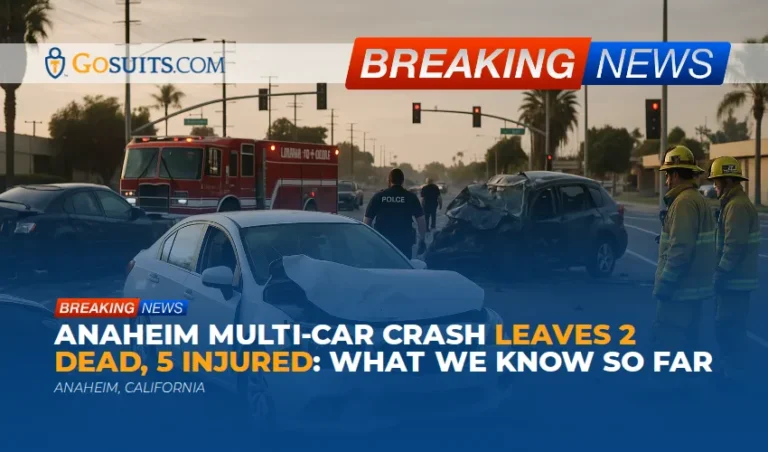
A multi car crash in Anaheim left two people dead and five others injured, according to initial reports. Details such as the exact time, intersection, and identities of those involved have not been publicly confirmed at the time of writing. In Anaheim, multi vehicle collisions are not uncommon on busy corridors like the 5, 57, and 91 freeways, and on high traffic arterials including Katella Avenue, Harbor Boulevard, and Euclid Street. While we do not yet have official confirmation on where this collision occurred, the response in Anaheim typically involves coordinated efforts from Anaheim Police, Anaheim Fire & Rescue, and the Orange County Sheriff Coroner Division.
When more information is released, the official record often clarifies the number of vehicles, contributing factors such as speed or signal compliance, and whether impairment or distraction may have played a role. Multi vehicle crashes tend to produce layered chains of impact, which can complicate both the investigation and the insurance process. National data consistently shows that multi vehicle crashes account for a substantial share of serious injuries and fatalities each year, underscoring how quickly a congested roadway can become a mass casualty scene [1].
Where the investigation may focus
Even before official statements are released, it is useful to understand what investigators typically evaluate in an Anaheim multi car collision:
- Scene documentation Investigators photograph and map vehicle positions, debris fields, and final rest points. Skid marks, yaw marks, and roadway gouges can reveal pre impact speed and braking behavior [1].
- Signal timing and right of way If the crash occurred at an intersection, officers often review signal phasing and timing data, nearby camera footage, and witness statements to determine who had the right of way.
- Speed, impairment, and distraction Speeding, alcohol or drug impairment, and distraction remain major risk factors in fatal crashes [1].
- Vehicle inspections Airbag module data, event data recorders, and visible mechanical issues are reviewed. In some cases, a vehicle defect inspection can be requested if something appears abnormal.
- Comparative fault analysis California applies a comparative fault framework. Responsibility may be allocated among multiple drivers depending on the facts proven by physical evidence and testimony [7].
- Medical response and timelines First responder and hospital timelines help confirm injury severity and causation.
This process is methodical. It can take days or weeks to gather traffic camera footage, pull data from vehicle modules, and reconcile conflicting statements. Families often feel left in the dark during this period. Knowing where to request records and how to preserve key information can help.
Immediate steps for those affected in Anaheim
In the immediate aftermath of a serious crash, the situation is stressful and confusing. Here are practical steps people in Anaheim commonly take, grounded in public guidance from state agencies.
- Get medical evaluation quickly Even if injuries seem minor, symptoms can worsen hours or days later. Prompt medical care creates documentation that later helps explain the trajectory of pain, mobility limits, and needed treatment [10].
- Report the crash when required California requires drivers to report collisions to the DMV within 10 days when there is injury, death, or property damage meeting the state threshold. The SR 1 report form and instructions are available through the DMV [4].
- Do not rush to give detailed recorded statements Insurance adjusters may call quickly and ask for recorded statements. What is said can be used later to limit recovery. Consider speaking with a trusted attorney first to understand your rights.
- Preserve photos and contacts Save all scene photos, contact details for witnesses, and any correspondence from insurers or investigators.
- Secure a copy of the collision report When available, obtain the official report. For crashes investigated by the California Highway Patrol, collision report request guidance is published by CHP [3]. For incidents within city limits, the investigating police department typically processes the report under the California Public Records Act [5].

How to get official records in Orange County
Police traffic collision report
Crashes in Anaheim are usually handled by Anaheim Police Department unless the California Highway Patrol has jurisdiction. Anaheim PD reports are generally requested through the department’s Records Bureau using state public records procedures. If CHP investigated, the agency provides a collision report process that includes what documentation is required and who is eligible to receive a copy [3].
California’s Public Records Act gives the public a pathway to request governmental records, with certain exemptions. If a report is still under active investigation, release can be limited or delayed. The California Attorney General provides public guidance on the Public Records Act [5].
Orange County Sheriff Coroner
When a fatality occurs in Anaheim, the Orange County Sheriff Coroner Division typically conducts a death investigation. Next of kin can contact the Coroner for information regarding identification, cause and manner of death when available, and how to request reports. The Coroner’s website explains the process and the types of records that may be released to the legal next of kin and authorized parties [2].
Traffic camera footage and public agency video
In some Anaheim collisions, nearby public cameras may capture useful footage. California agencies often have limited retention periods for video files. A prompt request can be crucial because some traffic videos are overwritten quickly. California’s public records laws govern how and when those videos may be requested and released [5].
Hospitals and trauma care near Anaheim
Serious crashes in Anaheim frequently involve transport to trauma centers in or near Orange County. California’s Emergency Medical Services Authority oversees the trauma system and publishes resources that identify trauma center designations at the county level [6]. Hospital destination depends on proximity, the patient’s condition, and EMS protocols. For severe injuries, first responders generally coordinate rapid transport to the nearest appropriate trauma facility to maximize survival and recovery prospects [6].
Legal rights after a fatal or serious crash in California
Families and injured survivors often ask what rights exist under California law after a fatal or major injury crash in Anaheim. While every case is unique, some general principles are widely recognized in state law.
- Negligence and duty of care California law imposes a general duty on drivers to act with reasonable care. When a driver breaches that duty and causes harm, civil liability can follow [8].
- Comparative fault California follows comparative fault principles. If multiple drivers share responsibility, fault can be apportioned, and recoverable damages are generally reduced by the claimant’s percentage of fault as determined by the evidence and, if necessary, a jury [7].
- Wrongful death timeline In California, most wrongful death claims must be filed within a defined time period. The statutes provide a two year window in many cases, although special rules can apply, including shorter government claim deadlines if a public entity is involved [9].
- Insurance duties and consumer protections The California Department of Insurance publishes consumer facing guidance on auto claims, including the handling of total losses and policy obligations that can apply after a crash [11].
As claims begin, many turn to car accident lawyers to help navigate multiple insurers, evidence issues, and the interplay between comparative fault and medical documentation. No single approach fits all collisions, especially multi vehicle chain reactions where multiple carriers may dispute who pays what and in what order.
Insurance questions after a multi vehicle collision
Multi car collisions raise complex coverage questions that go beyond the typical two vehicle crash. Which insurer pays first. How do policy limits stack across several at fault drivers. What happens if one driver has no insurance or too little coverage. California has specific rules and consumer protections that influence the path of a claim [11]. As of 2025, the state increased minimum auto liability limits, which affects the baseline available coverage in newer policies issued after the change [12].
To understand priority of coverage and how insurers often sort out payment responsibility in multi vehicle scenarios, this guide may help explain practical steps and common pitfalls: Which Insurance Pays First After a Multi Car Crash.
Chain reaction crashes also invite underinsured motorist and uninsured motorist questions, particularly when severe injuries outstrip at fault driver limits. Anaheim car accident lawyers familiar with Orange County practices often evaluate the full insurance picture early so that key notices go out in time and policy preservation issues are addressed.
Evidence and documentation to preserve
Preserving evidence promptly helps investigators and can support civil claims if you choose to pursue them later. In a multi vehicle crash, the amount of potential evidence can be significant. Consider the following categories:
- Scene evidence Photos and video of vehicle positions, road conditions, weather, skid marks, and any debris. Note signage and signal placements in Anaheim corridors known for high traffic volumes, such as the Katella and Harbor area near the Resort District.
- Witness information Names and contact details of bystanders, rideshare drivers queued near the Platinum Triangle, or nearby business employees who saw the sequence of impacts.
- Vehicle data Modern vehicles store key data. If a car is about to be towed or salvaged, document the VIN, license plate, and storage yard details so that data can be preserved properly.
- Medical records and bills Save discharge instructions, imaging reports, and physical therapy plans. Recovery often involves multiple providers in Orange County, which makes organized records essential.
- Employment and lost time Keep proof of missed work, light duty restrictions, and any disability paperwork.
- Communications Save texts, emails, and letters from insurers and adjusters. Requests for recorded statements or medical authorizations should be reviewed carefully.
Community safety notes for Anaheim roads
Anaheim’s road network is a mix of freeways, major arterials, and neighborhood streets that become especially busy during peak commute hours, weekend events at Angel Stadium and Honda Center, and seasonal surges around the Disneyland Resort. Multi vehicle crashes often occur when a single mistake compounds quickly in packed traffic. National and state level data highlight the role of speed, impairment, and distraction in deadly crashes, themes that remain constant across Southern California communities [1][10].
California maintains statewide crash data through SWITRS, which agencies use to analyze collision factors and identify corridors for engineering and enforcement strategies [13]. In practice, that can translate to signal timing changes, added protected left turns, and targeted enforcement where patterns emerge. For residents, the best defense remains staying alert, leaving space in heavy traffic, and slowing down well before entering busy intersections, especially near freeway on and off ramps on the 5, 57, and 91.
Call to action section
In the days after a serious multi vehicle crash, the most effective actions are usually simple and time sensitive.
- Secure essential records now Request the police collision report as soon as it is available, and note any supplemental diagrams or statements. Early access helps clarify fault questions and informs insurance decisions. Coroner reports for fatalities in Anaheim are handled by the Orange County Sheriff Coroner Division.
- Protect your claim before calling insurers Speak with a qualified attorney first. Claims adjusters may seek recorded statements quickly. Statements can be interpreted in ways that limit recoveries later. Understanding your rights and obligations before that call can make a measurable difference.
- Document medical care thoroughly Follow through on every referral and keep records. Many injuries evolve over time. Solid documentation helps ensure the full picture is visible during any later evaluation.
- Preserve vehicle and video evidence If your vehicle is in a tow yard, gather yard details and request preservation. Ask nearby businesses about camera retention policies because some systems overwrite within days.
- Track deadlines California’s DMV reporting rules and civil filing timelines can affect rights. Missing a deadline can close doors unexpectedly [4][9].
Why act now. Because reports, videos, and physical evidence are often lost to time. Early steps also reduce the risk of insurance missteps that can later constrain recovery options. Acting promptly gives clarity and preserves choices.
Commentary from Gosuits Anaheim, California Personal Injury Attorney
Our hearts are with every family affected by this tragedy in Anaheim. Losing two community members and seeing several others injured is devastating. The thoughts here are offered for general information and education, not as a strategy for anyone’s specific situation.
From what is publicly known so far, this was a multi vehicle crash with multiple victims. In our experience handling serious roadway events in Orange County, chain reaction collisions raise questions about speed management, spacing in dense traffic, and intersection control. The investigation will likely center on physical evidence at the scene, any available camera footage, and statements from drivers and witnesses. Comparative fault can come into play when several vehicles are involved, which makes careful evidence collection especially important.
Insurance companies and large corporations often move fast after a collision, and they understand how to use early statements and partial records to their advantage. Adjusters may encourage quick recorded statements before medical care is complete or before the full collision report is available. Partial facts can be framed in ways that shift blame or reduce the perceived seriousness of injuries. Policy limit questions also arise quickly in multi vehicle crashes, and without full visibility into all available coverages, people sometimes leave significant benefits on the table.
A free consultation can be important for understanding options before contacting any insurer. It helps people learn which documents to secure, how to approach recorded statements, and how to preserve vehicle and video evidence that could be critical later. Even if someone decides not to pursue a claim, the right early steps can prevent unintended mistakes.
References
- Overview of Motor Vehicle Crashes in 2022 – NHTSA
- Coroner Division – Orange County Sheriff’s Department
- Collision Records and Reports – California Highway Patrol
- Traffic Accidents and SR 1 Reporting – California DMV
- California Public Records Act Information – Office of the Attorney General
- Trauma System in California – EMS Authority
- California Civil Jury Instructions Resource – Judicial Branch of California
- Civil Code Section 1714 Duty of Care – California Legislature
- Code of Civil Procedure 335.1 Statute of Limitations – California Legislature
- Transportation Safety Key Facts – CDC
- Consumer Auto Insurance Claims Guides – California Department of Insurance
- SB 1107 Auto Liability Insurance Minimums – California Legislature
- SWITRS and OTS Reporting Tools – California Highway Patrol