- What we know so far
- Where and why these crashes happen in Texas
- Who may be responsible in a train and 18 wheeler crash
- Evidence to preserve and request
- How to get official records in Texas
- Insurance issues after a train and 18 wheeler collision
- Texas safety context and prevention at rail crossings
- Potential rights for injured passengers and families
- Practical steps in the first 7 days
- Why acting promptly matters in Texas
- Commentary from Gosuits Texas Personal Injury Attorney
- References
What we know so far
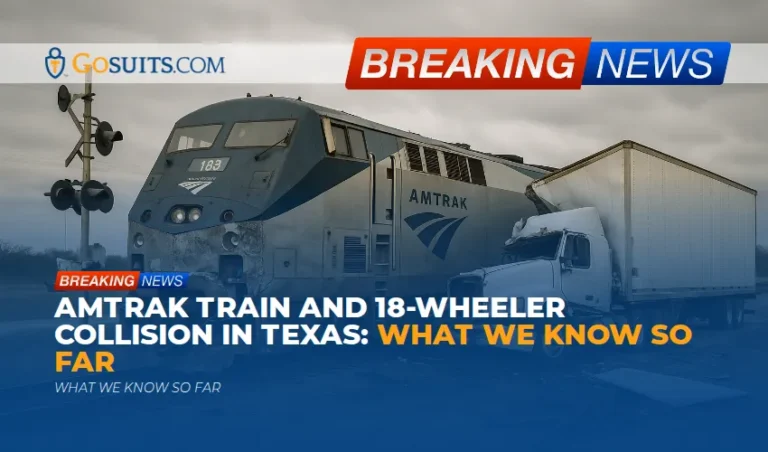
NBC News reported that an Amtrak train collided with an 18 wheeler in Texas on March 18, 2026. Initial video coverage highlights a significant impact between a passenger train and a tractor trailer. As of this writing, public details on the precise location, the number of people injured, and the cause have not been released through official government channels. That means many facts are still developing, and investigations by local law enforcement, the railroad, and potentially federal agencies are likely ongoing.
Texas communities know how quickly a typical day near the tracks can change. From the I 35 corridor between Austin and the Dallas Fort Worth area to smaller towns like Temple, Taylor, and San Marcos, long freight trains and twice daily passenger service on major routes move through neighborhoods, rural crossings, and industrial spurs. When an 18 wheeler meets a train at grade, forces are extreme and consequences can be life altering.
Where and why these crashes happen in Texas
Highway rail grade crossing crashes occur where a roadway and track intersect at the same level. Texas has thousands of such crossings, ranging from fully signalized gates with flashing lights to passive crossbuck only locations on farm to market roads. The Federal Railroad Administration maintains the national inventory and crash statistics for these crossings, which consistently show that driver behavior, sight obstructions, and warning device issues are common factors in collisions between trains and motor vehicles [1].
Nationwide, FRA data reflect that several thousand highway rail crossing collisions occur each year, causing hundreds of injuries and fatalities. Despite trains having right of way and dedicated warning systems, the size and weight of freight cars and locomotives mean stopping distances are vast, so a train crew often cannot avoid a crash once a vehicle enters the crossing [1]. The National Transportation Safety Board has repeatedly emphasized the unique risks at grade crossings and urged layered countermeasures, including roadway design improvements, active warning devices, and public education [2].
In Texas, seasonal patterns can add risk. Spring thunderstorms can knock out power to warning devices or reduce visibility. Harvest and oilfield activity bring more heavy trucks onto rural roads that may cross rail lines at angles or on grades. Each of these elements makes attentive driving and adherence to crossing laws critical.
Who may be responsible in a train and 18 wheeler crash
Determining civil fault in a train truck crash is fact intensive. Investigators typically examine driver actions, motor carrier safety compliance, the condition and operation of crossing warning devices, sightlines, train speed, and whether the crossing’s design met applicable standards. In Texas, fault can be apportioned among multiple parties if evidence supports shared responsibility. Below are common avenues investigators and attorneys explore.
Commercial truck driver and motor carrier duties
Professional drivers must approach and traverse rail crossings with heightened care. Federal rules require certain commercial motor vehicles such as those carrying hazardous materials or passengers to stop, look, and listen before crossing tracks, and to ensure there is sufficient space to fully clear the crossing without shifting gears while on the tracks [3]. Texas law also prohibits a driver from proceeding when a crossing signal is active or a train is approaching closely enough to constitute an immediate hazard [4]. Evidence of violating these safety rules can be significant in assessing negligence.
Hours of service, distracted driving, and route planning can enter the analysis. If a carrier pressured a schedule that increased risk at a known hazardous crossing, or if a driver’s electronic logging device and telematics show fatigue or distraction, those facts may bear on liability under federal motor carrier safety regulations [5]. This is where careful investigation, often guided by seasoned truck accident lawyers, becomes key to preserving and evaluating crucial records early in the case.
Railroad and crossing owner responsibilities
Railroads are generally responsible for maintaining the track and the active warning devices they own, while public agencies can be involved in roadway approaches and signage. Investigations may look at whether lights and gates functioned as designed, whether vegetation or grade created visibility issues, and whether any prior incident history suggested a need for upgrades. FRA reporting and the crossing inventory database often provide important context for these questions [1].

Public agency considerations
If roadway design, signage placement, or sightline maintenance by a governmental entity played a role, a separate set of Texas notice and immunity rules can affect how claims proceed. Notice deadlines for claims involving governmental units may be as short as six months, and some local charters establish even shorter periods. Anyone evaluating that angle should pay close attention to the Texas Civil Practice and Remedies Code notice provisions [6].
Comparative fault and passengers
Train passengers generally have no control over a driver’s decisions at a highway rail crossing. In most passenger injury cases, comparative fault is not an issue for the passenger, though it can be hotly contested among other parties. The allocation of fault is ultimately governed by Texas comparative negligence rules and the specific facts uncovered by investigators.
Evidence to preserve and request
Time sensitive records can disappear quickly after a train truck crash. Families and injured passengers often do not realize that some critical data are routinely overwritten in days or weeks. Preserving the following can help ensure that the truth is captured:
- Locomotive event recorder and video: Modern locomotives typically carry event recorders and inward and outward facing cameras. These document speed, horn use, braking, and the crossing approach. Railroads report accident details to the FRA and retain records under federal rules [1].
- Crossing signal health logs: Active warning devices generate diagnostic logs. These can show whether lights and gates functioned as intended in the minutes leading up to the crash.
- Truck electronic logs and telematics: ELD data, engine control module downloads, GPS breadcrumbs, and dashcam footage can clarify speed, braking, distraction, and route choices under FMCSA rules [5].
- Eyewitness and 911 recordings: Contemporary accounts and recordings often capture horn patterns, gate positions, and vehicle movements.
- Scene documentation: Photographs of skid marks, debris fields, sightlines, sun angle, and the exact resting positions are most valuable if captured quickly.
- Toxicology and autopsy records: In fatal cases, the county medical examiner’s records can be pivotal in reconstructing events and understanding injuries. Major Texas counties maintain public facing guidance for next of kin requests. See the county offices listed in the Resources below.
In many cases, formal preservation letters are sent to the railroad, motor carrier, and any third parties with potential evidence. These letters request a litigation hold and outline categories of records that must not be altered or destroyed. The sooner this step is taken, the more likely crucial data will be saved for independent review.
How to get official records in Texas
Police crash reports
In Texas, the official crash report is typically a CR 3 Peace Officer’s Crash Report. The Texas Department of Public Safety maintains crash records access and provides instructions for eligible parties to request copies. Access generally requires that the requester be directly involved or otherwise authorized by law, and there may be processing times before a report is released [7].

Federal rail data and investigations
The Federal Railroad Administration’s Office of Safety posts highway rail crossing collision data and maintains a public database where users can view crossing inventories and summary accident information [1]. For major events, the National Transportation Safety Board sometimes initiates an investigation, publishes preliminary summaries, and later releases a docket of factual materials. Those NTSB materials can include photos, interviews, and technical reports [2].
Autopsy and death records
If a death occurred, families can usually request autopsy and related records from the county medical examiner where the death was pronounced. In Texas, major county offices include Dallas County, Harris County, Bexar County, and Tarrant County. Links for each office’s procedures appear in the Resources section below. For official death certificates, the Texas Department of State Health Services Vital Statistics unit provides statewide guidance on ordering certified copies [8].
Public information requests
If additional materials are needed from a city, county, or local police department, Texas law allows members of the public to request records under the Texas Public Information Act. The Texas Attorney General provides step by step instructions for making a request and explains common exceptions that may apply to ongoing investigations [9].
Insurance issues after a train and 18 wheeler collision
Crashes involving an 18 wheeler and a passenger train trigger multiple insurance layers. The motor carrier will have primary liability coverage, with possible excess policies. Depending on the facts, claims may also be evaluated by the railroad’s liability carriers and, for injured passengers, by their own health insurers or med pay coverages. When many adjusters are involved, statements can be misinterpreted and used to limit recovery later. Before starting an insurance claim or giving any recorded statement, it is prudent to consult with truck accident lawyers in Texas so rights are fully understood.
Insurers may quickly tender low early offers to close files before the full scope of injuries, wage loss, and long term care needs are known. Others may delay, request unnecessary authorizations, or steer claimants away from independent evaluations. Early guidance from truck accident lawyers can help prevent missteps, ensure the right documentation is gathered, and keep negotiations grounded in objective evidence rather than pressure tactics.
Texas safety context and prevention at rail crossings
TxDOT’s Rail Division partners with local governments and railroads on crossing safety projects such as installing active warning devices, improving sightlines, and creating grade separations. The state also coordinates education and enforcement efforts aimed at reducing risky behavior at crossings [10]. FRA’s data analysis underscores that multi layer solutions are most effective: better engineering and active warnings, strong enforcement of crossing laws, and consistent public outreach [1][2].
For heavy trucks, stopping distance and traction matter. NHTSA’s large truck safety materials highlight how long and loaded vehicles require much more roadway to stop, especially in wet conditions common during Texas spring storms. Approaching a track at an angle or grade only increases the risk if a driver misjudges space to clear the crossing [11]. Coordinated route planning that avoids problematic crossings when possible, and a firm company policy to never queue vehicles over the rails, are practical and proven steps motor carriers can take.
Potential rights for injured passengers and families
Injury and wrongful death claims arising from a train truck collision can involve several categories of damages under Texas law, including medical expenses, lost income and earning capacity, and noneconomic harms such as pain, mental anguish, and loss of companionship for certain family members in fatal cases. For a deeper plain language overview of common categories, see Types of damages available in Texas personal injury cases.
Texas has deadlines that govern how long a person has to file a civil claim, and different rules can apply depending on whether a governmental entity is involved. The general limitations period for many personal injury claims is two years, but there are exceptions and shorter notice requirements when public entities are implicated [12][6]. Because of these time limits, timely evaluation helps protect options while evidence is still fresh.
Practical steps in the first 7 days
- Get medical evaluation early: Even if symptoms seem minor, train impacts can cause delayed onset injuries. Follow physician guidance and keep all discharge paperwork and imaging.
- Preserve evidence: Save tickets, seat assignments, photos, and clothing. Start a brief journal of symptoms, sleep disruption, and activity limits.
- Document expenses: Track out of pocket medical costs, travel for medical care, and work impacts. Keep pay stubs and any HR communications about missed time.
- Identify witnesses and media: Write down names and numbers of anyone who saw the crash or the immediate aftermath. Save any local news clips capturing the scene.
- Request official records: Note the law enforcement agency at the scene and the incident number if available. Begin the process to obtain the Texas crash report when it becomes available through DPS or the involved department [7].
- Avoid social media commentary: Public posts can be misread and used against a claim. Keep updates private and factual, if at all.
- Consult an attorney before insurance calls: What is said to any insurance adjuster can be used later to limit recovery. A brief consultation first helps set boundaries and ensures the right information is shared in the right order.
Why acting promptly matters in Texas
- Evidence windows are short: Locomotive video, crossing diagnostics, and truck telematics can be overwritten on rolling cycles. Acting now increases the chance those digital records are preserved rather than lost.
- Legal timelines start quickly: Texas limitations and notice rules begin to run from the date of the incident. Some governmental notice windows can be as short as six months, and certain local governments set shorter deadlines by charter [6]. Early action keeps all options available.
- Medical baselines matter: Prompt diagnosis links injuries to the crash and supports treatment decisions. Waiting can complicate both recovery and documentation.
- Coordinated communication helps: Multiple insurers may contact those affected. A clear plan for what to share and when reduces the risk of inconsistent statements and misplaced authorizations.
- Planning reduces financial stress: Understanding potential coverage coordination between liability, health insurance, and personal coverages can prevent avoidable gaps while claims are evaluated.

Commentary from Gosuits Texas Personal Injury Attorney
Our hearts are with everyone affected by the Amtrak and 18 wheeler collision reported in Texas. Train truck crashes are traumatic, and the uncertainty in the first few days can be overwhelming. This article is meant to provide general information and education for our Texas neighbors who are trying to make sense of what comes next.
Based on what is publicly known so far, investigators will likely focus on driver decision making at the crossing, the operation and visibility of warning devices, and whether any roadway or design issues contributed to risk. In Texas, we see these incidents most often at or near rural crossings that lack full separation from the track. It is appropriate and expected that a thorough, independent review of truck logs, locomotive data, and crossing diagnostics takes place before anyone draws firm conclusions.
In the aftermath of high profile crashes, insurance companies and large corporations move fast to control the narrative. Adjusters may push early statements, ask for broad medical authorizations, or extend quick settlement offers before the full picture of injuries and long term needs is clear. They count on the fact that most people have never navigated a multi carrier claim involving a railroad and an interstate motor carrier. Having a skilled advocate levels the playing field and can help ensure the evidence is preserved and the process stays fair.
One of the most important early steps is obtaining a free consultation to understand rights, timelines, and the scope of available insurance. Even a short conversation can help prevent common pitfalls, set expectations for the investigation, and clarify which records to request first.
References
- FRA Office of Safety Analysis: Highway Rail Crossing and Accident Data – Federal Railroad Administration
- Railroad Grade Crossing Safety – National Transportation Safety Board
- 49 CFR 392.10: Railroad grade crossing requirements for certain CMVs – eCFR
- Texas Transportation Code Chapter 545: Operation and Movement of Vehicles including Railroad Crossings – Texas Legislature Online
- Hours of Service Regulations Summary – Federal Motor Carrier Safety Administration
- Texas Civil Practice and Remedies Code Chapter 101: Tort Claims and Notice Requirements – Texas Legislature Online
- Crash Records Information and CR 3 Reports – Texas Department of Public Safety
- Death Records and Certificates – Texas Department of State Health Services
- How to Request Public Information – Office of the Texas Attorney General
- TxDOT Rail Division: Programs and Safety Initiatives – Texas Department of Transportation
- Large Trucks: Safety Information and Resources – National Highway Traffic Safety Administration
- Texas Civil Practice and Remedies Code Chapter 16: Limitations of Actions – Texas Legislature Online
- Dallas County Medical Examiner: Records and Services – Dallas County
- Harris County Institute of Forensic Sciences – Harris County
- Bexar County Medical Examiner – Bexar County
- Tarrant County Medical Examiner – Tarrant County